• Skip to content
  • Skip to primary sidebar

Right Attitudes

Ideas for Impact

Search Results for: skills for success

How Can You Contribute?

January 25, 2021 By Nagesh Belludi Leave a Comment

The celebrated management guru Peter Drucker urged folks to replace the pursuit of success with the pursuit of contribution. To him, the existential question was not, “How can I achieve what’s been asked of me?” but “What can I contribute?”

Drucker wrote in his bestselling The Effective Executive (1967; my summary,)

The great majority of executives tend to focus downward. They are occupied with efforts rather than with results. They worry over what the organization and their superiors “owe” them and should do for them. And they are conscious above all of the authority they “should have.” As a result, they render themselves ineffectual. The effective executive focuses on contribution. He looks up from his work and outward toward goals. He asks: “What can I contribute that will significantly affect the performance and the results of the institution I serve?” His stress is on responsibility.

The focus on contribution is the key to effectiveness: in a person’s own work—its content, its level, its standards, and its impacts; in his relations with others—his superiors, his associates, his subordinates; in his use of the tools of the executive such as meetings or reports. The focus on contribution turns the executive’s attention away from his own specialty, his own narrow skills, his own department, and toward the performance of the whole. It turns his attention to the outside, the only place where there are results.

Peter Drucker: Focus on Contribution - How Can You Contribute? Focusing on contribution versus (or as well as) typical metrics of success pivots you away from self-focus and helps engage in meaningful relationships with your employees, peers, and managers.

In his celebrated article on “Managing Oneself” in the January 2005 issue of Harvard Business Review, Drucker clarified,

Throughout history, the great majority of people never had to ask the question, What should I contribute? They were told what to contribute, and their tasks were dictated either by the work itself—as it was for the peasant or artisan—or by a master or a mistress—as it was for domestic servants.

There is no return to the old answer of doing what you are told or assigned to do. Knowledge workers in particular have to learn to ask a question that has not been asked before: What should my contribution be? To answer it, they must address three distinct elements: What does the situation require? Given my strengths, my way of performing, and my values, how can I make the greatest contribution to what needs to be done? And finally, What results have to be achieved to make a difference?

Idea for Impact: Take Responsibility for Your Contribution

Focusing on contribution instead of efforts is empowering because it compels you to think through the results you need to deliver to make a difference and identify new skills to develop. “People in general, and knowledge workers in particular, grow according to the demands they make on themselves,” as Drucker remarked in The Effective Executive.

Filed Under: Living the Good Life, Mental Models Tagged With: Adversity, Attitudes, Emotions, Mindfulness, Philosophy, Relationships, Resilience, Success

Easy Money, Bad Deals, Poor Timing: The General Electric Debacle // Summary of ‘Lights Out’

December 14, 2020 By Nagesh Belludi Leave a Comment

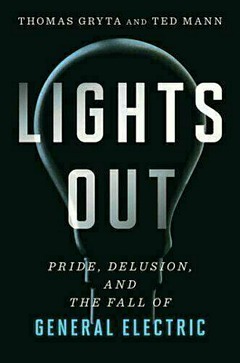
The story arc of the unraveling of General Electric should be familiar to followers of business news over the last two decades. Wall Street Journal reporters Thomas Gryta and Ted Mann’s crisp Lights Out: Pride, Delusion, and the Fall of General Electric (2020) draws together the vital episodes in one impassive narrative. It’s brimming with lessons about the hazards of obsessively focusing on impressing Wall Street.

Decades of Bad Decisions and Careless Oversight Ruined GE

'Lights Out General Electric' by Thomas Gryta (ISBN 035856705X) The fall of General Electric is really the story of how long-time CEO Jeff Immelt got saddled with the doomed legacy of the previous CEO, Jack Welch.

In 2001, Immelt took over a ship that was in trouble but wasn’t sinking yet. Unbeknownst to many analysts and investors—and overlooked by Jack Welch-buffs,—General Electric had been spoiled by greed, lack of transparency, and “lax oversight and buried risks.”

As a rising star, Immelt was part of Welch’s apparatus, perhaps to a smaller extent, at the GE Medical Systems division that Immelt ran previously. Early in his tenure as CEO, Immelt realized the scope of a disaster in the making. However, he didn’t act quickly and decidedly enough to fix the ill-fated ship’s rotten bits.

To focus on the stock’s negative return during Immelt’s 16 years as CEO and pit it against the sixtyfold return over Welch’s 20-year term is myopic. This argument is definitely understandable, yet it is scarcely convincing.

Welch’s good times couldn’t last forever, and Immelt had a tough act to follow. Yes, Welch was a forceful numbers-obsessed management mastermind who transformed GE into the world’s largest, most profitable, and best-admired company during his tenure as CEO. However, many of the mistakes of his corporate strategy manifested years later.

Welch would argue that he pushed his underlings to produce results, not fraud. But even if the CEO didn’t bend the rules himself, Welch cultivated an environment of pressure that incentivized people to do just that.

Welch was fond of saying, “You reinforce the behaviors that you reward. If you reward candor, you’ll get it.” Welch’s playbook rewarded—and got—the worst traits of modern capitalism. In so doing, he sowed the seeds of the company’s tragic decline.

Jack Welch’s Playbook Was Long-term Destructive to GE

Welch had a take-no-prisoners attitude to running GE. He set overly aggressive targets for his managers. He engaged in accounting shenanigans and consistently “managed” the numbers to maintain the myth of consistency and limitless growth. Behind the scenes, Welch’s machination was made possible by crafty-but-legal accounting practices (with auditor KPMG’s blessings, nonetheless,) mazes of financial deals, and murky structures. Welch even underfunded reinsurance reserves by $9.4 billion, helping pump up profits from 1997 to 2001.

Managing financial results wasn’t unique to GE, but the degree of GE’s reliance on the practice was. Management, with its customary swagger, treated the frenzy of last-minute tweaks and transactions each quarter as entirely natural. GE executives have acknowledged that they worked to make sure earnings were always growing in a nice smooth trajectory.

Immelt knew—or came to comprehend—of all this tomfoolery but didn’t break GE’s bad habits swiftly. Specifically, Immelt didn’t dismantle the GE Capital unit, the company’s most significant liability, and it continued to haunt GE. Under pressure, the complex conglomerate structure that Welch had held together during the good times of the ’80s and the ’90s started falling apart towards the end of his tenure.

The winds were shifting on Welch. GE’s share price had soared for years, making it, for a time, the world’s most valuable company. [During Welch’s] final eighteen months, the share price fell 33 percent. … [Bond-market guru Bill Gross commented,] “Institutional investors have wondered why a company can continue to produce 15 percent earnings growth year after year, quarter after quarter.”

An Addiction That Was So Hard to Break

At the heart of General Electric’s fall is how GE Capital came to gain an outsized influence over the parent company and ruined it. Under Jack Welch, GE Capital’s business model of high leverage and “financialization” was resoundingly successful. Financial engineering, e.g., recognizing revenue from long-term service contracts for power-plant repairs and jet-engine maintenance, is not only suspect, but it cannot manufacture results beyond the short term.

GE Capital was the nonbank bank that was embedded in the company’s fabric. Everything that GE produced was leased, rented, or loaned by GE Capital. In other words, the industrial side was sustained by the rise of GE Capital. It was too interlinked to everything else, and that impeded Immelt’s “definancialization” plans.

In the ’90s, Welch embraced the notion that it’s a lot easier to make money in financial services than in industrial manufacturing. The Capital unit provided huge dividends (with enormous risks) while the industrial side was less profitable but more stable.

No wonder, then, that Welch made GE Capital a gargantuan part of GE. GE Capital became the vehicle for his headlong obsession with enhancing pure shareholder value.

Sadly, Welch bet the farm on the continued success of GE Capital. It misused GE’s high-quality credit rating and became a colossal lender and a major shadow bank. Welch’s bet went sour in 2008—GE Capital was the largest commercial paper issuer going into the financial crisis. It needed a $139 billion government bailout, and it has continued to drain the company’s bottom line ever since.

Jeff Immelt focused on pivoting GE towards core industrial businesses. He doubled GE’s investment in R&D. He sold off slower-growth, low-tech, and nonindustrial businesses, but not soon enough. He managed to keep revenues growing and delivered high margins until the financial crisis hit.

Cleaning Up the Mess Left by Welch

Even as Immelt went about restructuring the company around industrial products, he continued to rely on GE Capital “for smoothing out rough quarters and delivering easy profits.” It was a hard addiction to break.

Lights Out acknowledges that Immelt was “playing with a tough hand,” and he knew that “his success would be attributed to his predecessor but his failure would be seen as all his own doing.”

The authors reveal plenty of leadership blind spots. Immelt was a genial and assertive salesperson, and he didn’t like hearing bad news. He didn’t like delivering bad news either.

CEOs are expected to be optimistic, but Immelt was unfailingly overoptimistic. Perhaps his overconfidence was a manifest outcome of the company’s cultural dynamics. Sadly, when a company is doing well, such CEO attributes as optimism, audacity, and foresight that Immelt’s leadership personified are heralded as brilliant, but when things go wrong, they’re the first to get the blame. Results are all that matters.

Some board members … had … a poor impression of Immelt’s deal-making skills. The knock on Immelt was that he chased trends, arrived too late, and paid handsomely. One rival CEO joked that he was “fad surfing.”

Immelt Made Bad Decisions and Was Slow to Make Changes

Immelt spent over $100 billion on ill-timed share buybacks to shore up earnings-per-share and so the stock price. He had a history of overpaying for acquisitions. He was reluctant to back away from deals that he was dead set on, even when the deal’s prospects became dubious during the parleying.

Immelt tended to start negotiations too high, sometimes to the surprise of others involved in the deal, leaving little room for negotiation. It wasn’t uncommon for the board to approve one of Immelt’s deals, only to have him ask for approval to pay more in order to make the deal work. In some ways, this tendency simply reflected Immelt’s experience as a salesman. He’d always needed to close deals, and for a company like GE, paying a little more didn’t seem to cause any concern.

No decision could be more illustrative of Immelt’s fateful deal-making than the one for Alstom, the French power generating equipment company. Immelt set his reputation on that deal because GE Power would be “the centerpiece of his new GE.” Immelt didn’t walk out on the deal even after regulators forced General Electric to divest Alstom’s lucrative service business and take on 30,000 high-cost employees in Europe.

Worst of all, the deal was spectacularly mistimed. With the Alstom purchase, Immelt doubled down on fossil-fuel-fired turbines just as renewables were becoming more cost-competitive. Demand for GE Power’s products collapsed in next to no time, and that unit’s profit plunged 45% in 2017. The whole Alstom transaction turned out to be an out-and-out disaster. In 2018, General Electric took a $22 billion goodwill impairment charge for the Alstom acquisition.

Hope and Optimism Could Take Immelt Only So Far

It’s both easy and unfair to comment on what GE should have done. Immelt’s prospects were seriously encumbered by the September 11 attacks, post-Enron accounting rules, the 2008 financial credit crisis, and a substantial recession that hit the energy industry.

The world in which Jeff Immelt had thought he would be leading GE had been turned upside down. The recession and the uncertainty that followed the terrorist attacks had dampened the global growth on which GE’s industrial businesses depended. And changes to accounting rules in the wake of the Enron scandal, by requiring that the company now account for the vast financial holdings on its balance sheet at GE Capital, had eliminated an easy and reliable source of paper profits to smooth over rough periods.

Lights Out explains how, during the last five years of his tenure, Immelt’s misfortunes piled on. GE Healthcare took a pause (it’s innovative, high-profit machines had become increasingly commoditized.) The GE Renewables business rarely turned a profit. The GE Transportation unit’s sales stagnated. GE Power built an extensive inventory hoping for a return in demand for its large, expensive machines. The merger of GE Oil and Gas with Baker Hughes turned out to be untimely too.

For many investors, GE had lost its mojo. Its lackluster performance, fuzzy financials, and unknown risk just didn’t fit with a lot of investment portfolios.

Leadership Mismanagement, Self-Dealing, Collusion

The deplorable collapse of General Electric, and GE Capital, in particular, was fostered by the board’s abysmal stewardship.

GE’s board was dysfunctional. It comprised too many directors who owed their cushy positions to Welch and Immelt and merely rubber-stamped their strategic actions. As chairman of the board, Immelt promptly cast out Welch-appointed directors who objected to his plans.

As they’d done under Welch, the board usually tended to approve Immelt’s recommendations and follow his lead. Some felt that Immelt manipulated the board, and it was whispered that members were chosen and educated to see the company through his visionary eyes. There was concern that the board didn’t entirely understand how GE worked, and that Immelt was just fine with that. Like many CEOs who are also their company’s chairman, he made sure that his board was aligned with him.

Just last week, GE agreed to a $200 million fine to settle a Securities and Exchange Commission probe into feel-good accounting at its Power and Insurance units.

Too Steeped in the GE Culture to Effect a Major Transformation

Immelt was replaced by John Flannery, a finance specialist. Flannery had run the business development team when GE Power bought Alstom. He wasn’t likely to kick off any dramatic changes in GE’s business strategy. His proposals for GE’s transformation were consistent with Immelt’s strategy.

Flannery tried to stop GE’s hemorrhaging of money but wasn’t quick enough either. He showed reluctance—caution perhaps—to take risky and complicated actions that could have been costly or even impossible to reverse.

If Immelt was known for his vaulting optimism, Flannery soon became known for his indecision and endless analysis. Few decisions, even major ones, were final. A critical strategic move, like the separation of a major division, could be made, only to be reassessed at any time. Flannery’s style was quickly grating on top executives who worked with him.

The board got insecure quickly because of widespread public criticism that it had waited too long to remove Immelt. “After sixteen years of Immelt, Flannery thought that he had more time to turn the ship around, but when he looked for support from the board, there was none there.” Fourteen months into his term, Flannery was forced out.

For the first time in its 126-year history, GE, which prided itself as a talent factory, handed the leadership baton to an “outsider” to bring a fresh perspective.

New CEO Lawrence “Larry” Culp is generally admired for his stellar record of accomplishment at Danaher, a smaller industrial conglomerate. “Culp had more experience, and he also had no emotional attachment to GE.” Culp had joined GE’s board six months before and had started questioning the wisdom he’d received from Flannery and his team.

Having an outsider take charge of a storied company marks how much change the board desired. GE may not reclaim its once-celebrated footprint. But it’ll continue to be one of the great American business stories.

Jack Welch’s GE: Everything Worked Until It Didn’t

Recommendation: Must-Read Thomas Gryta and Ted Mann’s excellent Lights Out: Pride, Delusion, and the Fall of General Electric. It’s a great reminder that even America’s most iconic companies—and the world’s leading businesses—can go off the rails if things go wrong.

It wasn’t Immelt’s fault that the entire oil sector had turned south. But he was responsible for GE investors being so openly exposed to the collapse. … He had spent sixteen years at the top and, regardless of what Welch had left for him; he’d had plenty of time to fix it.

Lights Out is a revealing, reasonable, and accessible narrative of how a thriving company was humbled by sheer misfortune and poor leadership.

Jack Welch’s razzle-dazzle capitalism party could last only so long.

Filed Under: Business Stories, Leadership, The Great Innovators Tagged With: General Electric, Jack Welch, Leadership Lessons, Leadership Reading

How Can You Contribute?

June 22, 2020 By Nagesh Belludi Leave a Comment

The celebrated management guru Peter Drucker urged folks to replace the pursuit of success with the pursuit of contribution. To him, the existential question was not, “How can I achieve what’s been asked of me?” but “What can I contribute?”

Drucker wrote in his bestselling The Effective Executive (1967; my summary,)

The great majority of executives tend to focus downward. They are occupied with efforts rather than with results. They worry over what the organization and their superiors “owe” them and should do for them. And they are conscious above all of the authority they “should have.” As a result, they render themselves ineffectual. The effective executive focuses on contribution. He looks up from his work and outward toward goals. He asks: “What can I contribute that will significantly affect the performance and the results of the institution I serve?” His stress is on responsibility.

The focus on contribution is the key to effectiveness: in a person’s own work—its content, its level, its standards, and its impacts; in his relations with others—his superiors, his associates, his subordinates; in his use of the tools of the executive such as meetings or reports. The focus on contribution turns the executive’s attention away from his own specialty, his own narrow skills, his own department, and toward the performance of the whole. It turns his attention to the outside, the only place where there are results.

Peter Drucker: Focus on Contribution - How Can You Contribute? Pursuing contribution versus—or as well as—success pivots you away from self-focus and helps engage in meaningful relationships with your employees, peers, and managers.

In his celebrated article on “Managing Oneself” in the January 2005 issue of Harvard Business Review, Drucker clarified,

Throughout history, the great majority of people never had to ask the question, What should I contribute? They were told what to contribute, and their tasks were dictated either by the work itself—as it was for the peasant or artisan—or by a master or a mistress—as it was for domestic servants.

There is no return to the old answer of doing what you are told or assigned to do. Knowledge workers in particular have to learn to ask a question that has not been asked before: What should my contribution be? To answer it, they must address three distinct elements: What does the situation require? Given my strengths, my way of performing, and my values, how can I make the greatest contribution to what needs to be done? And finally, What results have to be achieved to make a difference?

Idea for Impact: Take Responsibility for Your Contribution

Focusing on contribution instead of efforts is empowering because it compels you to think through the results you need to deliver to make a difference and identify new skills to develop. “People in general, and knowledge workers in particular, grow according to the demands they make on themselves,” as Drucker remarked in The Effective Executive.

Filed Under: Career Development, Managing People Tagged With: Coaching, Delegation, Mentoring, Peter Drucker, Winning on the Job

Leo Burnett on Meaning and Purpose

June 15, 2020 By Nagesh Belludi Leave a Comment

Adman Leo Burnett (1892–1971) founded a global advertising agency that ranks among the titans of the trade. Burnett and the company that bears his name produced such famous brand icons as the Marlboro Man, Tony the Tiger, Jolly Green Giant, Maytag Repairman, and Pillsbury Doughboy.

Burnett pioneered the ‘Chicago School’ of advertising, wherein product campaigns centered on the inherent appeal of products themselves. Burnett’s advertisements used meaningful visuals to evoke emotions and experiences. This approach contrasted the time-honored use of catchy catchphrases and clever copy describing the products’ features. The models in Burnett’s campaigns resembled ordinary people rather than celebrities.

“When to Take My Name Off the Door”

After 33 years at the helm of his company, Burnett officially retired at age 76. He delivered a remarkable valedictory (film clip,) reminding his colleagues of his advertising agency’s core values and its high creative standards.

Let me tell you when I might demand that you take my name off the door.

When you lose your itch to do the job well for its own sake—regardless of the client, or the money, or the effort it takes.

When you lose your passion for thoroughness…your hatred of loose ends.

When you stop reaching for the manner, the overtones, the marriage of words and pictures that produces the fresh, the memorable, and the believable effect.

When you stop rededicating yourselves every day to the idea that better advertising is what the Leo Burnett Company is all about.

When you begin to compromise your integrity—which has always been the heart’s blood—the very guts of this agency.

When you stoop to convenient expediency and rationalize yourselves into acts of opportunism—for the sake of a fast buck.

When your main interest becomes a matter of size just to be big—rather than good, hard, wonderful work.

When you lose your humility and become big-shot weisenheimers … a little too big for your boots.

When you start giving lip service to this being a “creative agency” and stop really being one.

Finally, when you lose your respect for the lonely man—the man at his typewriter or his drawing board or behind his camera or just scribbling notes with one of our big black pencils—or working all night on a media plan. When you forget that the lonely man—and thank God for him—has made the agency we now have—possible. When you forget he’s the man who, because he is reaching harder, sometimes actually gets hold of—for a moment—one of those hot, unreachable stars.

THAT, boys and girls, is when I shall insist you take my name off the door.

Idea for Impact: Leaders are Meaning-Makers

Burnett’s valedictory is a potent reminder of the power of meaningful organizational values and a leader’s role in upholding his company’s principles-based DNA.

Organizational values are at the heart of the long-term success of a company. When these values grow fainter, the company may no longer reflect the intended culture. The organizational values will no longer clarify, inspire, and bind the company’s customers, employees, partners, investors, and other stakeholders.

As the steward of a company’s culture, a leader is responsible for institutionalizing—not merely individualizing—a sense and meaning in the workplace. And, as Burnett demonstrates, an effective leader passionately expresses what the company stands for and shares personal lessons learned in that process.

Burnett’s name is still on the door.

Filed Under: Career Development, Sharpening Your Skills, The Great Innovators Tagged With: Attitudes, Creativity, Entrepreneurs, Likeability, Marketing, Winning on the Job

Pulling Off the Impossible Under Immense Pressure: Leadership Lessons from Captain Sully

May 25, 2020 By Nagesh Belludi Leave a Comment

I recently watched Sully (2016,) the overrated Clint Eastwood-directed drama about the US Airways Flight 1549 incident, aka the “Miracle on the Hudson.”

Sully Movie (2016) with Tom Hanks, Clint Eastwood In summary, on 15-Jan-2009, Captain Chesley “Sully” Sullenberger (played by Tom Hanks) heroically dead-sticked his Airbus A320 aircraft in New York City’s Hudson River after both the aircraft’s engines failed from a bird strike. He then helped get passengers and crew off uninjured.

Sully centers on Sullenberger’s post-decision dissonance. To spin the real-life six-minute flight and the 24-minute swift rescue into a 96-minute Holyrood extravaganza, the filmmakers devised an antagonist in the form of National Transportation Safety Board (NTSB) investigators who try hard to blame Sullenberger for the mishap.

Overdramatized Portrayal of the NTSB Investigators

On the screen, the smirking NTSB investigators use flight simulators and computer analysis to second-guess Sullenberger’s lightning-quick decisions. They would have rather he made it to an airport nearby—a possibility that he had instantly judged was not viable given his 40 years of flying experience.

Contrary to Sully‘s portrayal, the NTSB was unequivocal that landing the aircraft on the Hudson was the right call. In his memoir, Highest Duty: My Search for What Really Matters (2009,) Sullenberger mentions that he was “buoyed by the fact that investigators determined that [first officer] Jeff and I made appropriate choices at every step.”

In the course of the real-life 18-month investigation of Flight 1549, the NTSB did investigate the odds of landing the aircraft in a nearby airport. Exploring all possible flaws that contribute to a crash is part of the NTSB’s charter. The NTSB, like other accident-investigation agencies, concerns itself principally with preventing future accidents. It rarely seeks to assign blame, nor does it make the pilots justify their actions.

The Complex Leadership Requirements of Flying

Apart from the sensationalized portrayal of the NTSB investigators, Sully misses the opportunity to call attention to the complex leadership requirements of aviation. Flying a civil aircraft is characterized by a high level of standardization and automation, while still placing a strong emphasis on formal qualification and experience.

Today, highly trained pilots have to work with ever more complicated and autonomous technology. The routinization must be weighed up against deliberate action. On Flight 1549, the A320’s much-studied fly-by-wire system allowed the pilots to concentrate on trying to resurrect the engines, starting the auxiliary power unit (APU,) and deciding the flight path in the direction of the Hudson. Airbus’s legendary computer controls will not allow the pilots to override the computer-imposed limits even in an urgent situation. Sullenberger and others have commented that lesser human-machine interaction may perhaps have allowed him a more favorable landing flare and helped him temper the aircraft’s impact with the water.

Aircrews now consist of ad hoc teams working together typically only for a few flights. They build their team quickly and rely on the crew’s collective knowledge and experience to round out the high levels of standardization.

Due to the complex demands for leadership in aircrews, specialized training programs such as Crew Resource Management (CRM) are in place to improve crew communication, situational awareness, and impromptu decision-making. These systems were established to help crews when technical failures and unexpected events disrupt highly procedualized normal operations.

Furthermore, individual and organizational learning from accidents was institutionalized through mandatory reporting of incidents—not only within the airline involved but also across the aviation community.

Leadership Lessons on Acting Under Immense Pressure: The Context of Success

Owing to intuition, experience, and quick coordination, Sullenberger was able to “land” the aircraft on the Hudson within four minutes following the bird strike and have his passengers and crew quickly evacuated onto the aircraft’s wings and onto rafts.

The rapid and highly complex coordination required for this extraordinary achievement was only achievable because of exceptional leadership, exemplary decision-making under stress, and the technical skills of both the cockpit- and cabin-crew.

The pilots were highly experienced—Sullenberger even had experience as a glider pilot. Further contextual factors—the calm weather on that afternoon and the proximity of NY Waterway ferries—helped bring this accident to a good end. All this facilitated the almost immediate rescue of passengers and crew from the rapidly sinking aircraft and the frigid water.

'Highest Duty What Really Matters' by Chesley Sullenberger (ISBN 0061924695) On Another Note, Sullenberger’s memoir, Highest Duty (2009,) is passable. The most interesting part of the book is the last fourth, where he discusses Flight 1549 and what went through his mind. Interestingly, Sullenberger writes that even after he realized that the plane was in one piece after hitting the water, he worried about the difficulties that still lay ahead. The aircraft was sinking: everyone had to be evacuated quickly. The passengers could survive only for a few minutes in the frigid waters of the Hudson.

Filed Under: Leadership, Project Management, Sharpening Your Skills Tagged With: Assertiveness, Aviation, Biases, Conflict, Decision-Making, Mindfulness, Problem Solving, Stress, Teams

How to Improve Your Career Prospects During the COVID-19 Crisis

May 7, 2020 By Nagesh Belludi Leave a Comment

Now that the COVID-19 pandemic has plunged the world into despondency and uncertainty, it’s easy to worry about your career prospects, feel risk-averse, and become inert.

However, if you could look beyond the short-term challenges, now’s a good time to take on new skills, tend to your network, and accelerate your long-term career prospects.

Here’s how to take a bit of initiative and think creatively about your career during the current lockdown.

  1. Reflect upon your goals for your life and career. Think clearly through the steps you must take to realize your aspirations.
  2. State clearly your aims. If you want to earn more or get a better responsibility, speak to your boss about what it’ll take to secure a promotion.
  3. Seek specific feedback, but don’t just reflect on the past. Asking for feedback puts you—not your boss—in the driver’s seat. Ask lots of questions and decide what you could do to make a positive change.
  4. Redefine your goals at work. Identify worthwhile measures of success. Agree on targets that stretch but don’t strain.
  5. Work with your boss to find gaps in your experience. Find projects where you could develop and use those skills.
  6. Don’t try to do everything. Prioritize. Ask yourself, “Where do my strengths lie?” Focusing on one or two areas could help you isolate and sharpen the necessary skills to move up.
  7. Seek out new opportunities. Be alert to points of diminishing returns on learning new skills.
  8. Take the lead on a project that others don’t find particularly interesting (see Theo Epstein’s 20 Percent Rule.) You could not only learn by way of broader experiences and gain confidence but also become more visible to management and situate yourself for a promotion.
  9. Offer to share responsibility. Take an interest in your colleagues’ work. You could win over grateful allies and open up new opportunities within your company.
  10. Reevaluate what’s essential. To the extent possible, divest yourself of the boring, time-wasting, frivolous, and worthless—anything that doesn’t “move the ball down the field.”
  11. Pursue side projects. Cultivating knowledge and trying out new skills during your free time is a definite path to career reinvention.
  12. Seek out mentors. Make the right contacts. Bear in mind, those who influence decisions may not necessarily be the ones at the top.
  13. Begin actively networking. It’s never late to put together a range of experts whose knowledge and experience you could tap into.

Idea for Impact: Mulling over how to improve yourself and enhance your career is a great shelter-in-place project. As President Dwight D. Eisenhower once declared, “Plans are useless but planning is indispensable.”

Filed Under: Career Development, Sharpening Your Skills Tagged With: Career Planning, Coaching, Feedback, Job Transitions, Managing the Boss, Motivation, Networking, Personal Growth

Make ‘Em Thirsty

May 6, 2020 By Nagesh Belludi Leave a Comment

Sony’s Akio Morita, like Apple’s Steve Jobs, was a marketing genius. Morita’s hit parade included such iconic products as the first hand-held transistor radio and the Walkman portable audio cassette player.

Key to Morita’s success was his mastery of the art of the pitch. Morita pushed Sony to create consumer electronics for which no obvious need existed and then generated demand for them.

The best marketing minds know how to create a customer—previously unaware of a problem or an opportunity, she becomes interested in considering the opportunity, and finally acts upon it.

Coca-Cola marketers are but creating a thirst by showing the fizzle a freshly poured glass in Coke ads. “Thirst asks nothing more,” indeed.

The marketing guru Seth Godin has said, “So many people are unhappy … what they have doesn’t make them unhappy. What they want does. And want is created by the marketers.” Recall the old parable,

A sales trainee was trying to explain his failure to close a single deal in his first week. “You know,” he said to his manager, “you can lead a horse to water, but you can’t make him drink.”

“Make him drink?” The manager sputtered. “Your job is to make him thirsty.”

Idea for Impact: Whether you realize this or not, you’re in marketing, as is everybody else. You’re constantly pitching your ideas, skills, time, appeal, charm, and so forth. Study the art of the pitch. Master the art of generating demand for whatever it is you have to offer. Learn to “make ’em thirsty.” Marketing is everything.

Filed Under: Mental Models, Sharpening Your Skills Tagged With: Creativity, Customer Service, Innovation, Marketing, Parables, Persuasion, Problem Solving, Skills for Success, Thinking Tools, Winning on the Job

This is the Career “Kiss of Death,” according to Lee Iacocca

April 2, 2020 By Nagesh Belludi Leave a Comment

Auto industry icon Lee Iacocca wrote in Iacocca: An Autobiography (1986,)

There’s one phrase that I hate to see on any executive’s [performance] evaluation, no matter how talented he may be, and that’s the line: “He has trouble getting along with other people.”

To me, that’s the kiss of death. “You’ve [the evaluator] just destroyed the guy,” I always think. “He can’t get along with people? Then he’s got a real problem, because that’s all we’ve got around here. No dogs, no apes—only people. And if he can’t get along with his peers, what good is he to the company? As an executive, his whole function is to motivate other people. If he can’t do that, he’s in the wrong place.”

A significant predictor of success in most professions is being easy to get along with. People who’re well-liked, work well with others, and help them do their jobs well will advance in any organization. Those who don’t usually don’t get as far.

Idea for Impact: Interpersonal relationships in the workplace are at the heart of the matter

Leadership is influence. Leadership isn’t about titles, positions, pedigree, distinction, or corner offices. A leader who can encourage, inspire, and direct others’ efforts will be effective in any endeavor.

If you’d like to exert more influence on your boss and inspire more cooperation from your peers and colleagues, work on being genuine, pleasant, sincere, easy to talk with, and friendly—without becoming desperate to please others.

Too, develop the antennae for what motivates people by respecting their ideas and values. That may sometimes necessitate holding back your own.

Read Dale Carnegie’s masterful manual on people skills, How to Win Friends & Influence People (1936.) Jeswald Salacuse’s Leading Leaders (2005; my summary) can help you expand your persuasive skills for situations where you may not have much influence over others.

Filed Under: Career Development, Sharpening Your Skills Tagged With: Getting Along, Relationships, Social Life, Winning on the Job

The Poolguard Effect: A Little Power, A Big Ego!

February 24, 2020 By Nagesh Belludi Leave a Comment


Even Petty Power Corrupts: Authority Can Warp Behavior

The Poolguard Effect: A Little Power, A Big Ego! Ever wonder why some folks with a little authority, but not much real status, tend to throw their weight around? They often become overconfident, controlling, and bossy. This phenomenon, known as “hubris syndrome,” can lead to micromanaging, unnecessary rules, and a real disconnect from the people around them.

Even in lower-level jobs, you can see these power trips in action. For instance, rub a TSA agent the wrong way, and you might get flagged for extra screening. Summer pool guards can be overly strict with kids and parents who don’t show them the proper respect. In bureaucratic offices, clerks and supervisors frequently impose petty rules just to flex their authority.

These power trippers rely on control to boost their fragile egos. Power tends to amplify self-importance, making people more likely to act in a domineering way—something we often sum up with, “power corrupts” or the “authority bias.

Power Increases People’s Sense of Entitlement

This anecdotal observation is backed by a study titled “The Destructive Nature of Power Without Status.” The researchers argue that neither power nor low status alone leads people to mistreat others; it’s the combination of the two that increases the likelihood of abuse.

We predicted that when people have a role that gives them power but lacks status—and the respect that comes with that status—then it can lead to demeaning behaviors. Put simply, it feels bad to be in a low-status position and the power that goes with that role gives them a way to take action on those negative feelings.

One way to prevent these toxic power dynamics is to ensure that everyone feels respected and valued, regardless of their role. According to the study, “respect assuages negative feelings about low-status roles and encourages positive interactions with others.” In other words, courtesy pays off!

Notes

  • Some people despise anyone they suspect is trying to pull the strings or exert power over them.
  • Consider the 1971 Stanford Prison Experiment, where a group of students was assigned roles as either prisoners or guards in a simulated prison. Despite knowing they were part of an experiment, the “guards” subjected the “prisoners” to humiliating treatment. According to the researchers, this behavior stemmed from the guards’ desire for respect and admiration, which they felt was lacking in their interactions with others. This controversial experiment was later depicted in a 2015 docudrama.
  • This concept can be compared to the Napoleon Complex, where shorter men may overcompensate for their height through social aggressiveness, despite the fact that Napoleon himself was not actually short.
  • Cf. The “Waiter Rule” states that how you treat seemingly insignificant people says a lot about your personality and priorities.

Filed Under: Leadership, Managing People, Sharpening Your Skills Tagged With: Attitudes, Discipline, Ethics, Etiquette, Getting Ahead, Humility, Integrity, Leadership, Motivation, Psychology

Some Lessons Can Only Be Learned in the School of Life

November 19, 2019 By Nagesh Belludi Leave a Comment


How Anil Ambani Learned the Ropes of Doing Business in India

In the Fall of 1982, Anil Ambani, scion of one of India’s wealthiest family, returned home to Mumbai, then Bombay, after attending the University of Pennsylvania’s Wharton School.

Anil had fast-tracked through his two-year MBA program in less than 15 months.

He met up with his father Dhirubhai Ambani and announced, “Look, Dad, I’ve become an MBA, and I’m going to take a break since I worked hard. I will see you in the New Year.”

Dhirubhai asked, “I am very happy and delighted that you accomplished this. Since I did not go to any formal school or college, I do not have any degree, why don’t you tell me, from your learning at Wharton, what does an MBA stand for?”

Smug and self-satisfied, Anil replied, “That’s simple. Master of Business Administration.”

Dhirubhai countered, “An MBA represents Manē Badhā Āvō che,” (Gujarati for “I am know all.”) He explained,

You are entering India, and you need to Indianize your MBA … at Wharton School, did they teach you about customs duties, excise duties, income tax, sales tax, Parliament?

Do you know about a zero-hour question, a call-attention motion, and the difference between a starred question and an unstarred question in the Indian Parliament?

If you don’t get to know all these things, let me assure you, all your formal education is not going to help you. You need your practical Indian MBA. And I am going to create that learning environment for you so that you can get the exposure.

A formal education doesn’t necessarily teach you everything about how to navigate the real world

Dhirubhai Ambani, the prototypical crony capitalist that he was, was highlighting the importance of learning the ways and means of doing business in pre-liberalization India.

One must note that Ambani’s extraordinary rags-to-riches story was a blend of cunning, street smartness, audacious risk-taking, and an unparalleled knack for bending the rules through powerful politicians and bureaucrats. As controversial as he was, Ambani must be understood in the socio-political context of India’s post-Independence industrial milieu. He artfully exploited the opportunities those times offered.

Idea for Impact: Formal education cannot complete the kind of real-world operative skills that you need

If you’re truly serious in your desire to get ahead in business, you will need a broader grasp of your chosen discipline than you can get from formal education.

  • Look, listen, learn. Every industry, company, organization, and team has its own culture. Spend time observing the winners: what does success look like? Who holds power, and how are they persuaded? What are the traits of people who get ahead? Emphasize developing skills in line with the winners.
  • Develop a network of people who can potentially lend a hand or bail you out of a jam. Invest in the people who will listen to your ideas and support your ambitions. Get to know peers at all levels to build a support base. Any person may have the knowledge and the allegiances that they can put to work for you if they’re so inclined.
  • Discover how to make the most of the circumstances you’re dealt with. Don’t manipulate others for your own devices in a Machiavellian sense—although, occasionally, you may need to use duplicity for respectable purposes, i.e. where certain ends can justify certain means.

Remember, the political payoff for fostering and nurturing relationships, and for developing a vast reservoir of skills and experiences, may take months, years, or even decades.

Filed Under: Career Development, Sharpening Your Skills Tagged With: Attitudes, Career Planning, Employee Development, Getting Ahead, Job Transitions, Learning, Mentoring, Personal Growth, Role Models, Thinking Tools, Winning on the Job

« Previous Page
Next Page »

Primary Sidebar

Popular Now

Anxiety Assertiveness Attitudes Balance Biases Coaching Conflict Conversations Creativity Critical Thinking Decision-Making Discipline Emotions Entrepreneurs Ethics Etiquette Feedback Getting Along Getting Things Done Goals Great Manager Innovation Leadership Lessons Likeability Mental Models Mindfulness Motivation Parables Performance Management Personal Growth Persuasion Philosophy Problem Solving Procrastination Psychology Relationships Resilience Simple Living Social Skills Stress Thinking Tools Thought Process Time Management Winning on the Job Wisdom

About: Nagesh Belludi [hire] is a St. Petersburg, Florida-based freethinker, investor, and leadership coach. He specializes in helping executives and companies ensure that the overall quality of their decision-making benefits isn’t compromised by a lack of a big-picture understanding.

Get Updates

Signup for emails

Subscribe via RSS

Contact Nagesh Belludi

RECOMMENDED BOOK:
Ego is the Enemy

Ego is the Enemy: Ryan Holiday

Ryan Holiday describes how a lack of humility can impede a full, successful life. Lessons: be humble and persistent; value discipline and results, not passion and confidence. Be less, do more.

Explore

  • Announcements
  • Belief and Spirituality
  • Business Stories
  • Career Development
  • Effective Communication
  • Great Personalities
  • Health and Well-being
  • Ideas and Insights
  • Inspirational Quotations
  • Leadership
  • Leadership Reading
  • Leading Teams
  • Living the Good Life
  • Managing Business Functions
  • Managing People
  • MBA in a Nutshell
  • Mental Models
  • News Analysis
  • Personal Finance
  • Podcasts
  • Project Management
  • Proverbs & Maxims
  • Sharpening Your Skills
  • The Great Innovators

Recently,

  • How to Deal with … Interrupters
  • How to Deal with … Overtalkers
  • Stress You Can’t Name Is Stress You Can’t Manage
  • Inspirational Quotations #1176
  • The Leader and the Legend
  • The Commercialization of Yoga: Downward Dog, Upward Profit
  • Write Your Constitution, Then Cut What Doesn’t Fit

Unless otherwise stated in the individual document, the works above are © Nagesh Belludi under a Creative Commons BY-NC-ND license. You may quote, copy and share them freely, as long as you link back to RightAttitudes.com, don't make money with them, and don't modify the content. Enjoy!