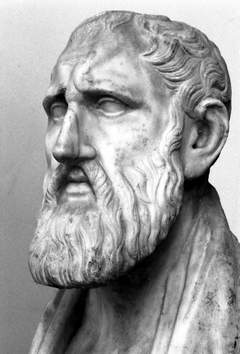
 Zeno of Citium, the founder of Stoicism, has long struck me as one of the most underrated thinkers on the human mind. People remember his ideas about virtue and fate. I admire him more for something less glamorous: he and his successors treated emotions as separate things with separate causes, and they bothered to tell them apart.
Modern wellness culture, for all its apps and podcasts, has mostly given that up.
Ask someone how they’re holding up under pressure and you’ll usually hear one word: stressed. Then comes the remedy, a meditation app or a breathing exercise or a long run, applied with no clear idea of what it’s meant to relieve. It’s a painkiller taken without knowing where it hurts. Sometimes it works. When it doesn’t, people decide they’re bad at relaxing, which is rarely the problem.
The trouble is that “stressed” covers too much ground. One person is dreading a conversation she has to start. Another is waiting on a phone call that hasn’t come. Both say they’re stressed and both reach for the same generic relief, yet their problems have almost nothing in common. One of them needs to act, and the other needs to stop checking.
That vagueness has a cost. If you can’t say what you’re feeling, you can’t work out what to do about it, and advice written for stress in general tends to go nowhere.
Zeno Kept a Filing Cabinet for Fear
The early Stoics, Zeno and especially his successor Chrysippus, drew up a detailed taxonomy of the emotions, preserved by Diogenes Laërtius in his Lives of the Eminent Philosophers. Under fear alone they listed six species: terror, nervous shrinking, shame, consternation, panic and mental agony.
As the broader Stoic taxonomies preserved by anthologist Joannes Stobaeus further elaborate on these distinctions:
Hesitation is fear of future action. Agony is fear of failure and otherwise fear of worse outcomes. Shock is fear of an uncustomary surprise. Shame is fear of a bad reputation. A ruckus is fear pressing down with sound. Divine fright is fear of gods or divine power. Terror is fear of a terrible thing. A fright is fear that comes from a story.
—Stobaeus 2.7.10c [=Diogenes Laertius 7.113]
The list matters because of what stood behind it. For the Stoics, every emotion contains a judgment about what matters and what’s at stake. Shame, defined as the fear of disgrace, quietly assumes your reputation is something you can’t afford to lose. Name the emotion accurately and you expose that belief, and a belief that’s been exposed can be examined. Precision helps less because it calms you than because it shows you what to work on.
Take nervous shrinking, which in classical scholar R.D. Hicks’s translation is “fear that one will have to act.” Anyone who has put off a hard email for three days knows it. The giveaway is avoidance, and the remedy is to shrink the first action until it’s almost trivial: open the draft, write one sentence. Mental agony is a different animal, the fear “felt when some issue is still in suspense,” as when you’re waiting on test results or a job offer. Shrinking the task does nothing for it. What helps is sorting what you can influence from what you can’t, then deciding on a time when you’ll stop checking.
Shame and consternation call for something else again. With shame, the useful thing to work out is whose judgment you’re actually afraid of, and it’s often one particular person or an audience that isn’t watching. Consternation, the fear “due to a presentation of some unusual occurrence,” arrives with the surprise reorganization or the unexpected breakup. You’re not facing a known threat so much as a lost sense of how things work, so the sensible move is to hold off on deciding what it means and deal with the next practical step.
Terror, the “fear which produces fright,” is the true emergency and the one case where the body comes first. Slow your breathing, steady yourself, and sort out the story afterward.
The entry that reads most like today is panic, which the Stoics defined as “fear with pressure exercised by sound,” and it’s hard to read that without thinking of a buzzing phone or a meeting where everyone talks at once. Much of what we call stress today isn’t a reaction to a problem you can point to. It’s a reaction to noise and urgency. The Stoic answer is practical: take away the sound first, then decide whether anything is actually urgent. Silence the phone, leave the room, and see how much of the emergency survives.
A Label Isn’t a Cure
.jpg "'How Emotions Are Made' by Lisa Feldman Barrett (ISBN 0544133315)") There’s research behind the idea, though it’s more modest than wellness writing usually lets on. A well-known 2007 study led by Matthew Lieberman found that putting feelings into words was associated with reduced amygdala activity. Closer to the argument here is Canadian-American psychologist Lisa Feldman Barrett’s work on emotional granularity, which suggests that people who describe their emotions in finer detail tend to regulate them better.
There’s research behind the idea, though it’s more modest than wellness writing usually lets on. A well-known 2007 study led by Matthew Lieberman found that putting feelings into words was associated with reduced amygdala activity. Closer to the argument here is Canadian-American psychologist Lisa Feldman Barrett’s work on emotional granularity, which suggests that people who describe their emotions in finer detail tend to regulate them better.
Emotions are not reactions to the world. You are not a passive receiver of sensory input but an active constructor of your emotions. From sensory input and past experience, your brain constructs meaning and prescribes action. If you didn’t have concepts that represent your past experience, all your sensory inputs would just be noise. You wouldn’t know what the sensations are, what caused them, nor how to behave to deal with them.
The effects are real but moderate. A label is where the work starts.
Naming has limits, too. It can slide into rumination, and someone who has spent an hour dissecting a feeling and come out worse should stop and pick the next action. Sometimes the problem isn’t an emotion at all. Sleep debt or a workload that’s simply too heavy won’t yield to a better label, and a feeling that’s persistent and heavy deserves a professional.
You don’t need to take up Stoic philosophy to benefit from Zeno’s insight. The next time you catch yourself thinking I’m stressed, match the feeling to the closest of the six, then make the one small move that suits it. You won’t always guess right on the first try. A wrong guess can be corrected, though, and a vague feeling can only be endured.
Idea for Impact: Replace “I’m stressed” with something specific, such as nervous shrinking about the email or mental agony over the results. It’ll feel strange at first. It almost always shows where to start.

 The technology industry thrives on urgency, but urgency is a poor advisor. In my experience, the push for the “latest”
 One of the most liberating choices you can make is to stop chasing applause disguised as approval—whether it comes as
  When American playwright and diplomat
.jpg "'When Things Fall Apart' by Pema Chodron (ISBN 1611803438)")
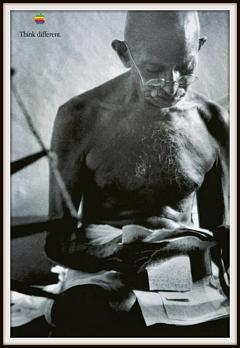 Apple’s “Think Different” campaign in 1998 placed Gandhi among its
  When stress builds, some people instinctively take a few minutes to clean. It’s more than a quick break—it’s a
  My friend Jack recently offered a retrospective on his decade-long dalliance with sneaker trends—a ride as unpredictable as it was swift. He began faithfully attached to New Balance, those once-maligned “dad shoes” that screamed suburban resignation. Then came Converse, adopted not for comfort but for credibility, as his children entered the age of judgment and he entered the age of trying not to embarrass them. Shortly thereafter, he flirted with On sneakers during a Lululemon-inspired phase that boldly declared, “I’m trendy, indeed!” Yet as fashion’s fickle currents swept him toward HOKA’s cloud-like comforts, Jack eventually circled back to a reinvented New Balance—now celebrated as a bona fide streetwear icon. Worn out by the relentless trend chase, he