• Skip to content
  • Skip to primary sidebar

Right Attitudes

Ideas for Impact

Procrastination

Big Shifts Start Small—One Change at a Time

September 12, 2025 By Nagesh Belludi Leave a Comment

Big Shifts Start Small---One Change at a Time We romanticize transformation—new routines, cleaner diets, sharper habits. But in practice, change rarely arrives in cinematic sweeps. It comes in quieter forms: a switch from soda to water, a walk around the block, skipping the evening snack. Small choices. Easily overlooked. In aggregate, they shape us.
Trying to change everything at once—run daily, meditate, overhaul meals—is a recipe for burnout disguised as ambition. Better to start with one tweak, something frictionless enough to stick. Once it feels second nature, stack another. A short walk. A light dinner. A weekend without takeout. These shifts build momentum without demanding heroics.

Progress thrives on consistency, not spectacle. The goal isn’t an overhaul—it’s a steady tilt toward better. And in that tilt, you free up space: less guilt, fewer negotiations, more clarity. Change doesn’t have to be loud to matter.

Idea for Impact: Progress is rarely explosive. More often, it’s the quiet rebellion of small shifts against chaos—one glass of water, one walk around the block, one skipped snack at a time.

Wondering what to read next?

  1. Did School Turn You Into a Procrastinator?
  2. An Effective Question to Help Feel the Success Now
  3. Do Things Fast
  4. What the Dry January Trap Shows Us About Extremes
  5. Just Start with ONE THING

Filed Under: Living the Good Life, Mental Models, Sharpening Your Skills Tagged With: Change Management, Decision-Making, Discipline, Fear, Getting Things Done, Goals, Motivation, Procrastination

Let a Dice Decide: Random Choices Might Be Smarter Than You Think

September 10, 2025 By Nagesh Belludi Leave a Comment

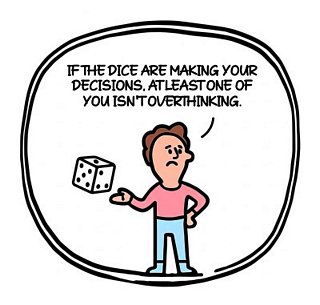
Let a Dice Decide: Random Choices Might Be Smarter Than You Think We make thousands of decisions daily—what to wear, which email to answer first, whether to take the scenic route or stick to the main road. Most are low-stakes, but the act of choosing can sap mental energy. That’s decision fatigue: as options pile up, clarity frays, and even the inconsequential starts to feel weighty. The mind treats small choices like they’ve got far more significance than they deserve.

There’s a surprisingly elegant way out: hand off minor decisions to chance. Roll a die. Flip a coin. Outsource the trivial. Randomization cuts through indecision and delivers instant clarity. Ironically, when the coin’s in mid-air, we often discover what we truly want—hoping silently for a particular side to land face-up. That fleeting instinct speaks louder than hours of deliberation.

We already allow randomness to shape more of our lives than we realize. We hit shuffle and trust an algorithm to pick our next song. We choose checkout lines blindly, hoping they’re fastest. Our social feeds present content in curated chaos. Even picking a restaurant often comes down to whatever looks inviting in the moment. Randomness isn’t an interruption—it’s ambient, constant, and influential.

Using chance deliberately brings relief. Faced with mundane, energy-draining decisions, inviting a bit of randomness can be playful and effective. It breaks the loop of paralysis-by-analysis and forces commitment. It frees up brainpower for choices that actually require reflection. Not everything deserves a full internal debate.

Of course, not every decision fits this mold—career shifts, relationships, financial moves need real thought. But for the daily swarm of indecision, randomness offers clarity and release.

That’s freedom from the unimportant.

Wondering what to read next?

  1. Everything in Life Has an Opportunity Cost
  2. Don’t Ruminate Endlessly
  3. A Winner is Merely a Quitter with a Better Sense of Timing: When Quitting Is the Win
  4. In Imperfection, the True Magic of the Holidays Shines
  5. To-Do or Not To-Do?

Filed Under: Mental Models, Sharpening Your Skills Tagged With: Anxiety, Assertiveness, Clutter, Decision-Making, Discipline, Efficiency, Parables, Procrastination, Simple Living, Thought Process

How to … Tame Your Calendar Before It Tames You

September 3, 2025 By Nagesh Belludi Leave a Comment

How to ... Tame Your Calendar Before It Tames You If you’re a working professional with a family, your calendar probably feels like a runaway train. One minute you’re fine, the next you’re missing deadlines, forgetting birthdays, and wondering how your day disappeared. Here’s how to fix it:

  • Start your day with a plan. Take 15 minutes each morning to pick your top three tasks. Not everything—just the three that matter most. Split your time into “must-dos” and “want-to-dos.” This helps you stop reacting to everyone else’s chaos and focus on what counts.
  • Block time for deep work. Set aside three two-hour blocks each week—early, mid, and late week. Use them to think, plan, read, or catch up. No meetings. No distractions. President Richard Nixon used to sneak off to a quiet office just to get things done. You can too.
  • End your day with a reset. Spend 30 minutes wrapping up. Clear your desk, answer emails, return calls, jot down loose thoughts. This helps you switch off and enjoy your evening without your brain spinning like a washing machine.

Idea for Impact: Use your calendar as a weapon, not a shackle. Dictate your hours with intent, or watch them be looted by the trivial and the dim. Reclaim your time—or be ruled by the petty tyranny of other people’s priorities.

Wondering what to read next?

  1. Ask This One Question Every Morning to Find Your Focus
  2. Don’t Do the Easiest Jobs First
  3. Stop Putting Off Your Toughest Tasks
  4. The Midday Check
  5. How to … Kickstart Your Day with Focus & Set a Daily Highlight to Stay on Track

Filed Under: Living the Good Life, Sharpening Your Skills Tagged With: Discipline, Efficiency, Getting Things Done, Procrastination, Stress, Tardiness, Task Management, Time Management, Work-Life, Workplace

Be Careful What You Start

August 11, 2025 By Nagesh Belludi Leave a Comment

Be Careful What You Start - Every Act Is a Precedent The paths you tread most lightly are often the ones that later shape your life. A single moment of indulgence, a flicker of forgetfulness—each becomes a quiet rhythm, echoing into routine. And soon, without your knowing, a habit is no longer something you choose, but something that chooses you.

Repetition morphs into identity. A habit, once planted, is never benign—it germinates, it metastasizes. If you’re not vigilant, you’ll wake to find your life colonized by rituals you never consciously adopted. So the deeper wisdom may lie not in resisting habits altogether, but in questioning your impulses—choosing your beginnings not with sentiment, but with scrutiny.

Idea for Impact: Every act is a precedent. Be kind to your future self, yes—but be honest, too. The habits you begin today will greet you tomorrow with open arms—be they comforting or constricting. So take a breath before you begin, and ask: is this a habit you’re willing to be ruled by?

Wondering what to read next?

  1. What the Dry January Trap Shows Us About Extremes
  2. If Stuck, Propel Forward with a ‘Friction Audit’
  3. Use This Trick to Make Daily Habits Stick This Year
  4. Don’t Try to ‘Make Up’ for a Missed Workout, Here’s Why
  5. How to Turn Your Procrastination Time into Productive Time

Filed Under: Health and Well-being, Living the Good Life, Mental Models Tagged With: Change Management, Discipline, Goals, Mindfulness, Motivation, Procrastination, Targets

Thought Without Action is a Rehearsal for Irrelevance

August 8, 2025 By Nagesh Belludi Leave a Comment

Success Lives in Execution, Not in Perfect Plans Strategy means nothing without execution. Yet too often, plans drown in opinion. Feedback loops expand. Timelines slip. Clarity dies by excessive rumination.

Want momentum? Stop collecting takes. Set a direction, trim the noise, act.

Every added voice risks dilution. Every delay compounds cost.

Decisiveness is underrated. Strategy doesn’t need universal buy-in—it needs movement. Adapt when you must, but not at the expense of traction.

Idea for Impact: Momentum isn’t built on many voices, but on one that dares to commit. Success lives in execution, not in perfect plans. Every time.

Wondering what to read next?

  1. Don’t Do the Easiest Jobs First
  2. Ask This One Question Every Morning to Find Your Focus
  3. Did School Turn You Into a Procrastinator?
  4. Why Doing a Terrible Job First Actually Works
  5. How to Banish Your Inner Perfectionist

Filed Under: Living the Good Life, Sharpening Your Skills Tagged With: Clutter, Decision-Making, Discipline, Getting Things Done, Motivation, Procrastination, Task Management

Why Doing a Terrible Job First Actually Works

June 5, 2025 By Nagesh Belludi Leave a Comment

Metamorphosis Concept Butterfly Life Cycle: Why Doing a Terrible Job First Actually Works

A fellow grad student once said, “I was stuck on my dissertation for six months until my advisor gave me two words that changed everything: ‘write drivel.'” The idea was simple. Starting with anything is easier than waiting for brilliance to strike.

This principle extends beyond writing: procrastination often arises from the fear of imperfection, making even simple tasks—whether drafting an essay, pitching an idea, or cleaning out the attic—feel overwhelming; the solution is to lower your expectations: scribble down whatever comes to mind, wash one dish, or toss one useless box, because even chaotic progress is still progress.

Once an imperfect first version exists, refinement becomes natural. The mind shifts from avoidance to problem-solving, and momentum builds. Perfectionism paralyzes. Iteration unlocks creativity. Masterpieces are never created in a single stroke—they begin as rough sketches.

Conquer initial friction by taking decisive steps. Start small, lower the bar, and welcome the imperfect. Let messy drafts, shaky attempts, and awkward beginnings propel you forward toward success.

Idea for Impact: Start badly—then make it better. That is how great things are made.

Wondering what to read next?

  1. How to Banish Your Inner Perfectionist
  2. Did School Turn You Into a Procrastinator?
  3. Don’t Do the Easiest Jobs First
  4. Ask This One Question Every Morning to Find Your Focus
  5. An Effective Question to Help Feel the Success Now

Filed Under: Mental Models, Sharpening Your Skills Tagged With: Decision-Making, Discipline, Getting Things Done, Lifehacks, Motivation, Perfectionism, Procrastination, Tardiness, Task Management

Did School Turn You Into a Procrastinator?

May 12, 2025 By Nagesh Belludi Leave a Comment

The Academic Environment is a Breeding Ground for Procrastination for Many Students

Procrastination likely started as something you picked up from others. Watching people around you delay tasks felt normal, even harmless. As a kid, putting things off gave quick relief with few real consequences. Over time, it became your default.

School gave it room to grow. You postponed homework, studying—everything. Disorganization, fear of failure, and the myth that you “work best under pressure” fueled it. Deadlines made it worse. The thrill of cramming tricked you into thinking it worked. You got by. Decent grades hid the stress, mistakes, and half-baked work. That selective memory helped the habit stick.

Then came college. More freedom, less structure. The “perfect moment” to start was always tomorrow. Cramming brought excitement. Stress and mediocre results followed. Still, you did okay—better than expected. That made you wonder: why put in more effort if coasting works?

At work, procrastination still lingers. You meet deadlines, maybe even get praised. That feeds the illusion. But it comes at a cost. The constant rush strains your focus, saps energy, and stirs anxiety. It also hurts relationships as delays build frustration. You keep thinking pressure boosts performance, but that belief wears you down.

Idea for Impact: Last-minute adrenaline feels productive. It’s not. It spikes stress and blocks growth. Breaking the cycle isn’t easy—but it’s necessary. And worth it. Because it’s not just you who pays the price—it’s everyone else who relies on you.

Wondering what to read next?

  1. Do Things Fast
  2. Just Start with ONE THING
  3. Don’t Do the Easiest Jobs First
  4. Why Doing a Terrible Job First Actually Works
  5. Big Shifts Start Small—One Change at a Time

Filed Under: Mental Models, Sharpening Your Skills Tagged With: Decision-Making, Discipline, Fear, Getting Things Done, Goals, Motivation, Perfectionism, Procrastination, Task Management, Time Management

Just Start with ONE THING

March 31, 2025 By Nagesh Belludi Leave a Comment

Taking One Action Is Crucial; It Jumpstarts Momentum for Further Progress Are you finding it challenging to take action?

Struggling to get into stuff that you know would make life better?

Maybe you’re all about the buzz of getting inspired and picturing an awesome future. But then, bam! You hit a wall when it’s time to turn those dreams into action.

You halt and stall, failing to heed the inner call.

Simply knowing what needs to be done isn’t sufficient; action is imperative.

The initial step is to simply do something, to take a tangible step forward in your life.

Start small, focus on ONE THING that you can actually do. It could be anything—just pick the easiest or coolest thing on your to-do list. And if time’s tight, go for something you can squeeze into your schedule.

Choose one task that’ll pave the way and break the shackles of delay.

Nailing down one doable goal is key for a couple of reasons. First off, it shows you’re ready to kick things into gear, especially if you’ve been feeling stuck. Plus, tackling just ONE THING makes it more likely you’ll actually get it done.

Idea for Impact: Getting started is crucial; it sparks momentum that propels you forward.

Just get started, even if you’re not the best at it. Embrace the bumps because they’ll move you forward. As you keep going, you’ll gain clarity and wisdom.

Once you nail that ONE THING, success will follow, boosting your confidence for tackling other stuff. But for now, laser-focus on that ONE THING. Get it done and watch the momentum roll.

Wondering what to read next?

  1. Did School Turn You Into a Procrastinator?
  2. Do Things Fast
  3. What the Dry January Trap Shows Us About Extremes
  4. Don’t Try to ‘Make Up’ for a Missed Workout, Here’s Why
  5. Just Start

Filed Under: Health and Well-being, Mental Models, Sharpening Your Skills Tagged With: Discipline, Fear, Getting Things Done, Goals, Motivation, Perfectionism, Procrastination, Targets

Chances Fade, Regrets Linger

March 29, 2025 By Nagesh Belludi Leave a Comment

Chase Your Dream: Effort Fades, Regret Lasts Forever Chasing a dream demands time, effort, money, and relationships. It requires stepping out of comfort zones, breaking old habits, and confronting setbacks. There’s no guarantee of success—only uncertainty and struggle along the way.

But trying beats regretting. Missed chances haunt more than failed attempts. The weight of “what if” lasts a lifetime. Life changes fast; today’s opportunities may vanish. Take the leap while you can. The pain of effort fades, but the pain of inaction lingers.

Idea for Impact: In the end, the highest price is paid by those who never tried, never lived, and never chased what truly mattered.

Wondering what to read next?

  1. That Burning “What If” Question
  2. Five Ways … You Could Be More Optimistic
  3. ‘Could’ Beats ‘Should’ Every Time
  4. Lessons from the Princeton Seminary Experiment: People in a Rush are Less Likely to Help Others (and Themselves)
  5. What Will You Regret?

Filed Under: Living the Good Life, Sharpening Your Skills Tagged With: Attitudes, Decision-Making, Introspection, Opportunities, Procrastination, Regret, Thought Process

Powerful Systems, Costly Upkeep

March 28, 2025 By Nagesh Belludi Leave a Comment

'Getting Things Done' by David Allen (ISBN 0670899240) David Allen developed the Getting Things Done (GTD) system to help individuals manage tasks and commitments through a process of capturing, clarifying, organizing, reflecting, and engaging. His book, Getting Things Done: The Art of Stress-Free Productivity (2001,) gained significant traction in the mid-2000s, alongside the growth of productivity blogs and digital tools. However, the system’s high maintenance demands have discouraged many users.

GTD demands considerable time investment, beginning with the capture of all tasks, projects, and “open loops,” followed by organizing them into actionable lists. Consistent upkeep, especially the weekly review, is critical for the system’s effectiveness. However, this ongoing maintenance can become burdensome, particularly for individuals with demanding schedules, as the time spent managing the system often outweighs the productivity benefits. Consequently, most users adapt the GTD framework to suit their needs rather than strictly adhering to the original methodology.

Idea for Impact: Any system, no matter how powerful, requires you to balance its benefits with the time you spend maintaining it. Experiment with simpler methods—sometimes, complex frameworks create more work than they solve.

Wondering what to read next?

  1. Don’t Do the Easiest Jobs First
  2. Ask This One Question Every Morning to Find Your Focus
  3. How to Help an Employee Who Has Too Many Loops Open at Once
  4. Stop Putting Off Your Toughest Tasks
  5. How to … Combat Those Pesky Distractions That Keep You From Living Fully

Filed Under: Mental Models, Sharpening Your Skills Tagged With: Clutter, Discipline, Procrastination, Tardiness, Task Management, Time Management

« Previous Page
Next Page »

Primary Sidebar

Popular Now

Anxiety Assertiveness Attitudes Balance Biases Coaching Conflict Conversations Creativity Critical Thinking Decision-Making Discipline Emotions Entrepreneurs Ethics Etiquette Feedback Getting Along Getting Things Done Goals Great Manager Innovation Leadership Leadership Lessons Likeability Mental Models Mindfulness Motivation Parables Performance Management Persuasion Philosophy Problem Solving Procrastination Psychology Relationships Simple Living Social Skills Stress Suffering Thinking Tools Thought Process Time Management Winning on the Job Wisdom

About: Nagesh Belludi [hire] is a St. Petersburg, Florida-based freethinker, investor, and leadership coach. He specializes in helping executives and companies ensure that the overall quality of their decision-making benefits isn’t compromised by a lack of a big-picture understanding.

Get Updates

Signup for emails

Subscribe via RSS

Contact Nagesh Belludi

RECOMMENDED BOOK:
How Will You Measure Your Life

How Will You Measure Your Life: Clayton Christensen

Harvard business strategy professor Clayton Christensen's exceptional book of inspiration and wisdom for achieving a purpose-filled, fulfilling life.

Explore

  • Announcements
  • Belief and Spirituality
  • Business Stories
  • Career Development
  • Effective Communication
  • Great Personalities
  • Health and Well-being
  • Ideas and Insights
  • Inspirational Quotations
  • Leadership
  • Leadership Reading
  • Leading Teams
  • Living the Good Life
  • Managing Business Functions
  • Managing People
  • MBA in a Nutshell
  • Mental Models
  • News Analysis
  • Personal Finance
  • Podcasts
  • Project Management
  • Proverbs & Maxims
  • Sharpening Your Skills
  • The Great Innovators

Recently,

  • You Need Your Enemy to Be Worth It
  • The Quiet Rebellion
  • The ‘Near Enemy’: The Subtle Corruption That Makes Good Acts Fail
  • Inspirational Quotations #1162
  • The “Empty Vessel” Effect: Why Insecurity Speaks the Loudest
  • Persuasion’s Oldest Trick Isn’t the Promise of More—It’s the Threat of Loss
  • Efficiency vs. Effectiveness: Activity Without Outcome as Self-Indulgent Futility

Unless otherwise stated in the individual document, the works above are © Nagesh Belludi under a Creative Commons BY-NC-ND license. You may quote, copy and share them freely, as long as you link back to RightAttitudes.com, don't make money with them, and don't modify the content. Enjoy!