• Skip to content
  • Skip to primary sidebar

Right Attitudes

Ideas for Impact

Creativity

Creativity by Imitation: How to Steal Others’ Ideas and Innovate

October 22, 2018 By Nagesh Belludi 2 Comments

Emulating others’ ideas is an underappreciated learning tool. Many creative innovators set forth as remarkably astute mimics of others. “Good artists copy, great artists steal,” prods a creator’s maxim often misattributed to Picasso.

Imitation is a leading pathway to business innovation, even if being an imitator is anchored by a sense of derision. Ever more businesses are nicking great ideas wherever they can obtain them—in their own industries or beyond. Hospitals have adapted safety and efficiency procedures from the military and the airline industry. Aircraft manufacturers have adopted the car industry’s lean supply chain management concepts. Ritz-Carlton, the luxury chain of hotels and resorts, runs the Ritz-Carlton Leadership Center that has helped trained its legendary cult of customer service and employee empowerment best practices to managers from companies across industries.

Creativity by Taking Existing Ideas: Applying Them in a New Context

The most prominent example of innovating by imitation is Ford’s development of the automobile assembly line—a system Henry Ford copied (and improved) from the Chicago meat processing business.

Henry Ford’s relentless ambition to build his Model T a high-volume-low-cost automobile, together with his engineering knowledge and manufacturing experience provided the leadership and creative environment that nurtured the development of the moving mechanical assembly line. Today, the moving assembly line is the epitome of manufacturing. Almost everything that is now industrially manufactured—automobiles, aircrafts, toys, furniture, food—passes down assembly lines before landing in our homes and offices.

The genesis of the moving assembly line is in the American agricultural products industry. During the late 18th century, the movement of grains changed from hand labor to belts and later moving hoppers.

Innovation by Imitation: Many Innovations Come from the Outside

By 1873, Chicago’s meat-processing industry adapted belts and hoppers to transform beef and pork production into a standardized, mechanized, and centralized business. After cows and pigs travelled to their fate in train cars from farms throughout the Midwest, they were dropped into hoppers and killed. Conveyor belts then moved carcasses past meat cutters, who progressively removed various sections of the animal, cut them into appropriate sizes, and repackaged and dispatched processed meat across the United States.

The meat processors’ task was disassembly (as opposed to putting together automobile parts in Ford’s plants.) Each worker had a specific, specialized job. Production moved swiftly. The American writer Upton Sinclair famously described this industry’s ghastly working conditions in his acclaimed novel The Jungle and said, “They use everything about the hog except the squeal.”

Chicago Slaughter Houses Were the Pioneers of the Moving Disassembly Line Before Henry Ford Started His Assembly Line

In the early 1900s, when Henry Ford wanted to keep Model T production up with demand and lower the price, Ford’s team explored other industries and found four ideas that could advance their goal: interchangeable parts, continuous flow, division of labor, and cutting wasted effort. Ford’s engineers visited Swift & Company’s Slaughterhouse in Chicago and decided to adopt the “disassembly line” method to build automobiles.

The introduction of the moving assembly line process in 1913 enabled increased production up to 1,000 Model Ts a day and decreased assembly time from 13 hours to 93 minutes. Additional refinement of the process, thanks to reliable precision equipment and standardized shop practices, shortened production time radically: within a few years, a new Model T rolled off the assembly line every 24 seconds. First produced in 1908, the Model T kept the same design until the final one—serial number 15,000,000 rolled off the line in 1927.

Auschwitz-Birkenau and Victims of the Holocaust

Sadly, just as Henry Ford copied the Chicago meat processing and perfected the moving assembly line, the Nazi apparatus copied Ford’s methods of mass production to massacre six million people. While Midwestern butchers processed the livestock carcasses, the Nazis systematically handled corpses of the victims of the Holocaust. Nazi operatives removed victims’ hair, clothing, shoes, gold teeth, hairbrushes, glasses, suitcases, and anything of value to be repurposed for the Reich. The atrocities of this inexpressibly shocking disaster are on display at the train tracks and the museums of Auschwitz-Birkenau, Poland.

Formal Strategic-Benchmarking Programs

Smart businesses have formal strategic-benchmarking programs to achieve significant efficiency improvements: they pinpoint the strategic capabilities that matter most to their businesses, seek out companies or businesses that currently manage those capabilities best, and try to copy and deploy those capabilities as rapidly as possible. But time is of the essence for the success of these undertakings, as the management guru Tom Peters warns,

I hate Benchmarking! Benchmarking is stupid! Why is it stupid? Because we pick the current industry leader and then we launch a five-year program, the goal of which is to be as good as whoever was best five years ago, five years from now. Which to me is not an Olympian aspiration.

Imitation is a Key Characteristic of Highly Creative People: The Case of Steve Jobs Copying from Xerox

One of the key characteristics of highly creative people is their exposure to and experience with working in several related domains. They are very good at crossing domain boundaries, relating their creativeness in new and perhaps unexpected ways, and adapting knowledge into new domains. The following case of one of history’s most famous innovators illustrates this distinguishing characteristic.

Steve Jobs of Apple introduced the revolutionary Lisa computer in 1983. It featured such innovations as the graphical user interface, a mouse, and document-centric computing. Jobs had taken—and refined—all these inventions from Xerox’s PARC research labs and introduced by Xerox on its commercially-unsuccessful Alto and Star computers in 1981. The biographer Walter Isaacson writes in his best-selling Steve Jobs: “The Apple raid on Xerox PARC is sometimes described as one of the biggest heists in the chronicles of industry.” Isaacson cites Jobs: “Picasso had a saying—‘good artists copy, great artists steal’—and we have always been shameless about stealing great ideas… They [Xerox management] were copier-heads who had no clue about what a computer could do… Xerox could have owned the entire computer industry.”

Idea for Impact: Borrow Ideas from Others and Combine Them with Your Own Creativity

Interestingly, many “benchmarking” exercises in the world of business—even academia—do not come “top-down” out of strategy. In other words, innovations by imitation are typically not driven from the top down. Instead, they materialize from everyday operational challenges—those painful experiences that send managers scuttling for solutions in a hurry.

Look outside your industry. To improve your creativity, try spending time researching other smart companies—even those outside of your industry. Learning directly from other companies is a useful, underutilized form of research for finding ways to improve performance.

Attend to developments at your competitors and in other industries. Look for potential opportunities that have been discovered elsewhere. Avoid the “not invented here” syndrome—don’t reject other’s great ideas. Keep an open mind.

Wondering what to read next?

  1. Howard Gardner’s Five Minds for the Future // Books in Brief
  2. This is Yoga for the Brain: Multidisciplinary Learning
  3. Many Businesses Get Started from an Unmet Personal Need
  4. Innovation Without Borders: Shatter the ‘Not Invented Here’ Mindset
  5. How to Stimulate Group Creativity // Book Summary of Edward de Bono’s ‘Six Thinking Hats’

Filed Under: Business Stories, Mental Models, Sharpening Your Skills Tagged With: Creativity, Critical Thinking, Decision-Making, Entrepreneurs, Icons, Leadership Lessons, Mental Models, Thinking Tools, Thought Process, Winning on the Job

Disproven Hypotheses Are Useful Too

June 21, 2018 By Nagesh Belludi Leave a Comment

Hypotheses are conjectures—often merely proposals or intuitions—about what may constitute facts.

A specific hypothesis can be tested for its adequacy and proved correct or incorrect using the scientific method. Sometimes, a hypothesis is accepted for the time being, until further evidence suggests an amendment.

It does not matter if a certain hypothesis is proven incorrect because, in itself, the falsification of a hypothesis can offer precious insight about the “what is not” to enhance the “what is.”

Hypotheses are the bedrock of scholarship. Scientific understanding accrues when many interrelated and tested hypotheses are used to develop theories, and rethink and restructure our knowledge.

Wondering what to read next?

  1. Question the Now, Imagine the Next
  2. The Data Never “Says”
  3. The Solution to a Problem Often Depends on How You State It
  4. Defect Seeding: Strengthen Systems, Boost Confidence
  5. How to Solve a Problem By Standing It on Its Head

Filed Under: Mental Models Tagged With: Conviction, Creativity, Critical Thinking, Decision-Making, Discipline, Philosophy, Problem Solving, Thinking Tools, Thought Process

Turning a Minus Into a Plus … Constraints are Catalysts for Innovation

November 29, 2017 By Nagesh Belludi Leave a Comment

Creativity Thrives Best When Constrained

“Art consists in limitation,” as the English writer G. K. Chesterton remarked. Constraints are the sine qua non of creativity.

One of the great ironies of creative thinking is that it seems to benefit from constraints. At first blush, inventive thinking may seem to require a great degree of freedom and a lack of restrictions, but the reality of the creative process is that it is frequently entwined with many challenging constraints and intractable requirements. In the right light, demanding constraints can truly be blessings in disguise as the French poet Paul Valery observed, “A person is a poet if his imagination is stimulated by the difficulties inherent in his art and not if his imagination is dulled by them.”

Constraints can shape and focus problems and provide clear challenges to overcome. Constraints stimulate creativity because they not only invigorate inventive thinking but also reduce the complexity of the problem at hand. That is to say, constraints can make a problem more controllable, and possibly even more appealing.

Constraints and Challenge Can Actually Be Assets to the Creative Process

When you explore inventions that are creative, you’ll discover that the creators often exploited some core constraints that had characterized their domain in the past. Here are six examples of creativity that exploited a constraint to great advantage.

  • In 1986, British Airways ran a “Go for it, America!” marketing campaign to give away 5,200 free seats—all seats on its scheduled flights between USA and UK on June 10, 1986. In response, the upstart Virgin Atlantic ran its own newspaper advertisements that declared, “It has always been Virgin’s policy to encourage you to fly to London for as little as possible. So on June 10 we encourage you to fly British Airways.” And in smaller type, the ad read, “As for the rest of the year, we look forward to seeing you aboard Virgin Atlantic. For the best service possible. At the lowest possible fare.” The British Airways giveaway generated a lot of publicity, but most of the news coverage also mentioned Virgin’s unexpected, witty response.
  • In October 1984, during the second presidential debate with challenger Walter Mondale, Henry Trewhitt of the Baltimore Sun questioned President Ronald Reagan about his age: “You already are the oldest President in history, and some of your staff say you were tired after your most recent encounter with Mr. Mondale. I recall, yes, that President Kennedy, who had to go for days on end with very little sleep during the Cuba missile crisis. Is there any doubt in your mind that you would be able to function in such circumstances?” Reagan famously replied, “Not at all, Mr. Trewhitt and I want you to know that also I will not make age an issue of this campaign. I am not going to exploit for political purposes my opponent’s youth and inexperience.” Tyrwhitt responded, “Mr. President, I’d like to head for the fence and try to catch that one before it goes over.” Mondale lost and Reagan got elected for his second term as President. [See YouTube clip of this debate.]
  • An determined young woman I knew was embarking on a career as a new architect. She had set her sights on a job with a prominent architectural firm, but her professors and career councilors urged her to gain experience at a smaller employer first, as no prestigious firm would take on an inexperienced, new graduate. Undeterred, the young woman applied to the firm she had set her sights for. When asked about her experience, she declared slickly, “I have no experience at all. You see, I want to learn this business at a top quality firm. Employ me and mentor me to suit your design practices. This way, I’ll not have to unlearn any of the second-rate skills I’d have learned in another place.” She got the job.
  • When YouTube launched in 2005, many of its upstart competitors examined each uploaded video for copyright infringement. However, unlike its competitors, YouTube calculatedly let users upload any content and waited for copyright owners to complain before taking down noncompliant videos. By choosing to put their business model at risk, YouTube rapidly grew in content and viewers. Its early rivals faded out, and YouTube got acquired by Google and went on to became the world’s leading video-sharing platform.
  • The Soup, 1902 by Pablo Picasso (from his Blue Period) Legend has it that one day, the Spanish painter Pablo Picasso (1881–1973) had only blue paint to work with. When he started toying with the effects of painting with one color, he discovered the potential to produce interesting paintings that conveyed a sense of melancholy. Picasso had just relocated to Paris and was deeply affected by a close friend and fellow artist’s suicide. Art historians believe this event marked the onset of Picasso’s Blue Period (1901–1904,) during which he produced many stoic and sentimental paintings in mostly monochromatic shades of blue and blue-green. In what would become the hallmark of this greatest artist of the 20th century, Picasso leveraged an apparent constraint into an unintended creative outcome.
  • When American sculptor Janet Echelman’s art supplies never arrived to South India on a Fulbright scholarship trip, Echelman altered her plans and started working with bronze casts inspired by the local materials and culture of Mahabalipuram, fishing village famous for sculpture. However, she soon found the material too heavy and expensive for her Fulbright budget. While examining fishermen bundling their nets one evening, Echelman began speculating if nets could be a new approach to sculpture. However, the delicate surfaces of the fishnets revealed every ripple of wind. Echelman hoisted the fishnets onto poles and created sturdy volumetric forms without heavy, solid materials. Echelman’s building-sized constructed net art structures are now featured in many cities around the world. [See Janet Echelman’s TED talk.]

In each situation, the inventor reframed elements of his/her world that he/she couldn’t control.

When faced with an element of the situation that they cannot ignore or overcome, instead of tackling those problems head-on, creative folks tend to leverage their constraints in a creative way and reframe them into an exceptionally powerful problem-solving technique.

Idea for Impact: Constraints often stimulate creativity rather than suppress it.

The heart of many a problem lies in what seems to be a single, intractable element. When that’s the case, instead of asking, “how can I minimize this liability?” explore “how can I make the most of it?”

Wondering what to read next?

  1. Overcoming Personal Constraints is a Key to Success
  2. The Arrogance of Success
  3. Restless Dissatisfaction = Purposeful Innovation
  4. Finding Potential Problems & Risk Analysis: A Case Study on ‘The Three Faces of Eve’
  5. Van Gogh Didn’t Just Copy—He Reinvented

Filed Under: Business Stories, Mental Models, Sharpening Your Skills Tagged With: Creativity, Critical Thinking, Innovation, Mental Models, Parables, Thinking Tools, Thought Process

Learning from the World’s Best Learning Organization // Book Summary of ‘The Toyota Way’

November 27, 2017 By Nagesh Belludi Leave a Comment

Toyota is the World’s Most Benchmarked Company, and for Good Reason

Toyota’s cars are reputed for their reliability, initial quality, and long-term durability. It is the pioneer of modern, mass-production techniques and a paragon of operational excellence. Even if its reputation has taken a beating in the last few years because of the uncontrolled acceleration crisis and major product recalls, Toyota’s long-term standing as the epitome of quality production is undeniable.

Toyota measures and improves everything—even the noise that doors make when they open and close. As cars roll off assembly lines, they go through a final inspection station staffed by astute visual and tactile inspectors. If they spot even a simple paint defect, they don’t just quietly fix the problem merely by touching up the paint to satisfy the customer or their plant manager. They seek out systemic deficiencies that may have contributed to the problem, and may hint at deeper troubles with their processes.

World-Class Processes, World-Class Quality

'The Toyota Way' by Jeffrey Liker (ISBN 0071392319) As Jeffrey K. Liker explains in his excellent The Toyota Way, the genius of Toyota lies in the Japanese expression ‘jojo‘: it has gradually and steadily institutionalized common-sense principles for waste reduction (‘muda, mura, muri‘) and continuous improvement (‘kaizen.’) Liker, a professor of industrial engineering at the University of Michigan (my alma mater) has studied the Toyota culture for decades and has written six other books about learning from Toyota.

Liker establishes the context of The Toyota Way with a concise history of Toyota Motor (and the original Toyoda Textile Machinery business) and the tone set by Toyota founders Sakichi and Kiichiro Toyoda. Quality pioneers such as Taiichi Ohno, W. Edwards Deming, and Joseph Juran instituted groundbreaking philosophies that shifted Toyota’s organizational attention from managing resource efficiencies in isolation to managing the flow of value generated by the Toyota Production System (TPS.)

“No Problem is the Problem:” How Toyota Continuously Improves the Way it Works

Liker devotes a bulk of his book to the distinct elements of Toyota’s foundational principles: continuous flow, minimal inventory, avoidance of overproduction, balanced workload, standardized tasks, visual control, etc. He drills down to the underlying principles and behaviors of the Toyota culture: respect people, observe problems at the source, decide slowly but implement swiftly, and practice relentless appraisals of the status quo. Liker states, “Toyota’s success derives from balancing the role of people in an organizational culture that expects and values their continuous improvements, with a technical system focused on high-value-added flow.”

Companies that have tried to emulate Toyota have struggled not with understanding its management tools but with putting into practice the mindset and the organizational discipline that permeates everything Toyota does. “Understanding Toyota’s success and quality improvement systems does not automatically mean you can transform a company with a different culture and circumstances.”

Book Recommendation: Read The Toyota Way. As Liker observes, “Toyota is process oriented and consciously and deliberately invests long term in systems of people, technology and processes that work together to achieve high customer value.” The Toyota Way is comprehensive and well organized, if tedious in certain parts. It can impart many practical pointers to help improve the operational efficiency of one’s organization. Peruse it.

Postscript: I’ve taken many tours of Toyota’s Georgetown, Kentucky, factories and a few associated suppliers—once as part of a lean manufacturing study tour organized by Liker’s research group and other times privately. I strongly recommend them for observing Toyota’s matchless culture in action on the production floor. I also recommend the Toyota Commemorative Museum in Nagoya for a history of Toyoda Textile Machinery and Toyota Motor and their management principles.

Wondering what to read next?

  1. How Toyota Thrives on Imperfection
  2. Empower Your Problem-Solving with the Initial Hypothesis Method
  3. Innovation: Be as Eager to Stop Zombie Projects as You Are to Begin the New
  4. How to … Declutter Your Organizational Ship
  5. Why We’re So Bad At Defining Problems

Filed Under: Business Stories, Leading Teams, Mental Models Tagged With: Change Management, Creativity, Decision-Making, Leadership, Leadership Reading, Learning, Mental Models, Problem Solving, Quality, Simple Living, Toyota, Training

How to Guard Against Anything You May Inadvertently Overlook

October 23, 2017 By Nagesh Belludi Leave a Comment

The World is More Inundated with Uncertainties and Errors Than Ever Before

Checklists can help you learn about prospective oversights and mistakes, recognize them in context, and sharpen your decisions.

I am a big fan of Harvard surgeon and columnist Atul Gawande’s The Checklist Manifesto (2009.) His bestseller is an engaging reminder of how the world has become so complex.

The use of the humble checklist can help you manage the myriad of complexities that underlie most contemporary professional (and personal) undertakings—where what you must do is too complex to carry out reliably from memory alone. Checklists “provide a kind of a cognitive net. They catch mental flaws inherent in all of us—flaws of memory and attention and thoroughness.”

'The Checklist Manifesto: How to Get Things Right' by Atul Gawande (ISBN 0312430000) Gawande begins The Checklist Manifesto with an examination of the characteristics of errors from ignorance (mistakes you make because you don’t know enough—“much of the world and universe is—and will remain—outside our understanding and control”), and errors of ineptitude (mistakes you make because you don’t apply correctly what you know.) Most human and organizational failures involve the latter.

The philosophy is that you push the power of decision making out to the periphery and away from the center. You give people the room to adapt, based on their experience and expertise. All you ask is that they talk to one another and take responsibility. That is what works.

The surgery room, Gawande’s own profession, is the principal setting for many of the book’s illustrative examples of how the introduction of checklists dramatically reduced the rate of complications from surgery. He also provides handy stories from other realms of human endeavor—aviation, structural engineering, and Wall Street-investing.

Getting Things Right, Every Time

Checklists are particularly valuable in situations where the stakes are high enough, but your impulsive thought process could lead to suboptimal decisions.

'Think Twice: Harnessing the Power of Counterintuition' by Michael J. Mauboussin (ISBN 1422187381) The benefits of checklists also feature prominently in the thought-provoking Think Twice: Harnessing the Power of Counterintuition (2012.) The author, Credit Suisse Investment analyst and polymath Michael J. Mauboussin, argues that checklists are more effective in certain domains than in others:

A checklist’s applicability is largely a function of a domain’s stability. In stable environments, where cause and effect is pretty clear and things don’t change much, checklists are great. But in rapidly changing environments that are heavily circumstantial, creating a checklist is a lot more difficult. In those environments, checklists can help with certain aspects of the decision. For instance, an investor evaluating a stock may use a checklist to make sure that she builds her financial model properly.

A good checklist balances two opposing objectives. It should be general enough to allow for varying conditions, yet specific enough to guide action. Finding this balance means a checklist should not be too long; ideally, you should be able to fit it on one or two pages.

If you have yet to create a checklist, try it and see which issues surface. Concentrate on steps or procedures, and ask where decisions have gone off track before. And recognize that errors are often the result of neglecting a step, not from executing the other steps poorly.

In addition to creating checklists that are specific enough to guide action but general enough to handle changing circumstances, Mauboussin recommends keeping a journal to gather feedback from past decisions and performing “premortems” by envisioning that a imminent decision has already been proven wrong, and then identifying probable reasons for the failure.

No Matter How Proficient You May Be, Well-designed Checklists Can Immeasurably Improve the Outcomes

The notion of making and using checklists is so plainly obvious that it seems impracticable that they could have so vast an effect.

Investor Charlie Munger, the well-respected beacon of wisdom and multi-disciplinary thinking, has said, “No wise pilot, no matter how great his talent and experience, fails to use his checklist.” And, “I’m a great believer in solving hard problems by using a checklist. You need to get all the likely and unlikely answers before you; otherwise it’s easy to miss something important.”

Idea for Impact: Checklists can prevent many things that could go wrong in the hands of human beings, given our many well-documented biases and foibles. Well-designed checklists not only make sure that all the can-be-relied upon elements are in place in complex decision-making, but also provide for flexibility and room for ad hoc judgment.

Wondering what to read next?

  1. The Boeing 737 MAX’s Achilles Heel
  2. Question the Now, Imagine the Next
  3. Defect Seeding: Strengthen Systems, Boost Confidence
  4. Be Smart by Not Being Stupid
  5. Availability Heuristic: Our Preference for the Familiar

Filed Under: Mental Models, Sharpening Your Skills Tagged With: Biases, Books for Impact, Creativity, Decision-Making, Problem Solving, Risk, Thinking Tools

The Power of Counterintuitive Thinking

September 15, 2017 By Nagesh Belludi Leave a Comment

“The All-embracing quality of the great virtue follows alone from the Tao … Only with Tao can follow the right path,” wrote Laozi in Tao Te Ching.

Translated roughly as “the way of integrity,” the Tao Te Ching is mostly a work of maxims of varying length; but it frequently quotes traditional poems, songs, and hymns.

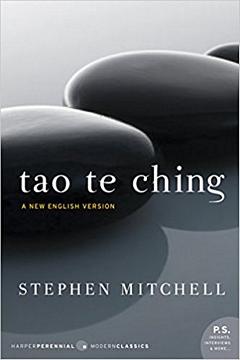
'Tao Te Ching' by Stephen Mitchell (ISBN 0061142662) While the normative meaning of the word ‘Tao’ is just “path” or “way,” the text’s dominant theme is the spirit or quality of mind one needs to cultivate.

Here’s a verse from Tao Te Ching that advocates the power of counterintuitive thinking:

A good soldier is never aggressive;
A good fighter is never angry.
 
The best way of conquering an enemy
Is to win him over by not antagonizing him.
 
The best way of employing a man
Is to serve under him.
 
This is called the virtue of non-striving!
This is called using the abilities of men!
This is called being wedded to Heaven as of old!

Wondering what to read next?

  1. To Know Is to Contradict: The Power of Nuanced Thinking
  2. Overcoming Personal Constraints is a Key to Success
  3. The Longest Holdout: The Shoichi Yokoi Fallacy
  4. What Isn’t Matters Too
  5. How to Solve a Problem By Standing It on Its Head

Filed Under: Mental Models, Sharpening Your Skills Tagged With: Attitudes, Creativity, Critical Thinking, Philosophy, Thought Process, Wisdom

This is Yoga for the Brain: Multidisciplinary Learning

August 11, 2017 By Nagesh Belludi 1 Comment

You need a broad-based understanding to succeed in today’s increasingly complex world.

Modern scientific and technological advances are increasingly born at the frontiers of more than one science disciplines.

It’s impossible to know everything. However, if you work to understand the basics of the biggest, most important paradigms in the fields of science, humanities, and social sciences, you can progressively expand your decision-making process.

A multidisciplinary methodology entails drawing suitably from multiple disciplines to examine problems outside of their normal boundaries and reach solutions based on an understanding of complex situations.

Multidisciplinarity Leads to Better Internalization of Knowledge

Multidisciplinarity allows you can transform a perspective in one discipline to expand your thought-frameworks in other disciplines. The renowned venture capitalist Paul Graham, author of the bestselling Hackers & Painters: Big Ideas from the Computer Age, said this best when he once wrote,

Studying things from unrelated subjects (multidisciplinary learning) is a lot like yoga for brain. You don’t actually get anywhere when you do yoga. You stand in one place and bend yourself in various shapes. But it makes you more flexible, so when you go out and do walk around, you can walk better.

“Cross-Training for the Mind” à la Charlie Munger

'Poor Charlie's Almanack' by Charlie Munger (ISBN 1578645018) The great investor Charlie Munger, Vice-Chairman of Berkshire Hathaway, is a big proponent of multidisciplinary thinking. This distinguished beacon of rationality and wisdom coined the term “latticework of mental models” to enable the “cross-training for the mind.” Rather than silo your mind just in the narrow areas you tend to concentrate on at college and work, Munger advocates developing a broad, functional set of interdisciplinary knowledge about the world, which can serve you in all parts of life. According to the anthology Poor Charlie’s Almanack, Munger said at a 1998 talk at the Harvard Law School,

If A is a narrow professional, B consists of the big, extra-useful concepts from other disciplines, then, clearly, the professional possessing A plus B will usually be better off than the poor possessor of A alone. How could it be otherwise? And thus, the only rational excuse for not acquiring B is that it is not practical to do so, given the man’s need to A and the other urgent demands in his life. I will later try to demonstrate that this excuse for unidisciplinarity, at least for our most gifted people, is usually unsound.

Many of the world’s leading companies in science and technology are employing multidisciplinary people for managerial positions. These people understand a range of science principles and methods and can synthesize the works of domain-specific experts to invent creative solutions to problems.

Idea for Impact: Pursue Multidisciplinary Thinking

People who think very broadly and comprehend many different models from many different disciplines make better decisions.

Pursue multidisciplinary thinking. Open your mind to new ideas and new experiences. Make new friends, travel afar, read more, and discover new stories.

Interact with people who work in different disciplines and dabble with the arts and the media. Let the new sights, sounds, smells, languages, tastes, sensations, stories, and perspectives spark your creativity.

Wondering what to read next?

  1. Howard Gardner’s Five Minds for the Future // Books in Brief
  2. Creativity by Imitation: How to Steal Others’ Ideas and Innovate
  3. Four Ideas for Business Improvement Ideas
  4. Wide Minds, Bright Ideas: Book Summary of ‘Range: Why Generalists Triumph’ by David Epstein
  5. How to Stimulate Group Creativity // Book Summary of Edward de Bono’s ‘Six Thinking Hats’

Filed Under: Career Development, Mental Models, Sharpening Your Skills Tagged With: Creativity, Critical Thinking, Decision-Making, Mental Models, Skills for Success, Thinking Tools, Thought Process, Winning on the Job

One of the Tests of Leadership is the Ability to Sniff out a Fire Quickly

July 18, 2017 By Nagesh Belludi Leave a Comment

I’ve previously stressed the importance of problem-finding as an intellectual skill. I’ve also highlighted why risk analysis and risk reduction should be one of the primary goals of any intellectual process. In this article, I’ll write about being proactive in identifying problems before they evolve into crises.

How Wells Fargo Failed to Recognize a Problem and Address it before it Became a Bigger Problem

As the Wells Fargo accounts scandal unfolded, it was clear that Wells Fargo’s leadership was well aware of the burgeoning problems early on, but failed to act decisively and nip the problem in the bud.

Given impossible sales quotas to reach, Wells Fargo’s “high pressure sales culture” opened as many as two million bank and credit card accounts on behalf of its customers without their consent. Employees were rebuked or even fired for not meeting aggressive cross-selling targets.

Human nature is such that high-pressure demands can deplete the willpower people need to act morally and resist temptations. And such demanding circumstances encourage people to go into defensive mode, engage in self-interested behaviors, and consider only short term benefits and dangers.

Leadership Lessons from the Wells Fargo Accounts Scandal: “A Stitch in Time Indeed Saves Nine”

Leadership Lessons from the Wells Fargo Accounts Scandal Wells Fargo’s leadership reportedly had data about ethical breaches, but they ignored or misjudged the impact of the problem. Wells Fargo even held a two-day ethics workshop in 2014 unequivocally telling their employees not to do that. As per an internal review, managers knew that 1% of employees had been fired for “sales integrity” violations.

Wells Fargo’s leadership didn’t act quickly and decisively to mitigate the effects of the crisis. Warren Buffett, one of the Wells Fargo’s biggest investors, summarized this leadership inaction at the 2017 Berkshire Hathaway annual meeting:

There were three very significant mistakes, but there was one that was worse than all the others … The main problem was that they didn’t act when they learned about it … at some point if there’s a major problem, the CEO will get wind of it. And at that moment, that’s the key to everything, because the CEO has to act. It was a huge, huge, huge error if they were getting, and I’m sure they were getting, some communications and they ignored them or they just sent them back down to somebody down below.

Leadership: “Only the Paranoid Survive”

Andy Grove (1936–2016,) the illustrious cofounder and CEO of Intel, was a famous worrier. At Intel, the focal point of Grove’s leadership style was worry and skepticism. He believed that business success contains the seeds of its own destruction, and that in order for an organization to have longevity, it needs to continue to worry about the future.

'Only the Paranoid Survive' by Andrew S. Grove (ISBN 0385483821) Grove’s principle was immortalized in his famous proclamation, “Success breeds complacency. Complacency breeds failure. Only the paranoid survive.” He eloquently explained his worrisome mantra in his bestselling corporate memoir, Only the Paranoid Survive (1996.) He wrote in the preface:

The things I tend to be paranoid about vary. I worry about products getting screwed up, and I worry about products getting introduced prematurely. I worry about factories not performing well, and I worry about having too many factories. I worry about hiring the right people, and I worry about morale slacking off. And, of course, I worry about competitors. I worry about other people figuring out how to do what we do better or cheaper, and displacing us with our customers.

At Intel, worrying about the future created a culture of triumph that propelled change and innovation. Grove never let Intel rest on its laurels and led the company to break boundaries in microprocessor innovation. During his tenure as CEO from 1987—98, Intel’s stock price rose 32% a year. Grove also said, “A corporation is a living organism; it has to continue to shed its skin. Methods have to change. Focus has to change. Values have to change. The sum total of those changes is transformation.”

Idea for Impact: Learn to Sniff out a Fire Better than Anyone Does

The principal tasks of leadership are (1) identifying the biggest risks and opportunities, and (2) allocating organizational resources. Therefore, one of the tests of leadership is the ability to recognize a problem before it becomes a disaster. If identified and addressed early, nearly any problem can be resolved in a way that is beneficial for everyone involved.

Many leaders tend to be reactionary—they claim, “why fix something that isn’t broken.” Even when they see an impending problem, they may assume that the problem “isn’t that big of a deal” and wish the problem will just go away. Alas, many problems never go away; they only get worse.

To become a good leader, be paranoid—always assume that “there’s no smoke without fire.” If, according to Murphy’s Law, everything that can go wrong will go wrong, the paranoid leader has an advantage.

Whenever you are doing anything, have your eyes on the possibility of potential problems and actively mitigate those risks. Never allow a problem to reach gigantic proportions because you can and must recognize and fix it in its early stages.

As the medieval French philosopher and logician Peter Abelard (1079–1142) wrote, “The beginning of wisdom is found in doubting; by doubting we come to the question, and by seeking we may come upon the truth.”

Wondering what to read next?

  1. A Sense of Urgency
  2. Charlie Munger’s Iron Prescription
  3. Systems-Thinking as a Trait for Career Success
  4. You Can’t Develop Solutions Unless You Realize You Got Problems: Problem Finding is an Undervalued Skill
  5. Four Ideas for Business Improvement Ideas

Filed Under: Leadership, Sharpening Your Skills Tagged With: Adversity, Attitudes, Conflict, Creativity, Critical Thinking, Great Manager, Human Resources, Mental Models, Performance Management, Persuasion, Thinking Tools, Thought Process, Winning on the Job

Enabling the Highest Degrees of Understanding // Book Summary of Howard Gardner’s ‘The Unschooled Mind’

June 27, 2017 By Nagesh Belludi Leave a Comment

Traditional Schooling Fails to Teach Kids to Ask the Right Questions

'The Unschooled Mind' by Howard Gardner (ISBN 0465024386) In The Unschooled Mind (1991,) Harvard developmental psychologist Howard Gardner makes a persuasive case for why even the brightest students often lack a deep understanding of what traditional schooling purports to teach them.

According to Gardner, students (in elementary schools to graduate colleges) may take exams and earn degrees, but their supposed knowledge turns out deficient in situations that are at variance from the “text-to-test” framework in which they learnt it. To some extent, this disconnect is an outcome of teachers’ settling for “correct-answer compromises” whereby students take the rote repetition of facts, formulas, concepts, and theories for a real understanding of fundamental concepts.

Robust Forms of Intuitive Knowledge

Overall, Gardner argues that children tend to acquire well-established models for perceptive learning and intuitive thinking by the time they are five years old. They develop wide-ranging beliefs about the physical world and distinctive models of events and people.

Subsequently, when children begin their schooling, they are launched into pedagogic methods that often sidestep—even interfere with—the children’s entrenched patterns of learning and understanding. That is to say, children have to put up with a disagreeable dichotomy between their intuitive learning patterns and the academic learning:

In its theoretical resourcefulness and intuitions, [a 5-year old’s mind] is powerful; in its artistic endeavors, it can be creative and imaginative; in its adventurousness, it is exemplary. … Education that takes seriously the ideas and intuitions of the young child is far more likely to achieve success than education that ignores these views, either considering them to be unimportant or assuming that they will disappear on their own.

Experiential Learning, Supplanted by Critical Analysis and Synthesis, Can Enhance Students’ Points of View

The Unschooled Mind contends that far-reaching knowledge and appreciation of education can occur only when students are allowed to integrate their “prescholastic” learning modes with the scholastic and the disciplinary ways of traditional school education. “The problem is less a difficulty in school learning per se and more a problem in integrating the notational and conceptual knowledge featured in school with the robust forms of intuitive knowledge that have evolved spontaneously during the opening years of life.”

Gardner’s solution to this problem is to situate students in educational environments that pique their curiosity about the subject matter and, at the higher levels of education, challenge their preexisting assumptions. Educating children for the utmost degrees of understanding involves designing educational systems that help students synthesize these several patterns of learning.

Real Education Opens the Way to Thinking, Knowing, and Deeper Understanding

For real learning to occur, Gardner argues, students must have an opportunity to realize their own ignorance, and then ask and explore their own questions. Teachers must regularly expose students to “Christopherian encounters”—compelling personal discoveries of the inconsistencies between their various frames of reference—by approaching any subject matter through at least five instructive channels:

  • through narratives and stories,
  • through logical and quantitative lines of attack,
  • through “foundational” or philosophical inquiries,
  • through aesthetic approaches (exploring the creative and artistic elements) and
  • through creating and drawing upon the students’ life-experiences.

Gardner claims that traditional schooling should incorporate more apprenticing—apprenticeship programs build most effectively on the ways children learn—and schools should become more like children’s museums.

Recommendation: Read The Unschooled Mind by Howard Gardner, especially if you have a child in school. The key takeaway: to enable the highest degrees of understanding, any skills instruction must be systematically reinforced by instruction in which the deployment of the skills makes holistic sense.

Wondering what to read next?

  1. What Isn’t Matters Too
  2. Reframe Your Thinking, Get Better Answers: What the Stoics Taught
  3. Stuck on a Problem? Shift Your Perspective!
  4. Disproven Hypotheses Are Useful Too
  5. How to Stimulate Group Creativity // Book Summary of Edward de Bono’s ‘Six Thinking Hats’

Filed Under: Leadership Reading, Sharpening Your Skills Tagged With: Creativity, Development, Learning, Philosophy, Thinking Tools, Thought Process, Training

Good Questions Encourage Creative Thinking

May 23, 2017 By Nagesh Belludi Leave a Comment


Thought-provoking questions: potential game changers that are not asked nearly enough

“To think creatively, we must be able to look afresh at what we normally take for granted,” wrote George F. Kneller (1909–1999), the American academic and pioneer in the field of philosophy of education, in Art and Science of Creativity (1965.) Many people don’t know how to probe their thought processes with questions that encourage creativity.

Consider a brainstorming meeting where a new idea was received with comments and judgments like, “this won’t work,” “we’ve never done it this way,” “the customer won’t like it,” or, “if this is such a great idea, why hasn’t it been done before?” Immediately, a dysfunctional pattern ensues. Defensiveness sets in and the meeting’s participants will resist making any more suggestions and will fail to explore those ideas that were previously made. (One of the key principles of “divergent thinking” for idea-generation is to defer judgment. Neuroscience has suggested that the human prefrontal cortex—the self-monitoring element of the brain—is less active when we’re most creative.)

Creative thinkers ask open-ended, accommodating, and exploratory lead-in questions such as,

  • “I wonder if/why/whether … “
  • “Perhaps we could … “
  • “That would work if/when … “
  • “In what ways can we … .” This favorite of mine was introduced by Edward de Bono, the lateral thinking pioneer and creator of the “Six Thinking Hats” method for group creativity. De Bono called this lead-in question the ‘IWW.’

Instead of declaring “we could never do this,” ask “IWW (in what ways) may people start to do this?” In practical terms, this rephrasing may seem a small thing, but it embodies a leap in unhindered, open-minded thinking. The former seems a categorical rejection; but the latter invites an exploration of possibilities and signals the beginning of the search for solutions to constraints.

Idea for Impact: The ability to pose meaningful—and often deceptively simple questions is the hallmark of creativity

Often, what leads a creative person to get fresh insight is the quality of questions he/she asks. Questions such as “I wonder if …” and “In what ways can we … ” ignite dialogues in your mind that can lead to creative insights and new discoveries.

The prospect for creative thinking expands when you can reframe restraining statements into creative questions. Consider the following examples:

  • Restraining statement: “We can’t possibly do that.”
    Creative question: “If it were possible, how would you do it?”
  • Restraining statement: “It’ll take too long.”
    Creative question: “If it’s time-consuming, how can I make it short?”
  • Restraining statement: “I can’t talk to her.”
    Creative question: “If you could talk to her, what would you say?”
  • Restraining statement: “I’m too busy to do this.”
    Creative question: “In what ways can we free up some time for you?”

During brainstorming, asking questions in a way that opens participants’ minds to newer possibilities can have a transformative shift in the creative atmosphere. When participants suspend their judgments, everyone in the brainstorming session will feel comfortable enough to explore creative solutions to constraints.

Wondering what to read next?

  1. Howard Gardner’s Five Minds for the Future // Books in Brief
  2. How to Stimulate Group Creativity // Book Summary of Edward de Bono’s ‘Six Thinking Hats’
  3. This is Yoga for the Brain: Multidisciplinary Learning
  4. Four Ideas for Business Improvement Ideas
  5. Creativity by Imitation: How to Steal Others’ Ideas and Innovate

Filed Under: Mental Models, Sharpening Your Skills Tagged With: Conversations, Creativity, Questioning, Skills for Success, Thinking Tools, Thought Process, Winning on the Job

« Previous Page
Next Page »

Primary Sidebar

Popular Now

Anxiety Assertiveness Attitudes Balance Biases Coaching Conflict Conversations Creativity Critical Thinking Decision-Making Discipline Emotions Entrepreneurs Ethics Etiquette Feedback Getting Along Getting Things Done Goals Great Manager Innovation Leadership Lessons Likeability Mental Models Mindfulness Motivation Parables Performance Management Personal Growth Persuasion Philosophy Problem Solving Procrastination Psychology Relationships Resilience Simple Living Social Skills Stress Thinking Tools Thought Process Time Management Winning on the Job Wisdom

About: Nagesh Belludi [hire] is a St. Petersburg, Florida-based freethinker, investor, and leadership coach. He specializes in helping executives and companies ensure that the overall quality of their decision-making benefits isn’t compromised by a lack of a big-picture understanding.

Get Updates

Signup for emails

Subscribe via RSS

Contact Nagesh Belludi

RECOMMENDED BOOK:
How Adam Smith Can Change Your Life

How Adam Smith Can Change Your Life: Russ Roberts

EconTalk podcast host Russ Roberts on how morality comes from imagining being judged by our fellow man. A rendition of Adam Smith's Theory of Moral Sentiments.

Explore

  • Announcements
  • Belief and Spirituality
  • Business Stories
  • Career Development
  • Effective Communication
  • Great Personalities
  • Health and Well-being
  • Ideas and Insights
  • Inspirational Quotations
  • Leadership
  • Leadership Reading
  • Leading Teams
  • Living the Good Life
  • Managing Business Functions
  • Managing People
  • MBA in a Nutshell
  • Mental Models
  • News Analysis
  • Personal Finance
  • Podcasts
  • Project Management
  • Proverbs & Maxims
  • Sharpening Your Skills
  • The Great Innovators

Recently,

  • How to Deal with … Interrupters
  • How to Deal with … Overtalkers
  • Stress You Can’t Name Is Stress You Can’t Manage
  • Inspirational Quotations #1176
  • The Leader and the Legend
  • The Commercialization of Yoga: Downward Dog, Upward Profit
  • Write Your Constitution, Then Cut What Doesn’t Fit

Unless otherwise stated in the individual document, the works above are © Nagesh Belludi under a Creative Commons BY-NC-ND license. You may quote, copy and share them freely, as long as you link back to RightAttitudes.com, don't make money with them, and don't modify the content. Enjoy!