• Skip to content
  • Skip to primary sidebar

Right Attitudes

Ideas for Impact

Search Results for: Amazon Principle

Book Summary of John Bogle’s ‘Little Book of Common Sense Investing’

January 25, 2011 By Nagesh Belludi Leave a Comment

The Little Book of Common Sense Investing, John Bogle “In investing, the winning strategy for reaping the rewards of capitalism depends on owning businesses, not trading stocks,” argues John Bogle in making a strong case for low-cost index funds in his text, “The Little Book of Common Sense Investing.” With statistics and graphs, Bogle rationalizes that low-cost index funds outperform most investment professionals and offer better-than-average returns for investors over the long term.

John Bogle is the legendary founder of the investor-owned Vanguard Group, currently the world’s largest mutual fund company by total assets under management. Over the course of 25 years at the helm of Vanguard, until his retirement in 1999, he focused the efforts of Vanguard on offering cost-conscious investment choices to the masses. John Bogle is the bestselling author of many other books on investment advice.

Superiority of Low-Cost Index Funds

John Bogle founded the world’s first index mutual fund, the Vanguard 500 Index Fund in 1975. Since then, “Saint Jack” (as critics labeled Bogle mockingly) has untiringly promoted the virtues of low-fee, no-load, low-turnover, passively-managed index (or more precisely, index-tracking) mutual funds. Investing in such funds, he contends in “The Little Book,” is the simplest and most effective way to invest in a diversified portfolio of stocks and bonds, and profit from earnings growth of businesses and the dividends they yield.

John Bogle methodically discusses every theme relevant to successful investing: the myths of speculation and market timing, inflation, frictional costs (fees charged by brokers and investment advisors, costs of transactions, front-end and back-end loads,) and the effects of compounding and taxes. He then convincingly counters arguments against investing in total market index funds through easy-to-follow quantitative appraisals of investing in individual stocks and bonds, actively managed funds, hedge funds, and sector-specific funds. At the end of each chapter, Bogle reinforces his position with words of wisdom from some of the greatest minds in economics and investing: Ben Graham, Warren Buffet, John Maynard Keynes, Peter Lynch, and the like.

Invaluable Insights for Investors

The majority of people do not have the time, energy, determination, or aptitude for understanding economics, examining investments, managing risk, and building wealth for themselves. They are either overly cautious, or they invest heedlessly, submit to market trends, or engage in speculation. In reading John Bogle’s authoritative book, modest investors will recognize that low-cost index funds offer them broad diversification, reasonably good returns over the long-term, and the ability to outperform a majority of investment professionals.

Informed investors will find, notwithstanding many drawn-out discussions, a great reiteration of John Bogle’s now-familiar, commonsensical ideas on the merits of index investing.

Leadership Reader’s Bottom-line

  • “The Little Book of Common Sense Investing: The Only Way to Guarantee Your Fair Share of Stock Market Returns,” by John C Bogle
  • Subject: Personal finance, investment advice
  • Required reading for building wealth prudently through investments. The excellent insights in “The Little Book” deserve every investor’s considerations.
  • Recommended topics for further reading: asset allocation, financial planning, and retirement planning.
  • 4 out of 5 Stars

Filed Under: Leadership Reading, Personal Finance Tagged With: Books for Impact, Getting Rich, Personal Finance, Simple Living

Book Summary of Maria Bartiromo’s ‘The 10 Laws of Enduring Success’

November 28, 2010 By Nagesh Belludi Leave a Comment

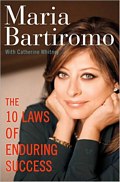
The 10 Laws of Enduring Success » Maria Bartiromo Success consists of recognizing opportunity, being optimistic, following our passions, keeping good relations, and making the best of circumstances that life presents us. The elements of accomplishment have been widely written about since the dawn of publishing. Each year, several authors attempt to repackage the familiar skills for success in new contexts. Such is the effort of CNBC anchor and journalist Maria Bartiromo (with Catherine Whitney) in “The 10 Laws of Enduring Success.” Maria presents the longstanding blueprint of success as ten attitudes: self-awareness, foresight, ingenuity, audacity, integrity, flexibility, modesty, fortitude, tenacity of purpose, and resilience.

“The 10 Laws of Enduring Success” falls short on one key characteristic. Advice on success can inspire only when the narrator connects his/her advice to personal anecdotes of hopes and despairs, achievements and disappointments, and meaningfully reflects on how certain attitudes contributed to his/her eventual success. Remember my recent article about commencement addresses by Steve Jobs, Bill Gates, and J K Rowling? These speakers are stimulating for the very reason that their timeless advices consist of thought-provoking personal contemplations.

“The 10 Laws of Enduring Success” is lacking in deep reflections of what contributed to the author’s success. As the host of one of the most popular shows in business TV, Maria Bartiromo has an extensive access to distinguished people. She does include insights from many successful people from the world of politics, business, sports, and entertainment. However, these narratives are typically short, often wander off the point, and do not necessarily connect to individual themes in a memorable way.

The conversational writing style is unassuming and quite engaging, and thus makes the book a quick read.

Leadership Reader’s Bottom-line

  • “The 10 Laws of Enduring Success” by Maria Bartiromo with Catherine Whitney
  • Subject: Skills for success
  • Suggested reading for fans of CNBC and the financial news media. Optional reading for others.
  • Read this book as a reiteration of the first principles of success. Be not amazed if this book does not prompt new thoughts.
  • 3 out of 5 Stars

Filed Under: Career Development, Leadership Reading, Sharpening Your Skills Tagged With: Books for Impact, Wisdom

Want to be more likeable? Improve your customer service? Adopt Sam Walton’s “Ten-Foot Rule”

January 7, 2010 By Nagesh Belludi 2 Comments


Walton Ten-Foot Rule

Sam Walton, Walmart’s iconic founder and perhaps the most successful entrepreneur of his generation, demonstrated considerable charisma, ambition, and drive from a very young age.

Sam was a committed student leader when he attended the University of Missouri, Columbia. One of the secrets to his reputation in college was that he would greet and speak to everybody he came across on campus. If he knew them, he was sure to address them by their name. In a short time, he had made many friends and was well-liked. Small wonder, then, that Sam triumphed in nearly all the student elections he entered.

From his bestselling autobiography, “Made in America”:

'Sam Walton: Made In America' by Sam Walton (ISBN 0553562835) I had decided I wanted to be president of the university student body. I learned early on that one of the secrets to campus leadership was the simplest thing of all: speak to people coming down the sidewalk before they speak to you. I did that in college. I did it when I carried my papers. I would always look ahead and speak to the person coming toward me. If I knew them, I would call them by name, but even if I didn’t I would still speak to them. Before long, I probably knew more students than anybody in the university, and they recognized me and considered me their friend. I ran for every office that came along. l was elected president of the senior men’s honor society, QEBH, an officer in my fraternity, and president of the senior class. I was captain and president of Scabbard and Blade, the elite military organization of ROTC.

When Walmart became sizeable enough, Sam realized that it could not offer prices lower than those of other retail giants—yet. As part of his customer service strategy, he institutionalized the very trait that had made him popular when he was a student. He insisted on the “Walton Ten-Foot Rule.” According to the rule, when Walmart associates (as Walmart calls its employees) came within ten feet of customers, they were to smile, make eye contact, greet the customer, and offer assistance. As Walmart grew, Sam added greeters who would greet customers at the door (and control “shrinkage” / shoplifting.) Even today, the Ten-Foot Rule is a part of the Walmart culture.

Likeability: A Predictor of Success

Likeability is an important predictor to success in life. Some people seem naturally endowed with appealing personalities. They tend to complement their talents by being personable and graceful, presenting themselves well, and by possessing the appropriate social skills for every occasion. They often win others over effortlessly. At school and in college, they are their teachers’ favorites and are chosen by their peers to represent their classes. They are invited to the right kind of parties and gatherings, and infuse them with life. At work, they are persuasive; they get noticed and quickly climb the corporate ladder.

From my observations of the traits of the talented and successful, I offer you a few reminders to help you become more personable, develop rapport, and thus maximize your chance of success:

  • Look people in their eyes. Smile. Greet them by their names.
  • Listen. Speak with a pleasant tone of voice and in a positive manner. Show respect. Indeed, even your adversaries have some admirable characteristics.
  • Show genuine interest in others. Try to build a rapport by sharing something about yourself with them.
  • Say “Please,” “Sorry,” and “Thank you.” Offer a kind word. Compliment them. Do not superficially flatter.
  • Consider the other’s perspectives and his/her circumstances before disagreeing.
  • Practice compassion. Make a sincere effort to help others.
  • Do not overdo any of the above. Try your best. Do not please others at the expense of your own sanity—stay true to your values, principles, and happiness.

Filed Under: Great Personalities, Sharpening Your Skills Tagged With: Body Language, Courtesy, Entrepreneurs, Etiquette, Likeability, Personality

« Previous Page

Primary Sidebar

Popular Now

Anxiety Assertiveness Attitudes Balance Biases Coaching Conflict Conversations Creativity Critical Thinking Decision-Making Discipline Emotions Entrepreneurs Etiquette Feedback Getting Along Getting Things Done Goals Great Manager Innovation Leadership Leadership Lessons Likeability Mental Models Mentoring Mindfulness Motivation Networking Parables Performance Management Persuasion Philosophy Problem Solving Procrastination Relationships Simple Living Social Skills Stress Suffering Thinking Tools Thought Process Time Management Winning on the Job Wisdom

About: Nagesh Belludi [hire] is a St. Petersburg, Florida-based freethinker, investor, and leadership coach. He specializes in helping executives and companies ensure that the overall quality of their decision-making benefits isn’t compromised by a lack of a big-picture understanding.

Get Updates

Signup for emails

Subscribe via RSS

Contact Nagesh Belludi

RECOMMENDED BOOK:
How Will You Measure Your Life

How Will You Measure Your Life: Clayton Christensen

Harvard business strategy professor Clayton Christensen's exceptional book of inspiration and wisdom for achieving a purpose-filled, fulfilling life.

Explore

  • Announcements
  • Belief and Spirituality
  • Business Stories
  • Career Development
  • Effective Communication
  • Great Personalities
  • Health and Well-being
  • Ideas and Insights
  • Inspirational Quotations
  • Leadership
  • Leadership Reading
  • Leading Teams
  • Living the Good Life
  • Managing Business Functions
  • Managing People
  • MBA in a Nutshell
  • Mental Models
  • News Analysis
  • Personal Finance
  • Podcasts
  • Project Management
  • Proverbs & Maxims
  • Sharpening Your Skills
  • The Great Innovators

Recently,

  • It’s Never About You
  • Inspirational Quotations #1132
  • What You’re Saying When You Say ‘Yes’
  • To-Do or Not To-Do?
  • Nice Ways to Say ‘No’
  • Inspirational Quotations #1131
  • Boundaries Define What You are—and What You’re Not

Unless otherwise stated in the individual document, the works above are © Nagesh Belludi under a Creative Commons BY-NC-ND license. You may quote, copy and share them freely, as long as you link back to RightAttitudes.com, don't make money with them, and don't modify the content. Enjoy!