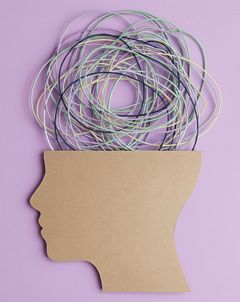
 The danger with misdirected potential is that it inevitably finds a home in the absurd—unearned bathos, misdirected obsession, even petty grandiosity.
Psychologist Marie-Louise von Franz, a close associate of Carl Jung, writes on the reality of wasted creative energy in Shadow and Evil in Fairy Tales (1974):
People who have a creative side and do not live it out are most disagreeable clients. They make a mountain out of a molehill, fuss about unnecessary things, are too passionately in love with somebody who is not worth so much attention, and so on. There is a kind of floating charge of energy in them which is not attached to its right object and therefore tends to apply exaggerated dynamism to the wrong situation.
Idea for Impact: Unspent creativity doesn’t stay idle—it mutates. If you don’t give it purpose, it will attach itself to nonsense and turn you into a zealot for the trivial.
.jpg "'Invention A Life' by James Dyson (ISBN 1982188421)")
 When stress builds, some people instinctively take a few minutes to clean. It’s more than a quick break—it’s a
  My friend Jack recently offered a retrospective on his decade-long dalliance with sneaker trends—a ride as unpredictable as it was swift. He began faithfully attached to New Balance, those once-maligned “dad shoes” that screamed suburban resignation. Then came Converse, adopted not for comfort but for credibility, as his children entered the age of judgment and he entered the age of trying not to embarrass them. Shortly thereafter, he flirted with On sneakers during a Lululemon-inspired phase that boldly declared, “I’m trendy, indeed!” Yet as fashion’s fickle currents swept him toward HOKA’s cloud-like comforts, Jack eventually circled back to a reinvented New Balance—now celebrated as a bona fide streetwear icon. Worn out by the relentless trend chase, he
  In
In  Ryanair’s CEO Michael O’Leary has long been one of my most admired businessmen. His achievements speak for themselves, but what has always impressed me even more is the consistency of his communication and the clarity of the philosophy that underpins everything he does.
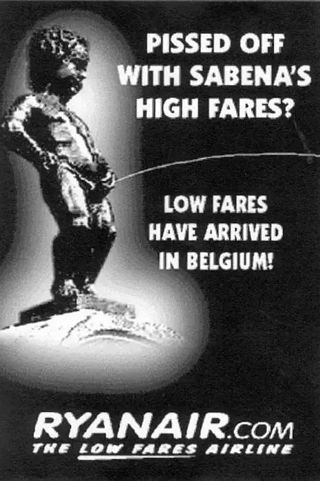 His flair for humorous controversy goes back years. During a 2001
  The AP Stylebook is not a book to be conquered, nor is The World Almanac and Book of Facts. They are tools, not tomes. They exist to be consulted, scanned, and revisited. Treating them like novels to be read from cover to cover is a category error.
.jpg "'Eternal Flame The Bangles' by Jennifer Otter Bickerdike (ISBN 0306833344)")