.jpg "'The Book of Human Emotions' by Tiffany Watt Smith (ISBN 0316265403)") Some books aren’t designed to be read front to back. Tiffany Watt Smith’s The Book of Human Emotions (2016) is a perfect example. It’s a compendium, a literary grab bag where readers can open to any page and uncover a curious nugget about the strange terrain of human feeling. Whether it launches a dinner-table debate or sends you into a cultural rabbit hole, its charm lies in its delightfully unsystematic approach.
Some books aren’t designed to be read front to back. Tiffany Watt Smith’s The Book of Human Emotions (2016) is a perfect example. It’s a compendium, a literary grab bag where readers can open to any page and uncover a curious nugget about the strange terrain of human feeling. Whether it launches a dinner-table debate or sends you into a cultural rabbit hole, its charm lies in its delightfully unsystematic approach.
Smith, a cultural historian focusing on the history of emotion, offers a colorful tour of the emotional spectrum. Some entries are instantly relatable; others are wonderfully obscure. The format is encyclopedic, ranging from single-sentence definitions to multi-page explorations. There’s basorexia, the sudden urge to kiss, and iktsuarpok, the anxious anticipation of someone’s arrival. Smith notes in the introduction that the modern idea of “emotions” didn’t appear until the 1830s. Before then, feelings were blamed on faulty souls or imbalanced bodily fluids like bile or phlegm.
The book is more than just a glossary; it’s threaded with sharp cultural insights—when a language has a specific word for a concept, it often indicates that this concept is culturally important, frequently discussed, or central to how people interact and understand their world. Smith touches on the aggressively enforced cheeriness of American customer service, a strange mandate for mandatory happiness that somehow leaves everyone slightly gloomier. She also highlights curiosities like awumbuk (from Papua New Guinea,) the oddly specific feeling of emptiness after guests leave, and the Dutch concept of gezelligheid, capturing the warmth of shared companionship.
Recommendation: Leaf through The Book of Human Emotions. Though the concept occasionally feels stretched, perhaps suggesting the author discovered that emotions alone might not justify an entire book, it remains engaging throughout. Smith writes with clarity and wit, avoiding the heaviness of academic prose. This is the kind of book that earns its place on the coffee table. It’s best enjoyed in fragments, one curious entry at a time, gently reminding us how language and culture shape what we feel and how we understand each other.
 There’s an old joke about the Soviet Union’s approach to industrial planning. It’s been told so often it’s
  We romanticize transformation—new routines, cleaner diets, sharper habits. But in practice, change rarely arrives in cinematic sweeps. It comes in quieter forms: a switch from soda to water, a walk around the block, skipping the evening snack. Small choices. Easily overlooked. In aggregate,
 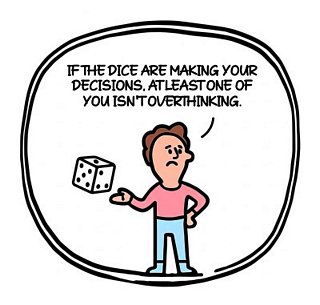 We make thousands of decisions daily—what to wear, which email to answer first, whether to take the scenic route or stick to the main road. Most are low-stakes, but the act of choosing can sap mental energy. That’s
  In the glossy canon of business magazine profiles and business school leadership panels, few rituals are as misleading as the executive career interview. A high-powered figure is asked for wisdom, and what follows is a polished origin myth framed as mentorship—a display of survivorship bias wrapped in aspirational prose. Biography
 .jpg "'Lean In' by Sheryl Sandberg (ISBN 0385349947)")
 If you’re a working professional with a family, your calendar probably feels
 McDonald’s has long leaned on
  You’re not stuck in busyness—you’re choosing it. That packed calendar, the blur of back-to-back tasks, the sense that your time isn’t your own? They’re symptoms of decisions made without reflection, not obligations
 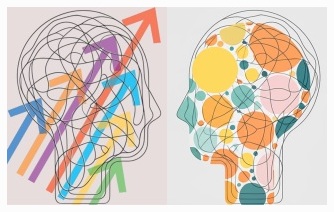 A thing can feel bad and be right.
 Organizations often face a moral dilemma when confronting high-performing individuals—those rainmakers whose charisma and drive yield tangible results (Jack Welch’s
 .jpg "'Betrayal Crisis Catholic Church' by Boston Globe (ISBN 0316776750)")