• Skip to content
  • Skip to primary sidebar

Right Attitudes

Ideas for Impact

Success

You Don’t Know If a Good Day is a Good Day

March 30, 2026 By Nagesh Belludi Leave a Comment

Effort Is the Measure: You Don't Know If a Good Day is a Good Day

You think you can judge a day by its immediate results. You cheer the win, grieve the loss, and call it settled. But life doesn’t close its books on your schedule.

A venture collapses after years of effort. A triumph curdles into a trap. A setback forces the pivot you didn’t have the nerve to make. Influence is narrower than you’d like: you can’t demand breakthroughs on Tuesday at 2:00 PM, and you can’t rush the maturity of complex work.

Tie your mood to these externals and you hand your peace of mind to chaos. The only variable under your command is effort. Kipling’s reminder in If— still stands: Triumph and Disaster are imposters. Triumph seduces you into arrogance; Disaster tricks you into despair. Treat them the same because neither defines you.

Success is often delayed recognition, flavored by luck. Failure is often the price of progress. The wise man measures his life not by victories or defeats, but by the steadiness of his effort.

Today’s setback may clear tomorrow’s path. Today’s victory may breed tomorrow’s complacency. Since you can’t see the end of the thread, the only rational move is to keep a steady hand, do the work, and let the results arrive when they’re ready.

Idea for Impact: The day isn’t the verdict.

Wondering what to read next?

  1. How to … Change Your Life When Nothing Seems to be Going Your Way
  2. External Blame is the Best Defense of the Insecure
  3. How Can You Contribute?
  4. Don’t Fight the Wave
  5. This May Be the Most Potent Cure for Melancholy

Filed Under: Health and Well-being, Living the Good Life, Mental Models, Sharpening Your Skills Tagged With: Adversity, Discipline, Emotions, Mindfulness, Productivity, Resilience, Success, Wisdom

The Setting Shapes the Story

March 25, 2026 By Nagesh Belludi Leave a Comment

A Mediocre Plan in the Right Context Beats a Brilliant Plan in the Wrong One A quote often attributed to Charlie Munger cuts straight to the point: “What boat you are in is far more important than how hard you row.”

This is about leverage—the overlooked variable. A mediocre plan in the right context beats a brilliant plan in the wrong one. Context is the multiplier.

Every environment carries a baseline rate of return on effort. High-performers don’t burn out from lack of skill. They burn out from applying serious effort to the wrong situation. A person of average ability in a high-growth field will likely outpace a genius in a dying one. An emotionally average person in a healthy relationship will flourish where a gifted communicator slowly corrodes in a toxic one.

The most important work isn’t execution. It’s selection.

Your environment doesn’t just surround you—it rewires you. A healthy system pulls average performers upward. A toxic one quietly degrades even the best.

Choose the boat carefully. Then row.

P.S. The quote originates in Warren Buffett’s 1985 Berkshire Hathaway Shareholder Letter, where he wrote that “energy devoted to changing vessels is likely to be more productive than energy devoted to patching leaks.” Munger preached the concept so relentlessly that the metaphor eventually took his name.

Wondering what to read next?

  1. The Only Cure for Imposter Syndrome Is Evidence
  2. You Don’t Know If a Good Day is a Good Day
  3. The Career-Altering Question: Generalist or Specialist?
  4. Your time is far from being wasted!
  5. This is Yoga for the Brain: Multidisciplinary Learning

Filed Under: Career Development, Leadership, Mental Models Tagged With: Career Planning, Efficiency, Productivity, Skills for Success, Success, Thinking Tools, Wisdom

Ridicule Is Often the Tax Levied on Originality: The Case of Ice King Frederic Tudor

March 23, 2026 By Nagesh Belludi Leave a Comment

'Ice King Frederic Tudor' by Carl Seaburg (ISBN 0939510804) I recently read Ice King: Frederic Tudor and His Circle (2003) by Carl Seaburg and Stanley Paterson. It tells the story of an important but largely forgotten chapter of American history—the birth of the commercial ice trade—tracing it from its laughed-at beginnings in Boston to a global industry that reshaped how the world ate, drank, and lived. The book is rich with personality, setback, and stubborn ambition, and it’s as much a character study as it is a business history.

The Slippery Speculation

In the winter of 1806, a young Boston merchant named Frederic Tudor walked out onto the frozen surface of Fresh Pond in Cambridge, watched laborers hack 80 tons of ice from the lake in great crystalline blocks, loaded them onto a ship called the Favorite, and set sail for Martinique.

Boston found this hilarious.

The city’s merchants—men who routinely speculated in coffee, mahogany, spices, and umbrellas—looked at Tudor and saw a fool. The Boston Gazette covered his departure with barely concealed mockery: “No joke. A vessel with a cargo of 80 tons of Ice has cleared out from this port for Martinique. We hope this will not prove to be a slippery speculation.”

Ice. To the tropics. On a wooden ship. In summer.

The math was simple, the conclusion obvious, and the skeptics entirely wrong about what that meant.

Tudor arrived in Martinique to find the ice had, miraculously, survived most of the journey. What hadn’t survived was the infrastructure to receive it. There was no ice house to store it. No local knowledge of how to use it. No customers who had ever seen a block of frozen water, let alone understood that they should want one. The ice melted in six weeks. Tudor lost $4,000—a serious sum—and sailed home to the sound of laughter he could probably hear from the dock.

He went back anyway.

The Contempt for Doubters

For the next 15 years, Tudor kept sailing. To Charleston. To Havana. To New Orleans. The obstacles were not occasional; they were relentless. He contracted yellow fever in the tropics and survived it. He suffered a mental breakdown and recovered. Employees stole from him. Government officials corrupted deals he had spent months building. The Jefferson embargo strangled his trade routes. The War of 1812 shuttered them entirely. The Panic of 1819 nearly finished him. And not once but twice, he was thrown into debtor’s prison—that particular humiliation reserved for men who owe more than they own and can no longer pretend otherwise.

Tudor endured all of it with a quality his contemporaries described, not entirely fondly, as implacable. He was defiant, imperious, and contemptuous of the men who doubted him. He did not explain himself. He did not seek reassurance. He simply continued.

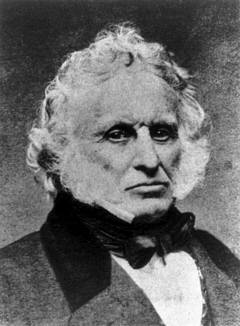
Frederic Tudor, the Ice King Who Invented the Global Ice Trade What kept him going was a conviction that looked, from the outside, like madness but was, in fact, a market insight of rare precision: there was no ice trade in the tropics because no one had ever built one. The absence of demand was not evidence that demand was impossible. It was evidence that no one had yet done the work of creating it.
So Tudor created it. He gave ice away, free, to bars and cafés, and kept supplying it until cold drinks became something people expected rather than wondered at. He taught locals to make ice cream, a product so novel and so immediately pleasurable that it sold itself. He demonstrated, patiently and repeatedly, that the thing his customers had never wanted was now the thing they couldn’t do without. He didn’t find a market. He built one from frozen water and sheer persistence.

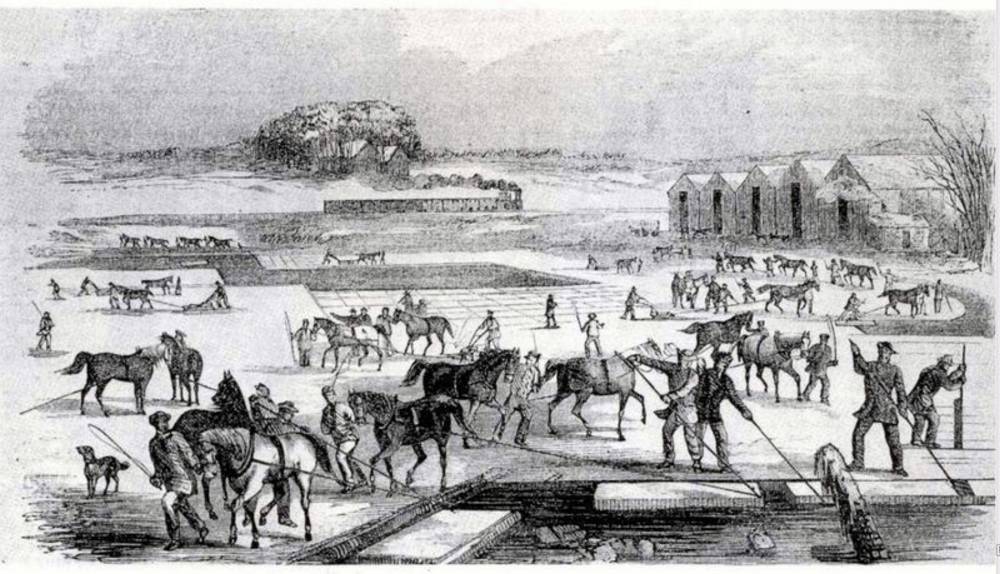
The logistics evolved through decades of failure and tinkering. Hay, tried first as insulation, proved unreliable; sawdust, sourced cheaply from New England’s abundant sawmills, worked far better. Tudor collaborated with the inventor Nathaniel Wyeth to develop horse-drawn ice cutters that replaced hand axes and multiplied the speed of the harvest. He designed and built specialized ice houses in Havana, Calcutta, and Charleston—structures engineered to hold temperature in climates that had never needed to hold temperature before.

Ice Harvesting in Massachusetts, early 1850s

Eccentricity Looks Like Innovation Only in Hindsight

By 1833, Tudor had become the dominant figure in the global ice trade. That year, he sent the ship Tuscany from Boston to Calcutta carrying 180 tons of ice. The journey crossed the equator twice and covered 16,000 miles. When the Tuscany arrived in port after four months at sea, the cargo was still largely intact. The British in India—who had spent years enduring the subcontinent’s heat with no means of relief—celebrated the delivery. They immediately raised funds to build a permanent, palatial ice house.

The man Boston had laughed at for nearly three decades was celebrated in Calcutta.

Tudor died in 1864, at 80, wealthy and decorated with the title that had followed him since his triumph: the Ice King. A bachelor for most of his working life, he had married after fifty and fathered six children. He owned a country estate in Nahant. The industry he had conjured from a frozen Cambridge pond would continue to sustain cities across America and beyond until mechanical refrigeration finally made it obsolete in the early twentieth century.

He was described by those who knew him as defiant, reckless in spirit, imperious, and implacable to enemies. Not a comfortable man. Not a man who needed your approval or asked for it.

That last part mattered more than any of the rest.

The Boston merchants who laughed at Tudor in 1806 were not stupid. They were rational. They looked at the evidence available—ice melts, the tropics are hot, customers there have never asked for frozen goods—and reached a perfectly reasonable conclusion. What they lacked wasn’t intelligence. It was the willingness to hold a conviction before the evidence had caught up to it. Tudor held his for twenty-seven years.

The line between eccentricity and genius is drawn only after success. Before success, they are indistinguishable. The visionary and the fool stand in the same room, making the same arguments, to the same skeptical audience. The difference between them is not talent or connections or luck. It is the refusal to leave the room.

Ridicule is the tax levied on originality. Tudor paid it, in full, for decades.

And then he collected.

Wondering what to read next?

  1. The Inopportune Case of the Airbus A340 Aircraft: When Tomorrow Left Yesterday Behind
  2. FedEx’s ZapMail: A Bold Bet on the Future That Changed Too Fast
  3. The Tyranny of Previous Success: How John Donahoe’s Tech Playbook Made Nike Uncool
  4. Starbucks’ Oily Brew: Lessons on Innovation Missing the Mark
  5. How FedEx and Fred Smith Made Information the Package

Filed Under: Business Stories, Great Personalities, Leadership, Sharpening Your Skills Tagged With: Decision-Making, Entrepreneurs, Icons, Innovation, Leadership Lessons, Motivation, Persistence, Starbucks, Strategy, Success

The Tyranny of Previous Success: How John Donahoe’s Tech Playbook Made Nike Uncool

March 16, 2026 By Nagesh Belludi Leave a Comment

The Tyranny of Previous Success: How John Donahoe's Tech Playbook Made Nike Uncool There’s an old adage that warns, if all you have is a hammer, everything looks like a nail. It’s meant as cautionary advice, but in the world of business, it’s more often a prophecy—executives convinced that their one winning strategy applies everywhere, blindly imposing their methods on industries with vastly different economic characteristics.

It’s the fatal overconfidence that led Ron Johnson to believe the sleek minimalism of Apple’s retail stores could translate seamlessly to J.C. Penney. In his seventeen-month tenure as CEO 2011–13, he eliminated discounts, ditched coupons, and tried to rebrand the department store into a collection of boutique-style mini-shops. The result was catastrophic. Sales plummeted as longtime bargain-hunting customers fled.

Expertise is valuable, but only when properly applied. Johnson’s misstep proved that misreading an audience is just as damaging as lacking experience altogether.

John Donahoe’s tenure at Nike unfolded in much the same way. After years in consulting and e-commerce—rising to CEO of Bain & Company in 1999, leading eBay 2008–15, and later running ServiceNow—his track record had its share of admirers and skeptics. Some credited him with steering companies toward digital transformation. Others argued his leadership at eBay had left the platform struggling against Amazon’s dominance. In 2014, he joined Nike’s board, gaining insider exposure before stepping in as president and CEO in January 2020. But being inside the walls isn’t the same as understanding the foundation, and his decisions soon reflected a tech executive’s mindset imposed on a company built on sport, culture, and product innovation.

How Silicon Valley Strategy Derailed Nike: Why John Donahoe's Tech Mindset Failed Donahoe tried to run a high-performance culture company as if it were a standardized tech firm. His defining move was an aggressive pivot to direct-to-consumer sales, an approach that worked during the pandemic but quickly backfired. By prioritizing Nike’s digital platforms, he neglected key wholesale partners like Foot Locker, leaving retail gaps that competitors were eager to fill. At the same time, Nike’s traditional strength in innovative footwear appeared stagnant as rivals such as Hoka and On surged in popularity. Instead of reinvesting in its product lineup, Nike poured resources into NFTs and metaverse ventures. Apparently, nothing says athletic excellence quite like pixelated sneakers floating in cyberspace.

By October 2024, the writing was on the wall. Investors decided a course correction was needed, and Donahoe was forced out, replaced by longtime Nike executive Elliott Hill. The shift back to an internal leader signaled a belief that Nike’s success required deep cultural understanding, not just a digital strategy. And given Donahoe’s five-year tenure as a board member before stepping in as CEO, it’s reasonable to ask whether protecting the company’s identity was ever on his to-do list. He failed not because he lacked intelligence, but because he misread the game entirely. Nike’s new CEO is currently attempting to undo the changes Donahoe wrought.

Idea for Impact: Strategy isn’t one-size-fits-all. Real leadership is about adaptation—recognizing that each challenge demands a tailored approach, not a recycled solution. Success comes from understanding context, adjusting tactics, and shaping strategies to fit the problem rather than forcing problems to conform to a familiar framework.

Wondering what to read next?

  1. Lessons from Peter Drucker: Quit What You Suck At
  2. Ridicule Is Often the Tax Levied on Originality: The Case of Ice King Frederic Tudor
  3. The Inopportune Case of the Airbus A340 Aircraft: When Tomorrow Left Yesterday Behind
  4. The Loss Aversion Mental Model: A Case Study on Why People Think Spirit is a Horrible Airline
  5. Book Summary of Nicholas Carlson’s ‘Marissa Mayer and the Fight to Save Yahoo!’

Filed Under: Business Stories, Leadership, Managing Business Functions, Mental Models Tagged With: Biases, Change Management, Decision-Making, Innovation, Leadership Lessons, Management, Strategy, Success, Transitions

The Champion Who Hated His Craft: Andre Agassi’s Raw Confession in ‘Open’

August 27, 2025 By Nagesh Belludi Leave a Comment

'Open An Autobiography' by Andre Agassi (ISBN 0307388409) When you first dive into Andre Agassi’s outstanding memoir, Open: An Autobiography (2010,) you’re hit with a shocking revelation right on the first page: “I play tennis for a living, even though I hate tennis, hate it with a dark and secret passion, and always have.”

This bewildering confession comes from one of the greatest tennis players of all time, a man who has racked up numerous accolades, including eight Grand Slam titles. The persona of a dedicated tennis champion pursuing his dreams turns out to be a facade.

Behind the Glory: Playing Through Pain

Agassi’s candid reflections highlight the internal conflicts and emotional challenges that often accompany the pursuit of success. His experience was overwhelming; he never truly had a choice in playing tennis, as his father forced him into it at a young age. What followed felt like a glorified prison camp, where the only way out was to succeed—something he did spectacularly, landing him on the world stage. Yet, by the time Agassi came to this realization, he felt trapped, believing there was nothing else he could pursue.

In Open, Agassi relives the feelings of powerlessness that fueled his detest for the very sport that had given him so much. When a job becomes all-consuming, it’s easy to develop a loathing for it. Being the best means everything revolves around performance, and the pressure to stay at the top is relentless. Failure is unacceptable, and the burden of tennis looms over every decision. Burnout becomes inevitable.

The Reluctant Legend - Andre Agassi Had a Complex Relationship with Tennis Agassi casts himself as a victim of his circumstances, expressing a weariness with the grind—a sentiment many can relate to. While few may hate their jobs as intensely as Agassi did, many struggle with the meaning of their work, questioning its eternal significance and fearing they are merely wasting time.

The Dark Side of Success

For years, Agassi believed real life was just around the corner, delayed by obstacles, unfinished business, and unsettled debts. Eventually, he realized those very obstacles were his life. Life isn’t something that happens to you; it’s something you shape with your choices and actions. You are the director of your own existence. Emotions like anger, jealousy, and fear aren’t just reactions, they’re nurtured. As long as you view yourself as a victim, success will remain out of reach.

Ultimately, there’s no point in toiling through the grind if you don’t enjoy the journey. Embrace the call that stirs your soul. In retirement, Agassi discovered new passions, particularly in education reform. He founded the Andre Agassi Foundation for Education, dedicated to improving opportunities for at-risk children. In his personal life, he met and married German tennis star Steffi Graf, who provided unwavering support, helping him navigate his post-tennis identity. Together, they embraced new ventures, illustrating Agassi’s resilience and his ability to make meaningful contributions beyond the tennis court.

Wondering what to read next?

  1. Great Jobs are Overwhelming, and Not Everybody Wants Them
  2. The Truth About Work-Life Balance
  3. Why You Can’t Relax on Your Next Vacation
  4. What Your Exhaustion May Be Telling You
  5. Hustle Culture is Losing Its Shine

Filed Under: Health and Well-being, Living the Good Life Tagged With: Assertiveness, Balance, Career Planning, Conflict, Legacy, Life Plan, Meaning, Mindfulness, Pursuits, Simple Living, Stress, Success, Work-Life

10 Things That Are Holding You Back

April 14, 2025 By Nagesh Belludi Leave a Comment

Conquer the Mental and Habitual Barriers Keeping You Stuck The biggest obstacles in your way aren’t out there; they’re in your head—and in your habits. Drop them, or they’ll drag you.

  1. The Need to Be Right. Your ego is holding you back. Let go of the need to prove yourself and embrace learning from others.
  2. Control. Trying to control everything keeps you stuck. Surrender and trust the process.
  3. Blame—it’s a trap. Own your choices, and free yourself to move forward.
  4. Self-Doubt. Negative self-talk limits your potential. Silence doubt and empower yourself to grow.
  5. Impressing Others. Seeking approval is draining. Live authentically, not for others’ validation.
  6. Excuses. They block progress. Take responsibility and make things happen.
  7. Living for Others’ Expectations. You’re not living someone else’s life. Pursue your dreams, not theirs.
  8. Perfection. Chasing perfection slows you down. Embrace progress, not flawless outcomes.
  9. The Past. The past is history. Focus on the present and shape your future.
  10. Fear of Failure. Fear keeps you stuck. See failure as growth and move forward with confidence.

Wondering what to read next?

  1. Decisions, Decisions: Are You a Maximizing Maniac or a Satisficing Superstar?
  2. What Are You So Afraid Of? // Summary of Susan Jeffers’s ‘Feel the Fear and Do It Anyway’
  3. Resilience Through Rejection
  4. Fear of Failure is an Obstacle to Growth
  5. The Simple Life, The Good Life // Book Summary of Greg McKeown’s ‘Essentialism’

Filed Under: Mental Models, Sharpening Your Skills Tagged With: Balance, Decision-Making, Discipline, Fear, Introspection, Mindfulness, Personal Growth, Psychology, Success, Therapy

Beyond Money’s Grasp: A Deeper Drive to Success

January 13, 2025 By Nagesh Belludi Leave a Comment

Beyond Money's Grasp: A Deeper Drive to Success

Successful individuals often find themselves driven to excel long after the allure of material rewards has waned. In the early stages of a career, financial concerns often take center stage. Young professionals are preoccupied with using disposable income to repay student loans, cover daily expenses, engage in some indulgent spending, and lay the foundation for financial stability. As their careers progress, however, there’s a noticeable shift in the importance of money. This transformation varies among individuals, but nearly everyone reaches a point where the stress of bills and even luxury desires diminishes, only to be supplanted by a need for what sociologists call psychic income.

For the ultra-successful, wealth accrues at a pace that outpaces practical spending. Their life becomes abundant, yet paradoxically, time feels limited. They have the means to pursue their passions but lack the time to do so. What truly captivates these successful people are factors that transcend monetary gain. Inspiration is fueled by ego, a sense of passion, and personal fulfillment—it thrives on the stimulation of challenges and the sheer joy of the journey. Success is rooted in a sense of mastery, achievement, and making a meaningful impact.

For those still on the path to success, a valuable lesson emerges: what many successful people value about their careers when they’re already successful mirrors the same qualities they sought throughout their professional journey. When climbing the corporate ladder, they didn’t gravitate toward safe, high-paying positions. Instead, they pursued challenging opportunities, and these ventures proved to be profoundly rewarding.

Idea for Impact: Success is a complex and personal concept, shaped by a blend of factors that align with one’s values and aspirations. Once you’re no longer a slave to the coin’s cruel reign, you’ll discover the true wellsprings of inspiration—an invitation to a richer and more purpose-driven existence.

Wondering what to read next?

  1. Transient by Choice: Why Gen Z Is Renting More
  2. The Champion Who Hated His Craft: Andre Agassi’s Raw Confession in ‘Open’
  3. The Extra Salary You Can Negotiate Ain’t Gonna Make You Happy
  4. Book Summary of Bill Perkins’s Die With Zero
  5. The Easy Tracking Spreadsheet That Can Transform Your Money Habits

Filed Under: Career Development, Living the Good Life, Personal Finance Tagged With: Balance, Career Planning, Getting Rich, Happiness, Money, Pursuits, Success, Winning on the Job, Work-Life

Get Started, Passion Comes Later: A Case Study of Chipotle’s Founder, Steve Ells

September 2, 2024 By Nagesh Belludi Leave a Comment

Get Started, Passion Comes Later The notion of directly pursuing your passion can seem daunting, particularly if you’re uncertain about identifying your true calling or how it could translate into a feasible career path. The tale of Chipotle and its founder Steve Ells serves as a fitting illustration of this dilemma.

After graduating from arts college, Ells headed to the Culinary Institute of America, where he fell in love with cooking. Initially, he dreamed of opening a fancy restaurant, but the funds weren’t there.

During the early 1990s, Ells embarked on a culinary journey, starting as a sous chef under renowned chef Jeremiah Towers at San Francisco’s upscale Stars restaurant. It was during this time that the idea for Chipotle began to take shape. Inspired by the delectable “mission-style” burritos he savored in San Francisco’s Mission District taquerias, Ells seized the opportunity. With an $85,000 loan from his father, he ventured to establish the inaugural Chipotle eatery in 1993, nestled in Denver, Colorado.

Ells’s father, crunching the numbers, estimated that his son would need to sell 107 burritos daily to break even. However, the response exceeded expectations. Within the inaugural month, Chipotle was churning out 1,000 burritos a day. This swift success unveiled Ells’s true calling. He realized his passion lay not in haute cuisine but in the realm of delivering delectable, freshly-prepared Mexican fare swiftly. Chipotle garnered a devoted following for its scrumptious offerings, rapid service, and unwavering commitment to sustainable sourcing.

Idea for Impact: Starting with an exploratory approach is often wiser than waiting for the perfect alignment with your passion. Dabble in different areas, adapt your goals over time, and stay open to new opportunities. Sometimes, passion emerges along the journey, leading to unexpected yet fulfilling paths.

Wondering what to read next?

  1. Risk More, Risk Earlier
  2. The Myth of Passion
  3. From Passion to Pragmatism: An Acceptable, Good Career
  4. Beyond Money’s Grasp: A Deeper Drive to Success
  5. “Follow Your Passion” Is Terrible Career Advice

Filed Under: Career Development, Great Personalities, Sharpening Your Skills, The Great Innovators Tagged With: Career Planning, Entrepreneurs, Personal Growth, Pursuits, Success, Winning on the Job

How to Feel More Beautiful

December 11, 2023 By Nagesh Belludi Leave a Comment

Some people base too much of their self-esteem on how they look. They’ll go to great lengths to preserve how good they think they look.

But props aren’t the real beauty. Props are just accessories.

Beauty should be more than meeting some subjective, media-defined, Kardashians- prototyped notion of what’s attractive. Ultimately, the verb “make up” suggests compensating for something missing or deficient.

Arguably beauty is admittedly a worthy aspiration. There is no virtue at all in eschewing good looks or those perceived to have them. Indeed, western philosophy usually considers beauty among the absolute human values—along with goodness, gentleness, self-control, truth, and justice.

However, you shouldn’t just don’t let attitudes about looks and sexual desirability overtake all other features of your self-esteem.

Feeling your very best—your most beautiful—doesn’t necessarily have to do with the way you look. Beauty is about finding what makes you happy, comfortable, and confident: wearing a specific set of clothes, going for a run, spending time with people you love, getting a good night’s sleep, and walking through warm sand—all these can make you feel good about yourself. They can give you a slight glow that shows.

Idea for Impact: Beauty is the highest expression of our physical selves. Let your beauty radiate from the inside out.

Base your self-esteem upon your inner, not outer, qualities. Define yourself in ways other than how you look. Zero in on what’s good about your abilities, skills, empathy, cheerfulness, personality, relationships, and perspective on the world. Even small shifts in your outlook can improve your overall self-esteem.

What does it take for you to become a more attractive version of yourself? Figure it out, and try to get more of it (whatever it is!) into your life.

No point in being pretty on the outside when you’re ugly on the inside.

Wondering what to read next?

  1. It’s Probably Not as Bad as You Think
  2. A Bit of Insecurity Can Help You Be Your Best Self
  3. How to … Change Your Life When Nothing Seems to be Going Your Way
  4. You Can’t Know Everything
  5. Smart Folks are Most Susceptible to Overanalyzing and Overthinking

Filed Under: Sharpening Your Skills Tagged With: Attitudes, Confidence, Perfectionism, Resilience, Success, Wisdom

External Blame is the Best Defense of the Insecure

July 31, 2023 By Nagesh Belludi Leave a Comment

In the realm of excuses, accountability tends to retreat while blame takes center stage. You find yourself playing the “blame game,” swiftly shifting responsibility onto external factors to protect your ego.

When faced with challenges, it’s natural to become defensive and deflect responsibility onto your boss, a vendor, the weather, working conditions, a partner, economic downturns, or anything but yourself. However, this negative energy worsens the situation and weakens your self-perception.

Beneath the surface, though, lies a truth: externalizing blame always hinders real growth and progress. So, the next time you catch yourself falling into the trap of feeling like a prisoner of circumstances, making excuses, or pointing fingers at others, take a moment to pause and ask yourself, “What could I have done to prevent this problem?” and “What lessons can we derive from this situation?”

Idea for Impact: Assuming responsibility is a testament to your strength. It displays courage, even if it may not feel that way. Only the resilient can truly accept blame. When we externalize blame, we give up control and surrender our power to heal and improve ourselves. On the other hand, embracing accountability has numerous benefits: it strengthens relationships, enhances credibility, fosters happiness within yourself and others, promotes transparency, boosts self-esteem, facilitates learning, and ultimately helps resolve problems. Choose accountability over blame and pave the way for personal growth and success.

Wondering what to read next?

  1. You Don’t Know If a Good Day is a Good Day
  2. Cope with Anxiety and Stop Obsessive Worrying by Creating a Worry Box
  3. Don’t Fight the Wave
  4. Expressive Writing Can Help You Heal
  5. This May Be the Most Potent Cure for Melancholy

Filed Under: Living the Good Life, Sharpening Your Skills Tagged With: Adversity, Anger, Emotions, Mindfulness, Resilience, Success, Wisdom

Next Page »

Primary Sidebar

Popular Now

Anxiety Assertiveness Attitudes Balance Biases Coaching Conflict Conversations Creativity Critical Thinking Decision-Making Discipline Emotions Entrepreneurs Etiquette Feedback Getting Along Getting Things Done Goals Great Manager Innovation Leadership Leadership Lessons Likeability Mental Models Mindfulness Motivation Networking Parables Performance Management Persuasion Philosophy Problem Solving Procrastination Psychology Relationships Simple Living Social Skills Stress Suffering Thinking Tools Thought Process Time Management Winning on the Job Wisdom

About: Nagesh Belludi [hire] is a St. Petersburg, Florida-based freethinker, investor, and leadership coach. He specializes in helping executives and companies ensure that the overall quality of their decision-making benefits isn’t compromised by a lack of a big-picture understanding.

Get Updates

Signup for emails

Subscribe via RSS

Contact Nagesh Belludi

RECOMMENDED BOOK:
The Guide

The Guide: R. K. Narayan

R.K. Narayan's story of the transformation of Raju is a profound, yet dryly humorous assessment of the frailty of the human condition and the meaning and consequences of our actions

Explore

  • Announcements
  • Belief and Spirituality
  • Business Stories
  • Career Development
  • Effective Communication
  • Great Personalities
  • Health and Well-being
  • Ideas and Insights
  • Inspirational Quotations
  • Leadership
  • Leadership Reading
  • Leading Teams
  • Living the Good Life
  • Managing Business Functions
  • Managing People
  • MBA in a Nutshell
  • Mental Models
  • News Analysis
  • Personal Finance
  • Podcasts
  • Project Management
  • Proverbs & Maxims
  • Sharpening Your Skills
  • The Great Innovators

Recently,

  • Inspirational Quotations #1149
  • Sadness Isn’t a Diagnosis
  • Optionality is the Ultimate Hack
  • Life Isn’t Fair, Nor Does It Pretend To Be: What ‘Tokyo Story’ Teaches Us About Disappointment
  • Inspirational Quotations #1148
  • The Only Cure for Imposter Syndrome Is Evidence
  • The Inopportune Case of the Airbus A340 Aircraft: When Tomorrow Left Yesterday Behind

Unless otherwise stated in the individual document, the works above are © Nagesh Belludi under a Creative Commons BY-NC-ND license. You may quote, copy and share them freely, as long as you link back to RightAttitudes.com, don't make money with them, and don't modify the content. Enjoy!