• Skip to content
  • Skip to primary sidebar

Right Attitudes

Ideas for Impact

Starbucks

The Inopportune Case of the Airbus A340 Aircraft: When Tomorrow Left Yesterday Behind

April 1, 2026 By Nagesh Belludi Leave a Comment

Airbus A340 Aircraft: A Casualty of Shifting Aviation Economics

If ever there were a textbook example of the risks of launching an ambitious project years, even decades, before knowing whether the world would still want it, the Airbus A340 aircraft is it. It stands as a true victim of the shifting economic tides between its conception and market launch.

Conceived in an era when four engines were synonymous with reliability, airlines operated with seemingly vast budgets, and regulators remained deeply skeptical of twinjets crossing oceans, this long-haul aircraft entered service as a relic before it had a chance to prove otherwise.

Airbus’s vision for the A340 took shape in the mid-1970s, a time when aviation adhered to traditional doctrines with near-religious fervor. Twin-engine reliability remained under suspicion, and Extended-range Twin-engine Operational Performance Standards (ETOPS), the still-in-blueprint regulatory framework dictating how far twin-engine aircraft could stray from emergency landing sites, severely restricted their range. Fuel efficiency was more of a luxury than a necessity, and airlines wielded significantly more pricing power than they do today. Determined to avoid twinjet constraints, Airbus forged ahead with a four-engine design, ensuring unrestricted intercontinental routes while sidestepping ETOPS limitations entirely.

The A340 is a Monument to Misjudged Ambition

To Airbus’s credit, its risk managers were not naive. Their hedge was simple yet shrewd: develop the A340 alongside a twin-engine counterpart, the A330. Faced with uncertainty about the aviation industry’s future trajectory, they created two aircraft with nearly identical airframes but distinct operational roles, one tailored for long-haul missions, the other optimized for medium-haul efficiency. The A340, with its four engines, would conquer the world’s longest routes unburdened by ETOPS restrictions, while the A330, with just two, would handle shorter yet commercially vital segments. Both aircraft shared a high degree of design commonality, including identical wings, and were assembled in the same factories using the same production lines. This strategy streamlined manufacturing and maintenance while granting airlines unprecedented flexibility in fleet planning. If the A340 struggled, the A330 could still succeed, and succeed it did.

By the early 1990s, as the A340 finally entered commercial service, the world had already moved on. Advances in engine technology had erased old concerns about twin-engine reliability, transforming twinjets from a calculated gamble into an industry inevitability. Airlines, newly fixated on cost-cutting, saw no reason to pay for four engines when two could offer equal dependability at a dramatically lower operating cost.

The A340’s fundamental flaw was that it entered service already obsolete. The market had already evolved past the need for it. Boeing’s 777 and Airbus’s own A330 delivered nearly identical capabilities at significantly lower costs. When Singapore Airlines, widely regarded as one of the industry’s most influential fleet strategists, abruptly retired its new A340-300s in favor of the Boeing 777, the message was unmistakable. The rest of the industry quickly reassessed its commitments to the quadjet.

Was the Airbus A340 a Failure, or the A330's Foundation for Success?

The Market Did Not Kill the A340—It Simply Outgrew It

Boeing’s final, decisive blow came with the 777-300ER. Offering the same long-haul capabilities but with vastly superior efficiency, this twinjet eliminated any lingering doubts about the necessity of four engines. Airbus scrambled to salvage its position, launching stretched A340-500 and A340-600 variants, but the damage was irreversible.

Adding insult to financial injury, the 777-300ER featured a standard 3-3-3 economy-class seating layout, immediately making more efficient use of cabin space compared to the A340’s (and A330’s) more passenger-friendly 2-4-2 configuration. Airbus had long promoted the comfort of its twin-aisle layout, fewer middle seats and better aisle access, but the industry had already shifted decisively toward revenue optimization. Boeing’s twinjet could seat more passengers per row, and as airlines grew more aggressive with capacity planning, the denser 3-4-3 configuration became the new standard on the 777, maximizing profitability per flight.

Faced with the harsh reality of economics steamrolling passenger comfort, airlines defected en masse. Boeing had delivered not just a fuel-efficient aircraft, but one that redefined how airlines extracted profit from every available square foot of cabin space.

The A340 Was Designed for an Era That Had Already Slipped Away

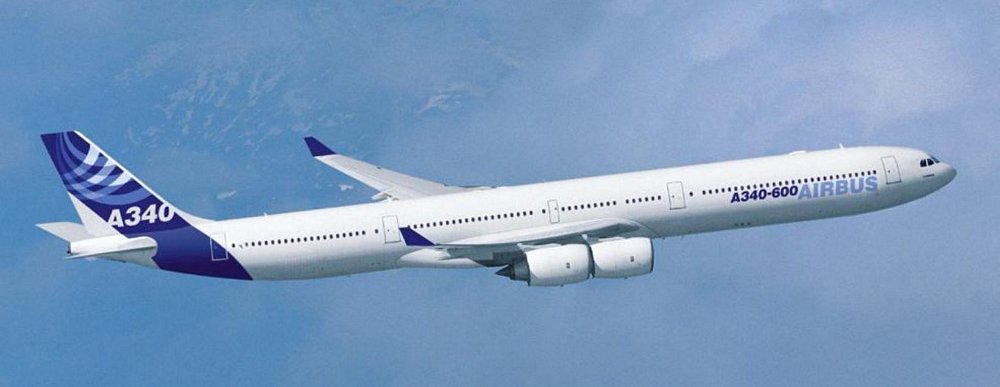
The Inopportune Case of the Airbus A340 Aircraft: When Tomorrow Left Yesterday Behind Despite the 777-300ER’s dominance in high-capacity, ultra-long-range operations, the Airbus A330 carved out its own space in the market. Continuous design improvements somewhat enhanced its operational flexibility, cost efficiency, and versatility, allowing it to thrive as a preferred choice for airlines needing reliable performance across a broad range of routes. Over time, its long-haul capabilities increasingly aligned with the missions originally envisioned for the A340, solidifying its role as an indispensable aircraft for medium- and long-haul operations.

In the end, the A340’s demise was not the result of incompetence, but of irrelevance. It was neither a failure nor an error in the traditional sense. It was comfortable, reliable, and capable. But it was designed for an era that had already begun to slip away and released into a market that had ruthlessly reshaped its priorities. In an industry where decades of forecasting can make or break billion-dollar programs, misjudging future trends is not just an inconvenience. It is a slow-motion catastrophe.

The A340 fell victim not to its own deficiencies, but to the relentless march of progress. In other words, the A340 did not fail because it was bad. It failed because everything else got better.

That is a cautionary tale, not of human folly, but of time’s merciless indifference, dismantling even the best-laid schemes with a quiet, unceremonious shrug.

Wondering what to read next?

  1. Five Where Only One is Needed: How Airbus Avoids Single Points of Failure
  2. Starbucks’ Oily Brew: Lessons on Innovation Missing the Mark
  3. Ridicule Is Often the Tax Levied on Originality: The Case of Ice King Frederic Tudor
  4. The Loss Aversion Mental Model: A Case Study on Why People Think Spirit is a Horrible Airline
  5. Gut Instinct as Compressed Reason—Why Disney Walked Away from Twitter in 2016

Filed Under: Business Stories, Managing Business Functions, Mental Models Tagged With: Aviation, Critical Thinking, Decision-Making, Efficiency, Entrepreneurs, Innovation, Leadership Lessons, Problem Solving, Risk, Starbucks, Strategy

Ridicule Is Often the Tax Levied on Originality: The Case of Ice King Frederic Tudor

March 23, 2026 By Nagesh Belludi Leave a Comment

'Ice King Frederic Tudor' by Carl Seaburg (ISBN 0939510804) I recently read Ice King: Frederic Tudor and His Circle (2003) by Carl Seaburg and Stanley Paterson. It tells the story of an important but largely forgotten chapter of American history—the birth of the commercial ice trade—tracing it from its laughed-at beginnings in Boston to a global industry that reshaped how the world ate, drank, and lived. The book is rich with personality, setback, and stubborn ambition, and it’s as much a character study as it is a business history.

The Slippery Speculation

In the winter of 1806, a young Boston merchant named Frederic Tudor walked out onto the frozen surface of Fresh Pond in Cambridge, watched laborers hack 80 tons of ice from the lake in great crystalline blocks, loaded them onto a ship called the Favorite, and set sail for Martinique.

Boston found this hilarious.

The city’s merchants—men who routinely speculated in coffee, mahogany, spices, and umbrellas—looked at Tudor and saw a fool. The Boston Gazette covered his departure with barely concealed mockery: “No joke. A vessel with a cargo of 80 tons of Ice has cleared out from this port for Martinique. We hope this will not prove to be a slippery speculation.”

Ice. To the tropics. On a wooden ship. In summer.

The math was simple, the conclusion obvious, and the skeptics entirely wrong about what that meant.

Tudor arrived in Martinique to find the ice had, miraculously, survived most of the journey. What hadn’t survived was the infrastructure to receive it. There was no ice house to store it. No local knowledge of how to use it. No customers who had ever seen a block of frozen water, let alone understood that they should want one. The ice melted in six weeks. Tudor lost $4,000—a serious sum—and sailed home to the sound of laughter he could probably hear from the dock.

He went back anyway.

The Contempt for Doubters

For the next 15 years, Tudor kept sailing. To Charleston. To Havana. To New Orleans. The obstacles were not occasional; they were relentless. He contracted yellow fever in the tropics and survived it. He suffered a mental breakdown and recovered. Employees stole from him. Government officials corrupted deals he had spent months building. The Jefferson embargo strangled his trade routes. The War of 1812 shuttered them entirely. The Panic of 1819 nearly finished him. And not once but twice, he was thrown into debtor’s prison—that particular humiliation reserved for men who owe more than they own and can no longer pretend otherwise.

Tudor endured all of it with a quality his contemporaries described, not entirely fondly, as implacable. He was defiant, imperious, and contemptuous of the men who doubted him. He did not explain himself. He did not seek reassurance. He simply continued.

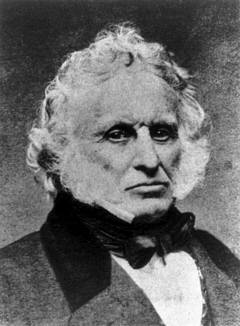
Frederic Tudor, the Ice King Who Invented the Global Ice Trade What kept him going was a conviction that looked, from the outside, like madness but was, in fact, a market insight of rare precision: there was no ice trade in the tropics because no one had ever built one. The absence of demand was not evidence that demand was impossible. It was evidence that no one had yet done the work of creating it.
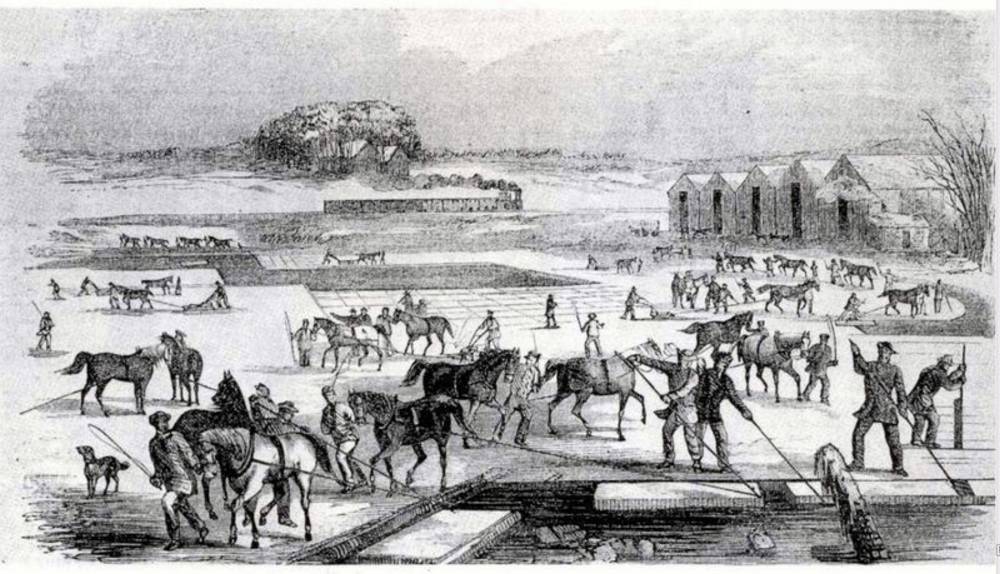
So Tudor created it. He gave ice away, free, to bars and cafés, and kept supplying it until cold drinks became something people expected rather than wondered at. He taught locals to make ice cream, a product so novel and so immediately pleasurable that it sold itself. He demonstrated, patiently and repeatedly, that the thing his customers had never wanted was now the thing they couldn’t do without. He didn’t find a market. He built one from frozen water and sheer persistence.

The logistics evolved through decades of failure and tinkering. Hay, tried first as insulation, proved unreliable; sawdust, sourced cheaply from New England’s abundant sawmills, worked far better. Tudor collaborated with the inventor Nathaniel Wyeth to develop horse-drawn ice cutters that replaced hand axes and multiplied the speed of the harvest. He designed and built specialized ice houses in Havana, Calcutta, and Charleston—structures engineered to hold temperature in climates that had never needed to hold temperature before.

Ice Harvesting in Massachusetts, early 1850s

Eccentricity Looks Like Innovation Only in Hindsight

By 1833, Tudor had become the dominant figure in the global ice trade. That year, he sent the ship Tuscany from Boston to Calcutta carrying 180 tons of ice. The journey crossed the equator twice and covered 16,000 miles. When the Tuscany arrived in port after four months at sea, the cargo was still largely intact. The British in India—who had spent years enduring the subcontinent’s heat with no means of relief—celebrated the delivery. They immediately raised funds to build a permanent, palatial ice house.

The man Boston had laughed at for nearly three decades was celebrated in Calcutta.

Tudor died in 1864, at 80, wealthy and decorated with the title that had followed him since his triumph: the Ice King. A bachelor for most of his working life, he had married after fifty and fathered six children. He owned a country estate in Nahant. The industry he had conjured from a frozen Cambridge pond would continue to sustain cities across America and beyond until mechanical refrigeration finally made it obsolete in the early twentieth century.

He was described by those who knew him as defiant, reckless in spirit, imperious, and implacable to enemies. Not a comfortable man. Not a man who needed your approval or asked for it.

That last part mattered more than any of the rest.

The Boston merchants who laughed at Tudor in 1806 were not stupid. They were rational. They looked at the evidence available—ice melts, the tropics are hot, customers there have never asked for frozen goods—and reached a perfectly reasonable conclusion. What they lacked wasn’t intelligence. It was the willingness to hold a conviction before the evidence had caught up to it. Tudor held his for twenty-seven years.

The line between eccentricity and genius is drawn only after success. Before success, they are indistinguishable. The visionary and the fool stand in the same room, making the same arguments, to the same skeptical audience. The difference between them is not talent or connections or luck. It is the refusal to leave the room.

Ridicule is the tax levied on originality. Tudor paid it, in full, for decades.

And then he collected.

Wondering what to read next?

  1. The Inopportune Case of the Airbus A340 Aircraft: When Tomorrow Left Yesterday Behind
  2. FedEx’s ZapMail: A Bold Bet on the Future That Changed Too Fast
  3. The Tyranny of Previous Success: How John Donahoe’s Tech Playbook Made Nike Uncool
  4. Starbucks’ Oily Brew: Lessons on Innovation Missing the Mark
  5. How FedEx and Fred Smith Made Information the Package

Filed Under: Business Stories, Great Personalities, Leadership, Sharpening Your Skills Tagged With: Decision-Making, Entrepreneurs, Icons, Innovation, Leadership Lessons, Motivation, Persistence, Starbucks, Strategy, Success

AI, Hype, and the Art of Overstatement

June 19, 2025 By Nagesh Belludi Leave a Comment

'Green Dot Assist' at Starbucks: AI, Hype, and the Art of Overstatement The corporate world has developed a compulsive need to slap “AI” onto everything, as if the mere presence of the term turns mundane software into magic. Since large language models like ChatGPT hit the scene in late 2022, the trend has only accelerated, rebranding basic automation as “AI-powered” marvels—at least in name.

Starbucks has just jumped in, triumphantly announcing it’s using “AI to cut coffee prep time.” One might imagine robotic baristas adjusting grind size and pulling espresso shots with machine-like precision. But no. Instead, they’ve introduced “Green Dot Assist,” a digital manual on an iPad. It won’t brew coffee. It won’t optimize anything. It’ll simply answer questions like “What’s in the seasonal gingerbread latte?” and “How do I unjam the ice machine?”

This isn’t some groundbreaking AI revolution streamlining coffee prep. It’s a search function. A glorified FAQ. A way for overworked baristas to quickly check whether that obscure drink from last year’s promotion had caramel drizzle on the cold foam. But slap “AI” on it, and suddenly, it’s innovation.

AI has become a hollow incantation—uttered by the unctuous and the unthinking to signal “progress” without delivering any. And consumers and investors are eagerly lapping up this glorification of the mundane. Companies know it triggers excitement, even when the product is just the siren song of hollow spectacle.

Wondering what to read next?

  1. The Mere Exposure Effect: Why We Fall for the Most Persistent
  2. Elon Musk Insults, Michael O’Leary Sells: Ryanair Knows Cheap-Fare Psychology
  3. Labubu Proves That Modern Luxury Is No Longer an Object, It’s a Story
  4. Offering a Chipotle Burrito at a Dollar is Not a Bargain but a Betrayal of Dignity
  5. Japan’s MUJI Became an Iconic Brand by Refusing to Be One

Filed Under: Business Stories, MBA in a Nutshell Tagged With: Biases, Creativity, Innovation, Marketing, Parables, Starbucks

The Business of Popular Causes

January 22, 2025 By Nagesh Belludi Leave a Comment

Starbucks:Championing Progressive Causes, While Undermining Unionization Efforts Starbucks has long been celebrated for its progressive image and support of social justice causes. But when it comes to unionization and better benefits, the company’s actions tell a different story. Internal policies—like cracking down on union activities—raise doubts about how committed it truly is to the values it champions.

Starbucks is a prime example of a wider trend: companies quickly embrace progressive causes, but only when they don’t hurt the bottom line. This is Bandwagon Branding—when businesses latch onto the latest popular cause, whether it’s social justice, climate change, or equality, to align with dominant public values. They roll out hashtags, social media campaigns, and limited-edition products to show support. But once the spotlight fades, they quietly move on to the next issue. Remember when founder-CEO Howard Schultz launched the “Race Together” initiative, letting baristas at 12,000 locations write it on cups to spark conversations about race?

This cycle—big gestures, minimal change, quick pivots—reveals a harsh truth: corporations are profit-driven. Their true loyalty is to shareholders, not social causes. Corporate virtue-signaling often rings hollow.

Wondering what to read next?

  1. The Loss Aversion Mental Model: A Case Study on Why People Think Spirit is a Horrible Airline
  2. When Global Ideas Hit a Wall: BlaBlaCar in America
  3. Consumer Power Is Shifting and Consumer Packaged Goods Companies Are Struggling
  4. Your Product May Be Excellent, But Is There A Market For It?
  5. We Trust What We Can See: James Dyson Builds for That Instinct

Filed Under: Business Stories, Leadership, MBA in a Nutshell Tagged With: Biases, Diversity, Entrepreneurs, Group Dynamics, Humility, Marketing, Persuasion, Starbucks

Starbucks’ Oily Brew: Lessons on Innovation Missing the Mark

January 20, 2025 By Nagesh Belludi Leave a Comment

Starbucks Olive Oil-infused Coffee: Lessons on Innovation Missing the Mark Last quarter, Starbucks pulled the plug on its olive oil-infused Oleato coffee line as part of a broader push to streamline the menu and impro1ve store operational efficiency.

Oleato was among Starbucks’ boldest and riskiest experiments in recent years. It was the brainchild of founder and then-CEO Howard Schultz, an assertive visionary. During a visit to the olive groves of Sicily, Schultz was inspired by the Mediterranean tradition of consuming a daily spoonful of olive oil. He envisioned merging this health practice with Starbucks’ coffee expertise, creating a unique fusion of wellness and indulgence.

Debuting in Italy in February 2023, Oleato expanded globally, offering lattes and cold brews infused with extra virgin olive oil, marketed as luxurious, innovative, and health-conscious. While some customers liked the smooth, velvety texture, many found the flavor odd or the concept hard to swallow. Scaling the product and educating consumers proved challenging, leaving many unsure of its benefits beyond novelty.

Oleato’s flop revealed the risks of niche innovation. Starbucks thrives on pushing boundaries, but not all bold ideas hit the mark. Smart innovation requires knowing when to nurture an idea and when to cut losses. Schultz’s vision of Oleato kept Starbucks daring, but disciplined decision-making is key to ensuring innovation remains a strength, not a liability.

The Oleato dud highlights the perils of leadership driven by unchecked conviction. Schultz’s love affair with Italian espresso bars during a visit to Milan sparked the creation of Starbucks. However, visionary leaders like Schultz often turn bold ideas into untouchable pet projects. Even a passing thought can rapidly evolve into a sweeping directive, leaving little room for dissent. In such environments, feedback is stifled, and ideas can quickly take on a life of their own.

Wondering what to read next?

  1. FedEx’s ZapMail: A Bold Bet on the Future That Changed Too Fast
  2. We Trust What We Can See: James Dyson Builds for That Instinct
  3. Your Product May Be Excellent, But Is There A Market For It?
  4. The Inopportune Case of the Airbus A340 Aircraft: When Tomorrow Left Yesterday Behind
  5. How to … Declutter Your Organizational Ship

Filed Under: Leading Teams, Mental Models, Project Management, The Great Innovators Tagged With: Creativity, Critical Thinking, Decision-Making, Entrepreneurs, Innovation, Leadership, Leadership Lessons, Parables, Persuasion, Starbucks

Don’t Be A Founder Who Won’t Let Go

January 17, 2022 By Nagesh Belludi Leave a Comment

You’ll never get a potential successor to take your job if you’re going to be peering over her shoulder constantly and talking to employees directly about what they’re doing.

When you have a case of the founder’s syndrome, you’re addicted to running the show, and you’ll have a hard time separating yourself from the company you’ve built. When there are conflicts, you’re often at the center of it and hold your vision and experience over the leadership’s heads.

In the long run, your compulsion to have a say in all the nitty-gritty of your company will undermine the future of the very company that you’ve devoted your life to. The best thing you can do for its future is to back off and give your successor real control.

Establish a timetable to disengage yourself from the operating decisions and set some firm rules about this transition. Spend increasingly more time away from the business and pursue other interests. Start to envision a world in which your next ventures or leisure activities will become the principal focus of your life.

Idea for Impact: Know when your work is over and when it’s time for you to move on to other things. Grooming exceptional talent to take over the business you’ve built and gradually letting go of control is one of the most challenging things a founder will ever do. If done well, it’s the most transformative you can do for your business.

Wondering what to read next?

  1. Book Summary of Nicholas Carlson’s ‘Marissa Mayer and the Fight to Save Yahoo!’
  2. Two Leadership Lessons from United Airlines’ CEO, Oscar Munoz
  3. Starbucks’ Oily Brew: Lessons on Innovation Missing the Mark
  4. The Tyranny of Previous Success: How John Donahoe’s Tech Playbook Made Nike Uncool
  5. Ridicule Is Often the Tax Levied on Originality: The Case of Ice King Frederic Tudor

Filed Under: Leadership, Mental Models, The Great Innovators Tagged With: Change Management, Entrepreneurs, Leadership Lessons, Perfectionism, Personality, Starbucks, Transitions

How Starbucks Brewed Success // Book Summary of Howard Schultz’s ‘Pour Your Heart Into It’

April 18, 2017 By Nagesh Belludi Leave a Comment

I recently finished reading Pour Your Heart Into It, the personal story of how Starbucks founder, Chairman, and ex-CEO Howard Schultz built a major consumer brand and a stellar business model anchored in passion and values. He proclaims, “Success should not be measured in dollars … It’s about how you conduct the journey, and how big your heart is at the end of it.”

An Iconic Leader Built a Coffee Empire with Unyielding Attention to Customer Experience

'Pour Your Heart Into It' by Howard Schultz (ISBN 0786883561) Howard Schultz’s Pour Your Heart Into It (1997) begins with his formative years as a poor German-Jewish boy in Brooklyn and ends with Starbucks’ post-IPO journey to becoming a well-respected and recognized global consumer brand.

In 2000, three years after Pour Your Heart Into It was published, Schultz assigned Jim Donald as CEO and became Starbucks’ meddling chairman. In 2008, following quarter-after-quarter of disappointing sales figures during the Great Recession and a “watering down of the Starbucks experience,” Schultz returned as CEO in 2008 and led the company to commendable growth and profitability. His turnaround memoir (my summary here,) Onward: How Starbucks Fought for Its Life without Losing Its Soul (2012,) discusses how he restored the essence of the Starbucks experience during his second stint as CEO.

Earlier this month, Schultz entrusted a deputy with CEO responsibility, but remains chairman. In the same way as in 2000, he hasn’t left the company and focuses on developing Starbucks’ premium Reserve Roastery and Tasting Room stores.

Starbucks Created an Industry through High-profile Cafés That Promise a Lifestyle Experience

'Onward: How Starbucks Fought for Its Life without Losing Its Soul' by Howard Schultz, Joanne Gordon (ISBN 1609613821) In fact, Schultz did not start ‘Starbucks.’ When working as a plastics salesperson in 1981, he happened into Starbucks—then, a chain of six high-quality coffee retail stores based in Seattle. He immediately fell in love with his experience at their Pike Place Market store. Schultz recalls, “A heady aroma of coffee reached out and drew me in. I stepped inside and saw what looked like a temple for the worship of coffee. It was my Mecca. I had arrived.”

In 1982, he joined Starbucks as head of marketing and retailing. On a business trip to Italy, he witnessed the allure of Milan’s café culture. He was specifically fascinated by the passionate connection that the Italians had not only with their coffee, but also with their coffee bars—an integral part of their country’s social life.

After returning to Seattle, he could not persuade the original Starbucks’ proprietors to open similar “coffee bar experiences.” Schultz then quit Starbucks and opened his own Il Giornale chain of coffee bars. Three years later, when Schultz was all of 34, Il Giornale purchased Starbucks and adopted its name.

From Rags to Riches: Starbucks Became A “Company with a Conscience” While it Brewed Worldwide Success

The rags-to-riches account of Howard Schultz is one great American entrepreneur success story. Schultz grew up poor in Brooklyn’s subsidized housing projects. At age seven, Schultz was deeply upset when his father suffered after breaking an ankle. With no health insurance or other benefits, the senior Schultz (a blue-collar “beaten man”) worked very hard at dead-end jobs to atone for medical expenses and offset his lost pay. That incident left a profound impression on Howard. “As a kid I never had any idea that I would one day head a company. But I knew in my heart that if I was ever in a position where I could make a difference, I wouldn’t leave people behind,” he avows.

Subsequently, Howard Schultz wanted to create an enterprise that treated staff with respect and nurtured them. He writes, “If you treat your employees as interchangeable cogs in a wheel, they will view you with the same affection.” Starbucks offered health benefits and stock options to all staff (called “partners”)—including part-timers—to demonstrate “that a company can lead with its heart and nurture its soul and still make money.”

The essence of Pour Your Heart Into It is that the Starbucks marvel is not only about economic growth and brand success, but also about its socially conscious corporate ethos: “We never set out to build a brand. Our goal was to build a great company, one that stood for something, one that valued the authenticity of its product and the passion of its people.”

A Well-respected Global Brand and A Grande-sized Ego

Schultz’s gracious and inspiring account in Pour Your Heart Into It, however, is speckled with lofty assertions and self-congratulatory superlatives. For instance, when recounting his epiphany of discovering the allure of Milan’s café culture, Schultz states, “it was so immediate and physical that I was shaking.” He labels a prospective joint venture with Pepsi an “earth-jolting paradigm shift.”

Schultz takes credit for turning coffee into a “national obsession” in North America and declares that his founding purpose was to give North Americans the opportunity to savor the “romance and mystery” of Italian espresso bars. When featured on the cover of Fortune magazine for an article titled “Howard Schultz’s Starbucks Grinds Coffee Into Gold,” Schultz writes that he felt “proud but, frankly, a little embarrassed at all the attention. It’s always been hard for me to celebrate success.”

Like I wrote in my summary for Onward, Schultz’s account of his 2008 return as CEO, his flamboyant tone is demonstrative of a fiercely passionate entrepreneur and a brilliant corporate cheerleader. Under his leadership, Starbucks has used its narrative of being a noble torchbearer of altruistic capitalism to brew global success. Schultz writes,

Starbucks was attempting to accomplish something more ambitious than just grow a profitable enterprise. We had a mission, to educate consumers everywhere about fine coffee. We had a vision, to create an atmosphere in our stores that drew people in and gave them a sense of wonder and romance in the midst of their harried lives. We had an idealistic dream, that our company could be far more than the paradigm defined by corporate America in the past.

Over the last few years, Schultz has been increasingly politically active and has used the platform of his office at Starbucks to share views on matters that are peripheral to Starbucks’ business and operations. In 2015, for instance, Starbucks got into hot water after launching a bold “Race Together” campaign in the aftermath of the Ferguson racial unrests. With his characteristic flair, Schultz encouraged baristas to discuss race with customers at Starbucks stores “under the belief that it’s a critical first step toward confronting—and solving—race-related issues as a nation” according to this USA Today article. Alas, Schultz’s idea backfired and Starbucks called off the initiative.

More recently, after President Trump’s executive order excluding refugees from specific countries, Starbucks announced its intention to lead a global effort and hire 10,000 refugees globally by 2022. Trump supporters promptly boycotted Starbucks.

Schultz is speculated to be considering running for the 2020 Democratic presidential nomination.

Recommendation: Read Howard Schultz’s “Pour Your Heart Into It”

Howard Schultz’s description of how Starbucks transformed an entrenched commodity into a value-laden brand and a differentiated experience makes Pour Your Heart Into It an absorbing story of entrepreneurial success. Schultz portrays himself as a passionate, dedicated, and visionary entrepreneur. But then again, he appears impulsive as a manager and brash as a capitalist—often in little doubt that his own preferences for the Starbucks experience will reflect of those of its customers.

The significant take away lessons from Pour Your Heart Into It are,

  • Develop a close relationship with your customers through the quality of your product and your customer service.
  • Continually reinvent your product and your business, even when you are experiencing success.
  • When you start a business, work hard to instill values and beliefs. Set the standards and build the culture.
  • Any consumer business is only as good as its customer-facing employees. When an organization’s employees sincerely believe in its product, service, and business, they will care about the customer, perform at higher levels, and eventually increase the company’s value of the organization.

Coffee snobs—especially Starbucksaholics—will love Schultz’s impassioned portrayal of “the romance of the coffee experience, the feeling of warmth and community people get in Starbucks stores. That tone is set by our baristas, who custom-make each espresso drink and explain the origins of different coffees.”

Wondering what to read next?

  1. Putting the WOW in Customer Service // Book Summary of Tony Hsieh’s Delivering Happiness
  2. How to Buy a Small Business // Book Summary of Richard Ruback’s HBR Guide
  3. A Business Model Like No Other: Book Summary of ‘Becoming Trader Joe’
  4. Sony Personified Japan’s Postwar Technological Ascendancy // Summary of Akio Morita’s ‘Made in Japan’
  5. Starbucks’s Comeback // Book Summary of Howard Schultz’s ‘Onward’

Filed Under: Leadership Reading Tagged With: Books, Customer Service, Entrepreneurs, Motivation, Persuasion, Starbucks

Starbucks’s Comeback // Book Summary of Howard Schultz’s ‘Onward’

May 19, 2015 By Nagesh Belludi Leave a Comment

Starbucks founder, Chairman, and CEO Howard Schultz’s “Onward: How Starbucks Fought for Its Life without Losing Its Soul” is an interesting case study of organizational change as orchestrated by a passionate entrepreneur. The book covers the first two years of the turnaround of Starbucks after Schultz returned as CEO.

'Onward: How Starbucks Fought for Its Life without Losing Its Soul' by Howard Schultz, Joanne Gordon (ISBN 1609613821) In 2007, in the face of falling consumer spending and the upcoming Great Recession, the consumer discretionary sector was hit hard. Like other companies in that realm, Starbucks’ sales and profitability had dropped. The company’s stock price plummeted after Wall Street pared the rich valuations (high price-to-earning) of the company’s once-hot growth stock. Through these trials, Schultz worked at the company’s Seattle headquarters as chairman. Even after retiring as CEO in 2001, he had never left the company entirely and had even interjected often during Starbucks’ presentations to investors.

Starbucks’ financial under-performance was likely as much due to the economic slowdown as it was self-inflicted. In an apparent instance of misplaced cause-and-effect, Schultz blamed the company’s leadership for focusing too much on rapid expansion, opening too many stores, and diluting the in-store Starbucks experience. Behind the CEO’s back, Schultz started working with strategy consultants and other board members to develop a “transformational agenda” centered on the core values of the company he had founded in 1982.

In January 2008, Schultz invited the CEO home on a Sunday evening, fired him, and assumed the CEO position for a second stint. Over the next two years, Schultz rejuvenated the company’s mojo by making operational improvements and focusing on employee engagement, Starbucks’ specialty coffee products and its distinctive in-store customer experience.

Schultz’s vision, focus, and execution of this transformation makes up the bulk of “Onward”. One dominant theme in the book is founder’s syndrome—the intense reluctance of entrepreneurs like Schultz to cede control of their businesses.

Towards the end of 2009 (when “Onward” was authored,) the economy started to improve. A measured recovery in consumer confidence invigorated the fortunes of most consumer discretionary companies that had suffered during the downturn. At Starbucks, customers returned to stores and spent more. Sales and profitability improved. The company’s valuation on Wall Street soared again. Conceivably, Starbucks may have enjoyed a comeback even if Schultz had remained just the chairman, retained and supported the CEO, and worked with the company’s leadership team to initiate course corrections.

That Starbucks continues to be an American success story and has done extraordinarily well to date under Schultz’s leadership is one more instance of a beloved fairy tale in the world of business—that of a company in distress rescued by the return of its visionary founder.

“Onward” is Schultz’s somewhat grandiose narrative of his return as CEO. The 350-page book is brimming with peripheral details, self-congratulatory superlatives, recurring claims, and Pollyanna-isms that are illustrative of a charismatic entrepreneur and a brilliant corporate cheerleader.

Recommendation: Skim. (For Starbucks aficionados: Read.)

Wondering what to read next?

  1. Book Summary of Nicholas Carlson’s ‘Marissa Mayer and the Fight to Save Yahoo!’
  2. Book Summary of Donald Keough’s ‘Ten Commandments for Business Failure’
  3. How Starbucks Brewed Success // Book Summary of Howard Schultz’s ‘Pour Your Heart Into It’
  4. Don’t Be A Founder Who Won’t Let Go
  5. Lessons from the Biography of Tesla’s Elon Musk

Filed Under: Leadership Reading Tagged With: Books, Change Management, Entrepreneurs, Starbucks, Winning on the Job

Primary Sidebar

Popular Now

Anxiety Assertiveness Attitudes Balance Biases Coaching Conflict Conversations Creativity Critical Thinking Decision-Making Discipline Emotions Entrepreneurs Etiquette Feedback Getting Along Getting Things Done Goals Great Manager Innovation Leadership Leadership Lessons Likeability Mental Models Mindfulness Motivation Networking Parables Performance Management Persuasion Philosophy Problem Solving Procrastination Psychology Relationships Simple Living Social Skills Stress Suffering Thinking Tools Thought Process Time Management Winning on the Job Wisdom

About: Nagesh Belludi [hire] is a St. Petersburg, Florida-based freethinker, investor, and leadership coach. He specializes in helping executives and companies ensure that the overall quality of their decision-making benefits isn’t compromised by a lack of a big-picture understanding.

Get Updates

Signup for emails

Subscribe via RSS

Contact Nagesh Belludi

RECOMMENDED BOOK:
Tap Dancing to Work

Tap Dancing to Work: Warren Buffett

Insights into Warren Buffett's investment strategies and his philosophies on management, philanthropy, public policy, and even parenting. Articles by Carol Loomis, Bill Gates, and others.

Explore

  • Announcements
  • Belief and Spirituality
  • Business Stories
  • Career Development
  • Effective Communication
  • Great Personalities
  • Health and Well-being
  • Ideas and Insights
  • Inspirational Quotations
  • Leadership
  • Leadership Reading
  • Leading Teams
  • Living the Good Life
  • Managing Business Functions
  • Managing People
  • MBA in a Nutshell
  • Mental Models
  • News Analysis
  • Personal Finance
  • Podcasts
  • Project Management
  • Proverbs & Maxims
  • Sharpening Your Skills
  • The Great Innovators

Recently,

  • Inspirational Quotations #1149
  • Sadness Isn’t a Diagnosis
  • Optionality is the Ultimate Hack
  • Life Isn’t Fair, Nor Does It Pretend To Be: What ‘Tokyo Story’ Teaches Us About Disappointment
  • Inspirational Quotations #1148
  • The Only Cure for Imposter Syndrome Is Evidence
  • The Inopportune Case of the Airbus A340 Aircraft: When Tomorrow Left Yesterday Behind

Unless otherwise stated in the individual document, the works above are © Nagesh Belludi under a Creative Commons BY-NC-ND license. You may quote, copy and share them freely, as long as you link back to RightAttitudes.com, don't make money with them, and don't modify the content. Enjoy!