• Skip to content
  • Skip to primary sidebar

Right Attitudes

Ideas for Impact

Motivation

Ridicule Is Often the Tax Levied on Originality: The Case of Ice King Frederic Tudor

March 23, 2026 By Nagesh Belludi Leave a Comment

'Ice King Frederic Tudor' by Carl Seaburg (ISBN 0939510804) I recently read Ice King: Frederic Tudor and His Circle (2003) by Carl Seaburg and Stanley Paterson. It tells the story of an important but largely forgotten chapter of American history—the birth of the commercial ice trade—tracing it from its laughed-at beginnings in Boston to a global industry that reshaped how the world ate, drank, and lived. The book is rich with personality, setback, and stubborn ambition, and it’s as much a character study as it is a business history.

The Slippery Speculation

In the winter of 1806, a young Boston merchant named Frederic Tudor walked out onto the frozen surface of Fresh Pond in Cambridge, watched laborers hack 80 tons of ice from the lake in great crystalline blocks, loaded them onto a ship called the Favorite, and set sail for Martinique.

Boston found this hilarious.

The city’s merchants—men who routinely speculated in coffee, mahogany, spices, and umbrellas—looked at Tudor and saw a fool. The Boston Gazette covered his departure with barely concealed mockery: “No joke. A vessel with a cargo of 80 tons of Ice has cleared out from this port for Martinique. We hope this will not prove to be a slippery speculation.”

Ice. To the tropics. On a wooden ship. In summer.

The math was simple, the conclusion obvious, and the skeptics entirely wrong about what that meant.

Tudor arrived in Martinique to find the ice had, miraculously, survived most of the journey. What hadn’t survived was the infrastructure to receive it. There was no ice house to store it. No local knowledge of how to use it. No customers who had ever seen a block of frozen water, let alone understood that they should want one. The ice melted in six weeks. Tudor lost $4,000—a serious sum—and sailed home to the sound of laughter he could probably hear from the dock.

He went back anyway.

The Contempt for Doubters

For the next 15 years, Tudor kept sailing. To Charleston. To Havana. To New Orleans. The obstacles were not occasional; they were relentless. He contracted yellow fever in the tropics and survived it. He suffered a mental breakdown and recovered. Employees stole from him. Government officials corrupted deals he had spent months building. The Jefferson embargo strangled his trade routes. The War of 1812 shuttered them entirely. The Panic of 1819 nearly finished him. And not once but twice, he was thrown into debtor’s prison—that particular humiliation reserved for men who owe more than they own and can no longer pretend otherwise.

Tudor endured all of it with a quality his contemporaries described, not entirely fondly, as implacable. He was defiant, imperious, and contemptuous of the men who doubted him. He did not explain himself. He did not seek reassurance. He simply continued.

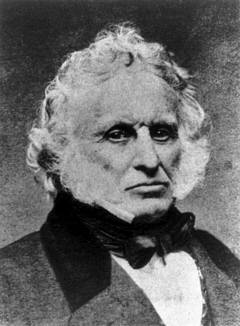
Frederic Tudor, the Ice King Who Invented the Global Ice Trade What kept him going was a conviction that looked, from the outside, like madness but was, in fact, a market insight of rare precision: there was no ice trade in the tropics because no one had ever built one. The absence of demand was not evidence that demand was impossible. It was evidence that no one had yet done the work of creating it.
So Tudor created it. He gave ice away, free, to bars and cafés, and kept supplying it until cold drinks became something people expected rather than wondered at. He taught locals to make ice cream, a product so novel and so immediately pleasurable that it sold itself. He demonstrated, patiently and repeatedly, that the thing his customers had never wanted was now the thing they couldn’t do without. He didn’t find a market. He built one from frozen water and sheer persistence.

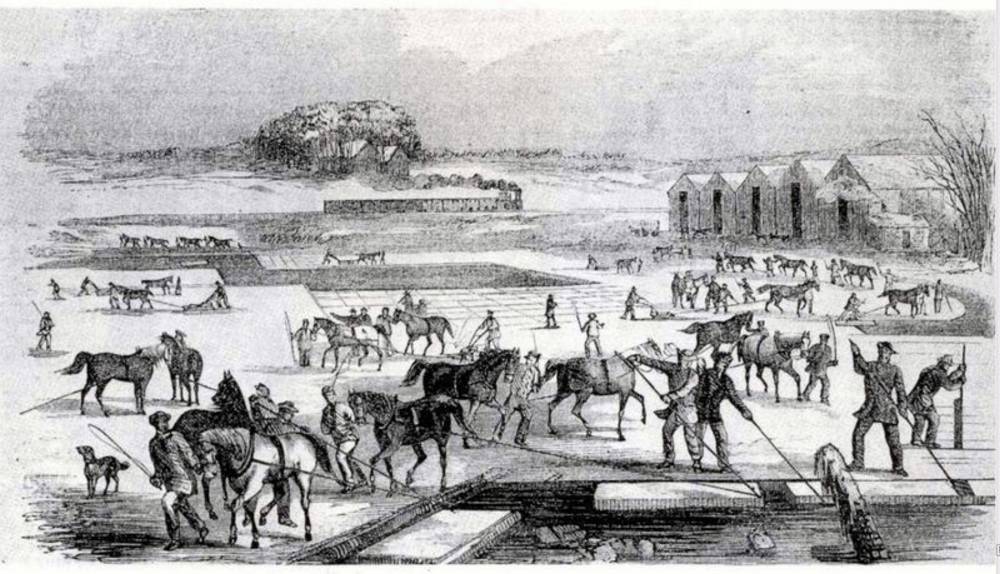
The logistics evolved through decades of failure and tinkering. Hay, tried first as insulation, proved unreliable; sawdust, sourced cheaply from New England’s abundant sawmills, worked far better. Tudor collaborated with the inventor Nathaniel Wyeth to develop horse-drawn ice cutters that replaced hand axes and multiplied the speed of the harvest. He designed and built specialized ice houses in Havana, Calcutta, and Charleston—structures engineered to hold temperature in climates that had never needed to hold temperature before.

Ice Harvesting in Massachusetts, early 1850s

Eccentricity Looks Like Innovation Only in Hindsight

By 1833, Tudor had become the dominant figure in the global ice trade. That year, he sent the ship Tuscany from Boston to Calcutta carrying 180 tons of ice. The journey crossed the equator twice and covered 16,000 miles. When the Tuscany arrived in port after four months at sea, the cargo was still largely intact. The British in India—who had spent years enduring the subcontinent’s heat with no means of relief—celebrated the delivery. They immediately raised funds to build a permanent, palatial ice house.

The man Boston had laughed at for nearly three decades was celebrated in Calcutta.

Tudor died in 1864, at 80, wealthy and decorated with the title that had followed him since his triumph: the Ice King. A bachelor for most of his working life, he had married after fifty and fathered six children. He owned a country estate in Nahant. The industry he had conjured from a frozen Cambridge pond would continue to sustain cities across America and beyond until mechanical refrigeration finally made it obsolete in the early twentieth century.

He was described by those who knew him as defiant, reckless in spirit, imperious, and implacable to enemies. Not a comfortable man. Not a man who needed your approval or asked for it.

That last part mattered more than any of the rest.

The Boston merchants who laughed at Tudor in 1806 were not stupid. They were rational. They looked at the evidence available—ice melts, the tropics are hot, customers there have never asked for frozen goods—and reached a perfectly reasonable conclusion. What they lacked wasn’t intelligence. It was the willingness to hold a conviction before the evidence had caught up to it. Tudor held his for twenty-seven years.

The line between eccentricity and genius is drawn only after success. Before success, they are indistinguishable. The visionary and the fool stand in the same room, making the same arguments, to the same skeptical audience. The difference between them is not talent or connections or luck. It is the refusal to leave the room.

Ridicule is the tax levied on originality. Tudor paid it, in full, for decades.

And then he collected.

Wondering what to read next?

  1. The Inopportune Case of the Airbus A340 Aircraft: When Tomorrow Left Yesterday Behind
  2. FedEx’s ZapMail: A Bold Bet on the Future That Changed Too Fast
  3. The Tyranny of Previous Success: How John Donahoe’s Tech Playbook Made Nike Uncool
  4. Starbucks’ Oily Brew: Lessons on Innovation Missing the Mark
  5. How FedEx and Fred Smith Made Information the Package

Filed Under: Business Stories, Great Personalities, Leadership, Sharpening Your Skills Tagged With: Decision-Making, Entrepreneurs, Icons, Innovation, Leadership Lessons, Motivation, Persistence, Starbucks, Strategy, Success

Values Are Easier to Espouse Than to Embody: Howard Schultz Dodges the Wealth Tax

March 13, 2026 By Nagesh Belludi Leave a Comment

Howard Schultz Leaves Washington Over Wealth Tax For Florida Yet another rich guy is fleeing a Democrat-controlled state over a new wealth tax. Starbucks founder Howard Schultz has announced he’s leaving Washington for Miami, just hours after lawmakers advanced a bill targeting residents earning over $1 million per year.

The irony is hard to miss: the man who sold us overpriced coffee now finds the tax bill too bitter to swallow.

This episode reveals a tension between values and their embodiment. Authenticity, after all, isn’t consistency of behavior but consistency of motive. Schultz may genuinely wish for equality, but not at the expense of his autonomy. And the rhetoric of social justice, it turns out, is far easier to tolerate when it’s someone else’s pocket being picked.

When public-facing values collide with private incentives, the resulting “exit” reveals something philosophically honest: even the most liberal-leaning icons often view capital as a tool they, rather than the government, are best equipped to deploy. The move to Florida isn’t just about money. It’s a vote for autonomy over how wealth is used.

There’s a name for this: Moral Licensing. When individuals believe they’ve “done enough” through public advocacy or charitable foundations, they feel entitled to act in their own interest elsewhere. Public advocacy creates a psychological surplus that justifies private retreat. Schultz’s mind balances the scales with a simple rationale: I’ve given enough.

Idea for Impact: This isn’t a tidy moral tale but a reminder that humans are allergic to compulsion. The liberal dream of redistribution collides with the liberal instinct for self-preservation. Schultz’s move is less hypocrisy than evidence that values are easier to espouse than to embody.

Wondering what to read next?

  1. Virtue Deferred: Marcial Maciel, The Catholic Church, and How Institutions Learn to Look Away
  2. Why Groups Cheat: Complicity and Collusion
  3. The Enron Scandal: A Lesson on Motivated Blindness
  4. Making Exceptions “Just Once” is a Slippery Slope
  5. Power Inspires Hypocrisy

Filed Under: Business Stories, Great Personalities, Living the Good Life Tagged With: Authenticity, Conviction, Entrepreneurs, Ethics, Integrity, Mental Models, Money, Motivation, Politics, Psychology, Values

The Hot-Desking Lie: How It Killed Focus and Gutted Collaboration

February 27, 2026 By Nagesh Belludi Leave a Comment

The Hot-desking Lie: How it Killed Focus and Gutted Collaboration When employees returned to offices after COVID, many found their desks had been replaced by lockers. Each morning meant competing for whatever seat was free, carrying laptops from floor to floor, setting up from scratch. Hot-desking was pitched as modern and collaborative. It was neither.

Marketed as liberation from hierarchy, fixed thinking, and the assigned desk, the reality was simpler: squeezing more bodies into less space while calling it progress. Austerity dressed as innovation.

The damage was measurable. Hot-desking reduced face-to-face interaction, increased dependence on messaging platforms, and shattered sustained attention. Noise and instability pushed employees to perform busyness rather than do their best work. Focus pods and quiet zones attempted to soften the model, but patches can’t fix a broken system. The people most harmed were those organizations depend on most: the analysts, strategists, and researchers whose roles require uninterrupted thought.

What hot-desking got fundamentally wrong is that true collaboration depends on the dignity of privacy. Without the ability to withdraw and think clearly, we can’t offer our best selves to others. Proximity isn’t connection. Trust and autonomy are.

Idea for Impact: Organizations advance when individuals can think without distraction. To deny employees the conditions for sustained thought isn’t efficiency. It’s regression. Both performance and collaboration require something hot-desking systematically withholds: the space to think, and the trust that makes that space feel safe.

Wondering what to read next?

  1. Treat Employees Like Volunteers
  2. These are the Two Best Employee Engagement Questions
  3. The Speed Trap: How Extreme Pressure Stifles Creativity
  4. How to Start a Hybrid-Remote Work Model
  5. Managing the Overwhelmed: How to Coach Stressed Employees

Filed Under: Leading Teams, Managing People Tagged With: Great Manager, Human Resources, Meetings, Motivation, Performance Management, Teams, Workplace

Live as If You Are Already Looking Back on This Moment with Longing

February 16, 2026 By Nagesh Belludi Leave a Comment

Anticipatory Nostalgia: Live as If You Are Already Looking Back on This Moment with Longing

Nostalgia is usually understood as a backward-looking emotion, a bittersweet yearning for what has already slipped away. But the present moment will itself be a past moment soon, destined to become something you may eventually long for. This realization shifts your perspective from what is gone to what is currently unfolding. Today’s reality is tomorrow’s cherished memory.

Here’s a simple discipline: treat the present like a future memory you’ll ache for. It’s not sentimental; it’s a deliberate mental posture that forces you to stop skimming life and start collecting it. When you decide that you may one day look back on this exact second with longing, everything about that second sharpens.

Anticipatory nostalgia is a practical tool. It tells your brain this moment matters, so you stop multitasking and start noticing. Instead of letting the transience of now create anxiety, you convert it into urgency, the good kind that makes you lean in. You notice the small things: the cadence of a friend’s laugh, the way light hits the table, the exact temperature of the air. Those details become the raw material of memory.

This approach changes your role in your own life. You stop observing passively and start curating actively. Saying “I will miss this” isn’t defeatist; it’s a command to savor. You linger in conversations with people you care about. You pay closer attention to the places you inhabit and the experiences unfolding around you. You laugh more honestly. You take mental snapshots that capture feeling, not just scenery. You aren’t mourning what’s ending; you’re celebrating what’s happening right now.

Treating ordinary moments as future treasures creates a feedback loop. The people in your life become more vivid when you recognize their presence is temporary. The places you visit or pass through daily gain new weight when you acknowledge you won’t always have access to them. Even small experiences, a quiet walk or an unhurried meal, become worth your full attention. That awareness doesn’t weigh you down. It energizes you.

To make this stick, try three things. /1/ Name the moment out loud: “Someday I’ll miss this.” /2/ Slow down for sixty seconds and take in what’s around you. /3/ Record one tiny note, a word, a photo, a voice memo, that anchors the feeling.

Idea for Impact: The best way to honor the memory you will one day have is to be fully present while it’s still being made. Do that, and ordinary life starts to look like something worth remembering.

Wondering what to read next?

  1. Anger Is Often Pointless
  2. The More You Can Manage Your Emotions, the More Effective You’ll Be
  3. I’ll Be Happy When …
  4. Change Your Perspective, Change Your Reactions
  5. Heaven and Hell: A Zen Parable on Self-Awareness

Filed Under: Health and Well-being, Living the Good Life, Sharpening Your Skills Tagged With: Attitudes, Buddhism, Emotions, Mindfulness, Mortality, Motivation, Philosophy, Relationships, Wisdom

The Surprising Stress-Relief Power of Cleaning

January 30, 2026 By Nagesh Belludi Leave a Comment

The Surprising Stress-Relief Power of Cleaning When stress builds, some people instinctively take a few minutes to clean. It’s more than a quick break—it’s a powerful reset. Stress floods the mind with tangled, racing thoughts. Cleaning cuts through the chaos, shifting focus to the present moment. It restores order, inside and out, clearing both space and mind.

Unlike other stress relievers like walking or cooking, cleaning delivers instant, visible results. Each cleared surface and sorted pile brings a hit of control, making problems feel smaller and more manageable. It’s a fast, tangible way to push back against overwhelm.

Idea for Impact: Cleaning is more than a chore. It’s a metaphor for reclaiming order from mental chaos. Make it a steady habit, not just a crisis response, and it becomes a reliable anchor—a way to stay balanced when life spins out.

Wondering what to read next?

  1. Five Ways … You Could Prevent Clutter in the First Place
  2. How to … Make a Dreaded Chore More Fun
  3. When Giving Up Can Be Good for You
  4. How to Embrace Multitasking
  5. Dear Hoarder, Learn to Let Go

Filed Under: Living the Good Life, Mental Models, Sharpening Your Skills Tagged With: Clutter, Discipline, Mindfulness, Motivation, Procrastination, Simple Living

How to Read the AP Stylebook

January 21, 2026 By Nagesh Belludi Leave a Comment

How to Read the AP Stylebook---Loo Literature The AP Stylebook is not a book to be conquered, nor is The World Almanac and Book of Facts. They are tools, not tomes. They exist to be consulted, scanned, and revisited. Treating them like novels to be read from cover to cover is a category error.

The task is not memorization; it is orientation. Success lies in knowing what is inside and where to find it. Think of these volumes as companions. Keep them close and dip into them often. Call it “loo literature” if you like—the practice of using idle moments to absorb their contents in small, concentrated bursts.

This method builds familiarity. Repetition creates a mental map of the book’s architecture. Over time, the intimidating mass of rules and facts becomes terrain you can navigate with ease.

Scanning beats slogging. Let your eyes wander and stop when something catches your attention: a curious rule in The AP Stylebook, a surprising statistic in the Almanac, or a detail that makes you pause. Those moments of discovery stick, eventually becoming landmarks in your memory.

Other reference works reward the same approach. Consider dictionaries of quotations, encyclopedias of political history, or guides to parliamentary procedure. None demand mastery, yet all reward repeated, low-pressure encounters.

Idea for Impact: Do not cram. Do not memorize. Familiarize, familiarize, familiarize. That steady discipline turns The AP Stylebook, The World Almanac, and their kin from daunting bricks into trusted allies.

Wondering what to read next?

  1. Curate Wisely: Navigating Book Overload
  2. How to Read Faster and Better
  3. Do Self-Help Books Really Help?
  4. A Guide to Intelligent Reading // Book Summary of Mortimer Adler’s ‘How to Read a Book’
  5. The Seduction of Low Hanging Fruit

Filed Under: Effective Communication, Leadership Reading, Sharpening Your Skills Tagged With: Books, Critical Thinking, Discipline, Motivation, Reading, Writing

What the Dry January Trap Shows Us About Extremes

January 2, 2026 By Nagesh Belludi Leave a Comment

What the The Dry January Trap teaches: Beyond the Cycle of Excess and Atonement Dry January is marketed as a ritual of renewal—a sober start to the year, a clean break from December’s excess. But beneath its virtuous packaging lies a familiar cycle. Instead of encouraging balance, it often replicates the very problem it claims to fix: the swing between indulgence and abstinence.

This binary—binge, then ban—doesn’t disrupt harmful habits. It reinforces them. By framing total sobriety as a seasonal corrective, Dry January legitimizes the very extremes it should disavow. True discipline is not abstention by calendar. It is the quiet, daily refusal to be ruled by impulse or fashion.

The same pattern surfaces beyond alcohol. Crash diets after holiday feasts. All-night cramming before exams. Financial detoxes to offset overspending. Each offers the illusion of control in the wake of excess—a performance of restraint with no staying power.

Discipline rooted in deprivation is flimsy. It fades with novelty. Lasting change comes from steady practice, not dramatic purges. If one must abstain, let it be for clarity, not conformity.

Idea for Impact: The antidote to overindulgence isn’t temporary denial—it’s moderation before the excess begins.

Wondering what to read next?

  1. Use This Trick to Make Daily Habits Stick This Year
  2. Be Careful What You Start
  3. The #1 Hack to Build Healthy Habits in the New Year
  4. A Worthwhile New Year’s Resolution
  5. How to Turn Your Procrastination Time into Productive Time

Filed Under: Health and Well-being, Living the Good Life, Mental Models, Sharpening Your Skills Tagged With: Assertiveness, Change Management, Discipline, Getting Things Done, Goals, Lifehacks, Mindfulness, Motivation, Procrastination, Targets

Do Things Fast

December 26, 2025 By Nagesh Belludi Leave a Comment

Do Things Fast: Action Creates Traction Procrastination isn’t just waiting—it’s the surrender of agency.

It’s not a delay of action—it’s a relinquishing of will.

The clock is indifferent to your hesitation, but your conscience is not.

Tasks rarely demand much time. They’re often quicker than you imagine, if measured by the minute. But what drags them out is the internal struggle: overthinking, fear, distraction.

That quiet battle inside your mind is the real delay—not the work itself, but the resistance before it. That battle—not the task—is what drains you.

Delay isn’t about duration; it’s about hesitation.

Do things fast—not recklessly, but with intention.

Start, and it’s swift. Stall, and it stretches endlessly, draining energy and time.

Action creates traction. With that, momentum grows.

Wondering what to read next?

  1. Did School Turn You Into a Procrastinator?
  2. How to Banish Your Inner Perfectionist
  3. Don’t Do the Easiest Jobs First
  4. Big Shifts Start Small—One Change at a Time
  5. Ask This One Question Every Morning to Find Your Focus

Filed Under: Health and Well-being, Living the Good Life, Mental Models, Sharpening Your Skills Tagged With: Decision-Making, Discipline, Getting Things Done, Goals, Motivation, Perfectionism, Procrastination, Time Management

Eat with Purpose, on Purpose

December 17, 2025 By Nagesh Belludi Leave a Comment

Eat Mindfully, Moderately, And Listen To Your Body's Fullness Cues

In India, Mitāhāra (Sanskrit for “moderate diet”) is central to Āyurveda and yoga, emphasizing a balanced, mindful diet suited to your unique needs. The goal? Align meals with your doṣa (body constitution) to stay healthy and prevent disease. Moderation is key—no excess, no shortage. Think wholesome, unprocessed foods like fruits, veggies, grains, and legumes. It’s a practice rooted in yoga, promoting physical purification, spiritual growth, and mental clarity. Eat with intention, and your body will thank you.

In Okinawa, locals follow Hara Hachi Bu (Japanese for “stomach 80% full,”) eating only until they’re about 80% satisfied. This approach, linked to their exceptional health and longevity, has earned them the title “land of centenarians.” Based on Confucian teachings of moderation, it’s now a popular Japanese proverb: “Stomach 80% full, no illness; stomach 120% full, doctor needed.” Follow this, and both your health and relationship with food will thrive.

Both Mitāhāra and Hara Hachi Bu share a core principle: caloric restriction—cutting calories without sacrificing nutrition. Studies show this can slow aging and extend lifespan in animals by reducing oxidative stress and improving metabolic function. While human aging is still debated, evidence suggests it may help reduce age-related diseases. The benefits go beyond longevity: mindful eating improves digestion, energy, sleep, weight management, mental clarity, and overall well-being. To practice, listen to your body’s cues, eat mindfully, and focus on whole foods like fruits, veggies, grains, and legumes. Limit unhealthy fats and sugars, avoid late-night meals, and stick to a consistent eating schedule. Watch out for overeating—those takeout boxes? They often pack more than you think. Social events or all-you-can-eat buffets? Beware—overindulgence lurks there.

Dieting is personal—what works for one may not work for another. It’s best to consult a dietician or doctor for a tailored plan. But here’s the key: eat mindfully. Pay attention to hunger cues and avoid overeating. Forget drastic calorie cuts—it’s about eating with intention. Are you consciously choosing your food, or eating mindlessly? Is your food fueling your body or filling a void? Mindless eating serves no real purpose.

Healthy eating isn’t about strict rules, unrealistic thinness, or depriving yourself of what you love. It’s about feeling great, having energy, and supporting your health. So, eat mindfully, eat with purpose, and eat on purpose. Your body will thank you.

Wondering what to read next?

  1. The Reason Why Weight Watchers Works whereas ‘DIY Dieting’ Fails
  2. This Isn’t Really a Diet Book, But It’ll Teach You to Eat Better
  3. Stop Dieting, Start Savoring
  4. Be Careful What You Start
  5. What the Dry January Trap Shows Us About Extremes

Filed Under: Health and Well-being Tagged With: Change Management, Discipline, Goals, Mindfulness, Motivation, Persuasion, Stress

This ‘Morning Pages’ Practice is a Rebellion Against the Tyranny of Muddled Thinking

November 12, 2025 By Nagesh Belludi Leave a Comment

Morning Pages Practice is a Rebellion Against the Tyranny of Muddled Thinking

Julia Cameron’s ‘Morning Pages’ ritual, introduced in her bestselling handbook on the creative life, The Artist’s Way: A Spiritual Path to Higher Creativity (1992,) has become a widely embraced method for nurturing mental clarity and creative flow. The idea’s simple yet profound. Each morning, you write three pages longhand in a stream-of-consciousness style. No filters. No expectations. Just an honest outpouring of whatever’s on your mind.

Morning Pages doesn’t require any special skill or background. Just a pen, some paper, and the willingness to meet yourself on the page. The goal isn’t to craft brilliance. It’s to make space for clarity by sweeping out mental clutter. That’s why the practice’s so effective. It reliably helps to center you before the noise of the day creeps in.

Over time, the pages begin to reveal patterns: recurring worries, creative blocks, unresolved questions. These are the kinds of things that might otherwise stay hidden. This daily ritual becomes a quiet mirror, reflecting back what needs attention. The practice can be incredibly grounding, especially on days when thoughts feel tangled or unsettled.

'The Artist Way Higher' by Julia Cameron (ISBN 1585421472) The value of Morning Pages lies less in what you write and more in the act of showing up. You don’t need to be profound. Rambling counts. Lists count. Complaints count. Even writing “I have nothing to say” counts. Strangely, some of the best surprises surface later, often not during writing but afterward: while walking the dog or washing dishes, a knot quietly unravels.

Some days, the resistance is loud, and the pages feel pointless. Those are the days they’re needed most. As Cameron reminds, writing through resistance is part of the process. Even if all you do is scribble frustrations, the practice can be trusted. Over time, it’ll offer far more than it’s asked.

Idea for Impact: Morning Pages create a rare space for unfiltered honesty. Clarity doesn’t arrive like a lightning strike. It comes from showing up. One page at a time. Three pages before breakfast can prevent an entire day spent lost in mental fog.

Wondering what to read next?

  1. The Power of Negative Thinking
  2. Get Everything Out of Your Head
  3. Cope with Anxiety and Stop Obsessive Worrying by Creating a Worry Box
  4. Expressive Writing Can Help You Heal
  5. The Healing Power of Third-Person Reflection

Filed Under: Living the Good Life, Sharpening Your Skills Tagged With: Anxiety, Conversations, Discipline, Introspection, Mindfulness, Motivation, Resilience, Worry

Next Page »

Primary Sidebar

Popular Now

Anxiety Assertiveness Attitudes Balance Biases Coaching Conflict Conversations Creativity Critical Thinking Decision-Making Discipline Emotions Entrepreneurs Etiquette Feedback Getting Along Getting Things Done Goals Great Manager Innovation Leadership Leadership Lessons Likeability Mental Models Mindfulness Motivation Networking Parables Performance Management Persuasion Philosophy Problem Solving Procrastination Psychology Relationships Simple Living Social Skills Stress Suffering Thinking Tools Thought Process Time Management Winning on the Job Wisdom

About: Nagesh Belludi [hire] is a St. Petersburg, Florida-based freethinker, investor, and leadership coach. He specializes in helping executives and companies ensure that the overall quality of their decision-making benefits isn’t compromised by a lack of a big-picture understanding.

Get Updates

Signup for emails

Subscribe via RSS

Contact Nagesh Belludi

RECOMMENDED BOOK:
The Guide

The Guide: R. K. Narayan

R.K. Narayan's story of the transformation of Raju is a profound, yet dryly humorous assessment of the frailty of the human condition and the meaning and consequences of our actions

Explore

  • Announcements
  • Belief and Spirituality
  • Business Stories
  • Career Development
  • Effective Communication
  • Great Personalities
  • Health and Well-being
  • Ideas and Insights
  • Inspirational Quotations
  • Leadership
  • Leadership Reading
  • Leading Teams
  • Living the Good Life
  • Managing Business Functions
  • Managing People
  • MBA in a Nutshell
  • Mental Models
  • News Analysis
  • Personal Finance
  • Podcasts
  • Project Management
  • Proverbs & Maxims
  • Sharpening Your Skills
  • The Great Innovators

Recently,

  • Book Summary: Hadley Freeman’s ‘Life Moves Pretty Fast’—How ’80s Movies Wrote America’s Story
  • Inspirational Quotations #1150
  • Corporate Boardrooms: The Governance Problem Everyone Knows and Nobody Fixes
  • Every Agreement Has a Loophole: What Puma’s Pele Gambit Teaches About Lateral Thinking
  • Five Simple Changes That Can Save You the Most Time
  • Inspirational Quotations #1149
  • Sadness Isn’t a Diagnosis

Unless otherwise stated in the individual document, the works above are © Nagesh Belludi under a Creative Commons BY-NC-ND license. You may quote, copy and share them freely, as long as you link back to RightAttitudes.com, don't make money with them, and don't modify the content. Enjoy!