
• Skip to content
  • Skip to primary sidebar

Right Attitudes

Ideas for Impact

Materialism

Geezer’s Paradox: Not Trying to Be Cool is the New Cool

January 28, 2026 By Nagesh Belludi 1 Comment

Geezer's Paradox: Not Trying to Be Cool is the New Cool My friend Jack recently offered a retrospective on his decade-long dalliance with sneaker trends—a ride as unpredictable as it was swift. He began faithfully attached to New Balance, those once-maligned “dad shoes” that screamed suburban resignation. Then came Converse, adopted not for comfort but for credibility, as his children entered the age of judgment and he entered the age of trying not to embarrass them. Shortly thereafter, he flirted with On sneakers during a Lululemon-inspired phase that boldly declared, “I’m trendy, indeed!” Yet as fashion’s fickle currents swept him toward HOKA’s cloud-like comforts, Jack eventually circled back to a reinvented New Balance—now celebrated as a bona fide streetwear icon. Worn out by the relentless trend chase, he abandoned the pursuit of cool, discovering—ironically—that true style springs from indifferent authenticity.

Jack’s quest for sneaker coolness, while amusing, is not merely anecdotal. It exemplifies what might be called the Geezer’s Paradox: the older we get, the less we care about being cool—and, perversely, the cooler we become. This isn’t wisdom. It’s exhaustion masquerading as enlightenment. The effort required to stay ahead of trends eventually outweighs the social reward, and so we opt out. Not with a bang, but with a sigh and a pair of shoes that don’t hurt our arches.

The paradox lies in the cultural feedback loop. Indifference, once a symptom of age, now reads as authenticity. And authenticity, in the current economy of curated selves, is the ultimate currency. Jack didn’t become cool by trying. He became cool by ceasing to try—though not before spending several hundred pounds on footwear that promised transcendence and delivered blisters.

Idea for Impact: Coolness, like happiness, resents pursuit. Stop chasing it and it might just follow you home. Or at least to the corner shop in a pair of sensible trainers.
Wondering what to read next?

  1. The Wisdom of the Well-Timed Imperfection: The ‘Pratfall Effect’ and Authenticity
  2. This Ancient Japanese Concept Can Help You Embrace Imperfection
  3. I’ll Be Happy When …
  4. Lilies and Leeches
  5. Seeing Joy

Filed Under: Living the Good Life, Mental Models, Sharpening Your Skills Tagged With: Assertiveness, Attitudes, Biases, Happiness, Humor, Materialism, Mindfulness, Parables, Persuasion, Simple Living

This Ancient Japanese Concept Can Help You Embrace Imperfection

November 24, 2025 By Nagesh Belludi Leave a Comment

Wabi-Sabi: Ancient Japanese Concept Can Help You Embrace Imperfection The Japanese aesthetic of wabi-sabi reveals beauty in imperfection, transience, and incompletion. It reflects a deep appreciation for the real and the natural, fostering humility and connection to the world around them.

Centuries of tradition and Zen Buddhism root wabi-sabi, honoring life’s cycles of growth and decay. While society often obsesses over flawless ideals, this philosophy offers a different view: finding allure in what’s irregular and fleeting.

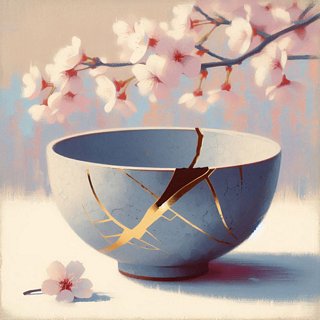
Consider kintsugi, or “golden joinery.” This Japanese art form involves mending broken pottery with gold. Rather than concealing the damage, they deliberately highlight the cracks with precious metal, transforming the object into a potent symbol of resilience and renewal. This appreciation for imperfection extends to their valuing of aged wood, antiques, and handcrafted items, where the wear and tear tell unique stories.

Wabi-sabi encourages acceptance of life’s inherent nature. Each flaw enriches one’s journey and deepens the broader human experience. This perspective frees individuals from chasing impossible perfection, celebrating life as it truly is.

Idea for Impact: Accept your natural flaws and challenge those unrealistic expectations. Embrace the beauty in repair and how things evolve.

Wondering what to read next?

  1. Mottainai: The Japanese Idea That’s Bringing More Balance to Busy Lives Everywhere
  2. Marie Kondo is No Cure for Our Wasteful and Over-consuming Culture
  3. Finding Peace in Everyday Tasks: Book Summary of ‘A Monk’s Guide to Cleaning’
  4. The Simple Life, The Good Life // Book Summary of Greg McKeown’s ‘Essentialism’
  5. I’ll Be Happy When …

Filed Under: Living the Good Life, Mental Models Tagged With: Clutter, Discipline, Happiness, Introspection, Japan, Materialism, Mindfulness, Parables, Perfectionism, Philosophy, Simple Living, Virtues

The Rebellion of Restraint: Dogma 25 and the Call to Reinvent Cinema with Less

November 14, 2025 By Nagesh Belludi Leave a Comment

Constraints and Creativity - The Rebellion of Restraint: Dogma 25 and the Call to Reinvent Cinema with Less At this year’s Cannes Film Festival, a group of Danish filmmakers unveiled a manifesto for a cinema movement called Dogma 25. Building on the radical spirit of Dogme 95—a cinematic rebellion launched in 1995 against Hollywood’s excesses—it rekindles artistic constraint for the digital age. Where Dogme 95 rejected artificial lighting, canned music, and special effects to prioritize raw storytelling, Dogma 25 asks a hauntingly relevant question: Can limitation still liberate? Might less still be more?

In an era flooded with tools and visual spectacle, Dogma 25 embraces subtraction as revolution. It challenges filmmakers to distill, not indulge—to confront material with honesty, stripped of digital distraction. Rule #1 declares: “All films must be made using consumer-grade materials, tech, or smartphones.” This isn’t nostalgia. It’s defiance.

Constraint, far from stifling creativity, sculpts it. Boundaries compel precision, guide direction, and fuel innovation. A haiku doesn’t suffer from brevity—it glows because of it. Like water diverting around stone, creative force adapts and deepens. The greatest artists don’t evade limitations. They lean into them—discovering rhythm in friction, meaning in resistance. Constraint doesn’t just make art possible. It makes art vital.

Freedom isn’t the absence of rules—it’s fluency in them. Obstacles do not cloud the path. They etch it.

Idea for Impact: Constraints are the launchpad of creativity. If you’re seeking creative breakthrough, don’t chase abundance. Flip the paradigm. Let constraint be your compass. It might just point to something more daring, vibrant, and truthful than anything born in excess.

Wondering what to read next?

  1. Constraints Inspire Creativity: How IKEA Started the “Flatpack Revolution”
  2. Question the Now, Imagine the Next
  3. Learning from Amazon: Getting Your House in Order
  4. Restless Dissatisfaction = Purposeful Innovation
  5. Unlocking Your Creative Potential: The Power of a Quiet Mind and Wandering Thoughts

Filed Under: Business Stories, Mental Models, The Great Innovators Tagged With: Creativity, Critical Thinking, Discipline, Innovation, Materialism, Parables, Problem Solving, Resilience, Simple Living, Thinking Tools

Japan’s MUJI Became an Iconic Brand by Refusing to Be One

September 26, 2025 By Nagesh Belludi Leave a Comment

Minimalism as Rebellion: MUJI's Counterstrike Against Consumer Excess

In the heyday of Japan’s consumer electronics boom, MUJI—short for Mujirushi Ryohin, or “no-brand quality goods”—stepped onto the scene as a quiet revolution. Launched in 1980, it offered a counterstrike against a market bloated with luxury logos and feature-packed excess. Consumers were drowning in labels and needless complexity. MUJI tossed them a lifeline.

Its genius wasn’t invention; it was restraint. MUJI’s philosophy ran on three simple principles: repurpose what others waste, strip out the ornamental, and reject the superfluous. This wasn’t minimalism for aesthetic purity. It was minimalism in service of reason—clarity with purpose, bordering on rebellion.

Take ochiwata, the cotton lint most manufacturers discard during combing. MUJI turns it into dishcloths, a subtle jab at industries obsessed with perfect materials. Or consider “Imperfect Dried Shiitake,” a bold rejection of beauty standards in the produce aisle. These items don’t hide their flaws; they wear them honestly. Even the packaging puts the product before the brand. MUJI doesn’t shout. It invites.

In a market starving for identity, MUJI chose integrity over polish. It slashed costs not to be cheap, but to be real. It isn’t anti-luxury; it’s anti-nonsense.

Idea for Impact: People don’t buy what you make—they buy what it means. MUJI nailed the message: by refusing to be a brand, it became one. A whisper that silenced the noise.

Wondering what to read next?

  1. The Rebellion of Restraint: Dogma 25 and the Call to Reinvent Cinema with Less
  2. Airline Safety Videos: From Dull Briefings to Dynamic Ad Platforms
  3. The Singapore Girl: Myth, Marketing, and Manufactured Grace
  4. Elon Musk Insults, Michael O’Leary Sells: Ryanair Knows Cheap-Fare Psychology
  5. Labubu Proves That Modern Luxury Is No Longer an Object, It’s a Story

Filed Under: Business Stories, MBA in a Nutshell, Mental Models, The Great Innovators Tagged With: Creativity, Innovation, Japan, Marketing, Materialism, Parables, Simple Living

The Case Against Minimalism: Less Stuff = Less You

February 6, 2025 By Nagesh Belludi 1 Comment

The Case Against Minimalism: Less Stuff = Less You The Minimalist lifestyle offers many perks, including the appealing notion that simplicity is a savvy response to our collective wake-up call about consumerism damaging the planet.

However, Minimalism can sometimes push people to become something they’re not. The things we own often reflect our carefully crafted identities, so when Minimalism demands a drastic downsizing, it can feel like it’s stripping our lives of their unique flair. The quest for less shouldn’t mean purging the vibrant chapters that make our lives rich and colorful.

If Minimalist cleanliness isn’t your style, why force it? Minimalism can sometimes feel like a rigorous diet for your belongings, reducing your space to a showroom of white tiles and Scandinavian IKEA furniture. One pan, one spoon, and a small wardrobe of organic fabrics might suit some, but for others, it’s just a recipe for a bland and impractical lifestyle. Simplicity may sound simple, but it can be less practical than it appears.

Ultimately, Minimalism is just a tool, and like any tool, it’s not a one-size-fits-all solution. The key is to organize your space in a way that suits you, even if it means your home doesn’t hit that Minimalist high note. A cluttered but cozy space might be your kind of harmony.

Life’s too short to live in a space as warm as a morgue. If surrounding yourself with cherished objects brings you joy and tells your story, then embrace it! As Marie Kondo wisely—though often ignored—said, if clutter sparks joy, who’s to stop you from indulging in it?

Idea for Impact: Live with intention, not deprivation. If you’re not going to enjoy it, Minimalism risks becoming just another trendy fad rather than something genuinely practical. After all, why sacrifice comfort and personal expression for the sake of an Instagram aesthetic?

Wondering what to read next?

  1. On Black Friday, Buy for Good—Not to Waste
  2. Having What You Want
  3. Addition Through Subtraction
  4. This Ancient Japanese Concept Can Help You Embrace Imperfection
  5. The Simple Life, The Good Life // Book Summary of Greg McKeown’s ‘Essentialism’

Filed Under: Living the Good Life Tagged With: Balance, Clutter, Happiness, Materialism, Mindfulness, Simple Living

What the Stoics Taught: Shunning the Materialistic Frenzy of Greed

January 23, 2025 By Nagesh Belludi Leave a Comment

What the Stoics Taught: Shunning the Materialistic Frenzy of Greed The Stoics are renowned for their profound insights into the workings of the human mind and their unwavering focus on distinguishing the internal from the external.

Marcus Aurelius, the Stoic Emperor, emphasized that true contentment doesn’t demand much. While modern society often links happiness to accumulating possessions, the Stoics ardently rejected this idea. They believed that genuine serenity and peace of mind result from simplification, not accumulation.

According to the Stoics, a significant portion of our suffering arises from our unrelenting attachment to external things. Seneca asserted, “It is not the man who has little, but he who desires more, that is poor.” Even the poet Tibullus echoed this Stoic wisdom, emphasizing that only the internal world holds the potential to bestow authentic happiness.

Idea for Impact: Rethink why you invest so much time and energy in the pursuit of peace of mind through external symbols like possessions, status, and wealth when what you seek is nestled within your own mind.

The Stoic message resounds clearly: The only things within our control are our thoughts, emotions, desires, and choices—in essence, our inner mental and emotional states. It’s within this realm that we discover the key to authentic happiness and tranquility.

Wondering what to read next?

  1. Why I’m Frugal
  2. I’ll Be Happy When …
  3. Never Enough
  4. On Black Friday, Buy for Good—Not to Waste
  5. The Simple Life, The Good Life // Book Summary of Greg McKeown’s ‘Essentialism’

Filed Under: Living the Good Life, Personal Finance Tagged With: Balance, Materialism, Money, Philosophy, Simple Living

On Black Friday, Buy for Good—Not to Waste

November 28, 2024 By Nagesh Belludi Leave a Comment

On Black Friday, Buy for Good, Not to Waste Ah, Black Friday, the annual shopping extravaganza featuring the spectacle of people buying all sorts of gadgets, gizmos, goodies, and gewgaws that they absolutely don’t need—often with money they don’t have!

Let’s not contribute to the throw-away culture, where convenience reigns supreme and responsibility goes out the window. Instead, let’s embark on a different kind of shopping journey—one that’s driven by the desire for simpler, more eco-conscious buying choices.

Idea for Impact: This holiday season, buy consciously by making thoughtful decisions, choosing quality over quantity, and resisting the temptation to snatch up anything that’ll inevitably end up growing dusty, lonely, and unworn at the bottom of a box or confined to a dark corner of your home. Opt for things made to last.

Wondering what to read next?

  1. I’ll Be Happy When …
  2. Marie Kondo is No Cure for Our Wasteful and Over-consuming Culture
  3. Addition Through Subtraction
  4. Why I’m Frugal
  5. The Simple Life, The Good Life // Book Summary of Greg McKeown’s ‘Essentialism’

Filed Under: Living the Good Life, Personal Finance Tagged With: Attitudes, Balance, Clutter, Discipline, Materialism, Mindfulness, Money, Simple Living

How Ads Turn Us into Dreamers

November 27, 2024 By Nagesh Belludi Leave a Comment

How Ads Turn Us into Dreamers through Emotional Baiting Advertisements used to be straightforward, focusing on what a product did and whether you needed it. Simple as that.

Then came a shift—a bit of sleight of hand, really. As consumer culture evolved, advertisers tapped into the power of emotional appeal. With the rise of mass media, lifestyle advertising emerged, connecting products with aspirational images and ideals.

Pioneers like David Ogilvy and Leo Burnett led this change, showing how products could enhance personal identity, success, and social status. Ads for brands like Ferrari and Mercedes-Benz started selling more than just cars—they sold desires like power, achievement, and prestige. The message became, “Own this, and you’ll get that.”

To me, the problem isn’t the desires themselves but the ineffective ways we pursue them. Recognizing what truly fulfills your desires can lead to mindful consumption—you’ll spend in ways that align with your values and reduce impulse buys.

Idea for Impact: Materialism is shallow. The symbols of prestige, security, power, and self-worth—like Chanel, Gucci, and Louis Vuitton—are empty. Unless you project meaning onto them.

Wondering what to read next?

  1. Never Enough
  2. Here’s the #1 Lesson from Secret Millionaires
  3. The ‘Buy More’ Madness Has to End
  4. Surprising Secrets of America’s Wealthy // Book Summary of ‘The Millionaire Next Door’
  5. Conspicuous Consumption and The Era of Excess // Book Summary of ‘Luxury Fever’

Filed Under: Living the Good Life, Personal Finance Tagged With: Biases, Marketing, Materialism, Money, Personal Finance, Persuasion, Simple Living

The ‘Buy More’ Madness Has to End

September 26, 2024 By Nagesh Belludi Leave a Comment

Stop Buying Stuff: The 'Buy More' Madness Has to End Stuff, stuff, stuff.

We’re all fed up with our stuff. Sure, some of it is genuinely useful or at least nice to have. But most of it? It’s just clutter—we’ll never use it.

What once seemed essential now just takes up space.

Advertisers, exploiting our endless craving for more, spend their careers tricking us into buying things we don’t need or even want. It’s infuriating how these so-called “creatives” see themselves as artists while devising ways to get us to spend money we don’t have on stuff we don’t need.

This madness has to end.

Someone should offer top dollar to those who can convince us to stop buying stuff.

What we really need is a killer ad campaign with the slogan “STOP BUYING STUFF.”

The irony? The ad industry geniuses who could create this campaign are busy getting us to do the exact opposite.

Could any amount of money persuade them to run an ad campaign aimed at, well, ending all ad campaigns?

Wondering what to read next?

  1. How Ads Turn Us into Dreamers
  2. On Black Friday, Buy for Good—Not to Waste
  3. Conspicuous Consumption and The Era of Excess // Book Summary of ‘Luxury Fever’
  4. Mottainai: The Japanese Idea That’s Bringing More Balance to Busy Lives Everywhere
  5. Decluttering: Getting Rid of the Stuff Doesn’t Necessarily Mean Getting Rid of Everything

Filed Under: Living the Good Life, Personal Finance Tagged With: Clutter, Marketing, Materialism, Persuasion, Simple Living

Seeing Joy

March 14, 2024 By Nagesh Belludi Leave a Comment

Seeing Joy Amid Life's Challenges: Purpose and Routine Life’s a constant whirlwind of routine and chaos, isn’t it? We’re all stuck in this crazy frenzy, with packed schedules and time slipping away. From the crack of dawn rush to meet deadlines to late-night cramming, every day’s just a blur. And even when we try to chill out, there’s always a million things vying for our attention. Finding joy in this hustle and bustle can feel like a distant dream.

Ever stop and think about it? The real challenge isn’t finding joy—it’s actually seeing it.

You know how it goes—when we convince ourselves life’s a drag, our brains work overtime to prove us right. The fast pace of life fills our heads with constant chatter like “brace for the next hurdle” or “let’s speed through this and onto the next thing.” It’s like we’re programming our minds to focus only on the hustle and bustle.

Here’s a simple trick to start seeing joy more: make a joy list before hitting the hay each night. Just grab a notepad, keep it by your bed, and jot down three things that made you happy, brought a smile to your face, or gave you some peace during the day. Think about those little moments that made you pause and appreciate the simple things, like watching a bird splash around in a puddle or getting a nice compliment from a stranger.

If you make this a nightly habit, you’ll train yourself to spot those little moments of joy throughout your day. Remind yourself to notice, enjoy, and remember them, knowing you’ll jot them down later. This can help clear your mind before bed, possibly leading to better sleep and waking up feeling more relaxed. Eventually, your brain will get the message that life, despite its craziness, is full of joy—you just gotta notice it.

Idea for Impact: Shift your perspective and learn to appreciate the little joys that surround us, even in the midst of challenges and hectic schedules.

Wondering what to read next?

  1. I’ll Be Happy When …
  2. The Simple Life, The Good Life // Book Summary of Greg McKeown’s ‘Essentialism’
  3. Having What You Want
  4. Lilies and Leeches
  5. The Case Against Minimalism: Less Stuff = Less You

Filed Under: Living the Good Life, Mental Models, Sharpening Your Skills Tagged With: Balance, Happiness, Materialism, Mindfulness, Pursuits, Simple Living

Next Page »

Primary Sidebar

Popular Now

Anxiety Assertiveness Attitudes Balance Biases Coaching Conflict Conversations Creativity Critical Thinking Decision-Making Discipline Emotions Entrepreneurs Etiquette Feedback Getting Along Getting Things Done Goals Great Manager Innovation Leadership Leadership Lessons Likeability Mental Models Mentoring Mindfulness Motivation Networking Parables Performance Management Persuasion Philosophy Problem Solving Procrastination Relationships Simple Living Social Skills Stress Suffering Thinking Tools Thought Process Time Management Winning on the Job Wisdom

About: Nagesh Belludi [hire] is a St. Petersburg, Florida-based freethinker, investor, and leadership coach. He specializes in helping executives and companies ensure that the overall quality of their decision-making benefits isn’t compromised by a lack of a big-picture understanding.

Get Updates

Signup for emails

Subscribe via RSS

Contact Nagesh Belludi

RECOMMENDED BOOK:
How Asia Works

How Asia Works: Joe Studwell

Joe Studwell on how Asia’s post-war economic miracles emerged via land reform, government-backed manufacturing, and financial repression.

Explore

  • Announcements
  • Belief and Spirituality
  • Business Stories
  • Career Development
  • Effective Communication
  • Great Personalities
  • Health and Well-being
  • Ideas and Insights
  • Inspirational Quotations
  • Leadership
  • Leadership Reading
  • Leading Teams
  • Living the Good Life
  • Managing Business Functions
  • Managing People
  • MBA in a Nutshell
  • Mental Models
  • News Analysis
  • Personal Finance
  • Podcasts
  • Project Management
  • Proverbs & Maxims
  • Sharpening Your Skills
  • The Great Innovators

Recently,

  • The Hot-Desking Lie: How It Killed Focus and Gutted Collaboration
  • Unreliable Narrators Make a Story Sounds Too Neat
  • Bertrand Russell on The Value of Philosophy: Doubt in an Age of Dogma
  • Inspirational Quotations #1142
  • The Law of Petty Irritations
  • Look, Here’s the Deal: Your Insecurity is Masquerading as Authority
  • Live as If You Are Already Looking Back on This Moment with Longing

Unless otherwise stated in the individual document, the works above are © Nagesh Belludi under a Creative Commons BY-NC-ND license. You may quote, copy and share them freely, as long as you link back to RightAttitudes.com, don't make money with them, and don't modify the content. Enjoy!