• Skip to content
  • Skip to primary sidebar

Right Attitudes

Ideas for Impact

Clutter

A Worthwhile New Year’s Resolution

December 31, 2025 By Nagesh Belludi Leave a Comment

A Worthwhile New Year's Resolution: Embracing Authentic Living and Imperfection Few things feel more exhausting than the annual tradition of drafting New Year’s resolutions. It seems the world collectively decides that, after a month of indulgence, we must suddenly repent with a list of impossible goals. This year, I’m opting out.

As the holiday decorations come down and the last bits of wrapping paper are shoved into the trash, we shift from celebration to self-discipline. December centers on joy and excess. January, by contrast, ushers in guilt, self-denial, and a touch too much self-righteousness.

Resolutions often serve as long, detailed inventories of our perceived shortcomings. The extra weight, the overflowing inbox, the unfinished books, the credit card bill staring us down—they all remind us that we should be thinner, richer, more productive, and more accomplished. Apparently, 2025 didn’t cut it. So now 2026 is the year we finally get our act together.

A few impulsive purchases or skipped workouts are not signs of failure. They are proof that we’re living. Still, resolutions twist these everyday moments into problems that need fixing, turning the new year into some sort of overdue bill.

By February, most resolutions are abandoned. Junk food bans crumble. Ambitious wake-up times slip back into snooze mode. Flipping the calendar doesn’t flip a switch in our minds. We are who we are—beautifully flawed, balancing indulgence and responsibility like everyone else.

Instead of another round of self-imposed suffering, we can try something refreshing. Let’s embrace where we are, imperfections included. If we must resolve to do something, let it be this: accept that we’ll never be perfectly polished, but we’ll always be wonderfully, unapologetically alive.

Wondering what to read next?

  1. What the Dry January Trap Shows Us About Extremes
  2. The #1 Hack to Build Healthy Habits in the New Year
  3. The ‘What-the-Hell’ Effect: How Minor Slip-Ups Trigger a Cycle of Giving Up
  4. Everything in Life Has an Opportunity Cost
  5. Half-Size Your Goals

Filed Under: Living the Good Life, Mental Models Tagged With: Assertiveness, Attitudes, Change Management, Clutter, Discipline, Getting Things Done, Goals, Procrastination, Targets, Wisdom

Messy Yet Meaningful

December 29, 2025 By Nagesh Belludi Leave a Comment

Embracing Chaos: The Path to Maturity Through Curiosity, Restraint, and Poetic Understanding Modern life tempts us toward simple ideals—peace, joy, freedom—but wisdom lies in reimagining these not as escapes from discomfort, but as quiet, sustained negotiations with the messier textures of reality and our own evolving psychology.

Peace isn’t the erasure of struggle. It’s the discipline of stillness in the eye of life’s whirlwind.

Joy isn’t the refusal of hardship. It’s the art of finding richness within the imperfect texture of experience.

Freedom isn’t the absence of constraint. It’s the capacity to act wisely within necessary limits.

Love isn’t just the presence of another. It’s the slow triumph of solitude, learned and accepted.

Growth isn’t a race toward improvement. It’s the quiet reconfiguration of the self in real time.

Purpose isn’t the conquest of doubt. It’s the patient search for significance beneath ambiguity.

Security isn’t a fortress of caution. It’s the intuition to risk and retreat in thoughtful balance.

Idea for Impact: Maturity doesn’t come from tidying life’s chaos, but from meeting it with curiosity, restraint, and poetic understanding.

Wondering what to read next?

  1. The More You Can Manage Your Emotions, the More Effective You’ll Be
  2. Change Your Perspective, Change Your Reactions
  3. If You Want to Be Loved, Love
  4. What It Means to Lead a Philosophical Life
  5. Anger is the Hardest of the Negative Emotions to Subdue

Filed Under: Living the Good Life, Mental Models Tagged With: Attitudes, Clutter, Emotions, Meaning, Mindfulness, Philosophy, Suffering, Virtues, Wisdom

This Ancient Japanese Concept Can Help You Embrace Imperfection

November 24, 2025 By Nagesh Belludi Leave a Comment

Wabi-Sabi: Ancient Japanese Concept Can Help You Embrace Imperfection The Japanese aesthetic of wabi-sabi reveals beauty in imperfection, transience, and incompletion. It reflects a deep appreciation for the real and the natural, fostering humility and connection to the world around them.

Centuries of tradition and Zen Buddhism root wabi-sabi, honoring life’s cycles of growth and decay. While society often obsesses over flawless ideals, this philosophy offers a different view: finding allure in what’s irregular and fleeting.

Consider kintsugi, or “golden joinery.” This Japanese art form involves mending broken pottery with gold. Rather than concealing the damage, they deliberately highlight the cracks with precious metal, transforming the object into a potent symbol of resilience and renewal. This appreciation for imperfection extends to their valuing of aged wood, antiques, and handcrafted items, where the wear and tear tell unique stories.

Wabi-sabi encourages acceptance of life’s inherent nature. Each flaw enriches one’s journey and deepens the broader human experience. This perspective frees individuals from chasing impossible perfection, celebrating life as it truly is.

Idea for Impact: Accept your natural flaws and challenge those unrealistic expectations. Embrace the beauty in repair and how things evolve.

Wondering what to read next?

  1. Mottainai: The Japanese Idea That’s Bringing More Balance to Busy Lives Everywhere
  2. Marie Kondo is No Cure for Our Wasteful and Over-consuming Culture
  3. Finding Peace in Everyday Tasks: Book Summary of ‘A Monk’s Guide to Cleaning’
  4. The Simple Life, The Good Life // Book Summary of Greg McKeown’s ‘Essentialism’
  5. I’ll Be Happy When …

Filed Under: Living the Good Life, Mental Models Tagged With: Clutter, Discipline, Happiness, Introspection, Japan, Materialism, Mindfulness, Parables, Perfectionism, Philosophy, Simple Living, Virtues

What the Mahabharata Teaches About Seeing by Refusing to See

October 20, 2025 By Nagesh Belludi Leave a Comment

Arjuna's Lesson in Focus from the Mahabharata Teaches About Seeing by Refusing to See The Mahābhārata, one of India’s most revered epics, intertwines themes of honor, duty, and destiny. Among its luminous tales is a striking lesson in pruned focus: young Arjuna’s test. Droṇācārya—the guru of warfare to both the Pāṇḍava and Kaurava princes, cousin clans bound by fate—devised a challenge to assess their discipline. He placed a wooden bird atop a tree and summoned each prince to aim at its eye. Before allowing the shot, he asked, “What do you see?”

Yudhiṣṭhira, the eldest of the cousins, stepped forward. Thoughtful and observant, he listed everything—the tree, the sky, the bird, even Droṇācārya. Though sincere, his scattered focus did not please the master. One by one, the other princes followed with similarly diffuse answers and were quietly dismissed.

Then came Arjuna. Calm and composed, he raised his bow, gaze locked onto the mark.”I see only the bird’s eye,” he said. Droṇācārya pressed, “Not the tree or branch?” Arjuna held firm.”Nothing else, Guru.” With reverent approval, the master allowed him to shoot. The arrow flew straight and true, striking the eye. That was the hallmark of the legend in the making. Arjuna’s clarity and devotion would shine as a beacon of mastery.

But the tale transcends its setting. It is not merely about talent—it celebrates radical focus. Arjuna’s greatness arose not from divine gifts but from subtraction: pruning distraction, discarding context, meeting the moment with terrifying purpose. His power lay in what he refused to see.

What Arjuna models is not just athletic elegance but cognitive courage—the discipline to silence all competing signals. In today’s age of constant distraction, such mastery feels almost mythical.

Idea for Impact: The modern tragedy is our inability to be Arjuna—to filter out the noise of desire, worry, and superficial validation in pursuit of a single, well-defined aim. This, too, is the bedrock of a well-lived life. And yet, it is a practice too rarely embraced.

Wondering what to read next?

  1. How to … Overcome Impact Blindness and Make Decisions with Long-Term Clarity
  2. Addition Through Subtraction
  3. This Ancient Japanese Concept Can Help You Embrace Imperfection
  4. Everything in Life Has an Opportunity Cost
  5. Lilies and Leeches

Filed Under: Living the Good Life, Mental Models, Sharpening Your Skills Tagged With: Balance, Biases, Clutter, Discipline, Mindfulness, Parables, Simple Living, Targets

Let a Dice Decide: Random Choices Might Be Smarter Than You Think

September 10, 2025 By Nagesh Belludi Leave a Comment

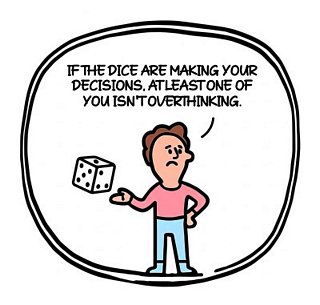
Let a Dice Decide: Random Choices Might Be Smarter Than You Think We make thousands of decisions daily—what to wear, which email to answer first, whether to take the scenic route or stick to the main road. Most are low-stakes, but the act of choosing can sap mental energy. That’s decision fatigue: as options pile up, clarity frays, and even the inconsequential starts to feel weighty. The mind treats small choices like they’ve got far more significance than they deserve.

There’s a surprisingly elegant way out: hand off minor decisions to chance. Roll a die. Flip a coin. Outsource the trivial. Randomization cuts through indecision and delivers instant clarity. Ironically, when the coin’s in mid-air, we often discover what we truly want—hoping silently for a particular side to land face-up. That fleeting instinct speaks louder than hours of deliberation.

We already allow randomness to shape more of our lives than we realize. We hit shuffle and trust an algorithm to pick our next song. We choose checkout lines blindly, hoping they’re fastest. Our social feeds present content in curated chaos. Even picking a restaurant often comes down to whatever looks inviting in the moment. Randomness isn’t an interruption—it’s ambient, constant, and influential.

Using chance deliberately brings relief. Faced with mundane, energy-draining decisions, inviting a bit of randomness can be playful and effective. It breaks the loop of paralysis-by-analysis and forces commitment. It frees up brainpower for choices that actually require reflection. Not everything deserves a full internal debate.

Of course, not every decision fits this mold—career shifts, relationships, financial moves need real thought. But for the daily swarm of indecision, randomness offers clarity and release.

That’s freedom from the unimportant.

Wondering what to read next?

  1. Everything in Life Has an Opportunity Cost
  2. Don’t Ruminate Endlessly
  3. In Imperfection, the True Magic of the Holidays Shines
  4. To-Do or Not To-Do?
  5. What Your Messy Desk Says About You

Filed Under: Mental Models, Sharpening Your Skills Tagged With: Anxiety, Assertiveness, Clutter, Decision-Making, Discipline, Efficiency, Parables, Procrastination, Simple Living, Thought Process

Thought Without Action is a Rehearsal for Irrelevance

August 8, 2025 By Nagesh Belludi Leave a Comment

Success Lives in Execution, Not in Perfect Plans Strategy means nothing without execution. Yet too often, plans drown in opinion. Feedback loops expand. Timelines slip. Clarity dies by excessive rumination.

Want momentum? Stop collecting takes. Set a direction, trim the noise, act.

Every added voice risks dilution. Every delay compounds cost.

Decisiveness is underrated. Strategy doesn’t need universal buy-in—it needs movement. Adapt when you must, but not at the expense of traction.

Idea for Impact: Momentum isn’t built on many voices, but on one that dares to commit. Success lives in execution, not in perfect plans. Every time.

Wondering what to read next?

  1. Don’t Do the Easiest Jobs First
  2. Ask This One Question Every Morning to Find Your Focus
  3. Did School Turn You Into a Procrastinator?
  4. Why Doing a Terrible Job First Actually Works
  5. Get Unstuck and Take Action Now

Filed Under: Living the Good Life, Sharpening Your Skills Tagged With: Clutter, Decision-Making, Discipline, Getting Things Done, Motivation, Procrastination, Task Management

Powerful Systems, Costly Upkeep

March 28, 2025 By Nagesh Belludi Leave a Comment

'Getting Things Done' by David Allen (ISBN 0670899240) David Allen developed the Getting Things Done (GTD) system to help individuals manage tasks and commitments through a process of capturing, clarifying, organizing, reflecting, and engaging. His book, Getting Things Done: The Art of Stress-Free Productivity (2001,) gained significant traction in the mid-2000s, alongside the growth of productivity blogs and digital tools. However, the system’s high maintenance demands have discouraged many users.

GTD demands considerable time investment, beginning with the capture of all tasks, projects, and “open loops,” followed by organizing them into actionable lists. Consistent upkeep, especially the weekly review, is critical for the system’s effectiveness. However, this ongoing maintenance can become burdensome, particularly for individuals with demanding schedules, as the time spent managing the system often outweighs the productivity benefits. Consequently, most users adapt the GTD framework to suit their needs rather than strictly adhering to the original methodology.

Idea for Impact: Any system, no matter how powerful, requires you to balance its benefits with the time you spend maintaining it. Experiment with simpler methods—sometimes, complex frameworks create more work than they solve.

Wondering what to read next?

  1. Don’t Do the Easiest Jobs First
  2. Ask This One Question Every Morning to Find Your Focus
  3. How to Help an Employee Who Has Too Many Loops Open at Once
  4. Stop Putting Off Your Toughest Tasks
  5. How to … Combat Those Pesky Distractions That Keep You From Living Fully

Filed Under: Mental Models, Sharpening Your Skills Tagged With: Clutter, Discipline, Procrastination, Tardiness, Task Management, Time Management

The Case Against Minimalism: Less Stuff = Less You

February 6, 2025 By Nagesh Belludi 1 Comment

The Case Against Minimalism: Less Stuff = Less You The Minimalist lifestyle offers many perks, including the appealing notion that simplicity is a savvy response to our collective wake-up call about consumerism damaging the planet.

However, Minimalism can sometimes push people to become something they’re not. The things we own often reflect our carefully crafted identities, so when Minimalism demands a drastic downsizing, it can feel like it’s stripping our lives of their unique flair. The quest for less shouldn’t mean purging the vibrant chapters that make our lives rich and colorful.

If Minimalist cleanliness isn’t your style, why force it? Minimalism can sometimes feel like a rigorous diet for your belongings, reducing your space to a showroom of white tiles and Scandinavian IKEA furniture. One pan, one spoon, and a small wardrobe of organic fabrics might suit some, but for others, it’s just a recipe for a bland and impractical lifestyle. Simplicity may sound simple, but it can be less practical than it appears.

Ultimately, Minimalism is just a tool, and like any tool, it’s not a one-size-fits-all solution. The key is to organize your space in a way that suits you, even if it means your home doesn’t hit that Minimalist high note. A cluttered but cozy space might be your kind of harmony.

Life’s too short to live in a space as warm as a morgue. If surrounding yourself with cherished objects brings you joy and tells your story, then embrace it! As Marie Kondo wisely—though often ignored—said, if clutter sparks joy, who’s to stop you from indulging in it?

Idea for Impact: Live with intention, not deprivation. If you’re not going to enjoy it, Minimalism risks becoming just another trendy fad rather than something genuinely practical. After all, why sacrifice comfort and personal expression for the sake of an Instagram aesthetic?

Wondering what to read next?

  1. On Black Friday, Buy for Good—Not to Waste
  2. Having What You Want
  3. Seeing Joy
  4. Lilies and Leeches
  5. I’ll Be Happy When …

Filed Under: Living the Good Life Tagged With: Balance, Clutter, Happiness, Materialism, Mindfulness, Simple Living

On Black Friday, Buy for Good—Not to Waste

November 28, 2024 By Nagesh Belludi Leave a Comment

On Black Friday, Buy for Good, Not to Waste Ah, Black Friday, the annual shopping extravaganza featuring the spectacle of people buying all sorts of gadgets, gizmos, goodies, and gewgaws that they absolutely don’t need—often with money they don’t have!

Let’s not contribute to the throw-away culture, where convenience reigns supreme and responsibility goes out the window. Instead, let’s embark on a different kind of shopping journey—one that’s driven by the desire for simpler, more eco-conscious buying choices.

Idea for Impact: This holiday season, buy consciously by making thoughtful decisions, choosing quality over quantity, and resisting the temptation to snatch up anything that’ll inevitably end up growing dusty, lonely, and unworn at the bottom of a box or confined to a dark corner of your home. Opt for things made to last.

Wondering what to read next?

  1. I’ll Be Happy When …
  2. Marie Kondo is No Cure for Our Wasteful and Over-consuming Culture
  3. Addition Through Subtraction
  4. Why I’m Frugal
  5. The Simple Life, The Good Life // Book Summary of Greg McKeown’s ‘Essentialism’

Filed Under: Living the Good Life, Personal Finance Tagged With: Attitudes, Balance, Clutter, Discipline, Materialism, Mindfulness, Money, Simple Living

In Imperfection, the True Magic of the Holidays Shines

November 21, 2024 By Nagesh Belludi Leave a Comment

In Imperfection, the True Magic of the Holidays Shines Amid the holiday rush, the pressure to create a flawlessly decorated home and a picture-perfect celebration can be overwhelming. However, the truth is that your home doesn’t need to mirror a Pinterest fantasy or a glossy magazine spread, and your Christmas feast doesn’t have to meet Martha Stewart’s standards.

Be realistic about holiday preparations. Even for those who thrive on meticulous planning, maintaining a spotless home can be a tall order, especially with more people than usual under one roof. Don’t burden yourself with the pursuit of perfection. Instead, focus on what genuinely matters and address the areas that truly bother you, while letting some things slide.

Remember, the heart of the holidays lies in spending quality time with loved ones and enjoying cherished traditions. The quirks and imperfections of your home? They give it character and warmth. Embrace those cozy, imperfect moments that make holiday celebrations truly special.

Idea for Impact: Imperfection makes the holiday season perfect by embracing the charm of spontaneous moments and genuine connections over meticulously planned perfection.

Wondering what to read next?

  1. The Liberating Power of Embracing a Cluttered Space
  2. A Key to Changing Your Perfectionist Mindset
  3. Thinking Straight in the Age of Overload // Book Summary of Daniel Levitin’s ‘The Organized Mind’
  4. Dear Hoarder, Learn to Let Go
  5. The 5 Habits of Highly Organized People

Filed Under: Living the Good Life, Mental Models, Sharpening Your Skills Tagged With: Anxiety, Clutter, Discipline, Perfectionism, Procrastination, Simple Living, Stress, Tardiness

Next Page »

Primary Sidebar

Popular Now

Anxiety Assertiveness Attitudes Balance Biases Coaching Conflict Conversations Creativity Critical Thinking Decision-Making Discipline Emotions Entrepreneurs Etiquette Feedback Getting Along Getting Things Done Goals Great Manager Innovation Leadership Leadership Lessons Likeability Mental Models Mentoring Mindfulness Motivation Networking Parables Performance Management Persuasion Philosophy Problem Solving Procrastination Relationships Simple Living Social Skills Stress Suffering Thinking Tools Thought Process Time Management Winning on the Job Wisdom

About: Nagesh Belludi [hire] is a St. Petersburg, Florida-based freethinker, investor, and leadership coach. He specializes in helping executives and companies ensure that the overall quality of their decision-making benefits isn’t compromised by a lack of a big-picture understanding.

Get Updates

Signup for emails

Subscribe via RSS

Contact Nagesh Belludi

RECOMMENDED BOOK:
Stumbling on Happiness

Stumbling on Happiness: Daniel Gilbert

Harvard psychologist Daniel Gilbert shares factual findings that will change the way you look at the world and seek happiness and joy.

Explore

  • Announcements
  • Belief and Spirituality
  • Business Stories
  • Career Development
  • Effective Communication
  • Great Personalities
  • Health and Well-being
  • Ideas and Insights
  • Inspirational Quotations
  • Leadership
  • Leadership Reading
  • Leading Teams
  • Living the Good Life
  • Managing Business Functions
  • Managing People
  • MBA in a Nutshell
  • Mental Models
  • News Analysis
  • Personal Finance
  • Podcasts
  • Project Management
  • Proverbs & Maxims
  • Sharpening Your Skills
  • The Great Innovators

Recently,

  • What Appears Self-Evident to One May Be Entirely Opaque to Another: How the Dalai Lama Apology Highlights Cultural Relativism
  • Inspirational Quotations #1136
  • Ditch Deadlines That Deceive
  • Invention is Refined Theft
  • You Need to Stop Turning Warren Buffett Into a Prophet
  • Inspirational Quotations #1135
  • What the Dry January Trap Shows Us About Extremes

Unless otherwise stated in the individual document, the works above are © Nagesh Belludi under a Creative Commons BY-NC-ND license. You may quote, copy and share them freely, as long as you link back to RightAttitudes.com, don't make money with them, and don't modify the content. Enjoy!