• Skip to content
  • Skip to primary sidebar

Right Attitudes

Ideas for Impact

Search Results for: bill gates

Inspirational Quotations #694

July 23, 2017 By Nagesh Belludi Leave a Comment

If you have a strong mind,|and plant in it a firm resolve,|you can change your destiny.
—Unknown

The exception proves the rule.
—Common Proverb

When playing Russian roulette the fact that the first shot got off safely is little comfort for the next.
—Richard Feynman (American Physicist)

Intelligent people have a remarkable ability to rationalize irrational actions, to re-tell history to fit their preferred, comfortable narrative.
—Ben Casnocha (American Entrepreneur, Investor)

Marriage is a coming together for better or for worse, hopefully enduring, and intimate to the degree of being sacred.
—William O. Douglas (American Judge)

You are successful and creative only when you see an opportunity in every difficulty.
—Swami Chinmayananda (Indian Hindu Teacher)

Unless I accept my faults, I will most certainly doubt my virtues.
—Hugh Prather (American Christian Author)

If you make listening and observation your occupation you will gain much more than you can by talk.
—Robert Baden-Powell, 1st Baron Baden-Powell (British Military Leader)

Fear must be entirely banished. The purified soul will fear nothing.
—Plotinus (Ancient Greek Philosopher)

Brood less, smile more and serve all.
—Swami Chinmayananda (Indian Hindu Teacher)

To give love is true freedom; to demand love is pure slavery.
—Swami Chinmayananda (Indian Hindu Teacher)

The more of wisdom we know, the more we may earn. That man who seeks to learn more of his craft shall be richly rewarded.
—George Samuel Clason (American Businessperson)

Character consists of what you do on the third and fourth tries.
—James A. Michener (American Novelist)

Humanity’s greatest advances are not in its discoveries—but in how those discoveries are applied to reduce inequity.
—Bill Gates (American Businessperson)

Providence conceals itself in the details of human affairs, but becomes unveiled in the generalities of history.
—Alphonse de Lamartine (French Writer)

If you yourself are at peace, then there is at least some peace in the world.
—Thomas Merton (French-born American Clergyman)

Everybody exists. It is only the few who live.|To live, you should have an ideal.
—Swami Chinmayananda (Indian Hindu Teacher)

Filed Under: Inspirational Quotations

Five Principles of Career Success from Intel’s Andy Grove

June 28, 2016 By Nagesh Belludi Leave a Comment

Andy Grove (1936–2016,) the illustrious cofounder and CEO of Intel, passed away earlier this year. Grove was arguably the most influential tech executive the Silicon Valley has ever seen. He achieved fame and success in his adopted country and provides an outstanding modern-day immigrant success story.

Modern-Day Immigrant Success Story

Born András István Gróf to a middle-class Jewish family in Hungary, he survived the Nazi occupation by taking a false name, hiding with Christian families, and escaping the heartbreaking fate of half a million Hungarian Jewish people. After the war, when the Russians occupied Hungary and installed a repressive Communist government, Grove’s father was forced to take up menial work despite having been emaciated from torture at a Nazi labor camp.

During the brutal response to the anti-Soviet 1956 Hungarian Revolution following Stalin’s death, Grove’s family hid themselves in a coal cellar whilst Soviet artillery shells destroyed their neighborhood. Grove joined a flood of people who took advantage of the pandemonium to walk across the border into Austria. He fled to the United States in 1957, arrived in New York with less than $20 in his pocket, and settled in with relatives.

As a child, Grove was afflicted with scarlet fever and an ear infection that left him nearly deaf. In spite of his hearing impairment and an inadequate knowledge of English, he studied chemical engineering at the City College of New York and graduated at the top of his class. Grove learned to lip read and then deciphered his notes after class. He recalled to The New York Times in 1960, “I had to go over each day’s work again at night with a dictionary at my side.” He then earned a Ph.D. in chemical engineering at Berkeley and joined Fairchild Semiconductor. When his managers Gordon Moore and Robert Noyce left Fairchild to start Intel, Grove went with them as director of engineering.

High Performance Management and Paranoia

'Only the Paranoid Survive' by Andrew S. Grove (ISBN 0385483821) Intel evolved swiftly. As President and later CEO, Grove brilliantly led Intel’s strategy and operations, established a near-monopoly on CPUs, and played a central role in the PC revolution. During this tenure as CEO from 1987–98, Intel’s stock price rose 32% a year. After relinquishing his role as Intel’s CEO in 1998 and as Chairman of the Board in 2005, he mentored prominent Silicon Valley entrepreneurs.

Grove was famous for his rigorous, no-nonsense, confrontational, non-hierarchical management style; his approach still dominates the Silicon Valley culture. He zealously demanded high performance. In 2004, the Wharton School him the most influential business leader of the past quarter-century, over Microsoft’s Bill Gates, General Electric’s Jack Welch, and Walmart’s Sam Walton.

Grove was a conspicuous voice for reason in the immigration, offshoring, and jobs-creation debates. He was also a prolific author and public speaker. His autobiography Swimming Across (2001) recounts the first 20 years of his life—from childhood in Hungary up until his move to California. His other autobiography, Only the Paranoid Survive (1996,) describes how companies should deal with emergent competitors, transform themselves, and perhaps change the nature of the industry itself. Forbes magazine calls it “probably the best book on business written by a business person since Alfred Sloan’s My Years with General Motors.” High Output Management (1995) explained how to maximize productivity and has become a cult classic in Silicon Valley. One on One with Andy Grove (1988) compiles his “Dear Abby”-style newspaper Q&A column on work- and career-advice.

Five Principles of Career Success

'One-on-One With Andy Grove' by Andy Grove (ISBN 0140109358) Wrapping up One on One, Grove summarized his advice on career, management, and leadership with five suggestions:

  • FIRST—and this is very important—enjoy your work. It’s impossible to like all of it. Sometimes you’ll chafe under its unrelenting nature, other times you’ll be bored, but overall you must enjoy it. I am convinced that most people will like their work if they can see that what they do makes a difference and if they approach their work with a bit of zest, maybe even playfulness. Doing so introduces a bit of levity when it’s most needed and leads to camaraderie.
  • SECOND, be totally dedicated to the substance of your work, to the end result, the output; not how you got to it or whose idea it was or whether you look good or not.
  • THIRD, respect the work of all those who respect their own work, from vice presidents to sales clerks, from maintenance technicians to security officers. Nobody is unimportant: It takes all levels and all jobs to run a functioning organization.
  • FOURTH, be straight with everyone. I hate it when people are not honest with me, and I would hate myself if I weren’t straight with them. This isn’t an easy principle to stick to. There are always many reasons (better to call them excuses) to compromise a little here or there. We may reason that people are not ready to hear the truth or the bad news, that the time isn’t right, or whatever. Giving in to those tempting rationalizations usually leads to conduct that can be ethically wrong and will backfire every time.
  • And, ALWAYS, when stumped, stop and think your way through to your own answers!

Filed Under: Career Development, Great Personalities Tagged With: Winning on the Job

Inspirational Quotations #626

April 3, 2016 By Nagesh Belludi Leave a Comment

If you have health, you probably will be happy, and if you have health and happiness, you have all the wealth you need, even if it is not all you want.
—Elbert Hubbard (American Writer)

One learns little more about a man from his feats of literary memory than from the feats of his alimentary canal.
—Frank Moore Colby (American Educator)

Leaders need to provide strategy and direction and to give employees tools that enable them to gather information and insight from around the world. Leaders shouldn’t try to make every decision.
—Bill Gates (American Businessperson)

Anger blows out the lamp of the mind. In the examination of a great and important question, everyone should be serene, slow-pulsed and calm.
—Robert G. Ingersoll (American Atheist Politician)

Pleasure is a reciprocal; no one feels it who does not at the same time give it. To be pleased, one must please.
—Earl of Chesterfield

Once our minds are ‘tattooed’ with negative thinking, our chances for long-term success diminish.
—John C. Maxwell (American Christian Professional Speaker)

Our minds are lazier than our bodies.
—Francois de La Rochefoucauld

The more refined one is, the more unhappy.
—Anton Chekhov (Russian Short Story Writer)

To do more for the world than the world does for you—that is success.
—Henry Ford (American Businessperson)

The ideal man bears the accidents of life with dignity and grace, making the best of the circumstances.
—Aristotle (Ancient Greek Philosopher)

When you get to the end of your rope, tie a knot and hang on.
—Franklin D. Roosevelt (American Head of State)

Wisdom is knowing what to do next; virtue is doing it.
—David Starr Jordan (American Zoologist)

Filed Under: Inspirational Quotations

Lessons from Sam Walton: Learning from Failure

March 29, 2016 By Nagesh Belludi Leave a Comment

Sam Walton (1918–1992) experienced failures and setbacks. And, like all successful people, the iconic founder of Walmart and Sam’s Club prided himself on learning from those experiences.

Walton’s Initial Success … and Then, in a Heartbeat, Failure

By 1950, a 32-year-old Sam Walton had established himself as a successful retailer in Newport, Arkansas. In 1945, Walton had purchased a Ben Franklin variety store and set up a five-year personal goal to make it the most profitable variety store in the region. By 1950, Walton had a record $250,000 in sales and $30,000 to $40,000 in profit (some $2.5 million in sales and $300,000 to $400,000 in profits in today’s dollars.) His success had attracted a lot of attention.

Not only that, the young Walton family—Sam, his wife Helen, and four young children—had firmly established itself in Newport. Sam and Helen were very active in the community and had taken up prominent civic and church duties.

An innocuous legal oversight cost him this success. When he had signed the lease on the property rental for his Ben Franklin variety store in 1945, thanks to inexperience and excitement at becoming a merchant, Walton had agreed to give back the landlord 5% of sales. He later discovered this was the highest any retailer had paid for rental.

More significantly, Walton had also neglected to add a clause in his lease that would give him the option to renew the lease after five years. Therefore, in 1950, when the lease on Walton’s Ben Franklin store expired, his sneaky landlord knew there was nowhere else in town for Walton to relocate his store. The landlord refused to renew Walton’s lease at any price! The landlord bought Walton’s well-established store along with its fixtures and inventory and transferred the store to his son. Walton was devastated; he had no choice but to give up his successful store. In his best-selling autobiography Made in America, Walton recalled this as the lowest point of his business life:

I felt sick to my stomach. I couldn’t believe it was happening to me. It really was like a nightmare. I had built the best variety store in the whole region and worked hard in the community, done everything right, and now I was being kicked out of town. It didn’t seem fair. I blamed myself for ever getting suckered into such an awful lease, and I was furious at the landlord. Helen, just settling in with a brand-new family of four, was heartsick at the prospect of leaving Newport. But that’s what we were going to do.

Sam Walton Was Not One to Dwell on Disasters

All the hard work he had put in to build a successful store and the earning power he had established over five years had become worthless because of an innocuous mistake. Nevertheless, Walton didn’t let this disaster get him down.

I’ve never been one to dwell on reverses, and I didn’t do so then. It’s just a corny saying that you can make a positive out of most any negative if you work at it hard enough. I’ve always thought of problems as challenges, and this one wasn’t any different. I don’t know if that experience changed me or not. I know I read my leases a lot more carefully after that, and may be I because a little wary of just how tough the world can be. Also, it may have been about then that I began encouraging our eldest boy—six-year-old Bob—to become a lawyer. But I didn’t dwell on my disappointment. The challenge at hand was simple enough to figure out. I had to pick myself up and get on with it, do it all over again, only even better this time.

This Newport experience turned out to be a blessing in disguise for Walton. His family relocated to the relatively obscure Bentonville, Arkansas, for a brand-new start. Walton started over and established himself as a retailer again—only in even bigger and better ways. In 1962, Walton decided that the future of retailing lay in discounting. His strategy of buying low, selling at a discount, and making up for low margins by moving vast amounts of inventory, made Walmart the most successful retailer ever. From 1985 until his death in 1992, he was the richest man in the world.

Successful People Learn from Failure and Get On

'Sam Walton: Made In America' by Sam Walton (ISBN 0553562835) Walton’s was a typical entrepreneurial response to failure—successful people take risks, fail sometimes, but pick themselves up, ask what they can learn from the experience, and try again, even harder the next time.

On a related note, Bill Gates, the most successful entrepreneur of his generation, once said, “Success is a lousy teacher. It seduces smart people into thinking they can’t lose.”

Complement this lesson on failure with J.K. Rowling’s reflections on the benefits of failure in her famous 2008 commencement address at Harvard: “Failure meant a stripping away of the inessential. I stopped pretending to myself that I was anything other than what I was, and began to direct all my energy into finishing the only work that mattered to me…The knowledge that you have emerged wiser and stronger from setbacks means that you are, ever after, secure in your ability to survive.”

Filed Under: Leadership Reading, Sharpening Your Skills Tagged With: Attitudes, Discipline, Entrepreneurs, Learning, Persistence, Personal Growth, Success

What Is the Point of Life, If Only to Be Forgotten?

January 5, 2016 By Nagesh Belludi Leave a Comment

While traveling around the magical Norwegian Fjords and contemplating life one day last summer, I recalled a young man’s story. He had spent many years in an Indian prison despite being acquitted because everyone had forgotten about him.

Forgotten

In 1988, Pratap Nayak was arrested at the age of 14 after getting caught in a violent clash between two rival families in his village in the state of Orissa. A corrupted lower court promptly sentenced him to life imprisonment.

Thanks to the Indian judicial system’s sluggishness, it took six years for a High Court to pronounce Nayak innocent. Unfortunately, nobody informed him or the prison officials about this judgment and his lawyer had died during the intervening years. Nayak’s family had assumed helplessness and lost touch with both him and with the lawyer.

Nayak remained in jail for eight more years after acquittal until a prison system auditor realized that Nayak wasn’t supposed to still be in prison. When he was finally freed at age 28, he was astonished and said, “no one bothered about me … not even my own family.”

When Nayak was finally reunited with his impoverished family of bamboo craftsmen, his father cried, “How shall I take care of him? We don’t get enough to eat ourselves. Had he completed his education, he would have had a good job by now. They ruined his life.”

“Life’s but a walking shadow … then is heard no more”

Shakespeare’s Macbeth (Act 5, Scene 5, Lines 22–31) contains one of the most eloquent expressions of our lives’ cosmic insignificance:

Tomorrow, and tomorrow, and tomorrow
Creeps in this petty pace from day to day
To the last syllable of recorded time,
And all our yesterdays have lighted fools
The way to dusty death. Out, out brief candle!
Life’s but a walking shadow, a poor player
That struts and frets his hour upon the stage
And then is heard no more. It is a tale
Told by an idiot, full of sound and fury,
Signifying nothing.

What Difference Does It Make What We Do with Our Lives?

Whenever I’m enjoying the splendor of the mountains and the waters—as I did in the Norwegian Fjords—and marvel at how these natural elements came to be millions of years ago, I meditate upon the fact that what we identify as our lifespan is but a tiny sliver in the grand timeline of the cosmos. We’re born, we live, we die, and then, as Shakespeare reminds us in Macbeth, we are “heard no more.”

In the grand scheme of things, everything is pointless, irrelevant, and ultimately insignificant. Our lives are impermanent and almost everything that most of us accomplish during our lives will someday become obsolete and be forgotten.

Yet, we rouse ourselves out of bed every day and engage in various activities that are all somehow tied to a purpose or mission—a mission we’ve either consciously created for ourselves or subconsciously accepted as an assignment from somebody. Central to this mission is that we hope to bring about more meaning to the lives of people around us.

This mission imbues us with a sense of purpose—invariably, it is a manifestation of a strong desire within ourselves to bring value, meaning, and joy for others and ultimately for ourselves as well. Even the prospect of smiling, complimenting, or expressing gratitude to another person feels good and adds to our own happiness because we know we’re adding more meaning to the other’s life.

Idea for Impact: The Key to a Life Well-led Is to Make as Big a Difference as You Can

The utmost measure of a life well-led is how you use your unique talents to do the most good you can. Enrich your life by trying to make a difference. Better yet, try to make the biggest difference you can. Perhaps if you’re fortunate enough—as the Buddha, Mahatma Gandhi, Albert Einstein, Richard Feynman, Bill Gates were/are—your contribution can create ripple effects and create an enduring legacy that lasts long after you’re gone.

If you want to be remembered and appreciated for having contributed something to the world, strive to live in the service of others and make the largest possible positive difference you can. That’s the key to a life well-led.

Filed Under: Living the Good Life, Sharpening Your Skills Tagged With: Balance, Buddhism, Life Plan, Meaning, Mindfulness, Philosophy, Virtues

Inspirational Quotations #609

December 6, 2015 By Nagesh Belludi Leave a Comment

We are sure to be losers when we quarrel with ourselves; it is civil war.
—Charles Caleb Colton (English Angelic Priest)

Gray skies are just clouds passing over.
—Duke Ellington

My job is about the most fun thing I do, but I have a broad set of interests, going places, reading things, doing things.
—Bill Gates (American Businessperson)

The violence we do to ourselves in order to remain faithful to the one we love is hardly better than an act of infidelity.
—Francois de La Rochefoucauld

The person who tries to live alone will not succeed as a human being. His heart withers if it does not answer another heart. His mind shrinks away if he hears only the echoes of his own thoughts and finds no other inspiration.
—Pearl S. Buck (American Novelist)

A reward cannot be valued if it is not understood
—Phillip C. Grant

The end of man is action.
—Thomas Carlyle (Scottish Writer)

Between the optimist and the pessimist, the difference is droll. The optimist sees the doughnut; the pessimist the hole!
—McLandburgh Wilson

Happiness depends upon ourselves.
—Aristotle (Ancient Greek Philosopher)

It is not a struggle merely of economic theories, or forms of government or of military power. At issue is the true nature of man. Either man is the creature whom the psalmist described as a little lower than the angels … or man is a soulless, animated machine to be enslaved, used and consumed by the state for its own glorification. It is, therefore, a struggle which goes to the roots of the human spirit, and its shadow falls across the long sweep of man’s destiny.
—Dwight D. Eisenhower (American Head of State)

Filed Under: Inspirational Quotations

Lessons from the Biography of Tesla’s Elon Musk

August 25, 2015 By Nagesh Belludi Leave a Comment

I recently finished reading Ashlee Vance’s riveting portrait of Elon Musk, the CEO of Tesla Motors, CEO of SpaceX, chairman of SolarCity, and previously the founder of PayPal and other companies.

Musk has emerged as the foremost superstar/visionary-entrepreneur of Silicon Valley since Apple’s Steve Jobs passed away in 2011.

'Elon Musk' by Ashlee Vance (ISBN 0062301233) Vance’s biography reveals how Musk’s “willingness to tackle impossible things” has “turned him into a deity in Silicon Valley.”

Vance’s biography portrays Musk as an obsessively focused and a remarkably driven entrepreneur, but one who is almost unbearably difficult to work with. Musk is tirelessly demanding of employees, has low tolerance for underperformers, and does not like to share credit for successful ventures.

The book’s key takeaway is actually an admonitory lesson: Elon Musk may well be one of the most successful entrepreneurs of all time—if your characterization of success is rather narrow. However, having an extreme personality and attaining great success come at the cost of many other things. In his drive to win, Musk sacrifices friends, business associates, and even his family to get what he wants. The story of Elon Musk exemplifies what happens when an overachieving leader regards individuals as tools and attaches more importance to his projects than to his people.

Complement Ashlee Vance’s “Elon Musk: Tesla, SpaceX, and the Quest for a Fantastic Future” with biographies of two other entrepreneur-visionaries with aggressively competitive personalities: Walter Isaacson’s “Steve Jobs” and Brad Stone’s “The Everything Store” Like Elon Musk, both Jobs and Bezos are reputed for their personal influence on every aspect of Apple and Amazon’s products and services. They are described as being demanding and demeaning to people who helped them realize their visionary aspirations.

Filed Under: Great Personalities, Leadership Reading, The Great Innovators Tagged With: Books, Elon Musk, Entrepreneurs, Leadership Lessons, Success

These Celebrities and Hollywood Actors Didn’t Just Wait Around for Dream Jobs to Turn up

July 21, 2015 By Nagesh Belludi 1 Comment

“He who lives uprightly and experiences true difficulty and disappointment and is nonetheless undefeated by it is worth more than someone who prospers and knows nothing but relative good fortune.”
—Vincent van Gogh

Stories of superstars who struggled in their early careers are very inspiring

Some superstars had it made. They came from privileged backgrounds and had spectacular starts to their careers. They were lucky enough to attend the best schools, get the right pedigree, make the right connections, get an early break, or join the fast track to the top.

Other superstars were not so lucky in their early careers. Most of these men and women—particularly the archetypical self-made person—came from humble backgrounds and struggled to establish themselves. They found productive jobs to eke out a living, all the while never losing sight of their ambitions. They took every opportunity to learn and prove themselves. They worked hard to get a foot in the door, toiled in the trenches, learned everything about their trades, and painstakingly built their spectacular careers from the ground up. In sum, they didn’t just while their time away waiting for their desired jobs and dream gigs to show up.

Jack Nicholson, Robin Williams, Brad Pitt

Consider three Hollywood superstars who struggled during their early careers and worked modest jobs to earn their living but never abandoned their ambitions.

  • Hollywood legend Jack Nicholson (b. 1937) ran errands and worked as a messenger at Hollywood’s MGM animation studios before being “discovered.” He had moved from New Jersey to pursue his dream of becoming an actor and lived with his wannabe-actress mother (whom he thought was his sister until he was 36, a full ten years after her death.)
  • Comedian and Hollywood actor Robin Williams (1951–2014) gained precious experience in his twenties working as a mime artist in front of New York’s Museum of Modern Art while trying to find acting gigs. As a child, Williams hardly fit the stereotype of someone who would later pursue comedy. Born to a successful Ford executive, Williams grew up a shy, lonely child playing by himself in an empty room of his family’s mansion. He overcame his shyness only after taking drama classes in high school.
  • Celebrated actor and producer Brad Pitt (b. 1963) worked a variety of odd jobs while struggling to establish himself in Hollywood. To pursue his passion for the big screen, he moved to Los Angeles from Missouri two weeks before he was about to earn his degree in Journalism. He took acting lessons and made contacts. Within months, Pitt got uncredited roles in three films. For the next seven years, he gained increasing recognition in supporting roles on television and in films before securing leading roles that catapulted him to worldwide fame.

Examine the purpose of these examples viz. to emphasize that successful people find something productive to do while improving themselves and waiting for their big break. Take note of a crucial nuance: we are not discussing humble part-time or casual summer jobs that later-superstars held in their youth—e.g., Pope Francis worked as a bouncer in Buenos Aires, German Chancellor Angela Merkel as a barmaid in Leipzig, Bill Gates as a page in the United States Congress, Warren Buffett as a newspaper delivery boy in Washington, D.C.

Albert Einstein, Soichiro Honda, Stephen King

Other disciplines also present plenty of superstars who pursued their ambitions while holding humble first-jobs.

  • Physicist and philosopher Albert Einstein (1879–1955) spent two frustrating post-college years searching for a teaching job before becoming a clerk at the Swiss Patent Office in Bern. In between examining patent applications and during his spare time, he worked on physics problems. In his third year at the job, he wrote four groundbreaking papers that transformed physics.
  • When Japanese engineer and industrialist Soichiro Honda (1906–1991) moved to Tokyo at age 15 to find work as an auto mechanic, a repair shop owner hired him as a nanny to his infant. With a child in tow, Honda often meandered about the garage, observing and learning from the mechanics. When the child was asleep, Honda tinkered with engines and started giving suggestions to the mechanics. He strengthened his passion for automotive engines just as the nascent industrial base of Japan was finding a new enthusiasm for machines.
  • 'Carrie' by Stephen King (ISBN 0307743667) Best-selling author Stephen King (b. 1947) struggled for years after graduating from college. He and his writer-wife grappled financially and lived in a trailer home. He worked hard at building a career as a writer and developed ideas for many novels. King sold short stories to men’s magazines and worked small jobs to make a living. When working as a janitor in a school locker room, he was inspired to write a novel titled “Carrie”. Set in a girls’ locker room, Carrie features a schoolgirl who exercises her newly-discovered telekinetic powers to exact revenge on her bullies. Carrie turned into King’s first published novel and lent him his big break.

Idea for Impact: Self-disciplined people don’t wait for the right answer or the golden path to present themselves. They understand that the best way to get unstuck is to start somewhere, focus on action, keep themselves productive, amend their course if necessary, and do all this without losing sight of their goals and ambitions.

A note of caution: Stories of superstars’ successes are but cherry-picked examples

“Welcome to Hollywood. What’s your dream?
Everybody comes here. This is Hollywood, the land of dreams.
Some dreams come true, some don’t. But keep on dreamin’.
This is Hollywood. Always time to dream, so keep on dreamin’.”
—From “Pretty Woman” (1990)

More than we possibly realize, so much of life’s success in life has to do with luck (or fate or destiny.) As I’ve written previously, success is often more about being at the right place, at the right time, and with the right person than about possessing the right skills and working hard.

The above are merely examples of a few lucky superstars who made it big in Hollywood or in their chosen disciplines and followed their passions as careers.

For every Stephen Hawking or J. K. Rowling, there are thousands of wannabe writers whose creative writing doesn’t even pay enough to buy the notebooks they use.

For every Jack Nicholson, Robin Williams, or Brad Pitt, there are countless Hollywood wannabes struggling in the “Land of a Million Dreams.” What’s more, among actors who manage to find work, an even smaller fraction of them actually make a living doing it. Part-timers are paid so little that they must work at stores, restaurants, or bars at night and on weekends. The cost of living in Southern California has hit the roof; even professionally-done headshots cost hundreds of dollars. The celebrity impersonators and street performers on Hollywood’s Walk of Fame have even started aggressively pestering tourists and photographers for bigger tips.

Celebrity impersonators and street artists on Hollywood's Walk of Fame pestering tourists for bigger tips

In the la-la land of Los Angeles, chances are that any random person you meet is an aspiring actor, model, designer, musician, songwriter, screenplay writer, director, stunt-double, makeup artist, or is trying to get some gig in the entertainment industry. Each aspirant is taking classes, trying to make contacts, looking for auditions, hoping to land jobs, wishing to be “discovered” by an actor or noticed by a talent agent at a restaurant, club, or elsewhere.

Competition is brutal and the market for fame is saturated

In Hollywood, anything is possible and yes, “some dreams come true.” However, in reality, there’s an infinitesimal chance that any aspirant will ever get a break. Even still, thousands of hopefuls flock to Hollywood every year (and thousands of rejects move out.) After endless auditions, rejections, or false starts, they wake up to the harsh realities of competition and get jobs that are more gratifying than chasing a near-impossible dream.

“He that lives upon hope will die fasting.”
—Benjamin Franklin

If you have a passion for something that will not pay adequately, pursue it on the side. Here’s some sage advice from my mentor Marty Nemko:

Do what you love, but don’t expect to get paid for it. Want to be on stage? Act in community theater. Want to be an artist? Convince a restaurant to let you decorate its walls with your creations. To make money, pick a field that pays decently and has few liabilities. Chances are, that will lead to more career contentment than pursuing a long-shot dream as your career. Treating a long-shot dream as an avocation gives you most of its pleasure without forcing you to endure a life of poverty.

Filed Under: Career Development, Great Personalities, Sharpening Your Skills Tagged With: Attitudes, Celebrities, Entrepreneurs, Scientists, Writers

Inspirational Quotations #474

May 5, 2013 By Nagesh Belludi Leave a Comment

Perhaps travel cannot prevent bigotry, but by demonstrating that all peoples cry, laugh, eat, worry, and die, it can introduce the idea that if we try and understand each other, we may even become friends.
—Maya Angelou (American Poet)

Most people live, whether physically, intellectually or morally, in a very restricted circle of their potential being. They make use of a very small portion of their possible consciousness, and of their soul’s resources in general, much like a man who, out of his whole bodily organism, should get into a habit of using and moving only his little finger. Great emergencies and crises show us how much greater our vital resources are than we had supposed.
—William James (American Philosopher)

You only find out who is swimming naked when the tide goes out.
—Warren Buffett (American Investor)

Your most unhappy customers are your greatest source of learning.
—Bill Gates (American Businessperson)

A good book is the precious lifeblood of a master spirit, embalmed and treasured up on purpose to a life beyond life.
—John Milton (English Poet)

I don’t make jokes. I just watch the government and report the facts.
—Will Rogers (American Actor)

The best teacher is the one who suggests rather than dogmatizes, and inspires his listener with the wish to teach himself.
—Edward Bulwer-Lytton, 1st Baron Lytton (English Poet)

People don’t understand the sort of fight it takes to record what you want, to record the way you want to record it.
—Billie Holiday

Show me a hero and I will write you a tragedy.
—F. Scott Fitzgerald (American Novelist)

Filed Under: Inspirational Quotations

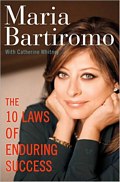
Book Summary of Maria Bartiromo’s ‘The 10 Laws of Enduring Success’

November 28, 2010 By Nagesh Belludi Leave a Comment

The 10 Laws of Enduring Success » Maria Bartiromo Success consists of recognizing opportunity, being optimistic, following our passions, keeping good relations, and making the best of circumstances that life presents us. The elements of accomplishment have been widely written about since the dawn of publishing. Each year, several authors attempt to repackage the familiar skills for success in new contexts. Such is the effort of CNBC anchor and journalist Maria Bartiromo (with Catherine Whitney) in “The 10 Laws of Enduring Success.” Maria presents the longstanding blueprint of success as ten attitudes: self-awareness, foresight, ingenuity, audacity, integrity, flexibility, modesty, fortitude, tenacity of purpose, and resilience.

“The 10 Laws of Enduring Success” falls short on one key characteristic. Advice on success can inspire only when the narrator connects his/her advice to personal anecdotes of hopes and despairs, achievements and disappointments, and meaningfully reflects on how certain attitudes contributed to his/her eventual success. Remember my recent article about commencement addresses by Steve Jobs, Bill Gates, and J K Rowling? These speakers are stimulating for the very reason that their timeless advices consist of thought-provoking personal contemplations.

“The 10 Laws of Enduring Success” is lacking in deep reflections of what contributed to the author’s success. As the host of one of the most popular shows in business TV, Maria Bartiromo has an extensive access to distinguished people. She does include insights from many successful people from the world of politics, business, sports, and entertainment. However, these narratives are typically short, often wander off the point, and do not necessarily connect to individual themes in a memorable way.

The conversational writing style is unassuming and quite engaging, and thus makes the book a quick read.

Leadership Reader’s Bottom-line

  • “The 10 Laws of Enduring Success” by Maria Bartiromo with Catherine Whitney
  • Subject: Skills for success
  • Suggested reading for fans of CNBC and the financial news media. Optional reading for others.
  • Read this book as a reiteration of the first principles of success. Be not amazed if this book does not prompt new thoughts.
  • 3 out of 5 Stars

Filed Under: Career Development, Leadership Reading, Sharpening Your Skills Tagged With: Books for Impact, Wisdom

« Previous Page
Next Page »

Primary Sidebar

Popular Now

Anxiety Assertiveness Attitudes Balance Biases Coaching Conflict Conversations Creativity Critical Thinking Decision-Making Discipline Emotions Entrepreneurs Etiquette Feedback Getting Along Getting Things Done Goals Great Manager Innovation Leadership Leadership Lessons Likeability Mental Models Mentoring Mindfulness Motivation Networking Parables Performance Management Persuasion Philosophy Problem Solving Procrastination Relationships Simple Living Social Skills Stress Suffering Thinking Tools Thought Process Time Management Winning on the Job Wisdom

About: Nagesh Belludi [hire] is a St. Petersburg, Florida-based freethinker, investor, and leadership coach. He specializes in helping executives and companies ensure that the overall quality of their decision-making benefits isn’t compromised by a lack of a big-picture understanding.

Get Updates

Signup for emails

Subscribe via RSS

Contact Nagesh Belludi

RECOMMENDED BOOK:
The Art of Stillness

The Art of Stillness: Pico Iyer

Travel writer Pico Iyer’s argues the importance of taking a timeout from busyness. Examples of a privileged few who have found peace through stillness in practice.

Explore

  • Announcements
  • Belief and Spirituality
  • Business Stories
  • Career Development
  • Effective Communication
  • Great Personalities
  • Health and Well-being
  • Ideas and Insights
  • Inspirational Quotations
  • Leadership
  • Leadership Reading
  • Leading Teams
  • Living the Good Life
  • Managing Business Functions
  • Managing People
  • MBA in a Nutshell
  • Mental Models
  • News Analysis
  • Personal Finance
  • Podcasts
  • Project Management
  • Proverbs & Maxims
  • Sharpening Your Skills
  • The Great Innovators

Recently,

  • Teams That Thrive make it Safe to Speak & Safe to Fail
  • Inspirational Quotations #1130
  • ‘Mrs Brown’s Boys’ Teaches That the Most Sincere Moment is the Unplanned One
  • Hustle Culture is Losing Its Shine
  • This Ancient Japanese Concept Can Help You Embrace Imperfection
  • Inspirational Quotations #1129
  • Don’t Abruptly Walk Away from an Emotionally Charged Conflict

Unless otherwise stated in the individual document, the works above are © Nagesh Belludi under a Creative Commons BY-NC-ND license. You may quote, copy and share them freely, as long as you link back to RightAttitudes.com, don't make money with them, and don't modify the content. Enjoy!