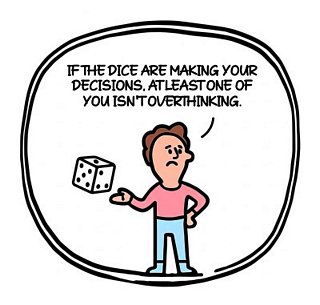
 We make thousands of decisions daily—what to wear, which email to answer first, whether to take the scenic route or stick to the main road. Most are low-stakes, but the act of choosing can sap mental energy. That’s decision fatigue: as options pile up, clarity frays, and even the inconsequential starts to feel weighty. The mind treats small choices like they’ve got far more significance than they deserve.
There’s a surprisingly elegant way out: hand off minor decisions to chance. Roll a die. Flip a coin. Outsource the trivial. Randomization cuts through indecision and delivers instant clarity. Ironically, when the coin’s in mid-air, we often discover what we truly want—hoping silently for a particular side to land face-up. That fleeting instinct speaks louder than hours of deliberation.
We already allow randomness to shape more of our lives than we realize. We hit shuffle and trust an algorithm to pick our next song. We choose checkout lines blindly, hoping they’re fastest. Our social feeds present content in curated chaos. Even picking a restaurant often comes down to whatever looks inviting in the moment. Randomness isn’t an interruption—it’s ambient, constant, and influential.
Using chance deliberately brings relief. Faced with mundane, energy-draining decisions, inviting a bit of randomness can be playful and effective. It breaks the loop of paralysis-by-analysis and forces commitment. It frees up brainpower for choices that actually require reflection. Not everything deserves a full internal debate.
Of course, not every decision fits this mold—career shifts, relationships, financial moves need real thought. But for the daily swarm of indecision, randomness offers clarity and release.
That’s freedom from the unimportant.
 In the glossy canon of business magazine profiles and business school leadership panels, few rituals are as misleading as the executive career interview. A high-powered figure is asked for wisdom, and what follows is a polished origin myth framed as mentorship—a display of survivorship bias wrapped in aspirational prose. Biography
 .jpg "'Lean In' by Sheryl Sandberg (ISBN 0385349947)")
 BlaBlaCar’s deliberate decision not to expand into the United States underscores how cultural fault lines can impede the global flow of innovation. The French platform has
  If you’re a working professional with a family, your calendar probably feels
 McDonald’s has long leaned on
 .jpg "'Bad Therapy' by Abigail Shrier (ISBN 0593542924)")
.jpg "'Open An Autobiography' by Andre Agassi (ISBN 0307388409)")
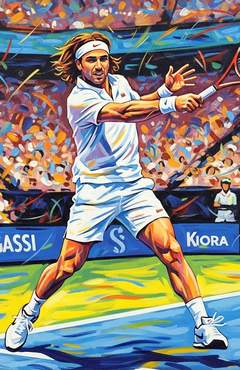 Agassi casts himself as a victim of his circumstances, expressing a weariness with the grind—a sentiment many can relate to. While few may hate their jobs
  We tend to see