• Skip to content
  • Skip to primary sidebar

Right Attitudes

Ideas for Impact

The Case Against Team Work

December 3, 2025 By Nagesh Belludi Leave a Comment

The Case Against Team Work

Teamwork has long been a favorite buzzword in management circles, pitched as the ultimate fix for productivity and innovation. Managers, conditioned by years of teamwork training, often push it everywhere without asking if it actually fits. But teamwork can be overhyped—even a roadblock to real progress. It’s not the best solution for every job. Sometimes it stifles more than it supports.

Teamwork often falls short of its promise. Studies show it doesn’t guarantee fresh ideas or higher output. Instead, it tends to blur accountability. When everyone shares a task, no one fully owns it. Deadlines slip as team members wait on each other. Solo work, though, forces ownership. You’re in charge, you’re motivated, and you move fast—no bureaucracy slowing you down.

Managers Conditioned to Embrace Teamwork

Then comes the “compromise effect.” In teams, bold ideas get watered down to dodge conflict. Original concepts get softened, reshaped, or even scrapped to chase consensus. What’s left is a safe, forgettable solution that tries to please everyone but excites no one. Solo work, by contrast, sparks the kind of daring ideas that big teams often bury.

And don’t ignore the heavy cost of coordination. Teams burn hours in endless check-ins, emails, and meetings just to stay “aligned.” This constant syncing drains time and energy, leaving less for the actual work. Independent workers, though, can cut through the noise, making sharp, fast decisions without all the back-and-forth.

So why do managers and HR teams keep pushing teamwork? It’s easy. Collaboration builds camaraderie, creates a sense of shared purpose, and makes workloads easier to shift around. Teamwork also helps mask individual performance, letting weaker players blend into the crowd. Companies love branding themselves around “collaboration” and “inclusivity,” even when these ideals barely move the productivity needle.

In Quiet Minds, Solutions Ignite

Teamwork still has its place. When you’re tackling messy problems that need many expert voices, collaboration can be a game-changer. When you need people invested, early involvement helps build commitment. And when the mission is critical, collaboration aligns everyone around big-picture goals.

But teamwork isn’t a cure-all. When deep, focused thought is required, solo work wins. Radical, game-changing ideas rarely spring from big committees—they thrive in small, bold groups where conformity isn’t king. When time is tight, you’ll make faster, sharper progress with clear leadership, not endless “involvement theater.”

Idea for Impact: Stop defaulting to teamwork for every project. Strike a smarter balance. Blend autonomy with selective collaboration. Pick the best approach for the job, and you’ll get accountability, originality, and speed—without the dead weight teamwork often drags along.

Wondering what to read next?

  1. The Abilene Paradox: Just ‘Cause Everyone Agrees Doesn’t Mean They Do
  2. Many Creative People Think They Can Invent Best Working Solo
  3. How to Stimulate Group Creativity // Book Summary of Edward de Bono’s ‘Six Thinking Hats’
  4. The High Cost of Too Much Job Rotation: A Case Study in Ford’s Failure in Teamwork and Vision
  5. Why Group Brainstorming Falls Short on Creativity and How to Improve It

Filed Under: Leading Teams, Managing People Tagged With: Conflict, Creativity, Innovation, Networking, Persuasion, Social Dynamics, Teams, Thought Process

Teams That Thrive make it Safe to Speak & Safe to Fail

December 1, 2025 By Nagesh Belludi Leave a Comment

Google Project Aristotle Findings: Teams That Thrive make it Safe to Speak & Safe to Fail In 2012, Google’s Project Aristotle set out to discover what makes teams effective. After studying hundreds of its own, the research identified five key traits. The most critical? Psychological safety.

Psychological safety is the foundation of high-performing teams. It means you can speak up, share ideas, and take risks without fear of ridicule or punishment. In these environments, openness isn’t optional—it’s expected. Creativity and collaboration thrive because people aren’t afraid to contribute.

The opposite is true in fear-driven cultures. In rigid, hierarchical environments, challenging the status quo risks backlash. Employees play it safe, innovation dries up, and self-preservation replaces bold thinking.

Teams that foster psychological safety communicate more openly, innovate faster, and recover better from mistakes. They ask questions, seek feedback, and view failure as a necessary step toward growth.

Idea for Impact: Managers shape this environment. Leading with vulnerability, welcoming tough conversations, encouraging every voice, and rewarding smart risks are not extras—they are essential. Respect must stay at the core.

Wondering what to read next?

  1. Don’t Manage with Fear
  2. Bringing out the Best in People through Positive Reinforcement
  3. From the Inside Out: How Empowering Your Employees Builds Customer Loyalty
  4. Create a Diversity and Inclusion Policy
  5. The Speed Trap: How Extreme Pressure Stifles Creativity

Filed Under: Leading Teams, Managing People, MBA in a Nutshell Tagged With: Assertiveness, Coaching, Feedback, Great Manager, Human Resources, Performance Management, Persuasion, Workplace

Inspirational Quotations #1130

November 30, 2025 By Nagesh Belludi

Some one speaks admirably of the well-ripened fruit of sage delay.
—Honore de Balzac (French Novelist)

A man who has not passed through the inferno of his passions has never overcome them.
—Carl Gustav Jung (Swiss Psychologist)

Many speak the truth when they say that they despise riches, but they mean the riches possessed by other men.
—Charles Caleb Colton (English Clergyman, Aphorist)

How often in the various amusements of the world is one tempted to pause a moment and ask oneself whether one really likes it!
—Anthony Trollope (English Novelist)

Power without principle is barren, but principle without power is futile. This is a party of government and I will lead it as party of government.
—Tony Blair (British Statesman)

Good nature is more agreeable in conversation than wit, and gives a certain air to the countenance which is more amiable than beauty.—It shows virtue in the fairest light; takes off, in some measure, from the deformity of vice; and makes even folly and impertinence supportable.
—Joseph Addison (English Poet, Playwright, Politician)

Always live up to your standards – by lowering them, if necessary.
—Mignon McLaughlin (American Journalist)

Whether a man is burdened by power or enjoys power; whether he is trapped by responsibility or made free by it; whether he is moved by other people and outer forces or moves them – this is of the essence of leadership.
—Theodore H. White (American Journalist)

If you suppress grief too much, it can well redouble.
—Moliere (French Playwright)

Profundity of thought belongs to youth, clarity of thought to old age.
—Friedrich Nietzsche (German Philosopher, Scholar)

Filed Under: Inspirational Quotations

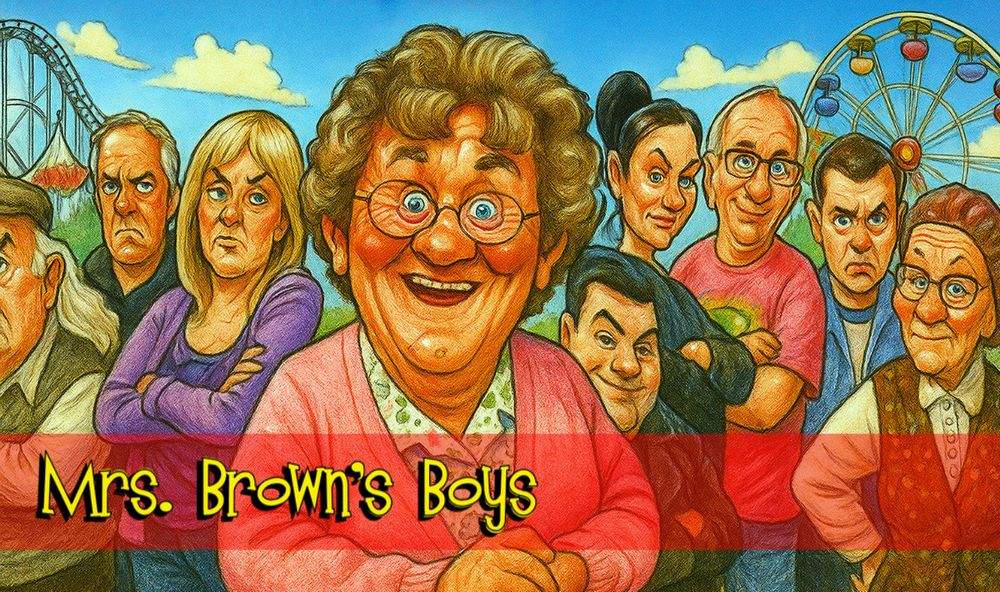
‘Mrs Brown’s Boys’ Teaches That the Most Sincere Moment is the Unplanned One

November 28, 2025 By Nagesh Belludi Leave a Comment

The Most Sincere Moment is the Unplanned One (Lessons from Mrs Brown's Boys)

I’ve been binge-watching the Irish-British sitcom Mrs. Brown’s Boys. It’s a refreshingly unpolished comedy—equal parts pratfall, dry wit, and show-business bravado. The series delights in on-air flubs and live-studio gags. Beneath the chaos lies a shrewd grasp of character and timing.

The show has deservedly received poor reviews from critics and TV audiences, but it thrives where traditional comedies hesitate—embracing the messy and unscripted with gleeful abandon.

One of the show’s hallmarks is its reliance on ad-libbing. During sketches, actors bait Brendan O’Carroll—who plays the indomitable Agnes Brown—with off-book quips, and he returns the favor by springing surprises on them. This give-and-take sparks real mishaps: actors flub lines, snort with laughter, or break character outright. These unscripted gaffes often hit harder than the written punchlines and lend the series a raw, stage-play immediacy.

That anything-goes spirit comes from an unconventional ensemble. Most of the main cast are family members and lifelong friends. They’ve grown up with these characters—on radio, in touring stage shows, and on TV. That loyalty infuses each scene with genuine warmth, turning flubbed lines into endearing inside jokes. In Mrs. Brown’s Boys, even the mayhem feels like a home movie you’re invited to sneer at—and secretly applaud.

Rather than hiding its seams, Mrs. Brown’s Boys tears them wide open. It winks at the camera and revels in live-show unpredictability. These fourth-wall breaches aren’t gimmicks—they’re invitations. Viewers aren’t just watching; they’re in on the joke, complicit in every pratfall and punchline. This collapse of artifice invites a question: what do we value more—crafted dialogue or unscripted reality? Mrs. Brown’s Boys discards polish in favor of spontaneous combustion. When an actor snorts mid-scene, it’s not a mistake—it’s a reminder that we’re witnessing something real. And that vulnerability—that glorious unsteadiness—is its greatest asset.

Messy and divisive, the show thrives on human unpredictability. It doesn’t just deliver punchlines, it invents them live. You’re not merely laughing at the jokes; you’re watching them take shape in real time. That, perhaps, is the show’s slyest joke.

At its core, Mrs. Brown’s Boys is more than slapstick anarchy—it’s a case study in presence. In work or in life, we’re tempted by flawless facades. But real moments emerge only when we risk imperfection. The show’s unscripted humor reminds us that when control slips, authenticity rushes in—and those unguarded flashes are often the funniest, and most human, of all.

Idea for Impact: Often, irreverence—when wielded with wit—is the finest antidote to cultural pomposity.

Wondering what to read next?

  1. The Wisdom of the Well-Timed Imperfection: The ‘Pratfall Effect’ and Authenticity
  2. Your Product May Be Excellent, But Is There A Market For It?
  3. Don’t Just Be Competent—Be Believably Competent
  4. Airline Safety Videos: From Dull Briefings to Dynamic Ad Platforms
  5. Design for the 80% Experience

Filed Under: Effective Communication, Sharpening Your Skills, The Great Innovators Tagged With: Creativity, Getting Along, Humor, Innovation, Likeability, Parables, Personality, Persuasion, Psychology, Thought Process

Hustle Culture is Losing Its Shine

November 26, 2025 By Nagesh Belludi Leave a Comment

Hustle Culture is Losing Its Shine Hustle culture promotes the idea that ambition is demonstrated through exhaustion, making sacrifices in well-being appear necessary for success. Society has embraced this mindset, glorifying relentless productivity even at the cost of health and happiness.

While intense focus on major projects can be valuable, maintaining such a pace continuously blurs the line between motivation and burnout. Social media amplifies this mentality, showcasing polished images of achievement while hiding the sleepless nights, strained relationships, and health challenges that often accompany it. The rise-and-grind mindset turns success into an endless pursuit, frequently obscuring its true cost.

In this process, personal relationships and healthy habits frequently deteriorate. Meaningful conversations diminish, connections weaken, and self-care is replaced by caffeine-fueled nights and quick-fix meals.

Idea for Impact: Hustle can be an effective tool, but it should remain just that—a tool, not a lifestyle. A fulfilling life is not built on burnout; it is built on sustainability.

Wondering what to read next?

  1. Busyness is a Lack of Priorities
  2. Great Jobs are Overwhelming, and Not Everybody Wants Them
  3. Why You Can’t Relax on Your Next Vacation
  4. The Champion Who Hated His Craft: Andre Agassi’s Raw Confession in ‘Open’
  5. Is Your Harried Mind Causing You to Underachieve?

Filed Under: Health and Well-being, Living the Good Life Tagged With: Balance, Mindfulness, Simple Living, Stress, Suffering, Time Management, Work-Life

This Ancient Japanese Concept Can Help You Embrace Imperfection

November 24, 2025 By Nagesh Belludi Leave a Comment

Wabi-Sabi: Ancient Japanese Concept Can Help You Embrace Imperfection The Japanese aesthetic of wabi-sabi reveals beauty in imperfection, transience, and incompletion. It reflects a deep appreciation for the real and the natural, fostering humility and connection to the world around them.

Centuries of tradition and Zen Buddhism root wabi-sabi, honoring life’s cycles of growth and decay. While society often obsesses over flawless ideals, this philosophy offers a different view: finding allure in what’s irregular and fleeting.

Consider kintsugi, or “golden joinery.” This Japanese art form involves mending broken pottery with gold. Rather than concealing the damage, they deliberately highlight the cracks with precious metal, transforming the object into a potent symbol of resilience and renewal. This appreciation for imperfection extends to their valuing of aged wood, antiques, and handcrafted items, where the wear and tear tell unique stories.

Wabi-sabi encourages acceptance of life’s inherent nature. Each flaw enriches one’s journey and deepens the broader human experience. This perspective frees individuals from chasing impossible perfection, celebrating life as it truly is.

Idea for Impact: Accept your natural flaws and challenge those unrealistic expectations. Embrace the beauty in repair and how things evolve.

Wondering what to read next?

  1. Mottainai: The Japanese Idea That’s Bringing More Balance to Busy Lives Everywhere
  2. Marie Kondo is No Cure for Our Wasteful and Over-consuming Culture
  3. Finding Peace in Everyday Tasks: Book Summary of ‘A Monk’s Guide to Cleaning’
  4. The Simple Life, The Good Life // Book Summary of Greg McKeown’s ‘Essentialism’
  5. Lilies and Leeches

Filed Under: Living the Good Life, Mental Models Tagged With: Clutter, Discipline, Happiness, Introspection, Japan, Materialism, Mindfulness, Parables, Perfectionism, Philosophy, Simple Living, Virtues

Inspirational Quotations #1129

November 23, 2025 By Nagesh Belludi

Only when the clamor of the outside world is silenced will you be able to hear the deeper vibration. Listen carefully.
—Sarah Ban Breathnach (American Self-help Author)

Laughter and levity habituate a man to lewdness.
—The Talmud (Sacred Text of the Jewish Faith)

We are all of us the worse for too much liberty.
—Terence (Roman Comic Dramatist)

Art distills sensations and embodies it with enhanced meaning.
—Jacques Barzun (American Cultural Historian)

Comfort and prosperity have never enriched the world as much as adversity has. Out of pain and problems have come the sweetest songs, and the most gripping stories.
—Billy Graham (American Baptist Religious Leader)

What rules the world is idea, because ideas define the way reality is perceived.
—Irving Kristol (American Political Writer)

What you are will show in what you do.
—Thomas Edison (American Inventor)

There are no mistakes or failures, only lessons.
—Denis Waitley (American Motivational Speaker)

There is a mean in everything.—Even virtue itself hath its stated limits, which, not being strictly observed, it ceases to be virtue.
—Horace (Quintus Horatius Flaccus) (Roman Poet)

There is no liberty to men whose passions are stronger than their religious feelings; there is no liberty to men in whom ignorance predominates over knowledge; there is no liberty to men who know not how to govern themselves.
—Henry Ward Beecher (American Protestant Clergyman)

If you want to annoy your neighbors, tell the truth about them.
—Pietro Aretino (Italian Author)

Bread of flour is good; but there is bread, sweet as honey, if we would eat it, in a good book.
—John Ruskin (English Art Critic)

Filed Under: Inspirational Quotations

Don’t Abruptly Walk Away from an Emotionally Charged Conflict

November 21, 2025 By Nagesh Belludi Leave a Comment

Don't Abruptly Walk Away from an Emotionally Charged Conflict A disagreement stays harmless until you make it personal. Attack someone’s character, dismiss their opinions, or ignore their emotions, and it stops being a discussion. It becomes a battle.

When emotions flare, logic vanishes. You’re no longer debating ideas—you’re defending your identity. It’s not about the issue anymore. It’s about validation. It’s us versus them. You fight to prove your point while tuning theirs out. If you’re already stressed or dragging old grudges, expect a full-blown meltdown. Old conflicts have a nasty habit of crashing new arguments.

To stop a disagreement from spiraling, resist making it personal. Even if their perspective sounds absurd, make a real effort—however brief—to understand it. If you value the relationship more than the argument, find common ground.

And don’t storm off. A dramatic exit feels good in the moment but sends one loud message: I don’t respect you enough to finish this. If you need space, say it straight. Try, “This is getting heated, and I’m not sure I’m communicating effectively. I need a break to collect my thoughts. Can we take five minutes?” Address it. Be clear. Pretend you’re listening—even if you aren’t.

Wondering what to read next?

  1. Entitlement and Anger Go Together
  2. Think Twice Before You Launch That Truth Bomb
  3. How to Speak Up in Meetings and Disagree Tactfully
  4. Who Told You That Everybody Was Going to Like You?
  5. Making the Nuances Count in Decisions

Filed Under: Effective Communication, Managing People, Sharpening Your Skills Tagged With: Anger, Assertiveness, Attitudes, Conflict, Conversations, Getting Along, Mindfulness, Social Skills

What It Means to Lead a Philosophical Life

November 19, 2025 By Nagesh Belludi Leave a Comment

What It Means to Lead a Philosophical Life November 20 is World Philosophy Day. It’s as fitting a moment as any to remember that introspection nurtures personal growth and cultivates a more thoughtful society.

Anything you do becomes richer when you understand not only what you’re doing but why you’re doing it. Too often, your motives dwell in the shadows, steering choices you barely notice. A philosophical life begins the moment you shine a light on those hidden reasons and ask “why?” with genuine curiosity.

Philosophy is not a quest for final answers but an invitation to explore questions without urgency. True growth emerges in the tension of uncertainty—when you sit with doubt, challenge your assumptions, and push your questions deeper rather than settle for neat solutions. Each inquiry expands your perspective, revealing layers of complexity you never imagined.

Living philosophically means weaving questions into every aspect of your being. It transforms routine into ritual and doubt into strength, guiding you through continual self-discovery. In this practice, no answer is ever final; each insight simply opens the door to further wonder.

Idea for Impact: To live philosophically is not to arrive, but to wander—with wonder—knowing that the questions matter more than the answers.

Wondering what to read next?

  1. Why Philosophy Matters
  2. What a Daily Stoic Practice Actually Looks Like
  3. Messy Yet Meaningful
  4. Why Others’ Pride Annoys You
  5. I’ll Be Happy When …

Filed Under: Living the Good Life, Mental Models, Sharpening Your Skills Tagged With: Attitudes, Discipline, Ethics, Mindfulness, Philosophy, Questioning, Virtues, Wisdom

The High Cost of Too Much Job Rotation: A Case Study in Ford’s Failure in Teamwork and Vision

November 17, 2025 By Nagesh Belludi Leave a Comment

Alan Mulally Dismantled Ford's Fiefdom Culture to Encourage Collaboration When Alan Mulally became Ford’s CEO in September 2006, the company was teetering on the edge of collapse. Ford had just posted a staggering $12.7 billion loss, was hemorrhaging market share to Japanese and Korean automakers, and was weighed down by outdated, inefficient products. Worse, the company was drowning in debt and facing a brutal liquidity crisis. Ford was desperate for a complete overhaul.

By the time Mulally stepped down in June 2014, Ford had staged a stunning turnaround. He unified global operations, streamlined brands, and standardized platforms across regions while refocusing on core markets. He slashed costs, restructured engineering, and poured heavy investment into fuel-efficient vehicles and cutting-edge technologies. Under his steady leadership, Ford weathered the 2008 financial crisis without a government bailout and returned to strong profitability. His tenure remains a powerful case study in corporate transformation.

One of Mulally’s most crucial changes was dismantling Ford’s toxic culture of internal rivalry and reckless short-termism. When he arrived, executives were shuffled through roles every two years, a system meant to create versatile leaders but one that completely backfired. Employees scrambled to make quick impressions rather than collaborate. Engineers routinely ignored predecessors’ work, even at the cost of losing smart, cost-saving innovations. The result was chaos—no continuity, no teamwork, no accountability.

'American Icon Ford Motor Company' by Bryce G. Hoffman (ISBN 0307886069) Mulally understood that leadership demanded stability. After joining Boeing as an engineer in 1969, he rose steadily through key technical and executive positions. He served as Senior Vice President of Airplane Development in 1994, President of Boeing Information, Space & Defense Systems in 1997, President of Boeing Commercial Airplanes in 1998, and finally CEO of Boeing Commercial Airplanes in 2001. Drawing from this deep experience, he extended leadership tenures at Ford, broke down fiefdoms, and fostered a culture of collaboration, discipline, and long-term strategic focus. His approach restored much-needed continuity and accountability, proving that constant job shuffling weakens leadership and that real impact takes time.

Idea for Impact: Exposing leaders to different departments builds broad perspective and prepares them for senior roles. However, they need enough time in each position to take ownership, build relationships, and drive real change. Rapid job rotations erode accountability and disrupt a deep sense of purpose.

Wondering what to read next?

  1. The Case Against Team Work
  2. Never Make a Big Decision Without Doing This First
  3. The ‘Small’ Challenge for Big Companies
  4. Heartfelt Leadership at United Airlines and a Journey Through Adversity: Summary of Oscar Munoz’s Memoir, ‘Turnaround Time’
  5. When Work Becomes a Metric, Metrics Risk Becoming the Work: A Case Study of the Stakhanovite Movement

Filed Under: Business Stories, Leadership, Leading Teams, Managing People, The Great Innovators Tagged With: Biases, Conflict, Creativity, Employee Development, Goals, Leadership Lessons, Performance Management, Social Dynamics, Teams

« Previous Page
Next Page »

Primary Sidebar

Popular Now

Anxiety Assertiveness Attitudes Balance Biases Coaching Conflict Conversations Creativity Critical Thinking Decision-Making Discipline Emotions Entrepreneurs Ethics Etiquette Feedback Getting Along Getting Things Done Goals Great Manager Innovation Leadership Lessons Likeability Mental Models Mindfulness Motivation Parables Performance Management Personal Growth Persuasion Philosophy Problem Solving Procrastination Psychology Relationships Resilience Simple Living Social Skills Stress Thinking Tools Thought Process Time Management Winning on the Job Wisdom

About: Nagesh Belludi [hire] is a St. Petersburg, Florida-based freethinker, investor, and leadership coach. He specializes in helping executives and companies ensure that the overall quality of their decision-making benefits isn’t compromised by a lack of a big-picture understanding.

Get Updates

Signup for emails

Subscribe via RSS

Contact Nagesh Belludi

RECOMMENDED BOOK:
Taking Advice

Taking Advice: Dan Ciampa

Executive coach Dan Ciampa offers an excellent framework on the advice network you need on strategic, operational, political, and personal elements of your work and life.

Explore

  • Announcements
  • Belief and Spirituality
  • Business Stories
  • Career Development
  • Effective Communication
  • Great Personalities
  • Health and Well-being
  • Ideas and Insights
  • Inspirational Quotations
  • Leadership
  • Leadership Reading
  • Leading Teams
  • Living the Good Life
  • Managing Business Functions
  • Managing People
  • MBA in a Nutshell
  • Mental Models
  • News Analysis
  • Personal Finance
  • Podcasts
  • Project Management
  • Proverbs & Maxims
  • Sharpening Your Skills
  • The Great Innovators

Recently,

  • The Commercialization of Yoga: Downward Dog, Upward Profit
  • Write Your Constitution, Then Cut What Doesn’t Fit
  • Inspirational Quotations #1175
  • How to Interview for Grit
  • Everything’s a Remix: Originality is Overrated
  • In Japan, Shame is Not a Private Torment but a Civic Virtue
  • Inspirational Quotations #1174

Unless otherwise stated in the individual document, the works above are © Nagesh Belludi under a Creative Commons BY-NC-ND license. You may quote, copy and share them freely, as long as you link back to RightAttitudes.com, don't make money with them, and don't modify the content. Enjoy!