• Skip to content
  • Skip to primary sidebar

Right Attitudes

Ideas for Impact

Crucible Experiences Can Transform Your Leadership Skills

October 18, 2016 By Nagesh Belludi Leave a Comment

'Geeks and Geezers' by Warren Bennis (ISBN 1578515823) In Geeks and Geezers (2002), renowned leadership academic Warren Bennis and management consultant Robert Thomas interview 40 “geeks” (aged 21–34) and “geezers” (aged 70–82) to evaluate differences in their leadership values and success patterns.

The two groups vary in backgrounds, ambitions, and their role models. The geeks are more concerned with work-life balance than the geezers. The geezers formed their characters during the Great Depression and World War II and hence hold Franklin Roosevelt, Gandhi, Lincoln, Mandela, Kennedy, and Churchill as leadership role models. In contrast, the geeks tend to model themselves after their parents, friends, bosses, and co-workers.

Leadership “Crucibles”: Pivotal life-changing experiences that alter your thinking and actions

The statistics and analyses of geeks and geezers are a gross distraction from the book’s central idea: that all potential leaders must pass through a “leadership crucible” that provides an intense, transformational experience. Only after they “organize the meaning” of and draw significant lessons from their crucible experiences can they become leaders. They must also cultivate complementary leadership skills such as adaptive capacity and the ability to engage others by creating shared meaning, voice, and integrity.

All geeks and geezers interviewed by the authors had one thing in common: each had at least one leadership crucible. The authors explain that each experience was “a test and a decision point, where existing values were examined and strengthened or replaced, where alternative identities were considered and sometimes chosen, where judgment and other abilities were honed.”

The best leaders excel in their ability to create meaning out of adversity

Geeks and Geezers lays monolithic emphasis on the role of transformational crucible experiences in building leadership skills. The authors conclude that such experiences shape a leader; therefore, “great leaders are not born but made—often by tough, bitter experience.” The book implies that most leadership development initiatives (selection, training, mentoring, job rotation, etc.) are not as effective as they are touted to be. The book advises would-be leaders to develop themselves by seeking out crucible experiences at work, school, or in their communities to maximize their leadership potential.

One meaningful takeaway from Geeks and Geezers is a contemplative exercise: to reflect on some crucible experiences in the reader’s life and examine what he/she has learned from them. The reader may be able to create his/her own story and find his/her “leadership voice.”

Recommendation: Skim. Read the final chapter. Beyond the authors’ anecdote-heavy “research,” Geeks and Geezers will engage readers in interesting case studies of successful men and women who moved beyond the constraints imposed by trying circumstances and reshaped themselves. However, most of Geeks and Geezers lacks substance and practical application, especially in comparison to co-author Bennis’s bestseller On Becoming a Leader.

Wondering what to read next?

  1. You Too Can (and Must) Become Effective // Summary of Peter Drucker’s The Effective Executive
  2. Transformational Leadership Lessons from Lee Kuan Yew, Singapore’s Founding Father
  3. A Guide to Your First Management Role // Book Summary of Julie Zhuo’s ‘The Making of a Manager’
  4. Five Rules for Leadership Success // Summary of Dave Ulrich’s ‘The Leadership Code’
  5. Books I Read in 2015 & Recommend

Filed Under: Leadership Reading, Sharpening Your Skills Tagged With: Books, Skills for Success

Inspirational Quotations by Oscar Wilde (#654)

October 16, 2016 By Nagesh Belludi Leave a Comment

Today marks the birthday of Oscar Wilde (1854-1900,) the Anglo-Irish playwright considered one of the greatest writers of the Victorian Era.

In his 30s, although married with two children, Oscar Wilde had a love affair with a young aristocrat. The affair became public; the revelation of Wilde’s homosexual double life ruined his reputation in the Victorian society. Still, this was the most creative period of his life. He wrote The Picture of Dorian Gray (1891), Salome (1891), and Lady Windermere’s Fan (1892.) He then erupted on the British theater scene with three successive comedy hits featuring people leading double lives: A Woman of No Importance (1893), An Ideal Husband (1895), and The Importance of Being Earnest (1895.)

His masterpiece The Importance of Being Earnest opened in London on Valentine’s Day 1895. It featured two protagonists who keep up fictitious personas to dodge burdensome social obligations until their sham identities and stories grow so intricate that everything gets revealed.

A few months later, Wilde was sentenced to two years of hard labor for homosexuality. When he got out of prison, he wrote The Ballad of Reading Gaol (1898,) a poem concerning inhumane prison conditions. With his reputation ruined, he wandered around France and Italy. Wilde’s health declined rapidly and he died penniless in a seedy hotel in Paris at the age of 46.

Oscar Wilde is considered the world’s greatest wit ever. He was a brilliant conversationalist; anecdotes abound about his well-known retorts. Once, when US Customs asked him if he had anything to declare upon arrival in New York, Wilde replied, “Nothing but my genius.”

Entire books have been devoted to Oscar Wilde’s one-liners. He said, “The only way to get rid of a temptation is to yield to it.” And, “I always pass on good advice. It is the only thing to do with it. It is never of any use to oneself.” And, “An idea that is not dangerous is unworthy of being called an idea at all.”

Inspirational Quotations by Oscar Wilde

What a pity that in life we only get our lessons when they are of no use to us.
—Oscar Wilde (Irish Poet)

Experience, the name men give to their mistakes.
—Oscar Wilde (Irish Poet)

I have the simplest tastes. I am always satisfied with the best.
—Oscar Wilde (Irish Poet)

Prayer must never be answered: if it is, it ceases to be prayer and becomes correspondence.
—Oscar Wilde (Irish Poet)

One should never trust a woman who tells one her real age. A woman who would tell that would tell anything.
—Oscar Wilde (Irish Poet)

Anyone who lives within their means suffers from a lack of imagination.
—Oscar Wilde (Irish Poet)

One should never listen. To listen is a sign of indifference to one’s hearers.
—Oscar Wilde (Irish Poet)

Ridicule is the tribute paid to the genius by the mediocrities.
—Oscar Wilde (Irish Poet)

Rich bachelors should be heavily taxed. It is not fair that some men should be happier than others.
—Oscar Wilde (Irish Poet)

Hard work is simply the refuge of people who have nothing whatever to do.
—Oscar Wilde (Irish Poet)

Man is least himself when he talks in his own person. Give him a mask, and he will tell you the truth.
—Oscar Wilde (Irish Poet)

We are all in the gutter, but some of us are looking at the stars.
—Oscar Wilde (Irish Poet)

Life is not complex. We are complex. Life is simple, and the simple thing is the right thing.
—Oscar Wilde (Irish Poet)

Life is never fair, and perhaps it is a good thing for most of us that it is not.
—Oscar Wilde (Irish Poet)

Only good questions deserve good answers.
—Oscar Wilde (Irish Poet)

I have said to you to speak the truth is a painful thing. To be forced to tell lies is much worse.
—Oscar Wilde (Irish Poet)

When I was young I used to think that money was the most important thing in life; now that I am old, I know it is.
—Oscar Wilde (Irish Poet)

An acquaintance that begins with a compliment is sure to develop into a real friendship.
—Oscar Wilde (Irish Poet)

Most people are other people. Their thoughts are someone else’s opinions, their lives a mimicry, their passions a quotation.
—Oscar Wilde (Irish Poet)

Education is an admirable thing. But it is well to remember from time to time that nothing that is worth knowing can be taught.
—Oscar Wilde (Irish Poet)

Men marry because they are tired; women because they are curious. Both are disappointed.
—Oscar Wilde (Irish Poet)

Wherever there is a man who exercises authority, there is a man who resists authority.
—Oscar Wilde (Irish Poet)

One should always be a little improbable.
—Oscar Wilde (Irish Poet)

No great artist ever sees things as they really are. If he did, he would cease to be an artist.
—Oscar Wilde (Irish Poet)

Life is much too important a thing ever to talk seriously about it.
—Oscar Wilde (Irish Poet)

The only thing that can console one for being poor is extravagance. The only thing that can console one for being rich is economy.
—Oscar Wilde (Irish Poet)

If you pretend to be good, the world takes you very seriously. If you pretend to be bad, it doesn’t. Such is the astounding stupidity of optimism.
—Oscar Wilde (Irish Poet)

We can have in life but one great experience at best, and the secret of life is to reproduce that experience as often as possible.
—Oscar Wilde (Irish Poet)

We are all in the gutter, but some of us are looking at the stars.
—Oscar Wilde (Irish Poet)

Self-denial is simply a method by which man arrests his progress.
—Oscar Wilde (Irish Poet)

Charity creates a multitude of sins.
—Oscar Wilde (Irish Poet)

A man who does not think for himself does not think at all.
—Oscar Wilde (Irish Poet)

Experience is one thing you can’t get for nothing.
—Oscar Wilde (Irish Poet)

Most modern calendars mar the sweet simplicity of our lives by reminding us that each day that passes is the anniversary of some perfectly uninteresting event.
—Oscar Wilde (Irish Poet)

When a man has no enemy left there must be something mean about him.
—Oscar Wilde (Irish Poet)

It is absurd to divide people into good and bad. People are either charming or tedious.
—Oscar Wilde (Irish Poet)

In examinations the foolish ask questions that the wise cannot answer.
—Oscar Wilde (Irish Poet)

All authority is quite degrading. It degrades those who exercise it, and degrades those over whom it is exercised.
—Oscar Wilde (Irish Poet)

It is the confession, not the priest, that gives us absolution.
—Oscar Wilde (Irish Poet)

Fashion is what one wears oneself. What is unfashionable is what other people wear.
—Oscar Wilde (Irish Poet)

To do nothing at all is the most difficult thing in the world, the most difficult and the most intellectual.
—Oscar Wilde (Irish Poet)

The supreme vice is shallowness.
—Oscar Wilde (Irish Poet)

‘Know thyself’ was written over the portal of the antique world. Over the portal of the new world, ‘Be thyself’ shall be written.
—Oscar Wilde (Irish Poet)

If one tells the truth, one is sure, sooner or later, to be found out.
—Oscar Wilde (Irish Poet)

Indifference is the revenge the world takes on mediocrities.
—Oscar Wilde (Irish Poet)

When the gods choose to punish us, they merely answer our prayers.
—Oscar Wilde (Irish Poet)

Always forgive your enemies; nothing annoys them so much.
—Oscar Wilde (Irish Poet)

A man who is master of himself can end a sorrow as easily as he can invent a pleasure. I don’t want to be at the mercy of my emotions. I want to use them, to enjoy them, and to dominate them.
—Oscar Wilde (Irish Poet)

Man reaches his perfection, not through what he has, not even through what he does, but entirely through what he is.
—Oscar Wilde (Irish Poet)

Skepticism is the beginning of Faith.
—Oscar Wilde (Irish Poet)

I can resist everything except temptation.
—Oscar Wilde (Irish Poet)

Women are never disarmed by compliments. Men always are.
—Oscar Wilde (Irish Poet)

The best way to appreciate your job is to imagine yourself without one.
—Oscar Wilde (Irish Poet)

An idea that is not dangerous is unworthy of being called an idea at all.
—Oscar Wilde (Irish Poet)

There is only one class in the community that thinks more about money than the rich, and that is the poor.
—Oscar Wilde (Irish Poet)

Looking good and dressing well is a necessity. Having a purpose in life is not.
—Oscar Wilde (Irish Poet)

People who count their chickens before they are hatched act very wisely because chickens run about so absurdly that it’s impossible to count them accurately.
—Oscar Wilde (Irish Poet)

The pure and simple truth is rarely pure and never simple.
—Oscar Wilde (Irish Poet)

Selfishness is not living as one wishes to live, it is asking others to live as one wishes to live.
—Oscar Wilde (Irish Poet)

One should absorb the color of life, but one should never remember its details.
—Oscar Wilde (Irish Poet)

A thing is not necessarily true because a man dies for it.
—Oscar Wilde (Irish Poet)

Ambition is the last refuge of the failure.
—Oscar Wilde (Irish Poet)

Filed Under: Inspirational Quotations

Lessons on Self-Acceptance from Lee Kuan Yew: Life is What You Make of it

October 14, 2016 By Nagesh Belludi Leave a Comment

'From Third World to First: The Singapore Story' by Lee Kuan Yew (ISBN 0060197765) Singapore’s founding father Lee Kuan Yew (1923–2015) was one of the greatest statesmen of the post-WWII era. As Singapore’s quasi-authoritarian leader, Lee transformed his small, resource-poor city-state into an economic powerhouse. (I recommend Lee’s excellent memoir From Third World to First: The Singapore Story.)

Lee’s reply to a question about his perspective on the meaning of life (8:50-minute mark in this video) includes nuggets of wisdom on self-acceptance.

Life is what you make of it. You are dealt a pack of cards. Your DNA is fixed by your mother and your father … . Your job is to make the best of the cards that have been handed out to you. What can you do well? What can you not do well? What are you worse at?

If you ask me to make my living as an artist, I’ll starve, because I just can’t draw… . But if you ask me to do a mathematical question or to argue a point out, I’ll get by. Those are the cards I was handed out, and I make use of them.

Don’t try and do something you are not favored by nature to do.

Pursue Perfect Acceptance, Not a Perfect Life

One of the most effective ways to make positive change in life is to recognize and make peace with parts of yourself that are not innate (or “hard-wired”) in you. Robert Holden emphasized in Happiness Now, “Happiness and self-acceptance go hand in hand. In fact, your level of self-acceptance determines your level of happiness. The more self-acceptance you have, the more happiness you’ll allow yourself to accept, receive and enjoy. In other words, you enjoy as much happiness as you believe you’re worthy of.”

  • 'Now, Discover Your Strengths' by Marcus Buckingham (ISBN 0743201140) Know your limitations. Despite the nudging of countless motivational speeches, you can’t learn to be competent in everything you attempt or think you have a passion for. You can only be great at a few things. Recognize your flaws and do what you’re good at. Indeed, your strengths contain your greatest potential for growth. As Marcus Buckingham argued in his bestselling Now, Discover Your Strengths, discovering and pursuing your strengths is vital to being happier and more productive.
  • Learn to play the hand you’ve been dealt. Don’t engage in wishful thinking. Don’t cry out, “If I only life were different … if only these problems wouldn’t exist, I would …” One of the great realities of life—one that is difficult but important to acknowledge—is that you do not have as much control in life as you would like to have.

Idea for Impact: The key to self-improvement is self-acceptance. Accept reality. Accept yourself. Identify the limits of your abilities and your time and say no to things you know you can’t do well.

Wondering what to read next?

  1. You Are Not Special
  2. The Futility of Attachment to Expected Results
  3. What It Means to Lead a Philosophical Life
  4. The More You Can Manage Your Emotions, the More Effective You’ll Be
  5. How “Shoulds” Trap You into Catastrophic Thinking

Filed Under: Great Personalities, Living the Good Life, Sharpening Your Skills Tagged With: Attitudes, Life Plan, Mindfulness, Philosophy, Singapore

The Curse of Teamwork: Groupthink

October 11, 2016 By Nagesh Belludi Leave a Comment

Many teams tend to compromise their decisions for the sake of consensus, harmony, and “esprit de corps.” The result is often a lowest-common-denominator decision upon which everybody in the team agrees. This predisposition for a team to minimize conflict and value conformity is the psychological phenomenon of Groupthink.

'Victims of Groupthink' by Irving Janis (ISBN 0395317045) In the 1970s, American psychologist Irving Janis defined Groupthink as “a mode of thinking that people engage in when deeply involved in a cohesive in-group, when the members’ strivings for unanimity override their motivation to realistically appraise alternative courses of action.” Janis argued that Groupthink “undermines critical analysis, legitimizes ignorance, reinforces collective biases, and promotes a group self-image of infallibility.”

Negative Effects of Groupthink in Teamwork

Teams are prone to Groupthink and a variety of other detrimental decision-making approaches, but are seldom aware of it.

  • Groupthink suppresses dissent Individuals resign to group pressure, thereby conforming their opinions to a decision that they believe will achieve consensus. Groupthink discourages dissenters from “rocking the boat.” Over time, nonconformists are gradually shunted aside or excluded from the team altogether.
  • Groupthink engenders self-censorship. Individuals who disagree with the chosen course of action remain silent because they reason they cannot change others’ minds. Consequently, the team tends to focus its discussions on ideas that everyone agrees about rather than ideas that everyone disagrees about.
  • Groupthink gives team members greater confidence in their collective decisions than their individual decisions. Therefore, Groupthink leads individuals to publicly endorse ideas and decisions that they view as common for the group, even if they personally have reservations about them.
  • Groupthink stifles creativity and independent thinking. When individuals are unwilling to bring up and confront difficult issues, the team fails to examine alternative viewpoints that could be contentious. This leads to irrational and flawed decisions.

Antidote to Groupthink in Teamwork

An awareness of Groupthink and other group dynamic biases combined with some hands-on intervention, self-reflection, and control can help teams make better decisions.

  • Create an organizational environment where individuals can freely voice their ideas, challenges, and concerns. Individuals must feel comfortable with taking interpersonal risks, admitting hesitations, and challenging one-another. Absent an inclination to avoid conflict, a team can easily discuss and debate different perspectives.
  • Think about the right information required to make sound decisions. Consider the strongest counter-argument to every idea.
  • Do not suppress disagreements or dominate the dissenters. Carefully examine the reasons and implications of alternate viewpoints.
  • Divide a team into sub-teams or partnerships and set each sub-team to work on a problem independently. Encourage them to take into account the plusses and the minuses of each idea.
  • Designate one team member as a devil’s advocate to argue enthusiastically against all contemplated ideas. This can force the team to discuss and debate the concomitant merits and demerits of different ideas. In Edward De Bono’s Six Thinking Hats process (see my book summary), the devil’s advocate wears the “black hat.”
  • Invite outside consultants and subject-matter experts to discuss key issues and review decisions.
  • Appoint a moderator who can engage the team collectively and individually by gathering all points of view, giving feedback, and challenging the team’s thinking. Ideally, the moderator should be an independent third party who can be comprehensive and forthright.
  • Step back regularly from the team’s deliberation process to reflect on the effectiveness of the team’s decision-making and intervene where necessary. In the Six Thinking Hats process, De Bono suggests adding reflection time at the end of each meeting to analyze the process’ effectiveness.

Idea for Impact: Sometimes, Teamwork is Overrated

Don’t get me wrong: teamwork can be very powerful, but only when teams consist of individuals who have the right expertise and who are willing to voice their forthright opinions, dissent, and build consensus. Avoid teamwork when one person or a partnership with complementary skills and styles may achieve identical objectives.

To prevent Groupthink, establish an environment where speaking up is encouraged and rewarded. Welcome disagreements, avoid dominating dissenters, and contemplate the strongest counter-argument to every idea.

Wondering what to read next?

  1. How to Stimulate Group Creativity // Book Summary of Edward de Bono’s ‘Six Thinking Hats’
  2. The Abilene Paradox: Just ‘Cause Everyone Agrees Doesn’t Mean They Do
  3. Why Group Brainstorming Falls Short on Creativity and How to Improve It
  4. To Know Is to Contradict: The Power of Nuanced Thinking
  5. Silence is Consent

Filed Under: Managing People, Mental Models, Sharpening Your Skills Tagged With: Conversations, Meetings, Networking, Social Dynamics, Social Skills, Teams, Thinking Tools, Thought Process

Inspirational Quotations by John Lennon (#653)

October 9, 2016 By Nagesh Belludi Leave a Comment

Today marks the birthday of John Lennon (1940-1980,) English rock legend and co-founder of the Beatles, the most influential music band of the rock era.

A native of Liverpool, Lennon did not show much musical inclination as a child. He was smart but often got into trouble for his angry streak, petty crimes, and rebellious attitude.

At age 16, Lennon listened to Elvis Presley, Chuck Berry, Carl Perkins, Jerry Lee Lewis, and other rock-and-roll legends whose records were brought over by American sailors docking at the Liverpool port. Fascinated by rock and roll music, Lennon formed his own band with several friends and called it the Quarrymen.

'The Beatles- The Biography' by Bob Spitz (ISBN 0316013315) Lennon met Paul McCartney at a church party in the summer of 1957. They became fast friends after Lennon learnt that McCartney could not only tune and play the guitar, but also recall the lyrics of the latest rock and roll songs. The two formed a legendary songwriting partnership that composed 180 songs. After McCartney’s friend George Harrison joined them in 1958, they formed the Beatals, which they later renamed Silver Beetles and finally the Beatles. Drummer Pete Best enlisted in 1960.

The Beatles played at various clubs around England and in Hamburg, Germany. They then returned to England and played at Liverpool’s Cavern Club where businessman Brian Epstein discovered them. After signing up as their manager, Epstein signed the Beatles with EMI records in 1962 and had drummer Pete Best replaced by Ringo Starr. By 1963, the Beatles were the most popular rock and roll band in England. The following year, they took America by storm with their appearance on The Ed Sullivan Show. ‘Beatlemania’ swept across Europe and America.

'John Lennon: The Life' by Philip Norman (ISBN 0060754028) Lennon was the Beatles’most controversial member. His 1966 statement, “The Beatles are bigger than Jesus Christ,” instigated a religious counterattack in the United States. During the later ’60s, he used his celebrity to draw attention to various political causes and feminism. His vehement denunciation of the Vietnam War resulted in a protracted—but unsuccessful—effort by the Nixon administration to deport him from his adopted hometown of New York. His single “Give Peace a Chance” became the anti-Vietnam-War anthem in 1969.

Lennon married Yoko Ono in 1969. After the Beatles disbanded in 1970, Lennon embarked on a successful solo career. After the birth of son Sean in 1975, Lennon retired from public life and stayed home with family. In 1980, he was assassinated by Mark Chapman who had asked Lennon for his autograph only hours earlier. A few days later, Ono organized over 100,000 people gathered in New York’s Central Park and thousands others around the world to observe a 10-minute silence to honor him. A section of Central Park is designated “Strawberry Fields” in his memory.

Inspirational Quotations by John Lennon

The unknown is what it is. And to be frightened of it is what sends everybody scurrying around chasing dreams, illusions, wars peace, love, hate, all that. Unknown is what it is. Accept that it’s unknown, and it’s plain sailing.
—John Lennon (British Singer)

A dream you dream alone is only a dream. A dream you dream together is reality.
—John Lennon (British Singer)

There’s nothing you can know that isn’t known.
—John Lennon (British Singer)

It just was a gradual development over the years. I mean last year was ‘all you need is Love.’ This year, it’s ‘all you need is Love and peace, baby.’ Give peace a chance, and remember Love. The only hope for us is peace. Violence begets violence. You can have peace as soon as you like if we all pull together. You’re all geniuses, and you’re all beautiful. You don’t need anyone to tell you who you are. You are what you are. Get out there and get peace, think peace, and live peace and breathe peace, and you’ll get it as soon as you like.
—John Lennon (British Singer)

Christianity will go. It will vanish and shrink. I needn’t argue with that; I’m right and I will be proved right. We’re more popular than Jesus now; I don’t know which will go first—rock and roll or Christianity.
—John Lennon (British Singer)

You either get tired fighting for peace, or you die.
—John Lennon (British Singer)

We’ve got this gift of love, but love is like a precious plant. You can’t just accept it and leave it in the cupboard or just think it’s going to get on by itself. You’ve got to keep watering it. You’ve got to really look after it and nurture it.
—John Lennon (British Singer)

Everything is clearer when you’re in love.
—John Lennon (British Singer)

Work is life, you know, and without it, there’s nothing but fear and insecurity.
—John Lennon (British Singer)

I don’t care too much for money, money can’t buy me love.
—John Lennon (British Singer)

Filed Under: Inspirational Quotations

Survive Stress & Manage Time Better Using Parkinson’s Law

October 7, 2016 By Nagesh Belludi Leave a Comment

Parkinson’s Law proclaims, “It is a commonplace observation that work expands so as to fill the time available for its completion.”

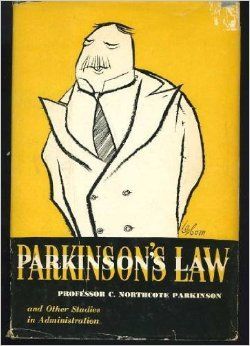
'Parkinson's Law, and Other Studies in Administration' by Cyril Northcote Parkinson (ISBN 0395083737) This adage’s namesake is British historian Cyril Northcote Parkinson, who first detailed it as an opening remark in his famous 1955 The Economist essay.

Parkinson’s Law has spawned many serviceable corollaries:

  • A wardrobe expands to fill all the available closet space.
  • A hoarder’s corpus of unwanted items and junk expands to fill his available space—in closets, cabinets, attics, garage, etc.
  • Data expands to fill the space available for storage.
  • Boredom expands to fill the space and time available to an affected individual.
  • Meetings expand to fill the time available. (Appropriately, if you set an hour for the meeting, people will use the entire hour, in spite of how much is on the agenda.)
  • No matter how much money people earn, they tend to spend the entire amount and a little bit more besides.

Parkinson’s Law for Stress-Management and Time-Management

From a stress- and time-management perspective, the functional implication of Parkinson’s Law is that tasks take as much time as you allot for them. In other words, the amount of time that you have to perform a task is the amount of time it will take to complete the task.

For example, if you have two hours to process engineering data, clean your wardrobe, bake a cake, or build a birdhouse, you are likely to fill those entire two hours performing that task, even if the task need not necessarily take as much time if you were efficient enough.

Idea for Impact: Put Bookends on Your Activities

According to Parkinson’s Law, work can contract to fill in the time you give it. You can apply artificial limitations to your work in order to finish it more efficiently. Consider setting time limits on all your activities.

Set a timer for each task you’re trying to get done. If you reckon something may take 90 minutes, set a timer for 90 minutes—or better yet, challenge yourself to be more efficient by setting a timer for 60 minutes. During that time, allow no interruptions and distractions. Keep your nose to the grindstone, apply yourself thoroughly to the task, and get it done.

For habitual procrastinators who tend to put off looming tasks to a later time and exert themselves at the “last minute” prior to an imminent deadline, one other corollary to Parkinson’s Law may be helpful: “If you wait until the last minute, it only takes a minute to do,” possibly producing mediocre results.

Wondering what to read next?

  1. Make a Habit of Stepping Back from Work
  2. Niksen: The Dutch Art of Embracing Stillness, Doing Nothing
  3. Your To-Do List Isn’t a Wish List: Add to It Selectively
  4. A Mindset Hack to Make Your Weekends More Refreshing
  5. Busyness is a Lack of Priorities

Filed Under: Sharpening Your Skills Tagged With: Mindfulness, Time Management

Beware of Advice from the Superstars

October 4, 2016 By Nagesh Belludi 1 Comment


Steve Jobs’s Eschewal of Market Research

Apple’s Steve Jobs said in a 1985 interview, “We built [the Mac] for ourselves. We were the group of people who were going to judge whether it was great or not. We weren’t going to go out and do market research.”

Twelve years later, he famously told BusinessWeek: “It’s really hard to design products by focus groups. A lot of times, people don’t know what they want until you show it to them.”

Throughout his illustrious career, Jobs eschewed market research and relied on his intuition. The aforementioned two quotes have become as legendary as the highly opinionated man himself. Reiterating Steve Jobs’ talent to see the needs of consumers before they themselves could, Apple’s Chief Design Officer and co-creator of Apple’s iconic products Jonathan Ive stated, “We don’t do focus groups—that is the job of the [product] designer. It’s unfair to ask people who don’t have a sense of the opportunities of tomorrow from the context of today to design.”

Take Away: Alas, many people who venerate Jobs have taken his message as a pretext to downplay the need for consumer research. Jobs may be correct, but his assertion is perhaps confined to the kind of pioneering products and services he introduced at Apple and Pixar. Most people who claim to be inspired by this lesson from Jobs’s career neither work in the narrow consumer electronics domain nor have their hero’s brilliant intuition and an extraordinarily gifted creative team to sidestep market research and customer input.

Stephen King’s Disdain for Outlines in Writing

'On Writing A Memoir of the Craft' by Stephen King (ISBN 1439156816) In the bestseller On Writing, celebrated American author Stephen King famously states that he never uses an outline to organize his thoughts. He describes the routine of outlining as “the good writer’s last resort and the dullard’s first choice. The story which results from it is apt to feel artificial and labored. … I don’t take notes; I don’t outline, I don’t do anything like that. I just flail away at the goddamn thing.” King advised other writers to keep from using outlines.

Take Away: Legions of King’s fans assumed that since this technique works so well for him, it must work for them too. Alas, they were mistaken: they aren’t as talented as him and cannot work without generating a detailed outline for a road map of creative writing. What works for writers—amateurs and professionals—is the advice of Terry Brooks, another famous American author, who wrote in his Sometimes the Magic Works, “Perhaps the best reason of all for outlining is that it frees you up immeasurably during the writing process to concentrate on matters other than plot.”

Sheryl Sandberg’s Privileged Work-Life Balance

'Lean In' by Sheryl Sandberg (ISBN 0385349947) Facebook’s Sheryl Sandberg wrote a prominent career advice book and feminist manifesto called Lean In. Sandberg urges women to fight for gender equality and be assertive to achieve career success.

Sandberg’s writing has been criticized for being out of touch with the reality that most women face. She establishes much of her “you-can-do-it-too” counsel on her own experience as a successful woman who’s balanced her career and family through high profile jobs at Google and Facebook.

Take Away: Few people come from as privileged a socio-economic background as Sandberg to obtain two Harvard degrees, get an illustrious mentor at college, work on prestigious research projects at the World Bank, and acquire hundreds of millions of personal wealth by their mid-careers. Few women can aspire to be as fairy-tale affluent, talented, and privileged as Sandberg. Few can afford to hire assistants and domestic help to help balance the demands of personal and professional life. Few people have the benefit of working in the upper echelons of progressive corporate environments such as those at Google and Facebook that make it as conducive to “lean in” like her.

What Worked for Them Won’t Work for You

If you read about how successful people get successful, remember that the career advice that works for the superstars is not necessarily what will work for most ordinary folks. So, don’t be misled by their “it worked for me” advice.

If a specific technique worked for Steve Jobs, Stephen King, Sheryl Sandberg, or anybody else who gives you advice, don’t assume it will work for you too. Alas, you are likely not as naturally brilliant, gifted, endowed, or disposed as they are. Neither are you as privileged to have access to the resources they can tap into.

In addition, in giving advice, superstars tend to understate—perhaps intentionally—the role that circumstances played in their success. On balance, much of success in life is a product of luck—being at the right time, at the right place, with the right people. Alas, what worked in their circumstances may not work in yours.

The Buddha taught prudence in such matters. He asked disciples to do what he taught only if it worked in the context of their own lives. He encouraged disciples to listen to his ideas, mull them over, try out what made sense, subsequently adapting what worked, and discarding what did not work.

The best way to educate yourself is by exposing yourself to a variety of success principles. Observe the top performers in your field. Then, identify, emulate, and adapt their effectiveness techniques to your circumstances. (See my previous article.)

Idea for Impact: Expose yourself to many success principles and consider what qualities, attributes, mental models, or approaches to life you may want to assimilate into who you are, even in part. Don’t expect to blatantly imitate a hero and expect the same outcomes: BE YOURSELF.

Wondering what to read next?

  1. Five Ways … You Could Elevate Good to Great
  2. Book Summary of Oprah Winfrey’s ‘The Path Made Clear’
  3. The Truth about Being a Young Entrepreneur
  4. Some Lessons Can Only Be Learned in the School of Life
  5. Writing Clearly and Concisely

Filed Under: Sharpening Your Skills Tagged With: Learning, Personal Growth, Role Models, Skills for Success, Steve Jobs

Inspirational Quotations by Mohandas K. Gandhi (#652)

October 2, 2016 By Nagesh Belludi Leave a Comment

Today marks the birthday of Mohandas K. Gandhi (1869–1948,) the apostle of peace and non-violence who said, “My life is my message.”

Around the world, this “Mahatma” (great soul) is idolized as a modern saint not only for his extraordinary public life as the leader of India’s peaceful struggle for independence, but also for his enduring philosophical contributions to humanity.

Gandhi was born into a family of modest means in the state of Gujarat. He was educated in British schools and earned a law degree in London. While working as an attorney in racially divided South Africa, he suffered discrimination in its full force. As dramatized in Richard Attenborough’s superb Gandhi, Gandhi was pushed off a train when he did not relocate from its first class coach. That particular incident made him politically active. During his 21 years in South Africa, he found his calling, experimented with nonviolent resistance, and vehemently fought against anti-Indian legislation in South Africa.

Gandhi then returned to India and organized peasants and workers against land taxes and subjugation. He led a series of nonviolent campaigns as the leader of the Indian crusade for home rule. He frequently resorted to hunger strikes not only in protest of British colonialism but also against hostility between India’s Hindus and Muslims. When Great Britain granted independence in 1947, the partition of India along religious lines led Gandhi to declare his life a failure because India could not govern itself as one nation but instead gave in to the division.

Within months after India’s independence, a Hindu fanatic assassinated Gandhi while he was on his way to evening prayers in Delhi. At his funeral procession, American radio journalist Edward Murrow broadcast, “The object of this massive tribute died as he had always lived—a private man without wealth, without property, without official title or office. Mahatma Gandhi was not a commander of armies nor ruler of vast lands. He could not boast any scientific achievements or artistic gift. Yet men, governments and dignitaries from all over the world have joined hands today to pay homage to this little brown man in the loincloth who led his country to freedom.”

Gandhi is one of the most-biographed people in the history of the world. Physicist Albert Einstein once said, “Generations to come will scarce believe that such a one as this ever in flesh and blood walked upon this earth.”

'Gandhi An Autobiography' by Mohandas Gandhi (ISBN 0807059099) Gandhi inspired Martin Luther King, Jr., Nelson Mandela, Aung San Suu Kyi, the 14th Dalai Lama, and political leaders who resist oppressive regimes. He was also a prolific writer; his most famous work is his autobiography, The Story of My Experiments with Truth (1940.)

Gandhi is the political and spiritual father of modern India. Beyond the common reverence of Gandhi as a freedom-struggle leader, he is also venerated for his philosophy of life. He advocated virtue, simple living, nonviolence, and vegetarianism. He expounded a nonviolent way of life in which people can recognize themselves as God’s children, irrespective of religion and culture, and live the life of absolute truth, universal love, and righteous justice. He presented this as an alternative to a Western culture overflowing with consumerism, individualism, competition, and inequality.

Gandhi said, “When I despair, I remember that all through history the way of truth and love have always won. There have been tyrants and murderers, and for a time, they can seem invincible, but in the end, they always fall. Think of it—always.”

Inspirational Quotations by Mohandas K. Gandhi

I am prepared to die, but there is no cause for which I am prepared to kill.
—Mohandas K. Gandhi (Indian Hindu Political leader)

Prayer is not an old woman’s idle amusement. Properly understood and applied, it is the most potent instrument of action.
—Mohandas K. Gandhi (Indian Hindu Political leader)

It is unwise to be too sure of one’s own wisdom. It is healthy to be reminded that the strongest might weaken and the wisest might err.
—Mohandas K. Gandhi (Indian Hindu Political leader)

Nothing can be more hurtful to an honourable man than that he should be accused of bad faith.
—Mohandas K. Gandhi (Indian Hindu Political leader)

There is a sufficiency in the world for man’s need but not for man’s greed.
—Mohandas K. Gandhi (Indian Hindu Political leader)

In judging myself I shall try to be as harsh as truth, as I want others also to be.
—Mohandas K. Gandhi (Indian Hindu Political leader)

Nonviolence is the first article of my faith. It is also the last article of my creed.
—Mohandas K. Gandhi (Indian Hindu Political leader)

Anger is the enemy of non-violence and pride is a monster that swallows it up.
—Mohandas K. Gandhi (Indian Hindu Political leader)

Prayer is the key of the morning and the bolt of the evening.
—Mohandas K. Gandhi (Indian Hindu Political leader)

Happiness is when what you think, what you say, and what you do are in harmony.
—Mohandas K. Gandhi (Indian Hindu Political leader)

Man should forget his anger before he lies down to sleep.
—Mohandas K. Gandhi (Indian Hindu Political leader)

Whenever you are confronted with an opponent, conquer him with love.
—Mohandas K. Gandhi (Indian Hindu Political leader)

They cannot take away our self-respect if we do not give it to them.
—Mohandas K. Gandhi (Indian Hindu Political leader)

Today I know that physical training should have as much place in the curriculum as mental training.
—Mohandas K. Gandhi (Indian Hindu Political leader)

A man of truth must also be a man of care.
—Mohandas K. Gandhi (Indian Hindu Political leader)

A man is but the product of his thoughts. What he thinks, he becomes.
—Mohandas K. Gandhi (Indian Hindu Political leader)

For me the different religions are beautiful flowers from the same garden, or they are branches of the same majestic tree.
—Mohandas K. Gandhi (Indian Hindu Political leader)

The cry for peace will be a cry in the wilderness, so long as the spirit of nonviolence does not dominate millions of men and women.
—Mohandas K. Gandhi (Indian Hindu Political leader)

Power is of two kinds. One is obtained by the fear of punishment and the other by acts of love. Power based on love is a thousand times more effective and permanent then the one derived from fear of punishment.
—Mohandas K. Gandhi (Indian Hindu Political leader)

A small body of determined spirits fired by an unquenchable faith in their mission can alter the course of history.
—Mohandas K. Gandhi (Indian Hindu Political leader)

If I believe I cannot do something, it makes me incapable of doing it, when I believe I can, then I acquire the ability to do it, even if I did not have the ability in the beginning.
—Mohandas K. Gandhi (Indian Hindu Political leader)

The weak can’t forgive. Forgiveness is of the strong.
—Mohandas K. Gandhi (Indian Hindu Political leader)

An error does not become truth by reason of multiplied propagation, nor does truth become error because nobody sees it. Truth stands, even if there be no public support. It is self sustained.
—Mohandas K. Gandhi (Indian Hindu Political leader)

One golden rule is to accept the interpretation honestly put on the pledge by the party administering it.
—Mohandas K. Gandhi (Indian Hindu Political leader)

Always believe in your dreams, because if you don’t, you’ll still have hope.
—Mohandas K. Gandhi (Indian Hindu Political leader)

Nothing is impossible for pure love.
—Mohandas K. Gandhi (Indian Hindu Political leader)

If you don’t ask, you don’t get.
—Mohandas K. Gandhi (Indian Hindu Political leader)

Religions are different roads converging to the same point. What does it matter that we take different road, so long as we reach the same goal. Wherein is the cause for quarrelling?
—Mohandas K. Gandhi (Indian Hindu Political leader)

When I despair, I remember that all through history the way of truth and love has always won. There have been tyrants and murderers and for a time they seem invincible but in the end, they always fall—think of it, always.
—Mohandas K. Gandhi (Indian Hindu Political leader)

Non-cooperation with evil is a sacred duty.
—Mohandas K. Gandhi (Indian Hindu Political leader)

You assist an evil system most effectively by obeying its orders and decrees. An evil system never deserves such allegiance. Allegiance to it means partaking of the evil. A good person will resist an evil system with his whole soul. Disobedience of the laws of an evil state is therefore a duty.
—Mohandas K. Gandhi (Indian Hindu Political leader)

The difference between what we do and what we are capable of doing would suffice to solve most of the world’s problems.
—Mohandas K. Gandhi (Indian Hindu Political leader)

A man who was completely innocent, offered himself as a sacrifice for the good of others, including his enemies, and became the ransom of the world. It was a perfect act.
—Mohandas K. Gandhi (Indian Hindu Political leader)

If one has no affection for a person or a system, one should feel free to give the fullest expression to his disaffection so long as he does not contemplate, promote, or incite violence.
—Mohandas K. Gandhi (Indian Hindu Political leader)

It is better to be violent, if there is violence in our hearts, than to put on the cloak of non-violence to coyer impotence.
—Mohandas K. Gandhi (Indian Hindu Political leader)

The best way to find yourself is to lose yourself in the service of others.
—Mohandas K. Gandhi (Indian Hindu Political leader)

Faith is not a delicate flower which would wither away under the slightest stormy weather.
—Mohandas K. Gandhi (Indian Hindu Political leader)

Providence has its appointed hour for everything. We cannot command results, we can only strive.
—Mohandas K. Gandhi (Indian Hindu Political leader)

Victory attained by violence is tantamount to a defeat, for it is momentary.
—Mohandas K. Gandhi (Indian Hindu Political leader)

Jealousy does not wait for reasons.
—Mohandas K. Gandhi (Indian Hindu Political leader)

The main purpose of life is to live rightly, think rightly, act rightly. The soul must languish when we give all our thought to the body.
—Mohandas K. Gandhi (Indian Hindu Political leader)

The essence of all religions is one. Only their approaches are different.
—Mohandas K. Gandhi (Indian Hindu Political leader)

One of the objects of a newspaper is to understand popular feeling and to give expression to it; another is to arouse among the people certain desirable sentiments; and the third is fearlessly to expose popular defects.
—Mohandas K. Gandhi (Indian Hindu Political leader)

Non-violence is not a garment to be put on and off at will. Its seat is in the heart, and it must be inseparable part of our very being.
—Mohandas K. Gandhi (Indian Hindu Political leader)

Wondering what to read next?

  1. Source of Mohandas K. Gandhi’s Quote, ‘You Must be the Change’
  2. Gandhi on the Doctrine of Ahimsa + Non-Violence in Buddhism
  3. Gandhi’s Wheel, Apple’s Spin: The Paradox of Apple’s ‘Think Different’ Campaign

Filed Under: Inspirational Quotations Tagged With: Gandhi, India

Avoid the Lectern in Presentations

September 30, 2016 By Nagesh Belludi Leave a Comment

Standing behind a lectern while presenting can make you seem stiff, unemotional, and disconnected. A lectern creates a barrier between you and your audience—it not only blocks out two-thirds of your body, but also restricts your natural hand gestures. The lectern may even entice you to lean on or hold it, making you look tense and uneasy.

By walking around the room and getting closer to your audience, you establish a bigger presence in the room and are harder to ignore. You encourage your audience to move their heads and eyes to follow you around the room, so they’re less likely to doze off during your presentation. Your watchful eyes may also prevent them from using their tablets and phones.

Walking about can make your presentation appear like a natural conversation and thus help you overcome any public speaking anxiety. You can also better gauge your audience’s reactions.

  • Always present standing up, even if you’re presenting to an audience of one or two. Standing while presenting not only lets you make better eye contact with your audience, but also helps you breathe and project your voice more clearly. You will appear to have more influence since your audience will be literally “looking up to you.”
  • Move around naturally. Mix it up to avoid looking nervous. Don’t always walk from the front to the back or from side to side.
  • Make your movements look relaxed and confident. Do not tap your foot, rock, sway, swing, or dance on the spot. Don’t try anything over-the-top, dramatic, or flashy.
  • Keep an open posture at all times; avoid crossing your arms or creating a symbolic barrier between you and the audience. Use hand gestures selectively for emphasis—do not gesture so much that your body language poses a distraction.
  • Stop moving and pause briefly after making each important point. As I mentioned in a previous article, pauses can help you emphasize your message and gather your next thoughts. In addition, the audience gets a chance to absorb your point.
  • When responding to a question, move closer to the person who asked the question.

Idea for Impact: When presenting, walk around the room naturally and interact with your audience. Moving around the room not only helps you keep eye contact with the audience, but also emphasizes an air of confidence, openness, and authority. You’ll also look more conversational, interesting, and memorable.

Wondering what to read next?

  1. Unlock the Power of Communication: Start with the End in Mind!
  2. Never Give a Boring Presentation Again
  3. A Little-Known Public-Speaking Tip
  4. An Essential Secret of Great Speakers: Pauses in Talking
  5. Ghosting is Rude

Filed Under: Effective Communication Tagged With: Etiquette, Meetings, Networking, Presentations

How to Handle Employees who Moonlight

September 27, 2016 By Nagesh Belludi Leave a Comment

Moonlighting—working a part-time job or having a business “on the side”—can pose a challenge for employers. Moonlighting can lead to divided allegiance, conflicts of interest, and poor job performance.

Employers expect employees to be present and prompt at their jobs. If employees are hustling to attend to multiple commitments, fatigue, lack of sleep, poor attentiveness, tardiness, and absenteeism can become problems. When an employees’ moonlighting hurts their on-the-job performance, employers are within their rights to discipline and terminate employees. For these reasons, some employers limit or prohibit moonlighting.

The proactive approach to moonlighting

One way to head off moonlighting problems is to have a policy about part-time jobs and running side businesses. Institute a policy that sets performance expectations, protects proprietary information, avoids conflicts of interest, and averts divided allegiance. Your moonlighting policy cannot regulate employees’ off-duty activities or prohibit employees from having other jobs. But it may expect employees to disclose and get approval for supplementary employment. A moonlighting policy may also require senior managers and leaders to disclose directorships and financial interests in other companies.

Tell employees they can’t mix their business with your company’s business

If you find an employee doing side work for pay from your office, tell him that this is a clear violation of office expectations; he should conduct no business other than your company’s during work hours. Tell your employee, “You can’t mix your other business with our business. Your time at this job should be exclusively for this job. Our company resources are for our company’s purposes only.”

If your employee gets occasional calls that he needs to attend to, reiterate the above expectation and encourage him to answer the calls during break time and away from his desk. Encourage him to respond to those calls with “I’m at my other job right now. Let me call you back later.”

Discourage employees from selling stuff to other employees

If you find an employee selling stuff to other employees or soliciting outside business during paid working time, discourage it as soon as you discover it. Explain how this interferes with your office’s work.

Discourage your employees from turning your office into a showroom and making customers of other employees. Selling merchandise could impair work relationships when a buyer is unhappy with a product or service. Worse yet, side-businesses can easily grow unmanageable in case of network marketing programs (e.g. Amway, Herbalife) that encourage upselling or getting others involved as salespeople.

Employees can involve their colleagues in side-businesses outside your office, as long as such activities don’t harm at-work relationships.

Idea for Impact: Managers can forestall many employee problems by being proactive and setting expectations

In general, moonlighting is neither unethical nor illegal. It may become an issue when the employer specifically prohibits it and/or where the other job is with a competitor, supplier, or customer and is therefore a potential conflict of interest. The only time you really need to challenge an employee’s moonlighting is when it can affect your business in terms of conflicts of interest and deficient work performance.

Bear in mind: don’t overlook or disregard such concerns until they become major problems.

Wondering what to read next?

  1. Fire Fast—It’s Heartless to Hang on to Bad Employees
  2. Should Staff Be Allowed to Do ‘Life Admin’ at Work?
  3. Can You Be Terminated for Out-of-Work Conduct?
  4. One of the Tests of Leadership is the Ability to Sniff out a Fire Quickly
  5. General Electric’s Jack Welch Identifies Four Types of Managers

Filed Under: Managing People, Sharpening Your Skills Tagged With: Conflict, Conversations, Etiquette, Great Manager, Human Resources, Performance Management

« Previous Page
Next Page »

Primary Sidebar

Popular Now

Anxiety Assertiveness Attitudes Balance Biases Coaching Conflict Conversations Creativity Critical Thinking Decision-Making Discipline Emotions Entrepreneurs Ethics Etiquette Feedback Getting Along Getting Things Done Goals Great Manager Innovation Leadership Lessons Likeability Mental Models Mindfulness Motivation Parables Performance Management Personal Growth Persuasion Philosophy Problem Solving Procrastination Psychology Relationships Resilience Simple Living Social Skills Stress Thinking Tools Thought Process Time Management Winning on the Job Wisdom

About: Nagesh Belludi [hire] is a St. Petersburg, Florida-based freethinker, investor, and leadership coach. He specializes in helping executives and companies ensure that the overall quality of their decision-making benefits isn’t compromised by a lack of a big-picture understanding.

Get Updates

Signup for emails

Subscribe via RSS

Contact Nagesh Belludi

RECOMMENDED BOOK:
Taking Advice

Taking Advice: Dan Ciampa

Executive coach Dan Ciampa offers an excellent framework on the advice network you need on strategic, operational, political, and personal elements of your work and life.

Explore

  • Announcements
  • Belief and Spirituality
  • Business Stories
  • Career Development
  • Effective Communication
  • Great Personalities
  • Health and Well-being
  • Ideas and Insights
  • Inspirational Quotations
  • Leadership
  • Leadership Reading
  • Leading Teams
  • Living the Good Life
  • Managing Business Functions
  • Managing People
  • MBA in a Nutshell
  • Mental Models
  • News Analysis
  • Personal Finance
  • Podcasts
  • Project Management
  • Proverbs & Maxims
  • Sharpening Your Skills
  • The Great Innovators

Recently,

  • Uncomfortable Taking Compliments? Just Say ‘Thank You.’
  • Before You Become an Entrepreneur, Talk Yourself Out of It
  • ‘In the Mood for Love’ and the Residue of Stoic Restraint
  • Inspirational Quotations #1177
  • How to Deal with … Interrupters
  • How to Deal with … Overtalkers
  • Stress You Can’t Name Is Stress You Can’t Manage

Unless otherwise stated in the individual document, the works above are © Nagesh Belludi under a Creative Commons BY-NC-ND license. You may quote, copy and share them freely, as long as you link back to RightAttitudes.com, don't make money with them, and don't modify the content. Enjoy!