Before enlightenment, I chopped wood and carried water. After enlightenment, I chopped wood and carried water.
—Zen Proverb (Japanese School of Mahayana Buddhism)
It is not money, nor is it mere intellect, that governs the world; it is moral character, and intellect associated with moral excellence.
—Theodore Dwight Woolsey (American Academic)
Each one, reach one. Each one, teach one. Until all are taught.
—Mark Victor Hansen (American Speaker, Author)
Friendship that insists upon agreement on all matters is not worth the name. Friendship to be real must ever sustain the weight of honest differences, however sharp they be.
—Mohandas K. Gandhi (Indian Hindu Political leader)
In retrospect, all these exercises in self-gratification seem pure fantasy, what Pascal called, licking the earth.
—Malcolm Muggeridge (English Journalist)
We become moral when we are unhappy.
—Marcel Proust (French Novelist)
Humor can help you cope with the unbearable so that you can stay on the bright side of things until the bright side actually comes along.
—Allen Klein (American Author)
A chain is no stronger than its weakest link, and life is after all a chain.
—William James (American Philosopher)
Men of principle are always bold, but those who are bold are not always men of principle.
—Confucius (Chinese Philosopher)
There are very few monsters who warrant the fear we have of them.
—Andre Gide (French Novelist)
A rich man’s joke is always funny.
—Thomas Edward Brown (Manx Poet)
If you want a golden rule that will fit everything, this is it: Have nothing in your houses that you do not know to be useful or believe to be beautiful.
—William Morris (British Artist, Author)
A poet’s pleasure is to withhold a little of his meaning, to intensify by mystification. He unzips the veil from beauty, but does not remove it.
—E. B. White (American Essayist, Humorist)
Metaphors have a way of holding the most truth in the least space.
—Orson Scott Card (American Author)
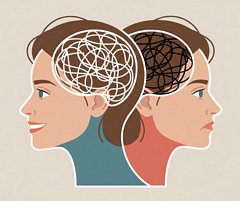 All-or-nothing thinking—the habit of seeing life in rigid extremes—distorts how you interpret events, relationships, and even your own ability to change. It works beneath conscious attention, which is why it’s so persistent.
 A quote often attributed to
 .jpg "'Ice King Frederic Tudor' by Carl Seaburg (ISBN 0939510804)")
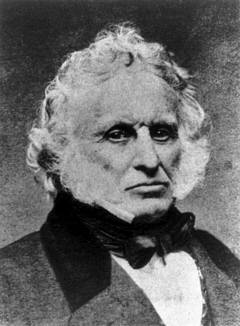 What kept him going was a conviction that looked, from the outside, like madness but was, in fact, a market insight of rare precision: there was no ice trade in the tropics because no one had ever built one. The absence of demand was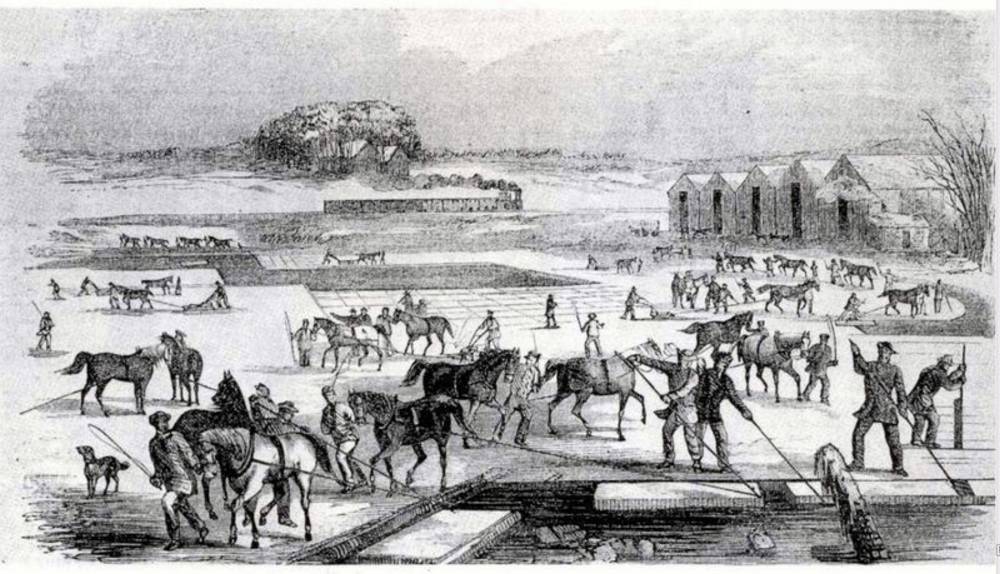
 McDonald’s and Taco Bell use dollar menus as bait—cheap hooks to reel in customers. Chipotle refuses to join that
 .jpg "'Ride of a Lifetime' by Robert Iger (ISBN 0399592091)")
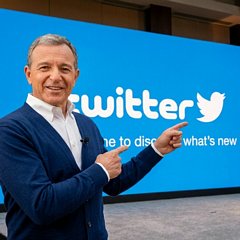 This is what gut feeling actually does in complex decisions. It doesn’t replace analysis; it registers when one factor has grown large enough to settle the question on its own. What
 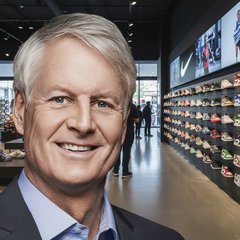 There’s an old adage that warns, if all you have is a hammer, everything looks like a nail. It’s meant as cautionary advice, but in the world of business, it’s more often a prophecy—executives convinced that their one winning strategy applies everywhere, blindly imposing their methods on industries with vastly different economic characteristics.
 Donahoe tried to run a high-performance culture company as if it were a standardized tech firm. His defining move was an
  Yet another rich guy is