• Skip to content
  • Skip to primary sidebar

Right Attitudes

Ideas for Impact

Managing People

What Jeeves Teaches About Passive Voice as a Tool of Tact

October 24, 2025 By Nagesh Belludi Leave a Comment

What Jeeves Teaches About Passive Voice as a Tool of Tact

P. G. Wodehouse’s Jeeves and Wooster tales are more than delightful escapades. They offer masterclasses in elegant interaction and psychological finesse. One standout feature is Jeeves’s knack for steering Bertie Wooster away from disaster without resorting to blunt rebuke.

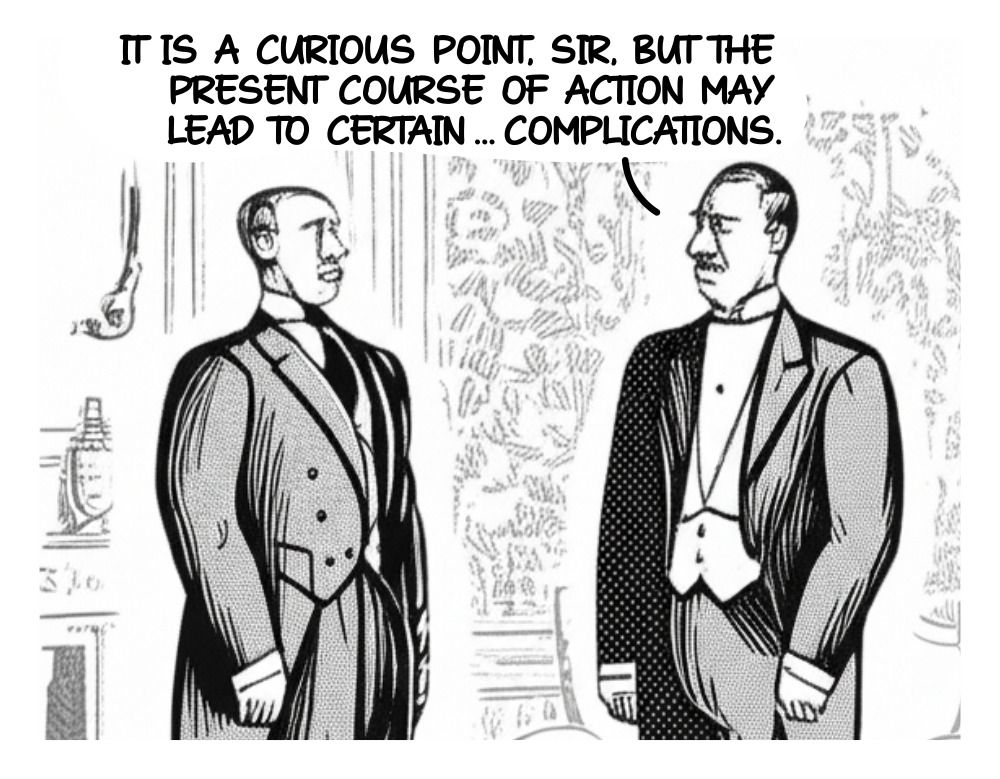
Jeeves never calls Bertie foolish. Instead, he refers to the latest tangle as a “rather complex imbroglio” or a “somewhat delicate situation.” These euphemisms allow Bertie to preserve his dignity while quietly grasping that he has stumbled again. Jeeves’s tact sustains trust, amplifies influence, and fosters a dynamic of gentle guidance over domination.

Central to this diplomacy is Jeeves’s expert use of passive voice. Rather than saying, “You’ve made a fool of yourself,” he offers, “There appears to have been a slight misunderstanding.” Shifting focus from the individual to the circumstance softens criticism. It diffuses blame, avoids defensiveness, and invites collaborative problem-solving—an ideal approach when harmony matters more than fault.

Passive voice offers distinct advantages in criticism. It cushions judgment, encourages reflection, and de-emphasizes the actor. By highlighting the event rather than the person, it makes feedback feel less accusatory and more constructive. This reduces tension and promotes respectful dialogue, especially in delicate or hierarchical relationships.

Yet diplomacy falters when passive voice is overused. “Mistakes were made” may sound politic, but it lacks clarity and direction. Vagueness erodes accountability.

Idea for Impact: Choosing between active and passive voice depends on intent. If tact is the aim, passive phrasing—handled as artfully as Jeeves handles a cravat—serves a distinct purpose. But when honesty and accountability take precedence, clarity matters more than softness. Language is not just what we say; it is how we say it. And in that, Jeeves stands as a model of refined expression.


Wondering what to read next?

  1. Avoid Control Talk
  2. The Sensitivity of Politics in Today’s Contentious Climate
  3. Witty Comebacks and Smart Responses for Nosy People
  4. Making the Nuances Count in Decisions
  5. Nice Ways to Say ‘No’

Filed Under: Effective Communication, Managing People, Sharpening Your Skills Tagged With: Assertiveness, Communication, Conflict, Conversations, Etiquette, Getting Along, Likeability, Parables, Persuasion, Social Skills

A Boss’s Presence Deserves Our Gratitude’s Might

October 15, 2025 By Nagesh Belludi Leave a Comment

Why We Need Bosses: The Backbone of Workplace Success

Ever pause and ponder a while on the virtues that make a boss worthwhile?

The boss hands out assignments and waits for the deliverables.

The boss helps set the course.

The boss organizes your time for you.

The boss decides what’s urgent.

The boss steers you toward success with purpose.

The boss paves the path for growth and success.

The boss lends a hand in moments of doubt.

The boss keeps you going when you don’t feel like doing it.

The boss gives you cover when you goof up (“he told me to!.”)

The boss pays you even when the client doesn’t honor the invoice.

The boss takes the blame.

The boss creates deadlines and sticks with them.

The boss makes sure you show up in the morning.

The boss pays for the office supplies.

The boss gives you someone to complain about.

The boss is an easy scapegoat for your personal frustrations or workplace dissatisfactions.

The boss carves up the work and gives you just that piece you signed up to do.

The boss gives you a role model (sometimes one who exhibits behaviors or values to be avoided.)

The boss gives you the momentum you need to get through the stuff that takes perseverance.

Tomorrow (16-Oct) is ‘National Boss’s Day’ in the United States and many other countries. It’s a good time to recognize the many challenges and pressures bosses face.

Sure, not all bosses are perfect … but let’s take a moment to show some love to those bosses who lead with dedication and commitment.

Wondering what to read next?

  1. No Boss Likes a Surprise—Good or Bad
  2. Don’t Be Friends with Your Boss
  3. You Can’t Serve Two Masters
  4. Tips for Working for a Type-A Boss
  5. The Good of Working for a Micromanager

Filed Under: Leadership, Managing People Tagged With: Conflict, Getting Along, Great Manager, Managing the Boss, Relationships, Winning on the Job

Managing the Overwhelmed: How to Coach Stressed Employees

September 22, 2025 By Nagesh Belludi Leave a Comment

Managing the Overwhelmed: How to Coach Stressed Employees It’s not pressure that breaks people—it’s pretending it isn’t there. Your job isn’t to shield your team from pressure, but to sharpen their ability to withstand it. Don’t reach for platitudes. Reach for precision. Here’s how to lead like it matters:

  • Ban multitasking from your team’s repertoire. It’s not a skill—it’s a slow bleed of attention and output. Force clarity. Demand focus. Two priorities, not ten. Excellence requires concentration, not dispersion.
  • Impose structure before chaos does. Spontaneity is a luxury few can afford. Instruct your team to plan the day before—ruthlessly. Prioritize, time-block, and start the day with intent, not inbox roulette.
  • Call out perfectionism for the vanity project it is. It’s not diligence—it’s delay dressed up as virtue. Teach your team to distinguish between what must be flawless and what simply must be finished.
  • Draw the line—and defend it. Constant availability is not commitment; it’s capitulation. Define what “off” means. Enforce it. Protect downtime like it’s oxygen—because it is.
  • Treat stress as a signal, not a sin. Chronic strain often points to deeper dysfunction: misaligned roles, toxic dynamics, or your own managerial evasions. Don’t soothe—intervene.
  • Make asking for help a norm, not a confession. The lone-hero fantasy is dead. Encourage your team to seek support, share burdens, and use the resources you claim to provide.
  • Invite candor before silence curdles into resentment. Don’t tell people to “move on.” Ask what’s wrong. Listen. Unspoken frustration doesn’t evaporate—it festers.

And finally: look in the mirror. Much of your team’s stress may originate from your systems, your silence, or your standards. Fix that first.

Wondering what to read next?

  1. Fire Fast—It’s Heartless to Hang on to Bad Employees
  2. Bringing out the Best in People through Positive Reinforcement
  3. Teams That Thrive make it Safe to Speak & Safe to Fail
  4. The Speed Trap: How Extreme Pressure Stifles Creativity
  5. Seven Easy Ways to Motivate Employees and Increase Productivity

Filed Under: Health and Well-being, Leading Teams, Managing People, MBA in a Nutshell Tagged With: Coaching, Conflict, Great Manager, Human Resources, Mentoring, Performance Management, Stress, Workplace

How to … Lead Without Driving Everyone Mad

September 17, 2025 By Nagesh Belludi Leave a Comment

How Bosses Can Drive Employees Crazy---and What They Can Do Instead Some managers inspire loyalty. Others, despite good intentions, slowly drain morale. This isn’t about tyrants—it’s about the well-meaning but unaware. If your team looks tense every Monday, there’s probably a reason.

Leadership sounds like vision and guidance. But in reality, it often means people grinding their teeth while their boss chips away at morale. Dysfunction doesn’t crash in—it creeps in through habits that quietly wear teams down.

  1. Don’t humiliate people in public. It’s not tough love—it’s bullying. Speak privately. Help them improve without turning it into a show.
  2. Don’t gossip about someone before speaking to them. It damages trust and spreads problems. Talk directly. Quietly. Like an adult.
  3. Don’t set impossible goals and act shocked when people burn out. High standards are fine. Just make sure they’re human. Let people breathe.
  4. Don’t take credit for your team’s work. It doesn’t make you look strong—it makes you look insecure. Recognition is fuel. Share it.
  5. Don’t change rules on a whim. People need consistency. If something shifts, explain why.
  6. Don’t avoid hard conversations. Problems don’t vanish—they rot. Face them with clarity and empathy.
  7. Don’t chase wins that wreck the team. Real success lasts. Build something people want to stay in.

Idea for Impact: Leadership isn’t about noise. It’s about steadiness, respect, and getting the few basics right.

Wondering what to read next?

  1. A Guide to Your First Management Role // Book Summary of Julie Zhuo’s ‘The Making of a Manager’
  2. Fostering Growth & Development: Embrace Coachable Moments
  3. Fire Fast—It’s Heartless to Hang on to Bad Employees
  4. Direction + Autonomy = Engagement
  5. Never Criticize Little, Trivial Faults

Filed Under: Leading Teams, Managing People, MBA in a Nutshell Tagged With: Coaching, Conversations, Feedback, Great Manager, Management, Mentoring, Performance Management

Narcissism Isn’t Confidence—It’s a Crisis of Worth

August 25, 2025 By Nagesh Belludi Leave a Comment

Narcissism Isn't Confidence, It's a Crisis of Worth We tend to see narcissists as preening showboats—people who crave attention, inflate their self-image, and dominate the spotlight. Often, our reflexive response blends dislike with a touch of envy. After all, narcissism seems to reflect confidence and competence, and society rewards those traits handsomely.

But as humanistic philosopher Erich Fromm reminds us in The Art of Being (1989,) that impression is misleading. From a psychological perspective, narcissists don’t love themselves too much—they struggle to love themselves at all. The swagger isn’t proof of wholeness but a carefully constructed façade meant to hide a deep sense of inadequacy.

Rather than vilify or envy, perhaps we can view narcissistic behavior as a strategy—a means by which the narcissist copes with the emotional turmoil of feeling unseen, unworthy, or insignificant. It serves as an overcorrection, a self-preservation tactic designed to stave off the discomfort of vulnerability.

We’re all, in some way, seeking to be loved for who we are. Narcissists just shout louder—not because they want attention, but because they’re afraid they won’t be heard. When we look at narcissism through this lens, compassion becomes possible. The self-absorption, the grandiosity, the insistence on being right—these aren’t signs of a well-fed ego, but of a starved one. They’re desperate attempts to mend an inner fracture, to fill an emotional vacancy no amount of applause can satisfy.

Idea for Impact: Narcissism isn’t self-love—it’s disguised self-doubt. And maybe the most constructive response isn’t scorn or jealousy, but the quiet grace of understanding. Still, let’s not forget: insecurity dressed as dominance is still dangerous.

Wondering what to read next?

  1. Avoid Control Talk
  2. “But, Excuse Me, I’m Type A”: The Ultimate Humblebrag?
  3. The Trouble with Accusing Someone of Virtue Signaling
  4. How Smart People Undermine Their Success
  5. Beware of Narcissists’ Reality Twists and Guilt Trips

Filed Under: Effective Communication, Managing People Tagged With: Assertiveness, Attitudes, Confidence, Humility, Likeability, Manipulation, Personality, Psychology, Respect, Suffering

People Work Best When They Feel Good About Themselves: The Southwest Airlines Doctrine

August 20, 2025 By Nagesh Belludi Leave a Comment

When People Feel Good, They Work Best: Herb Kelleher and Colleen Barrett's Southwest Way Southwest Airlines didn’t rise to prominence through spreadsheets or sycophancy. It was built by a jolly, chain-smoking Texas lawyer named Herb Kelleher (1931–2019,) who believed that business didn’t have to be boring—or cruel. A maverick in pinstripes, Kelleher co-founded the airline in 1967 with a cocktail napkin sketch and a rebellious grin, determined to inject his irreverent spirit into every corner of the company. He didn’t just want to run an airline—he wanted to run one that laughed in the face of corporate pomposity.

Kelleher’s philosophy was as unorthodox as it was effective. He rejected the sacred cow of “customer first” and instead declared, “If employees are treated well, they’ll treat the customers well. If the customers are treated well, they’ll come back, and the shareholders will be happy.”

This wasn’t a slogan—it was a strategy. And it worked. He understood what too many executives still miss: the happiness of a company’s employees is vital to its business success. At the heart of this culture was Colleen Barrett (1944–2024,) who began as Kelleher’s legal secretary and rose to become president and COO. She was the steward of Southwest’s soul, and she made it her mission to ensure employees felt not just respected, but loved. When Southwest went public in 1971, it chose the stock ticker LUV—a nod to its home base at Dallas Love Field and a cheeky emblem of its people-first ethos.

We almost demand that you have fun and you enjoy yourself. I spend probably seventy to eighty percent of my time trying to assure that our employees feel good about their work environment, feel that we care about them as people, and feel that they are empowered and really encouraged to make decisions from the heart. We really want people to do the right thing versus doing things right. If you enjoy what you’re doing, you will probably do it better.

'Nuts- Southwest Airlines' by Kevin and Jackie Freiberg (ISBN 0767901843) Barrett wasn’t just a leader—she was “Mom” to the workforce. Her office was adorned with a “wall of hearts,” a floor-to-ceiling collage of photos, thank-you notes, and memories. The Dallas headquarters itself was a shrine to joy: walls plastered with snapshots of birthdays, barbecues, community service, and cultural celebrations. Parties weren’t distractions—they were doctrine. They reminded everyone that work could be human. The power of giving employees the freedom to be themselves wasn’t just tolerated—it was institutionalized. As Kevin and Jackie Freiberg wrote in Nuts! Southwest Airlines’ Crazy Recipe for Business and Personal Success (1995; my summary):

Love conquers the defensiveness that closes people to influence. When people feel loved, the walls come down. When people look out for their colleagues’ interests, their colleagues are more open to accepting new ideas and behaving in prescribed ways.

A lot of people at Southwest Airlines believe that the reason Herb and Colleen have so much influence within the company has less to do with their positions than with the way that they consistently demonstrate their love for employees. Leading through love means you’ve got to care. Love is a source of influence.

But time, like altitude, changes perspective. In recent years, Southwest has begun to resemble the very industry it once mocked. The camaraderie remains, but the warmth has cooled. The parties are fewer, the policies more rigid, and the once-radical culture has been diluted by the gravity of scale and the pressures of Wall Street.

Still, the lesson endures: the happiest worker is not the one most surveilled, but the one most trusted to think. And in a world where most companies treat morale as a line item, Southwest’s early years stand as a reminder that a culture that celebrates its people will outlast one that merely exploits them.

That’s not sentimentality—it’s strategy. And it’s one worth defending.

Wondering what to read next?

  1. From the Inside Out: How Empowering Your Employees Builds Customer Loyalty
  2. A Rule Followed Blindly Is a Principle Betrayed Quietly
  3. Putting the WOW in Customer Service // Book Summary of Tony Hsieh’s Delivering Happiness
  4. These are the Two Best Employee Engagement Questions
  5. Employee Engagement: Show Them How They Make a Difference

Filed Under: Business Stories, Leading Teams, Managing People, MBA in a Nutshell, The Great Innovators Tagged With: Employee Development, Great Manager, Human Resources, Leadership, Likeability, Motivation, Performance Management, Persuasion

You’re Worthy of Respect

August 6, 2025 By Nagesh Belludi Leave a Comment

You're Worthy of Respect - Beware the Manipulators of Worth Watch out for anyone who demands you jump through hoops just to be treated with basic decency.

There’s a difference between earning trust and earning the right to be treated like a human being. The former is part of healthy relationships. The latter is a red flag.

Dignity isn’t a reward—it’s a baseline. You don’t need to prove your intelligence, competence, or usefulness to deserve courtesy, fairness, or kindness. If someone makes your dignity conditional, they’re not building trust—they’re asserting control.

Yes, respect for someone’s judgment or expertise is often earned over time. A job interview, a test of reliability, a gradual deepening of trust—these are normal. But they should never come at the cost of your basic worth.

If someone tells you to “prove your value” before they’ll treat you with respect, ask yourself: Are they assessing your skills—or trying to make you feel small?

In healthy relationships, respect is layered—but dignity is non-negotiable. You can earn someone’s confidence, but you should never have to earn their humanity.

Wondering what to read next?

  1. It’s Never About You
  2. The Pickleball Predicament: If The CEO Wants a Match, Don’t Let It Be a Mismatch
  3. Stop Trying to Prove Yourself to the World
  4. Who Told You That Everybody Was Going to Like You?
  5. Could Limiting Social Media Reduce Your Anxiety About Work?

Filed Under: Living the Good Life, Managing People, Sharpening Your Skills Tagged With: Assertiveness, Attitudes, Conflict, Etiquette, Getting Along, Likeability, Networking, Relationships

Reverse Mentoring: How a Younger Advisor Can Propel You Forward

July 30, 2025 By Nagesh Belludi Leave a Comment

Reverse Mentoring: How a Younger Advisor Can Propel You Forward Mentorship once meant absorbing polished advice from someone with gray hair, a Rolodex thick with gatekeepers, and the power to open doors. Age conferred authority. Experience granted relevance—and access.

Then Jack Welch flipped the script. In the late ’90s, with digital disruption looming, the General Electric CEO formalized Reverse Mentoring. Younger employees coached senior leaders in digital fluency. GE didn’t gesture at change—it pursued it. That fluency helped the company stay competitive.

Today’s youth sets the pace for innovation. They drive trends, build platforms, and shape culture. Older generations decode emojis like cryptic puzzles. Staying relevant demands engagement. Professionals who tune out drift into nostalgic irrelevance.

The shift reaches beyond the workplace. One founder I worked with saw this play out in real time. He turned to Jane, a junior colleague, for help understanding younger users of a tech feature. Unexpectedly, he gained clarity about his own daughter. Jane could interpret the daughter’s concerns about life with an ease rooted not in experience, but in proximity. Her fluency in generational nuance helped my client rewire how he reached out—replacing bewilderment with connection. She simply spoke the language he’d missed. It wasn’t therapy. It was perspective.

Idea for Impact: Wisdom belongs not only to those with tenure but to those with perspective. Reverse mentoring amplifies that wisdom—without the cliches or the campfire. The process confronts comfort. It demands humility—a resource many C-suites fail to stock. But the payoff endures: less noise, more signal, and leadership that listens.

Wondering what to read next?

  1. Even the Best Need a Coach
  2. An Underappreciated Way to Improve Team Dynamic
  3. Could Limiting Social Media Reduce Your Anxiety About Work?
  4. A Guide to Your First Management Role // Book Summary of Julie Zhuo’s ‘The Making of a Manager’
  5. The Pickleball Predicament: If The CEO Wants a Match, Don’t Let It Be a Mismatch

Filed Under: Career Development, Managing People Tagged With: Conversations, Getting Ahead, Mentoring, Networking, Problem Solving, Skills for Success, Social Dynamics, Therapy, Winning on the Job, Wisdom

To Know Is to Contradict: The Power of Nuanced Thinking

July 26, 2025 By Nagesh Belludi Leave a Comment

Beyond Heroes and Villains: The Power of Nuanced Thinking The tendency to divide humanity into heroes and villains, saints and devils, is a habit more of the primitive mind than of the reflective one.

A telling measure of a person’s cognitive sophistication is how they assess polarizing figures—be it Elon Musk, Greta Thunberg, Marine Le Pen, or Jacinda Ardern. Each is a nexus of contradictions, a repository of both virtue and folly. To apprehend this is not a mark of indecision, but of discernment.

The capacity to speak about them with nuance signals more than finesse—it stands as a quiet rebuke to simplistic thinking. It suggests a willingness to resist the pull of reductive narratives, to hold conflicting truths, and to embrace complexity over convenience.

Idea for Impact: True understanding lies not in easy answers, but in the ability to recognize and reflect on the layered realities others prefer to flatten. That, ultimately, is the mark of a mind equipped to navigate a complicated world.

Wondering what to read next?

  1. Charlie Munger’s Iron Prescription
  2. How to Handle Conflict: Disagree and Commit [Lessons from Amazon & ‘The Bezos Way’]
  3. One of the Tests of Leadership is the Ability to Sniff out a Fire Quickly
  4. Realize the Truth Yourself
  5. What Isn’t Matters Too

Filed Under: Managing People, Mental Models, Sharpening Your Skills Tagged With: Attitudes, Conflict, Critical Thinking, Leadership Lessons, Mental Models, Philosophy, Social Dynamics, Social Skills, Thinking Tools, Thought Process, Wisdom

Affection Is No Defense: Good Intentions Make Excellent Alibis

June 30, 2025 By Nagesh Belludi Leave a Comment

Affection Is No Defense: Good Intentions Make Excellent Alibis There’s a peculiar cruelty in the well-meant, the kind that cloaks harm in sentiment and justifies injury with declarations of virtue.

We’re told to “look at their intentions,” as if what’s in someone’s heart should matter more than what they’ve actually done—whether it’s manipulation, constant criticism, control, or the slow erosion of your boundaries.

That’s an absurd suggestion. Judging morality by intent is like driving blindfolded and expecting applause for staying in the lane—until you hit someone.

Good intentions don’t excuse toxic behavior. Someone might believe they love you while slowly suffocating you with their version of care. They may raise their voice, make your choices, erode your autonomy—and still feel righteous. They might call it love. It’s not. It’s apathy in the language of affection. It’s control dressed as concern.

Intention doesn’t shield impact. Even harm dressed as love is still harm. The pain’s real. The effects last.

Intentions don’t bleed. Impact does. When someone says their harmful behavior should be excused by how they feel about you, they’re really saying this: that their story matters more than your experience. That they’d rather seem good than do good.

Idea for Impact: It’s painful to admit someone you love might be hurting you. But no matter how gilded the alibi, harm is harm. Don’t accept it just because it came in a velvet box.

Wondering what to read next?

  1. It’s Never About You
  2. Get Rid of Relationship Clutter
  3. The Secret to Happiness in Relationships is Lowering Your Expectations
  4. Escape the People-Pleasing Trap
  5. How to Speak Up in Meetings and Disagree Tactfully

Filed Under: Health and Well-being, Managing People, Sharpening Your Skills Tagged With: Assertiveness, Conflict, Conversations, Emotions, Getting Along, Likeability, Mindfulness, Relationships, Suffering

« Previous Page
Next Page »

Primary Sidebar

Popular Now

Anxiety Assertiveness Attitudes Balance Biases Coaching Conflict Conversations Creativity Critical Thinking Decision-Making Discipline Emotions Entrepreneurs Etiquette Feedback Getting Along Getting Things Done Goals Great Manager Innovation Leadership Leadership Lessons Likeability Mental Models Mentoring Mindfulness Motivation Networking Parables Performance Management Persuasion Philosophy Problem Solving Procrastination Relationships Simple Living Social Skills Stress Suffering Thinking Tools Thought Process Time Management Winning on the Job Wisdom

About: Nagesh Belludi [hire] is a St. Petersburg, Florida-based freethinker, investor, and leadership coach. He specializes in helping executives and companies ensure that the overall quality of their decision-making benefits isn’t compromised by a lack of a big-picture understanding.

Get Updates

Signup for emails

Subscribe via RSS

Contact Nagesh Belludi

RECOMMENDED BOOK:
How to Talk to Anyone

How to Talk to Anyone: Leil Lowndes

Communication consultant Leil Lowndes discusses 92 tricks to become a better conversationalist and improve social relationships---body language, words to say, telephone techniques, social tactics.

Explore

  • Announcements
  • Belief and Spirituality
  • Business Stories
  • Career Development
  • Effective Communication
  • Great Personalities
  • Health and Well-being
  • Ideas and Insights
  • Inspirational Quotations
  • Leadership
  • Leadership Reading
  • Leading Teams
  • Living the Good Life
  • Managing Business Functions
  • Managing People
  • MBA in a Nutshell
  • Mental Models
  • News Analysis
  • Personal Finance
  • Podcasts
  • Project Management
  • Proverbs & Maxims
  • Sharpening Your Skills
  • The Great Innovators

Recently,

  • Is It Ever Too Late to Send a Condolence Card?
  • What Appears Self-Evident to One May Be Entirely Opaque to Another: How the Dalai Lama Apology Highlights Cultural Relativism
  • Inspirational Quotations #1136
  • Ditch Deadlines That Deceive
  • Invention is Refined Theft
  • You Need to Stop Turning Warren Buffett Into a Prophet
  • Inspirational Quotations #1135

Unless otherwise stated in the individual document, the works above are © Nagesh Belludi under a Creative Commons BY-NC-ND license. You may quote, copy and share them freely, as long as you link back to RightAttitudes.com, don't make money with them, and don't modify the content. Enjoy!