 We rely on to-do lists to organize our tasks, yet they often spiral beyond what’s manageable, overwhelming us with more than we can realistically accomplish.
What we choose not to do is just as defining as what we pursue. That is where a “don’t-do” list really comes in handy—it serves as a filter for distractions, those pointless tasks, and commitments that consume your time without yielding much in return. At work, this might mean forgoing duties that do not add significant value. In life, it could entail letting go of habits or projects that simply crowd out what actually matters.
Saying no today does not mean no forever. Some tasks can be revisited later; however, actively clearing space ensures that priorities remain front and center.
Idea for Impact: A to-do list drives action, while a not-to-do list sharpens focus. Figuring out what not to do often gets you further.
 Hustle culture promotes the idea that ambition is demonstrated through exhaustion, making sacrifices in well-being appear necessary for success. Society has
 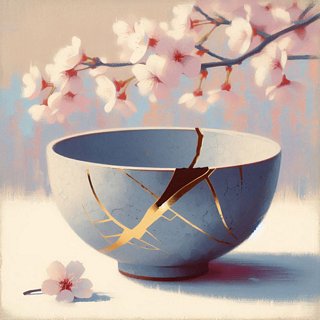 The Japanese aesthetic of
 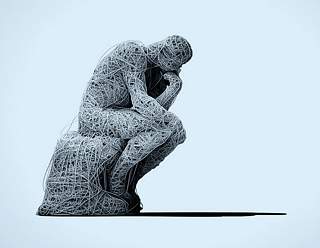 November 20 is
.jpg "'The Artist Way Higher' by Julia Cameron (ISBN 1585421472)")
 If you haven’t been tracking your personal finances, kick off with a Personal Net Worth Spreadsheet. It’s not revolutionary, but it is relentlessly revealing. The purpose is clear: record what you own, subtract what you owe, and face the unvarnished truth of the remainder. That number is your net worth—untainted by narrative or intention. It can’t flatter. It won’t excuse. It simply reveals.
 The
The 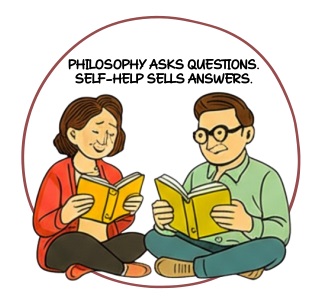 Self-help and philosophy both claim to enhance life, but they approach the task from opposite ends. Self-help assumes you know what you want—success, happiness, confidence—and hands you the tools to get there. Philosophy asks whether those goals are worth wanting in the first place.
.jpg "'The Stoic Capitalist' by Robert Rosenkranz (ISBN 1399423231)")
 Life is not a cradle of comfort but a crucible of experience. To be conscious is to be vulnerable—to injury, to loss, to the slow erosion of certainty. Suffering is not a glitch in the system; it is the system. And yet, the modern mind, coddled by convenience and narcotized by distraction, recoils from this fact as if it were an indecency rather than a reality.