• Skip to content
  • Skip to primary sidebar

Right Attitudes

Ideas for Impact

Leadership

Power Inspires Hypocrisy

July 27, 2020 By Nagesh Belludi Leave a Comment

Mark Hurd, whom I featured in Friday’s article, was one of the most respected and eminent leaders in Silicon Valley until his mighty fall following his dalliance with a contractor during his time as CEO of Hewlett Packard (HP.)

Hurd had hired this contractor, a glamour model, as a “hostess” for “executive summit events,” even at out-of-town places where there is no HP event, but Hurd happened to be.

Hurd was ultimately exonerated of violating HP’s sexual-harassment policy (nothing was consummated with the contractor, and Hurd settled with the accuser for undisclosed terms) but he was officially charged with drumming up expense reports.

Hurd walked away from HP with a $34 million severance package. Almost immediately, he became co-president of Oracle, earning $11 million a year and options.

Much has been speculated about the real reasons HP’s board gave Hurd the boot, especially considering that he probably falsified his just an expense report just the once. Even then, said expenses were petty compared to the massive turnaround he had engineered at HP after walking into a very troubling situation. Hurd was famed for his no-nonsense management style and for finagling a culture of operational excellence at HP.

When the Hurd controversy broke out, Wall Street Journal’s Jonah Lehrer argued that when nice people rise to positions of power, “authority atrophies the very talents that got them there.”

The very traits that helped leaders accumulate control in the first place all but disappear once they rise to power. Instead of being polite, honest and outgoing, they become impulsive, reckless and rude.

Contrary to the notion that nice guys finish last, research shows that the surest way to accumulate power is to do unto others as you would have them do unto you.

But once nice guys reach the top, the headiness of wielding power causes them to morph into a very different kind of beast. They lose their ability to empathize with others, especially lesser mortals, and ignore information that doesn’t confirm what they already believe. Most tellingly, perhaps, they learn to excuse faults in themselves that they are quick to condemn in others. That’s not to say that every CEO is a secret villain. But even the most virtuous people can be undone by the corner office.

Idea for Impact: Power can become an enabler of corruption, deceit, and hypocrisy. People in positions of power have incentives to hold others to strict account for their behaviors even as they themselves act up, especially when the odds of being caught and punished are slim.

Wondering what to read next?

  1. Power Corrupts, and Power Attracts the Corruptible
  2. The Poolguard Effect: A Little Power, A Big Ego!
  3. The Enron Scandal: A Lesson on Motivated Blindness
  4. Shrewd Leaders Sometimes Take Liberties with the Truth to Reach Righteous Goals
  5. Why Groups Cheat: Complicity and Collusion

Filed Under: Leadership, Mental Models Tagged With: Attitudes, Discipline, Ethics, Getting Along, Humility, Icons, Integrity, Leadership, Motivation, Psychology, Success

Pulling Off the Impossible Under Immense Pressure: Leadership Lessons from Captain Sully

May 25, 2020 By Nagesh Belludi Leave a Comment

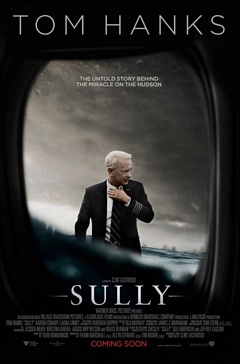
I recently watched Sully (2016,) the overrated Clint Eastwood-directed drama about the US Airways Flight 1549 incident, aka the “Miracle on the Hudson.”

Sully Movie (2016) with Tom Hanks, Clint Eastwood In summary, on 15-Jan-2009, Captain Chesley “Sully” Sullenberger (played by Tom Hanks) heroically dead-sticked his Airbus A320 aircraft in New York City’s Hudson River after both the aircraft’s engines failed from a bird strike. He then helped get passengers and crew off uninjured.

Sully centers on Sullenberger’s post-decision dissonance. To spin the real-life six-minute flight and the 24-minute swift rescue into a 96-minute Holyrood extravaganza, the filmmakers devised an antagonist in the form of National Transportation Safety Board (NTSB) investigators who try hard to blame Sullenberger for the mishap.

Overdramatized Portrayal of the NTSB Investigators

On the screen, the smirking NTSB investigators use flight simulators and computer analysis to second-guess Sullenberger’s lightning-quick decisions. They would have rather he made it to an airport nearby—a possibility that he had instantly judged was not viable given his 40 years of flying experience.

Contrary to Sully‘s portrayal, the NTSB was unequivocal that landing the aircraft on the Hudson was the right call. In his memoir, Highest Duty: My Search for What Really Matters (2009,) Sullenberger mentions that he was “buoyed by the fact that investigators determined that [first officer] Jeff and I made appropriate choices at every step.”

In the course of the real-life 18-month investigation of Flight 1549, the NTSB did investigate the odds of landing the aircraft in a nearby airport. Exploring all possible flaws that contribute to a crash is part of the NTSB’s charter. The NTSB, like other accident-investigation agencies, concerns itself principally with preventing future accidents. It rarely seeks to assign blame, nor does it make the pilots justify their actions.

The Complex Leadership Requirements of Flying

Apart from the sensationalized portrayal of the NTSB investigators, Sully misses the opportunity to call attention to the complex leadership requirements of aviation. Flying a civil aircraft is characterized by a high level of standardization and automation, while still placing a strong emphasis on formal qualification and experience.

Today, highly trained pilots have to work with ever more complicated and autonomous technology. The routinization must be weighed up against deliberate action. On Flight 1549, the A320’s much-studied fly-by-wire system allowed the pilots to concentrate on trying to resurrect the engines, starting the auxiliary power unit (APU,) and deciding the flight path in the direction of the Hudson. Airbus’s legendary computer controls will not allow the pilots to override the computer-imposed limits even in an urgent situation. Sullenberger and others have commented that lesser human-machine interaction may perhaps have allowed him a more favorable landing flare and helped him temper the aircraft’s impact with the water.

Aircrews now consist of ad hoc teams working together typically only for a few flights. They build their team quickly and rely on the crew’s collective knowledge and experience to round out the high levels of standardization.

Due to the complex demands for leadership in aircrews, specialized training programs such as Crew Resource Management (CRM) are in place to improve crew communication, situational awareness, and impromptu decision-making. These systems were established to help crews when technical failures and unexpected events disrupt highly procedualized normal operations.

Furthermore, individual and organizational learning from accidents was institutionalized through mandatory reporting of incidents—not only within the airline involved but also across the aviation community.

Leadership Lessons on Acting Under Immense Pressure: The Context of Success

Owing to intuition, experience, and quick coordination, Sullenberger was able to “land” the aircraft on the Hudson within four minutes following the bird strike and have his passengers and crew quickly evacuated onto the aircraft’s wings and onto rafts.

The rapid and highly complex coordination required for this extraordinary achievement was only achievable because of exceptional leadership, exemplary decision-making under stress, and the technical skills of both the cockpit- and cabin-crew.

The pilots were highly experienced—Sullenberger even had experience as a glider pilot. Further contextual factors—the calm weather on that afternoon and the proximity of NY Waterway ferries—helped bring this accident to a good end. All this facilitated the almost immediate rescue of passengers and crew from the rapidly sinking aircraft and the frigid water.

'Highest Duty What Really Matters' by Chesley Sullenberger (ISBN 0061924695) On Another Note, Sullenberger’s memoir, Highest Duty (2009,) is passable. The most interesting part of the book is the last fourth, where he discusses Flight 1549 and what went through his mind. Interestingly, Sullenberger writes that even after he realized that the plane was in one piece after hitting the water, he worried about the difficulties that still lay ahead. The aircraft was sinking: everyone had to be evacuated quickly. The passengers could survive only for a few minutes in the frigid waters of the Hudson.

Wondering what to read next?

  1. Lessons from the World’s Worst Aviation Disaster // Book Summary of ‘The Collision on Tenerife’
  2. Under Pressure, The Narrowing Cognitive Map: Lessons from the Tragedy of Singapore Airlines Flight 6
  3. “Fly the Aircraft First”
  4. How Contributing Factors Stack Up and Accidents Unfold: A Case Study of the 2024 Delta A350 & CRJ-900 Collision
  5. How Stress Impairs Your Problem-Solving Capabilities: Case Study of TransAsia Flight 235

Filed Under: Leadership, Project Management, Sharpening Your Skills Tagged With: Assertiveness, Aviation, Biases, Conflict, Decision-Making, Mindfulness, Problem Solving, Stress, Teams

The Biggest Disaster and Its Aftermath // Book Summary of Serhii Plokhy’s ‘Chernobyl: History of a Tragedy’

May 11, 2020 By Nagesh Belludi Leave a Comment

I visited the Chernobyl Exclusion Zone last year. This 2,600 sq km (1,000 sq mi) region spanning Ukraine and Belarus is the ghastly site of the greatest peacetime nuclear disaster in history. Yes, it’s safe enough to visit—with precautions, of course. [Read travel writer Cameron Hewitt’s worthwhile trip-report.]

Chernobyl is a gripping testimony to the perils of hubris and a poignant monument to the untold misery it imposed upon swathes of people.

To round out my learning from the trip, I recently read Chernobyl: History of a Tragedy (2019,) Harvard historian Serhii Plokhy’s haunting account of the nuclear disaster.

An Accident That Was Waiting to Happen

At 1:21 A.M. on 26-April-1987, an experimental safety test at Unit 4 of the Vladimir Ilyich Lenin Nuclear Power Plant complex in Chernobyl went dreadfully wrong. The test instigated a power surge. The reactor exploded and burst open, spewing a plume of radioactive elements into the atmosphere.

The discharge amounted to some 400 times more radioactive material than from the Hiroshima atomic bomb. Deputy Chief Engineer Anatoly Dyatlov, who was in charge of the calamitous test, called the ensuing meltdown “a picture worthy of the pen of the great Dante.” Sixty percent of the radioactive fallout came to settle in Belarus. Winds carried radioactive elements all the way to Scandinavia.

Right away, hundreds of firefighters and security forces consigned themselves to stabilize the reactor and stop the fires from spreading to the other reactors. In so doing, they exposed themselves to fatal doses of radiation, spending the rest of their lives grappling with serious health problems.

The world first learned of the accident when abnormal radiation levels were detected at one of Sweden’s nuclear facilities some 52 hours after the accident. It took the Soviet regime three days to acknowledge the meltdown publicly, “There has been an accident at the Chernobyl atomic-electricity station.” Soviet leader Mikhail Gorbachev addressed the nation 18 days after the accident, “The first time we have encountered in reality such a sinister force of nuclear energy that has escaped control.”

A Soviet Dream Town Then, a Graveyard of Dreams Now

The ghost town of Pripyat, a purpose-built workers’ settlement a mile from the nuclear plant, seized my mind’s eye. It was one of the Soviet Union’s most desirable communities, and 50,000 people lived there when the accident happened. Today, it’s a post-apocalyptic time warp—full of all kinds of dilapidated civic structures that once showcased the ideal Soviet lifestyle.

Pripyat was evacuated entirely on the afternoon of the disaster. Left to rot, the town has been completely overtaken by nature. A Ferris wheel—completed two weeks before the explosion, but never used—has become an enduring symbol of the inflictions. So have unforgettable images of deserted houses engulfed by forest, loveable stray dogs in dire need of medical attention, and a day-nursery strewn with workbooks and playthings.

A Human Tragedy: Disaster, Response, Fallout

Chernobyl: History of a Tragedy (2019) is a masterful retelling of the episode and its aftermath. Author Serhii Plokhy, who leads the Harvard Ukrainian Research Institute, grew up 500 kilometers south of Chernobyl. He later discovered that his thyroid had been inflamed by radiation.

Plokhy offers deeply sympathetic portrayals of the plant’s managers and engineers, the first-responders who risked their lives to contain the damage, and the civilians in the affected areas of Ukraine and Belarus.

Drawing upon the victims’ first-hand accounts as well as official records made available only after Ukraine’s 2013–14 Euromaidan revolution, Plokhy meticulously reconstructs the making of the tragedy—from the plant’s hasty construction to the assembly of the “New Safe Containment” structure installed in 2019.

The cleanup of the radioactive fallout could continue for decades. Robotic cranes will work in intense radiation and dismantle the internal structures and dispose of radioactive remnants from the reactors. The damage from the disaster may last for centuries—the half-life of the plutonium-239 isotope, one constituent of the explosion, is 24,000 years.

Design Flaws, Not All Operator Errors

Plokhy shows how Chernobyl personified the Soviet system’s socio-economic failings. Chernobyl was a disaster waiting to happen—an absolute storm of design flaws and human error.

The Chernobyl nuclear plant was hailed as a jewel in the crown of the Soviet Union’s technological achievement and the lynchpin of an ambitious nuclear power program. The RBMK (high power channel-type reactor) was flaunted as more powerful and cheaper than other prevalent nuclear power plant designs.

Anatoliy Alexandrov, the principal designer of the RBMK reactor and head of the Soviet Academy of Sciences, reportedly claimed that the RBMK was reliable enough to be installed on the Red Square. The communist czars skimped on protective containment structures in a great hurry to commission the Chernobyl reactors.

Commissars at the Ministry of Medium Machine Building, the secretive agency in charge of the Soviet nuclear program, knew all too well of the fatal flaws in the design and the construction of the RBMK reactors. Viktor Briukhanov, the Chernobyl plant’s director, had complained, “God forbid that we suffer any serious mishap—I’m afraid that not only Ukraine but the Union as a whole would not be able to deal with such a disaster.”

Yet, the powers-that-were assumed that clever-enough reactor operators could make up for the design’s shortcomings. Little wonder, then, that the Soviets ultimately attributed the accident to “awkward and silly” mistakes by operators who failed to activate the emergency systems during the safety test.

The Fallings of the Soviet System’s Internal Workings

Chernobyl: History of a Tragedy dwells on Soviet leadership and the ubiquitous disconnects and the vast dysfunctions in the Soviet state’s affairs.

Chernobyl is a metaphor for the failing Soviet system and its reflexive secrecy, central decision-making, and disregard for candor. The KGB worked systematically to minimize news of the disaster’s impact. KGB operatives censored the news of the lethal radioactive dust (calling it “just a harmless steam discharge,”) shepherded the tribunal hearings, and downplayed the political outcomes of the disaster.

Even the hundreds of thousands of Ukrainians, Belarusians, and Russians evacuated from the thirty-kilometer zone weren’t given full details of the tragedy for weeks. In the days following the accident, the Communist Party’s apparatus, well aware of the risks of radiation, did not curtail children’s participation in Kyiv’s May Day celebrations and parades.

Author Plokhy’s most insightful chapters discuss the historic political fallout of the disaster. Moscow downplayed the design flaws in the reactor and made scapegoats of a handful of the plant’s engineers and operators—just three men received 10-year prison sentences in 1987. One of the three, Deputy Chief Engineer Anatoly Dyatlov (whom I quoted above referring to Dante,) was granted amnesty after only three years. He died five years later from a heart failure caused by radiation sickness.

Chernobyl’s outstanding narrative feature is the interpretation of the disaster in the framework of the fate of the Soviet Union. Plokhy explains how Chernobyl was a decisive trigger to the unraveling of the Soviet Union. Chernobyl served as an unqualified catalyst for Gorbachev’s policy of glasnost (“openness.”) Too, it fanned the flames of the nationalist movements in the soon-to-break-away republics of Ukraine, Belarus, and the Baltics.

Recommendation: Read This Captivating Account of a Great Human Tragedy

Serhii Plokhy’s Chernobyl: History of a Tragedy (2019) is a must-read record of human fallacies and hubris. It’s a poignant narrative of the courage and helplessness of the thousands of firefighters, police officers, doctors, nurses, military personnel, and the communities who risked their lives to mitigate the aftermath of the disaster, investigate, and “liquidate” the site. On top, Chernobyl is an edifying thesis on how the disaster accelerated the decline and the downfall of the Soviet Union.

Wondering what to read next?

  1. Tylenol Made a Hero of Johnson & Johnson: A Timeless Crisis Management Case Study
  2. The “Ashtray in the Sky” Mental Model: Idiot-Proofing by Design
  3. Why Major Projects Fail: Summary of Bent Flyvbjerg’s Book ‘How Big Things Get Done’
  4. How Stress Impairs Your Problem-Solving Capabilities: Case Study of TransAsia Flight 235
  5. Many Hard Leadership Lessons in the Boeing 737 MAX Debacle

Filed Under: Business Stories, Leadership Tagged With: Biases, Decision-Making, Governance, Leadership Lessons, Parables, Problem Solving, Risk

A Superb Example of Crisis Leadership in Action

May 4, 2020 By Nagesh Belludi Leave a Comment

It is in a crisis that leaders show their mettle. The New York Times notes,

The master class on how to respond [to a crisis] belongs to Jacinda Ardern, the 39-year-old prime minister of New Zealand. On March 21, when New Zealand still had only 52 confirmed cases, she told her fellow citizens what guidelines the government would follow in ramping up its response. Her message was clear: “These decisions will place the most significant restrictions on New Zealanders’ movements in modern history. But it is our best chance to slow the virus and to save lives.” And it was compassionate: “Please be strong, be kind and united against Covid-19.”

Our political leaders’ responses to the current COVID-19 crisis are particularly instructive about how leaders should act in a crisis:

  • Lead from the front. Initiate quick, bold, and responsible action, even when it carries political risk. Don’t be overcome by panic.
  • Think the crisis through. Weigh your options carefully, and then make the call confidently. Stay focused. Don’t let stress impede your problem-solving capabilities.
  • Avert an information vacuum. Any gap in the available information will be filled by guesswork and speculation.
  • Provide an accurate picture of what’s going on. Be transparent and honest right from the beginning. Acknowledging the gravity of the situation and being clear about how you’re going to collectively address the crisis leaves your constituencies with a sense of confidence in your message.
  • Choose your words carefully. Don’t create a false sense of security. Avoid making throwaway comments that might be misconstrued.
  • Communicate often. Fine-tune your message. Update your analysis and reaffirm your assurance of support. Keeping everyone in the loop diffuses fears and uncertainties.
  • Empower employees to be part of the solution. Invite and respond to employees’ feedback and concerns. They’ll need to know they’re being heard.

Idea for Impact: When a crisis hits, constituencies fall back on their leaders for information, answers, confidence, and direction. Set the appropriate tone for the organizational response by being supportive, factual, transparent, open-minded, calm, and decisive.

Wondering what to read next?

  1. Leadership is Being Visible at Times of Crises
  2. How to … Declutter Your Organizational Ship
  3. Making Tough Decisions with Scant Data
  4. Tylenol Made a Hero of Johnson & Johnson: A Timeless Crisis Management Case Study
  5. Do Your Employees Feel Safe Enough to Tell You the Truth?

Filed Under: Effective Communication, Leadership Tagged With: Anxiety, Critical Thinking, Decision-Making, Leadership, Problem Solving, Risk, Winning on the Job

The Checkered Legacy of Jack Welch, Captain of Quarterly Capitalism

March 16, 2020 By Nagesh Belludi Leave a Comment

The legendary Jack Welch, the former Chairman and CEO of General Electric (GE) 1981–2001, died two weeks ago.

Welch was the most prominent business leader of the post-war era. Under his leadership, GE metamorphosed into one of the world’s largest, most profitable, and best-admired companies. He expanded GE’s market capitalization from $12 billion to $410 billion on the back of the steady economic expansion of the 1990s. Welch also became the poster child for “new globalization,” and GE led American companies in gaining access to new markets and lower-cost labor. (Note: GE Medical Systems was one of my first consulting clients out of college.)

For nearly three decades, until his star faded away in about 2008, Welch was the talk of corporate America. He was lionized for streamlining the industrial giant’s top-heavy bureaucracy and empowering managers to spot problems and make changes promptly.

Welch became the font of all sorts of pearls of management wisdom. He was the exemplar after whom American managers patterned themselves—“What Would Jack Do?” became a familiar business mantra. Companies borrowed six-sigma, rank-and-yank, stretch goals, and his other managerial innovations. In 1999, Fortune magazine designated Welch as the “manager of the century.”

Jack Welch Legacy #1: The Messy and Embarrassing $180 Million-Divorce

In 2002, Welch’s reputation took a first big hit when his wife Jane Welch exposed his extramarital affair with Harvard Business Review editor Suzy Wetlufer (later his third wife.) The affair started when she was interviewing him for her publication. Jane, a sharp corporate lawyer whom Jack had extolled as “the perfect partner” in part for taking up golf and playing with his business associates, had even confronted Wetlufer over the phone and cast doubt on her journalistic objectivity.

Welch’s private life became fodder for gossip, and he became a regular feature in New York’s supermarket tabloids. The proceedings of the divorce divulged the extravagant pension benefits that Welch had gotten for himself. Among other lavish allowances, he had kept a company plane and an apartment in New York’s Central Park West—just these cost GE some $1.7 million a year. GE would supply Welch with fresh flowers, wine, dry cleaning, and even vitamins. After a public outcry, Welch was forced to forfeit many of these retirement benefits.

Jack Welch Legacy #2: The Aura Deflated

Welch transformed GE into a super-conglomerate and a Wall Street-darling during his 21-year tenure as CEO. Sadly, Welch’s business model became overly complicated, and many of the mistakes of his strategic deals manifested years later. The most consequential case in point was GE Capital, the finance division that delivered the parent company a near-fatal blow during the 2008 financial crisis. Welch had overconfidently let GE Capital grow unchecked during his tenure, and its easy profits had masked problems at GE’s core industrial divisions.

After a much-publicized “Super Bowl of CEO succession planning,” Welch bequeathed his successor Jeffrey Immelt with a puffed-up corporation. Welch retired in September 2001, and the “house that Jack built” started to crumble right away in the wake of the 9/11 attacks. After failing to curb GE’s sagging profits, Immelt was fired in 2017 following his ill-timed deals for GE’s power division.

All told, Welch’s undoing was his exceptional obsession with shareholder value. He made countless deals—many unrelated to GE’s traditional core competencies—and championed corporate efficiency to the detriment of initiatives that may have sustained GE’s long-term competitiveness.

GE is now a derelict shadow of its former self. Its market capitalization has fallen from a peak of $600 billion in 2000 to $82 billion today.

Jack Welch Legacy #3: The “GE Man” Turned out a Dud

Welch’s other legacy was going to be the “GE Man.” Trained at the knee of Welch, GE’s vast managerial talent was commonly recognized as one of the world’s best. Its leadership development program, headquartered at the famed Leadership Center in Crotonville, New York, was the best training ground for future executives. In April 2005, Fortune magazine noted,

When a company needs a loan, it goes to a bank. When a company needs a CEO, it goes to General Electric, which mints business leaders the way West Point mints generals. … One headhunter estimates the company harbors another dozen execs of FORTUNE 500 caliber.

Alas, Welch’s protégés were mostly disappointments. Much of the long line of managers whom he had mentored at GE has failed to achieve runaway success in running big firms—3M, Boeing, Chrysler, Home Depot, Honeywell, Pentair, ABB, and, undeniably, GE itself.

John Flannery, another “GE Man” who succeeded Immelt, was fired after just 14 months. Flannery was replaced by Larry Culp, the first outsider to run GE in the company’s 126-year history!

Jack Welch Legacy #4: “Jack’s Rules” for Management Success

Welch and his management style earned much criticism for insensitiveness and abrasiveness. Yet, some of his leadership techniques are worth emulating.

  • Nurture a “boundaryless” culture. Cultivate an open organization by removing the barriers that inhibit people and organizations working together. Foster an informal culture that expedites the free flow of ideas, people, and decisions.
  • Involve everybody to enhance productivity. Welch instituted a brainstorming process called “Work-Out” that enabled frontline employees and workers to propose improvement ideas to the bosses who are required to take action “on the spot.”
  • Empower people. Delegate and get out of the way. “We now know where productivity-real and limitless productivity-comes from. It comes from challenged, empowered, excited, rewarded teams of people.”
  • Embrace meritocracy. Let ideas and intellect rule over hierarchy and tradition. “The quality of the idea is determined by the idea, and not the stripes on your shoulder.”
  • Eliminate bureaucracy. “Anything that you can do to simplify, remove complexity and formality, and make the organization more responsive and agile, will reduce bureaucracy.” Welch once called bureaucracy “the Dracula of institutional behavior,” since red tape and rules and regulations tend to rise from the dead every few years.
  • Simplify. Drop unnecessary work. Work with colleagues to streamline decision-making. “The way to harness the power of these people is not to protect them … but to turn them loose, and get the management layers off their backs, the bureaucratic shackles off their feet and the functional barriers out of their way.”
  • Focus on continuous improvement. “Don’t sit still. Anybody sitting still, you can guarantee they’re going to get their legs knocked out from under them.”
  • Act with speed. “Speed is everything. It is the indispensable ingredient in competitiveness.”
  • Get good ideas from everywhere. Study competitors. Abandon the “not invented here” mindset and embrace best practices that are “proudly found elsewhere.”

Welch’s playbook has been studied in dozens of management books, including the three best-sellers he wrote: Jack: Straight from the Gut (2001,) Winning (2005; with wife Suzy Welch,) and The Real-Life MBA (2015; also with Suzy.)

Jack Welch: Captain of Capitalism Whose Star Faded Away

Welch’s most significant legacy will be the Wall Street-orientation of business corporations. He promoted an obsessive focus on creating shareholder value, and in so doing, helped incite the current fixation on quarterly earnings. That, and the burn out of the General Electric that Welch left behind, is testimony to the potential after-effects of sacrificing the long-term well-being of corporations to meet short-term targets.

Wondering what to read next?

  1. Book Summary: Jack Welch, ‘The’ Man Who Broke Capitalism?
  2. Innovation Without Borders: Shatter the ‘Not Invented Here’ Mindset
  3. Don’t Be Deceived by Others’ Success
  4. Beware of Key-Person Dependency Risk
  5. FedEx’s ZapMail: A Bold Bet on the Future That Changed Too Fast

Filed Under: Leadership, The Great Innovators Tagged With: Entrepreneurs, General Electric, Icons, Jack Welch, Leadership Lessons, Mentoring, Role Models

This is Not Responsible Leadership: Boeing’s CEO Blames Predecessor

March 12, 2020 By Nagesh Belludi Leave a Comment

In January, Boeing’s former Chairman, David Calhoun, became CEO after the board fired Dennis Muilenburg. Less than two months later, in a New York Times interview last week, Calhoun blamed Muilenburg for the misfortunes plaguing Boeing:

  • Asked why he wouldn’t give up his salary (he gets a $7 million bonus if he can get the 737 MAX back into the sky) in light of the 737 MAX-related woes, Calhoun declared, “… ’cause I’m not sure I would have done it [taken the job without a salary].”
  • On Boeing’s systemic culture problem (a steady trickle of revelations has exposed software problems and corners being cut in the engineering and certification processes,) Calhoun characterized the contents of the leaked emails as unacceptable but also downplayed the issue: “… I see a couple of people who wrote horrible emails.”
  • Calhoun has been on Boeing’s board since 2009. While the MAX crisis snowballed and Boeing’s crisis management went from bad to worse, Calhoun took over as the board’s chairman. In that capacity, he fully endorsed Muilenburg saying, “from the vantage point of our board, he has done everything right,” “he didn’t create this problem,” and “shouldn’t resign.” Now, in the last week’s interview, Calhoun had a different take: “Boards are invested in their CEOs until they’re not. We had a backup plan. I am the backup plan.”
  • Acknowledging that Muilenburg boosted production rates before the supply chain was ready, Calhoun declared, “I’ll never be able to judge what motivated Dennis, whether it was a stock price that was going to continue to go up and up, or whether it was just beating the other guy to the next rate increase. If anybody ran over the rainbow for the pot of gold on stock, it would have been him.”

Calhoun and the rest of Boeing’s board of directors were part of the context right from the outset. The roots of Boeing’s current crisis embody decisions made by the company’s leadership over a decade and fully sanctioned by the board. The board is wholly accountable for everything that happens under its authority.

Idea for Impact: Blame is an Accountability Killer

This is not responsible leadership. A true leader doesn’t pass the blame for failure but graciously accepts responsibility for the problems he inherited. Even though Boeing’s lapses may not be traceable directly to him in his capacity as a member of the company’s board, Calhoun should have acknowledged his—and the rest of the board’s—failing to keep an eye on Boeing’s leadership team over the last decade.

Leading with integrity means taking personal responsibility. It’s tempting for people to take flight and avoid the personal consequences of what happened, to reject personal responsibility, and to pass the blame on to other people.

Calhoun could have acknowledged that the board’s actions had a role in the situation. By facing up to these criticisms and admitting that Boeing and it’s board could have done things better, Calhoun could have encouraged others at Boeing to do the same, especially considering that he must overhaul the company culture from the top down.

Wondering what to read next?

  1. The Cost of Leadership Incivility
  2. Five Signs of Excessive Confidence
  3. The Poolguard Effect: A Little Power, A Big Ego!
  4. Lessons from Tito’s Leadership of Yugoslavia
  5. Shrewd Leaders Sometimes Take Liberties with the Truth to Reach Righteous Goals

Filed Under: Effective Communication, Leadership Tagged With: Attitudes, Aviation, Governance, Humility, Integrity, Leadership, Leadership Lessons, Respect

The Poolguard Effect: A Little Power, A Big Ego!

February 24, 2020 By Nagesh Belludi Leave a Comment


Even Petty Power Corrupts: Authority Can Warp Behavior

The Poolguard Effect: A Little Power, A Big Ego! Ever wonder why some folks with a little authority, but not much real status, tend to throw their weight around? They often become overconfident, controlling, and bossy. This phenomenon, known as “hubris syndrome,” can lead to micromanaging, unnecessary rules, and a real disconnect from the people around them.

Even in lower-level jobs, you can see these power trips in action. For instance, rub a TSA agent the wrong way, and you might get flagged for extra screening. Summer pool guards can be overly strict with kids and parents who don’t show them the proper respect. In bureaucratic offices, clerks and supervisors frequently impose petty rules just to flex their authority.

These power trippers rely on control to boost their fragile egos. Power tends to amplify self-importance, making people more likely to act in a domineering way—something we often sum up with, “power corrupts” or the “authority bias.

Power Increases People’s Sense of Entitlement

This anecdotal observation is backed by a study titled “The Destructive Nature of Power Without Status.” The researchers argue that neither power nor low status alone leads people to mistreat others; it’s the combination of the two that increases the likelihood of abuse.

We predicted that when people have a role that gives them power but lacks status—and the respect that comes with that status—then it can lead to demeaning behaviors. Put simply, it feels bad to be in a low-status position and the power that goes with that role gives them a way to take action on those negative feelings.

One way to prevent these toxic power dynamics is to ensure that everyone feels respected and valued, regardless of their role. According to the study, “respect assuages negative feelings about low-status roles and encourages positive interactions with others.” In other words, courtesy pays off!

Notes

  • Some people despise anyone they suspect is trying to pull the strings or exert power over them.
  • Consider the 1971 Stanford Prison Experiment, where a group of students was assigned roles as either prisoners or guards in a simulated prison. Despite knowing they were part of an experiment, the “guards” subjected the “prisoners” to humiliating treatment. According to the researchers, this behavior stemmed from the guards’ desire for respect and admiration, which they felt was lacking in their interactions with others. This controversial experiment was later depicted in a 2015 docudrama.
  • This concept can be compared to the Napoleon Complex, where shorter men may overcompensate for their height through social aggressiveness, despite the fact that Napoleon himself was not actually short.
  • Cf. The “Waiter Rule” states that how you treat seemingly insignificant people says a lot about your personality and priorities.

Wondering what to read next?

  1. Power Corrupts, and Power Attracts the Corruptible
  2. Shrewd Leaders Sometimes Take Liberties with the Truth to Reach Righteous Goals
  3. Power Inspires Hypocrisy
  4. Why Groups Cheat: Complicity and Collusion
  5. Is Showing up Late to a Meeting a Sign of Power?

Filed Under: Leadership, Managing People, Sharpening Your Skills Tagged With: Attitudes, Discipline, Ethics, Etiquette, Getting Ahead, Humility, Integrity, Leadership, Motivation, Psychology

Two Leadership Lessons from United Airlines’ CEO, Oscar Munoz

December 12, 2019 By Nagesh Belludi 1 Comment

United Airlines announced last week that CEO Oscar Munoz and President Scott Kirby would transition to new roles as executive chairman and CEO respectively in May 2020.

Two Leadership Lessons from United Airlines' CEO, Oscar Munoz Munoz was very good for the airline. He deserves kudos for getting United back on track, for improving the company’s culture, employee morale, brand image, and customer experience, and for hiring Kirby.

  • Munoz, who came to United from the railroad company CSX, had hitherto gained considerable experience while serving for 15 years on United’s (and its predecessor Continental’s) board. But, when he became CEO in 2015, he stated that he hadn’t realized how bad things had got at United. That admission reflects poorly on his board tenure—board members are expected to be clued-up about the day-to-day specifics of the company and have more visibility into the pulse of the company’s culture beyond its senior management. Alas, board members not only owe their cushy jobs to the CEOs and the top leadership but also build long, cozy relationships with them.
  • Munoz will be remembered chiefly for the David Dao incident and the ensuing customer service debacle. The video of Dao being dragged out of his seat screaming was seen around the world. While the dragging was not Munoz’s fault (the underlying problem wasn’t unique to United,) the company’s horrendous response to the incident was. However, Munoz is worthy of praise for using the event as a learning exercise and an impetus for wholesale change in United’s operations and employee culture. In the aftermath of the incident, many customers vowed to boycott United flights, but that sentiment passed as the backlash over the incident waned. Even so, the David Dao incident need not have happened for United’s operational and cultural changes to materialize.

Scott Kirby is a hardnosed, “Wall Street-first, customer loyalty-last” kinda leader. Even though Kirby has made United an operationally reliable airline, his manic focus on cost-cutting has made him less popular with United’s staff and its frequent fliers. Let’s hope he’ll keep the momentum and preserve the good that Munoz has wrought.

Wondering what to read next?

  1. Books in Brief: ‘Flying Blind’ and the Crisis at Boeing
  2. Tylenol Made a Hero of Johnson & Johnson: A Timeless Crisis Management Case Study
  3. Heartfelt Leadership at United Airlines and a Journey Through Adversity: Summary of Oscar Munoz’s Memoir, ‘Turnaround Time’
  4. Book Summary of Nicholas Carlson’s ‘Marissa Mayer and the Fight to Save Yahoo!’
  5. Book Summary of Donald Keough’s ‘Ten Commandments for Business Failure’

Filed Under: Effective Communication, Leadership, The Great Innovators Tagged With: Aviation, Change Management, Ethics, Governance, Leadership Lessons, Learning, Problem Solving, Transitions, Winning on the Job

How Stress Impairs Your Problem-Solving Capabilities: Case Study of TransAsia Flight 235

October 1, 2019 By Nagesh Belludi Leave a Comment

As I’ve examined previously, airline disasters are particularly instructive on the subjects of cognitive impairment and decision-making under stress.

Consider the case of TransAsia Airways Flight 235 that crashed in 2015 soon after takeoff from an airport in Taipei, Taiwan. Accident investigations revealed that the pilots of the ATR 72-600 turboprop erroneously switched off the plane’s working engine after the other lost power. Here’s a rundown of what happened:

  1. About one minute after takeoff, at 1,300 feet, engine #2 had an uncommanded autofeather failure. This is a routine engine failure—the aircraft is designed to be able to be flown on one engine.
  2. The Pilot Flying misdiagnosed the problem, and assumed that the still-functional engine #1 had failed. He retarded power on engine #1 and it promptly shut down.
  3. With power lost on both the engines, the pilots did not react to the stall warnings in a timely and effective manner. The Pilot Flying acknowledged his error, “wow, pulled back the wrong side throttle.”
  4. The aircraft continued its descent. The pilots rushed to restart engine #1, but the remaining altitude was not adequate enough to recover the aircraft.
  5. In a state of panic, the Pilot Flying clasped the flight controls and steered (see this video) the aircraft perilously to avoid apartment blocks and commercial buildings before clipping a bridge and crashing into a river.

A High Level of Stress Can Diminish Your Problem-solving Capabilities

Thrown into disarray after a routine engine failure, the pilots of TransAsia flight 235 did not perform their airline’s abnormal and emergency procedures to identify the failure and implement the required corrective actions. Their ineffective coordination, communication, and error management compromised the safety of the flight.

The combination of sudden threat and extreme time pressure to avert a danger fosters a state of panic, in which decision-makers are inclined to commit themselves impulsively to courses of action that they will soon come to regret.

Idea for Impact: To combat cognitive impairment under stress, use checklists and standard operating procedures, as well as increased training on situational awareness, crisis communication, and emergency management.

Wondering what to read next?

  1. What Airline Disasters Teach About Cognitive Impairment and Decision-Making Under Stress
  2. Lessons from the World’s Worst Aviation Disaster // Book Summary of ‘The Collision on Tenerife’
  3. Under Pressure, The Narrowing Cognitive Map: Lessons from the Tragedy of Singapore Airlines Flight 6
  4. “Fly the Aircraft First”
  5. The “Ashtray in the Sky” Mental Model: Idiot-Proofing by Design

Filed Under: Business Stories, Leadership, Sharpening Your Skills Tagged With: Anxiety, Aviation, Biases, Decision-Making, Emotions, Mental Models, Mindfulness, Problem Solving, Risk, Stress, Thought Process, Worry

The Business of Business is People and Other Leadership Lessons from Southwest Airlines’s Herb Kelleher

September 24, 2019 By Nagesh Belludi Leave a Comment

Herb Kelleher (1931–2019), the larger-than-life cofounder and long-time CEO-chairman of Southwest Airlines, passed away earlier this year. He is celebrated for establishing a people-oriented company culture that any leader would envy.

What started as a doodle scratched on a cocktail napkin (this account has been disputed) changed the face of flying. Herb’s then-revolutionary vision of low-cost air travel boiled the business down to its essentials. The disciplined execution of this strategy broke the mold of the aviation industry, brought the freedom of travel to millions of people, and encouraged successful copycats the world over—from JetBlue to Ryanair, and IndiGo to Air Asia.

Here are some key lessons that Herb (he preferred to be called just that) had to teach.

Companies are built in the image of their founders. Herb was well known for his competitive chutzpah, his extroverted antics, and his knack for unforgettable publicity ploys (e.g. his paper bag commercial or the ‘Malice in Dallas’ arm wrestling contest.) To the flying public, Southwest became a brand infused with the unconventional, flamboyant, free-spirited personality of its boss. That culture will continue to reflect his vision even after he’s gone—the tone he set at Southwest is not unlike those set by Steve Jobs (foresight) at Apple, Ben Cohen and Jerry Greenfield (social values) at Ben & Jerry’s, and Walt Disney (teamwork.)

Ego is the enemy of good leadership. Southwest stands as the paradigm of the power of a lighthearted culture. Herb’s stewardship of the well-being of employees started with the ego at the top. At a 1997 testimony before the National Civil Aviation Review Commission, Herb introduced himself saying, “My name is Herb Kelleher. I co-founded Southwest Airlines in 1967. Because I am unable to perform competently any meaningful function at Southwest, our 25,000 Employees let me be CEO. That is one among many reasons why I love the People of Southwest Airlines.” An ego-bound leader with no sense of humor can cast a shadow across everyone’s work, whereas a self-effacing leader who engages a genuine, self-deprecating humor can help create an environment in which employees take risks, work as a team, and enjoy themselves more. “Power should be reserved for weightlifting and boats, and leadership really involves responsibility.”

Focus on your people, they’ll take good care of your customers. Southwest’s successes are widely attributed to its highly committed and motivated workforce. From the very beginning, Herb fixated on looking after his employees, so they looked after each other and took care of their customers. And, the devoted customers ensured the growth of the business. He famously declared,

The business of business is people—yesterday, today and forever. And as among employees, shareholders and customers, we decided that our internal customers, our employees, came first. The synergy in our opinion is simple: Honor, respect, care for, protect and reward your employees—regardless of title or position—and in turn they will treat each other and external customers in a warm, in a caring and in a hospitable way. This causes external customers to return, thus bringing joy to shareholders.

Hire committed people who’ll fit your company’s culture. Under Herb, Southwest pursued job candidates who exemplified three characteristics: “a ‘warrior spirit’ (that is, a desire to excel, act with courage, persevere and innovate); a ‘servant’s heart’ (the ability to put others first, treat everyone with respect and proactively serve customers); and a fun-loving attitude (passion, joy and an aversion to taking oneself too seriously.)”

Hire for attitude, train for skill. For Herb, recruiting was not about finding people with the right experience—it was about finding people with the right mindsets. “We will hire someone with less experience, less education and less expertise, than someone who has more of those things and has a rotten attitude. Because we can train people. We can teach people how to lead. We can teach people how to provide customer service. But we can’t change their DNA.”

Get your employees committed. “We have been successful because we’ve had a simple strategy. Our people have bought into it. Our people fully understand it. We have had to have extreme discipline in not departing from the strategy.” Herb’s magic extended to making employees think like long-term business owners. He once reflected,

We don’t just give people stock options. We have an educational team that goes around and explains to them what stock options are, how they work, the fact that it’s a longer-term investment. From 1990 to 1994, the airline industry as a whole lost $13 billion. Southwest Airlines was profitable during that entire time, but our stock was battered. Eighty-four percent of our employees continued with Southwest Airlines stock during that four-year period. That’s the kind of confidence and faith that you have to engender, so people have a longer-term view, and they’re not trying to outplay the market every day.

Southwest has never been in bankruptcy, nor has it had to layoff or furlong employees—an extraordinary achievement in the turbulent airline industry.

Stay focused on the core mission. During Herb’s era, Southwest never wavered from its core operating strategies. “We basically said to our people, there are three things that we’re interested in. The lowest costs in the industry, the best customer service, a spiritual infusion—because they are the hardest things for your competitors to replicate.” Herb’s low-cost recipe, however, did not expand to pinching on his employees’ earnings during tough times.

Herb’s Idea for Impact: “The business of business is not business. The business of business is people.”

'Nuts- Southwest Airlines' by Kevin and Jackie Freiberg (ISBN 0767901843) Herb left a colossal impression not only on the airline industry and on those who worked with him, but also on people-management as a practice.

Volumes have been written about Herb’s exemplar of how organizations can be responsibly people-centered. Read Kevin and Jackie Freiberg’s Nuts: Southwest Airlines’ Crazy Recipe for Business and Personal Success—it provides an insight into the unique culture and legacy that Herb shaped at Southwest.

Wondering what to read next?

  1. Likeability Is What’ll Get You Ahead
  2. The Likeability Factor: Whose “Do Not Pair” List Includes You?
  3. A Sense of Urgency
  4. The Pickleball Predicament: If The CEO Wants a Match, Don’t Let It Be a Mismatch
  5. Make Friends Now with the People You’ll Need Later

Filed Under: Leadership, Leading Teams, Managing People, Sharpening Your Skills, The Great Innovators Tagged With: Leadership Lessons, Networking, Personality, Persuasion, Winning on the Job

« Previous Page
Next Page »

Primary Sidebar

Popular Now

Anxiety Assertiveness Attitudes Balance Biases Coaching Conflict Conversations Creativity Critical Thinking Decision-Making Discipline Emotions Entrepreneurs Etiquette Feedback Getting Along Getting Things Done Goals Great Manager Innovation Leadership Leadership Lessons Likeability Mental Models Mentoring Mindfulness Motivation Networking Parables Performance Management Persuasion Philosophy Problem Solving Procrastination Relationships Simple Living Social Skills Stress Suffering Thinking Tools Thought Process Time Management Winning on the Job Wisdom

About: Nagesh Belludi [hire] is a St. Petersburg, Florida-based freethinker, investor, and leadership coach. He specializes in helping executives and companies ensure that the overall quality of their decision-making benefits isn’t compromised by a lack of a big-picture understanding.

Get Updates

Signup for emails

Subscribe via RSS

Contact Nagesh Belludi

RECOMMENDED BOOK:
The Power of a Positive No

The Power of a Positive No: William Ury

Harvard's negotiation professor William Ury details a simple, yet effective three-step technique for saying 'No' decisively and successfully, without destroying relationships.

Explore

  • Announcements
  • Belief and Spirituality
  • Business Stories
  • Career Development
  • Effective Communication
  • Great Personalities
  • Health and Well-being
  • Ideas and Insights
  • Inspirational Quotations
  • Leadership
  • Leadership Reading
  • Leading Teams
  • Living the Good Life
  • Managing Business Functions
  • Managing People
  • MBA in a Nutshell
  • Mental Models
  • News Analysis
  • Personal Finance
  • Podcasts
  • Project Management
  • Proverbs & Maxims
  • Sharpening Your Skills
  • The Great Innovators

Recently,

  • What Appears Self-Evident to One May Be Entirely Opaque to Another: How the Dalai Lama Apology Highlights Cultural Relativism
  • Inspirational Quotations #1136
  • Ditch Deadlines That Deceive
  • Invention is Refined Theft
  • You Need to Stop Turning Warren Buffett Into a Prophet
  • Inspirational Quotations #1135
  • What the Dry January Trap Shows Us About Extremes

Unless otherwise stated in the individual document, the works above are © Nagesh Belludi under a Creative Commons BY-NC-ND license. You may quote, copy and share them freely, as long as you link back to RightAttitudes.com, don't make money with them, and don't modify the content. Enjoy!