• Skip to content
  • Skip to primary sidebar

Right Attitudes

Ideas for Impact

Leadership

What Appears Self-Evident to One May Be Entirely Opaque to Another: How the Dalai Lama Apology Highlights Cultural Relativism

January 12, 2026 By Nagesh Belludi Leave a Comment

Dalai Lama Apology Highlights Cultural Relativism and Context-Bound Moral Judgments In 2023, a video of the Dalai Lama interacting with a young boy at a public event in India ignited global outrage. The footage showed him kissing the child on the lips, then extending his tongue and telling the boy to “suck my tongue.” The reaction was immediate and visceral; across cultures, people found the moment disturbing and profoundly inappropriate.
His office issued an apology and invoked cultural context. Defenders pointed to a Tibetan custom in which sticking out one’s tongue is a gesture of respect, an old practice tied to the 9th-century tyrant Lang Darma, whose black tongue became a symbol of malevolence. After his death, Tibetans briefly exposed their tongues to show they were not his reincarnation, a gesture that evolved into a sign of sincerity.

But the phrase uttered in 2023 had no connection to that tradition, and there’s no “sucking” involved in the Tibetan practice of sticking out one’s tongue in greeting.

And even if the Dalai Lama, an elderly spiritual figure known for his playful demeanor, intended the moment as harmless warmth, intention could not neutralize the optics. As a global leader, his “place” is no longer a monastery; it is the global stage, where every gesture is interpreted through a worldwide semiotic field. The incident became a lightning rod for debates about cultural relativism, the limits of intention, and the way symbols mutate across borders.

More importantly, the harm was not abstract. The optics themselves caused real damage to the child’s dignity, to public trust, and to the moral authority of a figure whose influence extends far beyond his tradition. No contextual explanation could override the intuitive recoil. Some behaviors, regardless of cultural lineage, trigger near-universal moral instincts.

The episode exposes the friction between divergent cultural operating systems in an interconnected world, but it also reveals the limits of relativism. Morality may be shaped by upbringing, but its foundations are not infinitely elastic. When a gesture crosses a line most humans recognize instinctively, tradition cannot serve as a shield.

Idea for Impact: Tradition excuses nothing. Morality may shift from one society to another, often amounting to little more than the habits a culture has chosen to bless. But that variability has limits. Not every strange or unsettling act can be waved away with appeals to heritage or upbringing; at some point, tradition stops being an explanation and becomes an evasion.

Wondering what to read next?

  1. Embracing Cultural Sensitivity: A Case Study of Akira Kurosawa’s Oscar Speech
  2. Power Corrupts, and Power Attracts the Corruptible
  3. You Need to Stop Turning Warren Buffett Into a Prophet
  4. Power Inspires Hypocrisy
  5. Virtue Deferred: Marcial Maciel, The Catholic Church, and How Institutions Learn to Look Away

Filed Under: Business Stories, Leadership, Mental Models Tagged With: Attitudes, Biases, Diversity, Ethics, Group Dynamics, Icons, Psychology, Role Models

You Need to Stop Turning Warren Buffett Into a Prophet

January 5, 2026 By Nagesh Belludi Leave a Comment

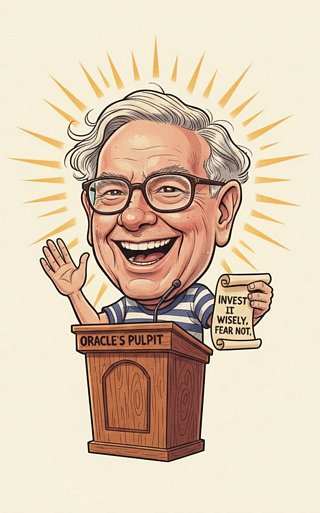
You Need to Stop Turning Warren Buffett Into a Prophet The new year marked Warren Buffett’s formal handover of the reins as CEO of Berkshire Hathaway to his chosen successor. The transition was deliberate and orderly. It signaled to shareholders and markets that Berkshire’s culture of discipline, patience, and long-term capital allocation is meant to outlive the man who built it.

Over the decades, Buffett has risen to an unusual cultural altitude, especially among devoted adherents of value investing. He’s part financial oracle and part homespun philosopher, dispensing deceptively simple wisdom with the aura of someone blessed with a Midas touch.

His most ardent admirers don’t merely study his methods; they venerate them. His shareholder letters are treated like sacred texts, his offhand remarks are parsed for hidden meaning, and his investing principles are elevated to universal law, supposedly immune to context, nuance, or time.

When Admiration Hardens into Uncritical Reverence

This isn’t to say Buffett’s philosophy lacks substance. His long-term mindset, focus on intrinsic value, and preference for durable businesses over speculation have shaped modern investing. Yet his most devoted followers treat these principles as commandments, overlooking the historical conditions that enabled his extraordinary success.

Buffett began in an era of lower valuations, thinner competition, and scarce financial data. He also enjoyed access to insurance float—an immense reservoir of low-cost capital ordinary investors can’t replicate. Many disciples still believe that faithfully applying his playbook in today’s very different market will produce the same results.

Buffett’s carefully cultivated public persona only deepens this loyalty. His down-home Midwestern charm isn’t accidental; it functions as armor. His accessible soundbites reinforce a comforting worldview in which patient investors always win, markets always recover, and disciplined value investing always triumphs. These narratives glide past inconvenient realities such as Japan’s post-1990 stagnation or the U.S. market’s lost decade from 2000 to 2010. His followers rarely ask for clarification. They don’t notice the cherry-picking or the broad-brushing. They accept the story as delivered.

Even his critiques are selective. Buffett often condemns the high fees charged by hedge funds and asset managers, yet his own early partnerships were structured with lucrative fees and equity stakes. They looked far more like the models he now derides than the mythologized image that surrounds him. He shifted toward long-term business ownership only after securing a substantial percentage stake in Berkshire Hathaway through those early arrangements. His admirers conveniently overlook the contradiction.

Buffett’s Wisdom Should Be Engaged With, Not Obeyed

None of this diminishes Buffett’s stature as a great investor or a compelling role model. His principles will remain valuable, and his track record is undeniable. But unchallenged hero worship is dangerous, especially when it replaces critical thinking with unquestioning allegiance. Many followers repeat his words, absorb his lessons, and apply his ideas without examining whether the underlying assumptions still hold. Markets evolve. Conditions shift. Rigid adherence to any single philosophy can become a liability.

Buffett’s ideas deserve scrutiny, not sainthood. His principles should be examined, not obeyed. Markets reward independent judgment, not intellectual submission. Thinking critically about those we admire isn’t disloyal. It’s essential.

Idea for Impact: Mistaking admiration for devotion that substitutes for analysis is a costly error. Real understanding requires scrutiny, adaptation, and the courage to rethink what once felt certain.

Wondering what to read next?

  1. Beware of Key-Person Dependency Risk
  2. A Real Lesson from the Downfall of Theranos: Silo Mentality
  3. Innovation Without Borders: Shatter the ‘Not Invented Here’ Mindset
  4. What Appears Self-Evident to One May Be Entirely Opaque to Another: How the Dalai Lama Apology Highlights Cultural Relativism
  5. Don’t Be Deceived by Others’ Success

Filed Under: Business Stories, Leadership, Mental Models Tagged With: Biases, Critical Thinking, Icons, Leadership Lessons, Mental Models, Psychology, Role Models, Social Dynamics

Founders Struggle to Lead Growing Companies

December 22, 2025 By Nagesh Belludi Leave a Comment

Tony's Chocolonely Case Study on Scaling Up: Founders Struggle to Lead Growing Companies

In 2003, Dutch investigative journalist Teun van de Keuken took an extreme approach to expose child labor in the cocoa industry. On his TV show Keuringsdienst van Waarde, he ate 12 chocolate bars that were likely made with cocoa harvested through child labor and demanded to be prosecuted under a Dutch law, which he believed held consumers accountable for knowingly purchasing illegally produced goods. Although authorities dismissed the case because it was impossible to definitively prove that the chocolate was unethically sourced, his stunt sparked widespread awareness about the dark practices behind chocolate production.

Determined to make the problem more tangible, van de Keuken arranged for a child exploited on a West African cocoa plantation to travel to the Netherlands. This move humanized the issue and forced global attention on the realities of the chocolate supply chain. Frustrated with the industry’s lack of progress, he founded Tony’s Chocolonely in 2005 to prove that chocolate could be made without slavery. Despite facing legal scrutiny in 2007, the brand eventually secured recognition for its commitment to ethical sourcing. By 2011, van de Keuken sold most of his stake, and entrepreneur Henk Jan Beltman became the majority shareholder, setting the stage for Tony’s international expansion.

Today, Tony’s Chocolonely has grown into a prominent brand, now widely available in America at retailers like Target, Whole Foods, and Walmart. The brand is instantly recognizable by its bold, blocky lettering and its uniquely irregularly shaped chocolate pieces—designed to serve as a constant reminder that inequality is built into the cocoa industry. While worldwide sales skyrocketed from 1 million euros at the time of van de Keuken’s exit to about 225 million euros today, details about his remaining stake remain private, though it’s likely that he has benefited financially.

Idea for Impact: Know when to step aside. Scaling a venture requires more than just passion—it demands operational efficiency, sound financial strategy, and strong leadership teams. Many founders flourish during the startup phase, yet recognizing when to adapt or step aside often makes the difference between a fleeting idea and lasting success.

Wondering what to read next?

  1. FedEx’s ZapMail: A Bold Bet on the Future That Changed Too Fast
  2. Learning from Amazon: Getting Your House in Order
  3. Starbucks’ Oily Brew: Lessons on Innovation Missing the Mark
  4. Lessons from Peter Drucker: Quit What You Suck At
  5. Your Product May Be Excellent, But Is There A Market For It?

Filed Under: Business Stories, Leadership, Mental Models, The Great Innovators Tagged With: Delegation, Discipline, Entrepreneurs, Leadership, Leadership Lessons, Parables, Personal Growth, Strategy

The High Cost of Too Much Job Rotation: A Case Study in Ford’s Failure in Teamwork and Vision

November 17, 2025 By Nagesh Belludi Leave a Comment

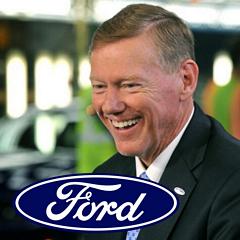
Alan Mulally Dismantled Ford's Fiefdom Culture to Encourage Collaboration When Alan Mulally became Ford’s CEO in September 2006, the company was teetering on the edge of collapse. Ford had just posted a staggering $12.7 billion loss, was hemorrhaging market share to Japanese and Korean automakers, and was weighed down by outdated, inefficient products. Worse, the company was drowning in debt and facing a brutal liquidity crisis. Ford was desperate for a complete overhaul.

By the time Mulally stepped down in June 2014, Ford had staged a stunning turnaround. He unified global operations, streamlined brands, and standardized platforms across regions while refocusing on core markets. He slashed costs, restructured engineering, and poured heavy investment into fuel-efficient vehicles and cutting-edge technologies. Under his steady leadership, Ford weathered the 2008 financial crisis without a government bailout and returned to strong profitability. His tenure remains a powerful case study in corporate transformation.

One of Mulally’s most crucial changes was dismantling Ford’s toxic culture of internal rivalry and reckless short-termism. When he arrived, executives were shuffled through roles every two years, a system meant to create versatile leaders but one that completely backfired. Employees scrambled to make quick impressions rather than collaborate. Engineers routinely ignored predecessors’ work, even at the cost of losing smart, cost-saving innovations. The result was chaos—no continuity, no teamwork, no accountability.

'American Icon Ford Motor Company' by Bryce G. Hoffman (ISBN 0307886069) Mulally understood that leadership demanded stability. After joining Boeing as an engineer in 1969, he rose steadily through key technical and executive positions. He served as Senior Vice President of Airplane Development in 1994, President of Boeing Information, Space & Defense Systems in 1997, President of Boeing Commercial Airplanes in 1998, and finally CEO of Boeing Commercial Airplanes in 2001. Drawing from this deep experience, he extended leadership tenures at Ford, broke down fiefdoms, and fostered a culture of collaboration, discipline, and long-term strategic focus. His approach restored much-needed continuity and accountability, proving that constant job shuffling weakens leadership and that real impact takes time.

Idea for Impact: Exposing leaders to different departments builds broad perspective and prepares them for senior roles. However, they need enough time in each position to take ownership, build relationships, and drive real change. Rapid job rotations erode accountability and disrupt a deep sense of purpose.

Wondering what to read next?

  1. The Case Against Team Work
  2. Never Make a Big Decision Without Doing This First
  3. The ‘Small’ Challenge for Big Companies
  4. Heartfelt Leadership at United Airlines and a Journey Through Adversity: Summary of Oscar Munoz’s Memoir, ‘Turnaround Time’
  5. Your Product May Be Excellent, But Is There A Market For It?

Filed Under: Business Stories, Leadership, Leading Teams, Managing People, The Great Innovators Tagged With: Biases, Conflict, Creativity, Employee Development, Goals, Leadership Lessons, Performance Management, Social Dynamics, Teams

A Boss’s Presence Deserves Our Gratitude’s Might

October 15, 2025 By Nagesh Belludi Leave a Comment

Why We Need Bosses: The Backbone of Workplace Success

Ever pause and ponder a while on the virtues that make a boss worthwhile?

The boss hands out assignments and waits for the deliverables.

The boss helps set the course.

The boss organizes your time for you.

The boss decides what’s urgent.

The boss steers you toward success with purpose.

The boss paves the path for growth and success.

The boss lends a hand in moments of doubt.

The boss keeps you going when you don’t feel like doing it.

The boss gives you cover when you goof up (“he told me to!.”)

The boss pays you even when the client doesn’t honor the invoice.

The boss takes the blame.

The boss creates deadlines and sticks with them.

The boss makes sure you show up in the morning.

The boss pays for the office supplies.

The boss gives you someone to complain about.

The boss is an easy scapegoat for your personal frustrations or workplace dissatisfactions.

The boss carves up the work and gives you just that piece you signed up to do.

The boss gives you a role model (sometimes one who exhibits behaviors or values to be avoided.)

The boss gives you the momentum you need to get through the stuff that takes perseverance.

Tomorrow (16-Oct) is ‘National Boss’s Day’ in the United States and many other countries. It’s a good time to recognize the many challenges and pressures bosses face.

Sure, not all bosses are perfect … but let’s take a moment to show some love to those bosses who lead with dedication and commitment.

Wondering what to read next?

  1. No Boss Likes a Surprise—Good or Bad
  2. Don’t Be Friends with Your Boss
  3. You Can’t Serve Two Masters
  4. Tips for Working for a Type-A Boss
  5. The Good of Working for a Micromanager

Filed Under: Leadership, Managing People Tagged With: Conflict, Getting Along, Great Manager, Managing the Boss, Relationships, Winning on the Job

Why Major Projects Fail: Summary of Bent Flyvbjerg’s Book ‘How Big Things Get Done’

September 24, 2025 By Nagesh Belludi Leave a Comment

Famous Construction Project Failures and The Curse of the Megaproject: Over Budget, Over Due

High-profile construction megaprojects routinely plunge into crisis through mismanagement and unforeseen complications. Boston’s Big Dig exemplifies this pattern as it swelled to five times its intended budget, dragging the city through nearly two decades of disruption before concluding in 2007. Sydney’s Opera House began as a modest four-year, $7-million plan and morphed into a 14-year, $102-million ordeal—its ever-evolving design and underestimated complexity a cautionary tale in unchecked ambition. Montreal’s 1976 Olympic Stadium, derisively dubbed the “Big Owe,” left taxpayers grappling with debt for over 30 years, and Germany’s Berlin Brandenburg Airport staggered behind schedule for a decade before finally opening in 2020.

Bent Flyvbjerg and journalist Dan Gardner meticulously deconstruct these tribulations in How Big Things Get Done: The Surprising Factors That Determine the Fate of Every Project, from Home Renovations to Space Exploration and Everything In Between (2023.) Their exhaustive study of 16,000 projects reveals that a mere 8.5% adhere to their initial time and budget estimates, with an unforgiving 0.5% delivering on time, cost, and promised impact. Project planners often engage in strategic misrepresentation, deliberately understating expenses to secure approval, while the sunk-cost fallacy pits stakeholders against cutting their losses despite mounting over-expenditure. Speed without foresight compounds disaster.

'How Big Things Get Done' by Bent Flyvbjerg (ISBN 593239512) In sharp contrast, China’s rapid rollout of the world’s largest high-speed rail network demonstrates the power of standardization and modular design. By employing repetition over reinvention, the nation completed its vast system in under a decade—a testament to disciplined execution. Pixar’s playbook in American animation underscores the virtues of a robust pre-production phase; meticulous storyboarding and character development catch chaos before it spreads, ensuring a smoother production process. Similarly, the Guggenheim Museum in Bilbao stands as an exemplar of efficient project management. Frank Gehry’s pioneering use of advanced computer-aided design let his iconic vision be refined in silicon before forged in steel.

These case studies drive home a singular truth: megaprojects succeed when disciplined forecasting, realistic budgeting, and proactive risk assessment govern the process. Conversely, the allure of expediency—the temptation to overpromise and underdeliver—is often the prelude to collapse. Flyvbjerg and Gardner’s analysis cuts through the hubris of grand plans, offering a compelling narrative that contrasts spectacular failures with triumphs born from deliberate design and rigorously earned execution.

Recommendation: Fast-read How Big Things Get Done—its stories don’t just teach project management; they expose the anatomy of ambition. Managing complexity demands more than vision. It requires a systematic, no-nonsense commitment to planning, precision, and integrity. This exploration offers a sobering yet galvanizing blueprint for anyone engaged in—and affected by—the colossal undertaking of building our modern world.

Wondering what to read next?

  1. Hofstadter’s Law: Why Everything Takes Longer Than Anticipated
  2. Lessons from Peter Drucker: Quit What You Suck At
  3. Zeigarnik Effect: How Incomplete Tasks Trigger Stress
  4. Let Go of Sunk Costs
  5. Warren Buffett’s Advice on How to Focus on Priorities and Subdue Distractions

Filed Under: Business Stories, Leadership, Mental Models, Project Management Tagged With: Biases, Budgeting, Decision-Making, Goals, Leadership Lessons, Procrastination, Risk, Targets, Time Management

When Global Ideas Hit a Wall: BlaBlaCar in America

September 5, 2025 By Nagesh Belludi Leave a Comment

When Global Ideas Hit a Wall: BlaBlaCar in America BlaBlaCar’s deliberate decision not to expand into the United States underscores how cultural fault lines can impede the global flow of innovation. The French platform has flourished in Europe by turning empty car seats into affordable intercity transport. Its success was driven by thrift, compact geography, and a communal ethos—ideal conditions for ridesharing.

The American market, however, presented a less hospitable landscape. Low fuel prices weakened cost-based incentives. Widespread car ownership reduced demand, and vast distances with sparse populations made rider-driver matching difficult. Without established transit hubs, the logistics became cumbersome.

A deeper challenge lay in cultural norms. American car culture prizes autonomy, spontaneity, and personal space—values that conflict with BlaBlaCar’s fixed routes and shared rides. Legal complexities and strong competition from entrenched local-ride players like Uber and Lyft made the prospect of entry unappealing.

Rather than launching and failing, BlaBlaCar opted out—recognizing that the U.S. market lacked the structural and cultural conditions essential to its model’s success.

Idea for Impact: Success hinges on cultural fit. Some ideas do not translate well across borders. Cultures are intricate systems of values and habits that can pose structural barriers to foreign solutions.

Wondering what to read next?

  1. How FedEx and Fred Smith Made Information the Package
  2. Consumer Power Is Shifting and Consumer Packaged Goods Companies Are Struggling
  3. Chance and the Currency of Preparedness: A Case Study on an Indonesian Handbag Entrepreneur, Sunny Kamengmau
  4. Your Product May Be Excellent, But Is There A Market For It?
  5. What Virgin’s Richard Branson Teaches: The Entrepreneur as Savior, Stuntman, Spectacle

Filed Under: Business Stories, Leadership, MBA in a Nutshell, The Great Innovators Tagged With: Diversity, Entrepreneurs, Innovation, Leadership Lessons, Marketing, Parables, Problem Solving, Social Dynamics

Virtue Deferred: Marcial Maciel, The Catholic Church, and How Institutions Learn to Look Away

August 13, 2025 By Nagesh Belludi Leave a Comment

Virtue Deferred: Marcial Maciel, The Catholic Church, and How Institutions Learn to Look Away Organizations often face a moral dilemma when confronting high-performing individuals—those rainmakers whose charisma and drive yield tangible results (Jack Welch’s ‘Four Types of Managers’ model.) They secure vital funding, lead winning campaigns, and appear central to the organization’s mission. Their value is clear. Their presence seems irreplaceable. Leadership, captivated by performance, may grow dependent on them.

Yet behind the brilliance, some of these figures violate core principles. They may cultivate toxic workplaces, breach ethical boundaries, or engage in outright abuse. This reveals a troubling paradox: the same individuals who fuel success may simultaneously erode the institution’s moral foundation. Fearing the loss of key assets, organizations may choose to look the other way—or worse, actively protect them.

Tolerance of this behavior extracts a steep cost. Morale withers. Trust deteriorates. Cultures of fear and duplicity take root. Behind a polished facade, core values decay. Integrity is sacrificed for short-term gain.

Few cases illustrate this more vividly than that of Marcial Maciel and the Catholic Church.

A Charismatic Predator Shielded by Power

In 2019, to mark the 80th anniversary of Pius XII’s elevation to Bishop of Rome, Pope Francis announced the opening of Vatican archives from his papacy. Scholars welcomed the decision, many of them drawn to longstanding controversies regarding Pius XII’s role during the Holocaust.

Included in this research were damning revelations about Marcial Maciel Degollado (1920–2008,) the Mexican priest who founded the Legion of Christ and the Regnum Christi religious order. Lauded as “the greatest fundraiser of the modern Roman Catholic Church,” Maciel transformed the Legion into a formidable spiritual, financial, and political force.

Beneath this polished image, however, lay systemic abuse.

Maciel was a chronic drug addict and serial predator who molested at least 60 boys and young men under his care. After his death, reports revealed that he had fathered multiple children—two of whom he allegedly abused—and maintained sexual relationships with several women, including one reportedly underage. His authorship of the book Integral Formation of Catholic Priests (1997) stands in grim contrast to the depraved reality of his life and actions, underscoring a profound institutional moral corruption.

The archives showed that senior Church officials, including Pope Pius XII, were aware of Maciel’s misconduct as early as the 1940s. Efforts to remove him began in 1956 but were halted following the pope’s death. Despite mounting evidence, Maciel remained in power for decades.

'Betrayal Crisis Catholic Church' by Boston Globe (ISBN 0316776750) Why was he protected? Because he was more than a priest—he was a rainmaker. His ability to attract wealth and influence made his misconduct inconvenient. The institution prioritized survival over accountability.

Even after repeated warnings and detailed accusations, the Church delayed meaningful action for over half a century. Only in 2006 did Pope Benedict XVI remove Maciel from public ministry, ordering him into a secluded life of prayer and penance. He died two years later. In 2010, the Vatican formally condemned his “reprehensible actions” and placed the Legion under direct papal oversight.

The Institutional Blind Spot: When Success Shields Abuse

Maciel’s story is not just a case of individual moral failure. It is a systemic cautionary tale. He turned the Legionaries of Christ into a financial and political juggernaut, directing millions toward Church coffers and gaining favor with powerful bishops and cardinals. In the institutional calculus of power, his sins were inconvenient, but his financial value was immense. He was shielded not despite his crimes, but because of them.

When institutions conflate prospering with virtue, they protect the golden goose—even when it lays rotten eggs. Often this happens not out of malice, but out of habit. In doing so, they risk betraying the very mission they claim to uphold.

Wondering what to read next?

  1. Power Inspires Hypocrisy
  2. Ethics Lessons From Akira Kurosawa’s ‘High and Low’
  3. The Enron Scandal: A Lesson on Motivated Blindness
  4. The Poolguard Effect: A Little Power, A Big Ego!
  5. Power Corrupts, and Power Attracts the Corruptible

Filed Under: Business Stories, Leadership, Sharpening Your Skills Tagged With: Attitudes, Biases, Conviction, Ethics, Getting Along, Integrity, Likeability, Motivation, Performance Management, Psychology

Lessons in Leadership and Decline: CEO Debra Crew and the Rot at Diageo

July 25, 2025 By Nagesh Belludi Leave a Comment

Lessons in Leadership and Decline: CEO Debra Crew and the Rot at Diageo Another heavyweight in consumer goods, Diageo, has entered a state of churn. CEO Debra Crew exited last week in a “mutual agreement”—a phrase that barely disguised the inevitability of her departure. It wasn’t a shock, but a slow unraveling: a tenure marked more by erosion than evolution.

Leadership is often a hostage of timing. Crew’s two-year stint was defined as much by strategic drift as by the lingering shadow of her predecessor’s legacy. She rose to the top in June 2023 following the sudden death of Sir Ivan Menezes—who had built Diageo’s fortunes on “premiumization,” a strategy that padded margins during the pandemic’s home-drinking boom. That success, however, ossified into institutional bloat.

Her term began with a bruising profit warning in November 2023. A nosedive in Latin America—blamed on distributor overstocking—exposed a startling disconnect from ground-level dynamics. Crew’s attempts to localize the crisis at a capital markets day rang hollow. The Times later described the company’s consumer blind spot as having “the whiff of incompetence.”

By early 2024, Diageo’s valuation had halved from its pandemic highs. CFO Lavanya Chandrashekar resigned in May. Months earlier, Crew had abandoned the company’s 5–7% medium-term growth target, citing tariff uncertainty and posting a 0.6% sales decline. Chair Javier Ferrán—long a patient steward—stepped down soon after. His departure, followed by the arrival of Sir John Manzoni, left Diageo’s leadership in flux just as the ship was listing and she had asked the board to quell speculation about her job.

Perhaps Crew was less a culprit than a proxy. Every leader is bound by the winds of their season. Spirits makers now face a hostile cocktail: Gen Z’s waning interest in alcohol, the rise of weight-loss drugs, and renewed risk of tariff whiplash. Pernod Ricard and Rémy Cointreau have suffered even steeper stock slides.

This episode offers another case study in how leadership narratives flatten complexity. Good times are hailed as proof of executive brilliance; bad times, as evidence of personal failure. The truth is messier: prosperity often arises from external tailwinds—technological shifts, market cycles, latent consumer trends—already in motion. Leaders rarely engineer them. They inherit them.

The trouble with leadership is that it is most praised—or punished—when least responsible. Strategic decisions marinate across fiscal years. Today’s success often echoes yesterday’s bets, while macroeconomic forces—unpredictable, impersonal, indifferent—reshape the field faster than any executive can pivot. Yet our mythology demands heroism. We cast leaders as masterminds of triumph or scapegoats for collapse, forgetting that most simply ride the wave.

Wondering what to read next?

  1. Lessons from Tito’s Leadership of Yugoslavia
  2. Lee Kuan Yew on the Traits of Good Political Leaders
  3. Heartfelt Leadership at United Airlines and a Journey Through Adversity: Summary of Oscar Munoz’s Memoir, ‘Turnaround Time’
  4. Book Summary of Donald Keough’s ‘Ten Commandments for Business Failure’
  5. FedEx’s ZapMail: A Bold Bet on the Future That Changed Too Fast

Filed Under: Business Stories, Great Personalities, Leadership, Leadership Reading, MBA in a Nutshell Tagged With: Change Management, Icons, Integrity, Leadership, Leadership Lessons, Leadership Reading, Performance Management, Wisdom

Consumer Power Is Shifting and Consumer Packaged Goods Companies Are Struggling

July 24, 2025 By Nagesh Belludi Leave a Comment

Consumer Power Is Shifting and Consumer Packaged Goods Companies Are Struggling The much-whispered unraveling of Kraft Heinz underscores a broader sector-wide malaise: the steep, stubborn erosion of organic growth across consumer staples. Giants like PepsiCo, Unilever, Procter & Gamble, Colgate-Palmolive, and India’s Tata Consumer Products face similarly constraining headwinds.

Saturated demand is the culprit. Consumers are maxed out on toothpaste, detergent, packaged snacks, and syrupy fizz. As categories mature and volume plateaus, traditional growth levers feel obsolete. Intensified global competition tightens the vise—especially from nimble, cost-efficient regional brands that operate hyper-locally across developing markets.

Consumer behavior is bifurcating. Price-sensitive shoppers are gravitating toward store-label substitutes: affordable, dependable, brand-agnostic. Meanwhile, high-intent buyers seek premium offerings reflecting health priorities, sustainability values, or cultural identity. Together, these forces compress mid-tier incumbents from both ends.

To recapture relevance, legacy players are pivoting—acquiring smaller, health-forward, culturally attuned brands with traction. This isn’t experimentation. It’s survival. Growth now hinges on swift, intentional entry into wellness-led micro-markets.

Consumer Packaged Goods Companies are Facing Saturated Demand PepsiCo’s acquisition of probiotic soda brand Poppi and Mexican-American snack label Siete Foods signals a clean-label, culturally conscious shift. Tata bolstered its portfolio with wholesome foods brand Soulfull, fusion brand Ching’s Secret, and Ayurvedic company Organic India. Unilever doubled down with Pukka Herbs, sustainable staple Seventh Generation, and offbeat grooming line Dr. Squatch—plus a stake in Esqa, Indonesia’s first vegan, Halal-certified cosmetics brand. Colgate and P&G followed, acquiring mission-driven favorites like Native, Hello Products, and Billie.

These investments reflect more than market strategy. They mark an ideological realignment. Today’s buyers demand clarity, simplicity, and purpose. With processed goods under scrutiny and marketing spin losing its shine, ethos has emerged as premium currency.

The staples sector isn’t merely evolving—it’s self-disrupting. In place of legacy inertia, a nimble, value-led strategy is taking root. The possible Kraft Heinz breakup embodies that shift.

Wondering what to read next?

  1. When Global Ideas Hit a Wall: BlaBlaCar in America
  2. Why Investors Keep Backing Unprofitable Business Models
  3. The Loss Aversion Mental Model: A Case Study on Why People Think Spirit is a Horrible Airline
  4. How FedEx and Fred Smith Made Information the Package
  5. Your Product May Be Excellent, But Is There A Market For It?

Filed Under: Business Stories, Leadership, MBA in a Nutshell Tagged With: Entrepreneurs, Innovation, Leadership Lessons, Marketing, Persuasion, Problem Solving, Strategy

Next Page »

Primary Sidebar

Popular Now

Anxiety Assertiveness Attitudes Balance Biases Coaching Conflict Conversations Creativity Critical Thinking Decision-Making Discipline Emotions Entrepreneurs Etiquette Feedback Getting Along Getting Things Done Goals Great Manager Innovation Leadership Leadership Lessons Likeability Mental Models Mentoring Mindfulness Motivation Networking Parables Performance Management Persuasion Philosophy Problem Solving Procrastination Relationships Simple Living Social Skills Stress Suffering Thinking Tools Thought Process Time Management Winning on the Job Wisdom

About: Nagesh Belludi [hire] is a St. Petersburg, Florida-based freethinker, investor, and leadership coach. He specializes in helping executives and companies ensure that the overall quality of their decision-making benefits isn’t compromised by a lack of a big-picture understanding.

Get Updates

Signup for emails

Subscribe via RSS

Contact Nagesh Belludi

RECOMMENDED BOOK:
So Good They Can't Ignore You

So Good They Can't Ignore You: Cal Newport

Computer scientist Cal Newport explains how blindly following one's passion is a poor career strategy. Developing precious skills can initiate a passionate pursuit and a meaningful career.

Explore

  • Announcements
  • Belief and Spirituality
  • Business Stories
  • Career Development
  • Effective Communication
  • Great Personalities
  • Health and Well-being
  • Ideas and Insights
  • Inspirational Quotations
  • Leadership
  • Leadership Reading
  • Leading Teams
  • Living the Good Life
  • Managing Business Functions
  • Managing People
  • MBA in a Nutshell
  • Mental Models
  • News Analysis
  • Personal Finance
  • Podcasts
  • Project Management
  • Proverbs & Maxims
  • Sharpening Your Skills
  • The Great Innovators

Recently,

  • What Appears Self-Evident to One May Be Entirely Opaque to Another: How the Dalai Lama Apology Highlights Cultural Relativism
  • Inspirational Quotations #1136
  • Ditch Deadlines That Deceive
  • Invention is Refined Theft
  • You Need to Stop Turning Warren Buffett Into a Prophet
  • Inspirational Quotations #1135
  • What the Dry January Trap Shows Us About Extremes

Unless otherwise stated in the individual document, the works above are © Nagesh Belludi under a Creative Commons BY-NC-ND license. You may quote, copy and share them freely, as long as you link back to RightAttitudes.com, don't make money with them, and don't modify the content. Enjoy!