Our expression and our words never coincide, which is why the animals don’t understand us.
—Malcolm de Chazal (Mauritian Writer, Painter)
Everybody has that thing where they need to look one way but they come out looking another way and that’s what people observe. You see someone on the street and essentially what you notice about them is the flaw. It’s just extraordinary that we should have been given these peculiarities. Something is ironic in the world and it has to do with the fact that what you intend never comes out like you intend it.
—Diane Arbus (American Photographer)
Age is a question of mind over matter. If you don’t mind, it doesn’t matter.
—Satchel Paige (American Baseball Player)
Life is a succession of moments. To live each one is to succeed.
—Corita Kent (American Nun, Artist)
Faithful servants have a way of knowing answered prayer when they see it, and a way of not giving up when they don’t.
—Max Lucado (American Author, Minister)
A man shares his days with hunger, thirst, and cold, with the good times and the bad, and the first part of being a man is to understand that.
—Louis L’Amour (American Novelist)
Art is the signature of civilizations.
—Beverly Sills (American Singer)
When schemes are laid in advance, it is surprising how often the circumstances will fit in with them.
—William Osler (Canadian Physician)
The mere stuffing of the mind with a knowledge of facts is not education.
—Joseph F. Smith (American Religious Leader)
The first condition of happiness is a clear conscience.
—David O. McKay (American Author)
In keeping people straight, principle is not as powerful as a policeman.
—Abel Hermant (French Novelist, Critic)
 We romanticize transformation—new routines, cleaner diets, sharper habits. But in practice, change rarely arrives in cinematic sweeps. It comes in quieter forms: a switch from soda to water, a walk around the block, skipping the evening snack. Small choices. Easily overlooked. In aggregate,
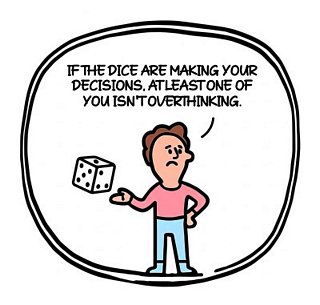 We make thousands of decisions daily—what to wear, which email to answer first, whether to take the scenic route or stick to the main road. Most are low-stakes, but the act of choosing can sap mental energy. That’s
  In the glossy canon of business magazine profiles and business school leadership panels, few rituals are as misleading as the executive career interview. A high-powered figure is asked for wisdom, and what follows is a polished origin myth framed as mentorship—a display of survivorship bias wrapped in aspirational prose. Biography
 .jpg "'Lean In' by Sheryl Sandberg (ISBN 0385349947)")
 BlaBlaCar’s deliberate decision not to expand into the United States underscores how cultural fault lines can impede the global flow of innovation. The French platform has
  If you’re a working professional with a family, your calendar probably feels
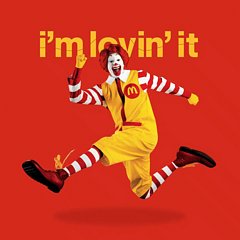 McDonald’s has long leaned on