• Skip to content
  • Skip to primary sidebar

Right Attitudes

Ideas for Impact

Nagesh Belludi

Dueling Maxims, Adages, and Proverbs

January 15, 2015 By Nagesh Belludi 1 Comment

Dueling Maxims, Adages, and Proverbs

Different Proverbs & Different Situations

The 17th-century Anglo-Welsh writer James Howell once said, “Proverbs may not improperly be called the philosophy of the common people.”

And the Spanish philosopher George Santayana once remarked, “Almost every wise saying has an opposite one, no less wise, to balance it.”

Maxims and proverbs condense humankind’s wisdom through the ages. Applied appropriately, proverbs are persuasive devices to convince others—through wit, humor, zing, irony, or bitterness—of implied wisdom and collective experience.

Proverbs tend to sound convincing—that is, at least until a contradictory proverb is evoked. According to American poet and essayist William Mathews, “All maxims have their antagonist maxims; proverbs should be sold in pairs, a single one being a half truth.” This discrepancy even appears in the Hebrew Bible (The Old Testament), as Proverbs 26:4 counsels, “do not answer a fool according to his folly, or you yourself will be just like him.” In the very next verse, Proverbs 26:5 urges, “answer a fool according to his folly, or he will be wise in his own eyes.”

One of the pleasures of working with maxims, proverbs, and quotations is contemplating confirmations, counterparts, contradictions, and inconsistencies. In other words, it’s fascinating and helpful to examine how words might apply differently in various situations.

When used without qualification, proverbs sometimes cancel one-another out. The following compendium illustrates this phenomenon.

Contradicting Common Proverbs

“All that glitters is not gold.” But, “Clothes make the man.”

“Clothes make the man.” But, “Never judge a book by its cover.”

“Don’t knock it till you’ve tried it.” But sometimes, “Leave well enough alone.”

“Wise men think alike.” But, “Fools seldom differ.”

“Haste makes waste.” But sometimes, “Strike while the iron is hot.”

“One man’s meat is another man’s poison.” But sometimes, “What’s good for the goose is good for the gander.”

“Misery loves company.” But, “The more the merrier.”

“The more the merrier.” But sometimes, “Two’s company; three’s a crowd.”

“What will be, will be.” But, “Life is what you make it.”

“Don’t sweat the small stuff.” But, “Every little bit helps.”

“Don’t sweat the small stuff.” But, “The devil is in the details.”

“A penny saved is a penny earned.” But, “Penny wise, pound foolish.”

“Repentance comes too late.” But, “Never too late to mend.”

“All for one and one for all.” But sometimes, “Every man for himself.”

“Blood is thicker than water.” But, “Many kinfolk, few friends.”

“A bird in the hand is worth two in the bush.” But, “A man’s reach should exceed his grasp.”

“The pen is mightier than the sword.” But, “Actions speak louder than words.”

“Ask no questions and hear no lies.” But, “Better to ask the way than to go astray.”

“If you can’t beat ’em, join ’em.” But sometimes, “If you lie down with dogs, you’ll wake up with fleas.”

“Better be alone than in bad company.” But, “There’s safety in numbers.”

“Tomorrow is another day.” But, “Another day might be too late.”

“If at first you don’t succeed, try, try again.” But, “Don’t beat a dead horse.”

“Absence makes the heart grow fonder.” But, “Out of sight, out of mind.”

“A silent man is a wise one.” But, “A man without words is a man without thoughts.”

“There is nothing new under the sun.” But, “There is nothing permanent except change.”

“The bigger the better.” But sometimes, “Good things come in small packages.”

“Look before you leap.” But, “He who hesitates is lost.”

“Don’t talk to strangers.” But, “Familiarity breeds contempt.”

“Variety is the spice of life.” But sometimes, “Don’t change horses in midstream.”

“All good things come to those who wait.” But sometimes, “Time and tide wait for no man.”

“Rome wasn’t built in a day.” But, “Time and tide wait for no man.”

“A miss is as good as a mile.” But sometimes, “Half a loaf is better than none.”

“Don’t speak too soon.” But sometimes, “Speak now or forever hold your peace.”

“Money can’t buy you love.” But, “Romance without finance can be a nuisance.”

“Never do evil, that good may come of it.” But, “The end justifies the means.”

“If you want something done right, do it yourself.” But sometimes, “Two heads are better than one.”

“There’s no fool like an old fool.” But, “An old fox is not easily snared.”

“Divide and rule.” But, “United we stand, divided we fall.”

“It’s never too late.” But, “The early bird catches the worm.”

“The early bird catches the worm.” But, “Good things come to those who wait.”

“To thine own self be true.” But, “When in Rome, do as the Romans do.”

“With age comes wisdom.” But, “Out of the mouths of babes and sucklings come all wise sayings.”

“Actions speak louder than words.” But, “It’s the thought that counts.”

“It’s the thought that counts.” But, “The road to hell is paved with good intentions.”

“Curiosity killed the cat.” But, “Ask and you shall receive.”

“Birds of a feather flock together.” But, “Opposites attract.”

“Ask and you shall receive.” But, “Ask no questions and hear no lies.”

“Faith will move mountains.” But, “Doubt is the beginning, not the end, of wisdom.”

“You can’t teach an old dog new tricks.” But, “You’re never too old to learn.”

“Friends don’t let friends drive drunk.” But, “Let sleeping dogs lie.”

“Where there’s a will, there’s a way.” But, “Take no for an answer.”

“Knowledge is power.” But, “Ignorance is bliss.”

“It never rains, then it pours.” But sometimes, “Lightning never strikes twice in the same place.”

“Better safe than sorry.” But, “Nothing ventured, nothing gained.”

“Beware of Greeks bearing gifts.” But, “Don’t look a gift horse in the mouth.”

“Silence is golden.” But sometimes, “The squeaky wheel gets the grease.”

“All work and no play makes Jack a dull boy.” But, “Idle hands do the devil’s work.”

“Practice makes perfect.” But, “All work and no play makes Jack a dull boy.”

“If one door shuts, another opens.” But, “Opportunity never knocks twice on the same door.”

“Don’t preach to the choir.” But, “Don’t cast pearls before swine.”

“Many hands make light work.” But, “Too many cooks spoil the broth.”

“Too many cooks spoil the broth.” But, “Two heads are better than one.”

“Don’t cross the bridge until you reach it.” But, “Forewarned is forearmed.”

“One size fits all.” But sometimes, “Different strokes for different folks.”

“The best things in life are free.” But, “There’s no such thing as a free lunch.”

“A good beginning makes a good ending.” But, “It’s not over till it’s over.”

“Hold fast to the words of your ancestors.” But, “Wise men make proverbs; fools repeat them.”

Wondering what to read next?

  1. Inspirational Epigrams by Oscar Wilde (#346)
  2. The Best of the Chinese Proverbs (Inspirational Quotations #362)
  3. The Wit & Wisdom of Benjamin Franklin: The Best 100 Maxims from “Poor Richard’s Almanack”

Filed Under: Proverbs & Maxims Tagged With: Proverbs & Maxims, Writing

Books I Read in 2014 & Recommend

January 12, 2015 By Nagesh Belludi Leave a Comment

Other than a number of Rick Steves’ books for my summer-long travels in Europe, here are a few books that I read in 2014 and recommend.

Even though I read few works of fiction, I read a number of Agatha Christie’s “Poirot” books, including the enthralling “Death on the Nile”. Christie describes her characters brilliantly with superb detail.

Books on Business, Operations, & Finance

  • Atul Gawande’s ‘The Checklist Manifesto’ on eliminating errors, improving safety, and increasing efficiency by adapting checklists, standard operating practices, and work instructions.
  • Steven Johnson’s 'How We Got to Now Six Innovations That Made the Modern World' by Steven Johnson (ISBN 1594632960) ‘How We Got to Now: Six Innovations That Made the Modern World’ explores how seemingly simple inventions cause huge societal shifts through the unintended consequences of collaboration and context. For example, the chapter on “Glass” narrates how the Gutenberg printing press led to lens-making, which in turn led to eyeglasses, telescopes and space exploration, microscopes and biology, fiberglass and fiber-optic cables, mirrors, cameras and the present-day selfie obsession.
  • Eric Schmidt and Jonathan Rosenberg’s ‘How Google Works’ is a firsthand account of the distinctive ecosystem, culture, people, and decision-making inside one of the world’s most admired companies.
  • John Mihaljevic’s ‘The Manual of Ideas: The Proven Framework for Finding the Best Value Investments’ describes nine template-themes of value investing strategies along with case studies, checklists, and screening tools.
  • Cristiane Correa’s ‘DREAM BIG: How Jorge Paulo Lemann, Marcel Telles and Beto Sicupira Acquired Anheuser-Busch, Burger King and Heinz and Revolutionized Brazilian Capital’ discusses 3G Capital’s approach to buying companies (including Tim Hortons in 2014; Coca-Cola, Campbell Soup, or PepsiCo are rumored to be next) and then implementing an aggressive management template that’s obsessive about slashing operating costs and expanding organizational efficiency.

Books on Skills for Success

  • Susan Cain’s ‘Quiet: The Power of Introverts in a World That Can’t Stop Talking’ on how the world excessively and misguidedly admires extroverts, but should also encourage and celebrate the particular talents, abilities, and dispositions of introverts.
  • Jocelyn K. Glei’s ‘Manage Your Day-to-Day: Build Your Routine, Find Your Focus, and Sharpen Your Creative Mind’ is a compilation of essays on time management, organizing routines, and work-life balance from various authors.
  • Russ Roberts’s 'How Adam Smith Can Change Your Life' by Russ Roberts (ISBN 1591846846) ‘How Adam Smith Can Change Your Life: An Unexpected Guide to Human Nature and Happiness’ is an interpretation of Adam Smith’s less known book, “Theory of Moral Sentiments”
  • B. H. Liddell Hart’s ‘Why Don’t We Learn from History?’ on the didactic value of history and on the significance of acting on principles deduced from learning from other people’s experience.
  • Gerd Gigerenzer’s ‘Risk Savvy: How to Make Good Decisions’ describes the many ways we characteristically misjudge risk and how we make bad decisions because we misunderstand risk.
  • Garth Sundem’s ‘Beyond IQ: Scientific Tools for Training Problem Solving, Intuition, Emotional Intelligence, Creativity, and More’ on how to develop brain power in competencies such as creativity, willpower emotional intelligence and intuition—skills that are not measured by standardized intelligence (e.g. IQ) tests.

Four Timeless Books I Re-Read Every Year

'Common Stocks and Uncommon Profits' by Philip A. Fisher (ISBN 0471445509) Benjamin Graham’s “Security Analysis”, Benjamin Graham’s “The Intelligent Investor”, and Phil Fisher’s “Common Stocks and Uncommon Profits” discuss two complementary schools of investment analysis. Graham’s quantitative approach to value investing comprises of buying stocks below what they are worth and then selling them once they are fully priced. In contrast, Fisher’s qualitative approach to growth investing considers the intangibles (products and services, management, competition, growth prospects, etc.) and paying a premium for growth. Graham’s and Fisher’s viewpoints are a significant part of Warren Buffett’s approach to investments. He’s described himself as “85% Graham, 15% Fisher” (I think Buffett is more “15% Graham, 85% Fisher.”)

Dale Carnegie’s “How to Win Friends and Influence People” is the granddaddy of all self-help books that spawned the self-improvement industry. I discovered that the 2011 update, “How to Win Friends and Influence People Digital Age”, references my blog article on the art of remembering names.

Wondering what to read next?

  1. Books I Read in 2015 & Recommend
  2. Book Summary of Maria Bartiromo’s ‘The 10 Laws of Enduring Success’
  3. Book Summary of Nassim Taleb’s ‘Fooled by Randomness’
  4. Book Summary of Viktor Frankl’s ‘Man’s Search for Meaning’
  5. Crucible Experiences Can Transform Your Leadership Skills

Filed Under: Leadership Reading, Sharpening Your Skills Tagged With: Books for Impact, Skills for Success

Inspirational Quotations #562

January 10, 2015 By Nagesh Belludi Leave a Comment

Power intoxicates men. When a man is intoxicated by alcohol, he can recover, but when intoxicated by power, he seldom recovers.
—Sappho (Greek Poet)

Our mistakes from the past are just that: mistakes. And they were necessary to make in order to become the wiser person we became.
—Bill Maher (American Comedian TV Personality)

Do what you fear most and you control fear.
—George Bancroft

There are more ideas on earth than intellectuals imagine. And these ideas are more active, stronger, more resistant, more passionate than “politicians” think. We have to be there at the birth of ideas, the bursting outward of their force: not in books expressing them, but in events manifesting this force, in struggles carried on around ideas, for or against them. Ideas do not rule the world. But it is because the world has ideas… that it is not passively ruled by those who are its leaders or those who would like to teach it, once and for all, what it must think.
—Michel Foucault (French Philosopher)

Sow a thought, reap an act; Sow an act, reap a habit; Sow a habit, reap a character; Sow a character, reap adestiny.
—Anonymous

If you take risks, you may fail. But if you don’t take risks, you will surely fail. The greatest risk of all is to do nothing.
—Roberto Goizueta (Cuban Businessperson)

I suppose I have a really loose interpretation of “work,” because I think that just being alive is so much work at something you don’t always want to do. The machinery is always going. Even when you sleep.
—Andy Warhol (American Painter)

As long as one keeps searching, the answers come.
—Joan Baez (American Singer)

Filed Under: Inspirational Quotations

Lord Chesterfield on Multitasking: Singular Focus on a Task is not only Practical but also a Mark of Intelligence

January 7, 2015 By Nagesh Belludi Leave a Comment

Our modern technological environment is largely to blame for our scattered attention. This age is saturated with information overload and electronic gadgets, accompanied by a societal expectation that people will respond immediately. As a result, the phenomenon of multitasking has grown dominant.

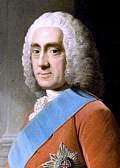
Philip Dormer Stanhope, 4th Earl of Chesterfield The meaning of multitasking has evolved over time. Three centuries ago, perhaps it meant dividing one’s immediate attention between various intellectual pursuits or recreational activities, such as socializing and dancing or eating and drinking. At that time, a father who cared deeply about his son’s education wrote to the boy persuading him to maintain singular focus on any task.

The British statesman Philip Dormer Stanhope, 4th Earl of Chesterfield (1694–1773,) was a renowned man of letters. From 1737 until his son’s death in 1768, the Earl of Chesterfield wrote instructive letters to his son on a wide range of subjects, including history, geography, literature, society, politics, and even conduct. Over 300 of Lord Chesterfield’s letters to his son, full of timeless wit and wisdom, were later published by the son’s widow as “Lord Chesterfield’s Letters” (free ebook at Project Gutenberg.)

Letters to His Son, by Philip Dormer Stanhope (4th Earl of Chesterfield)

On 25-Apr-1747 (the New Style date corresponding to the Old Style 14-Apr-1747,) the 4th Earl of Chesterfield delivered advice that remains especially applicable today: he encourages focus, engagement, being present, and staying in the moment.

I have always earnestly recommended to you, to do what you are about, be that what it will; and to do nothing else at the same time. Do not imagine that I mean by this, that you should attend to and plod at your book all day long; far from it; I mean that you should have your pleasures too; and that you should attend to them for the time; as much as to your studies; and, if you do not attend equally to both, you will neither have improvement nor satisfaction from either. A man is fit for neither business nor pleasure, who either cannot, or does not, command and direct his attention to the present object, and, in some degree, banish for that time all other objects from his thoughts. If at a ball, a supper, or a party of pleasure, a man were to be solving, in his own mind, a problem in Euclid, he would be a very bad companion, and make a very poor figure in that company; or if, in studying a problem in his closet, he were to think of a minuet, I am apt to believe that he would make a very poor mathematician. There is time enough for everything, in the course of the day, if you do but one thing at once; but there is not time enough in the year, if you will do two things at a time. The Pensionary de Witt, who was torn to pieces in the year 1672, did the whole business of the Republic, and yet had time left to go to assemblies in the evening, and sup in company. Being asked how he could possibly find time to go through so much business, and yet amuse himself in the evenings as he did, he answered, there was nothing so easy; for that it was only doing one thing at a time, and never putting off anything till to-morrow that could be done to-day. This steady and undissipated attention to one object is a sure mark of a superior genius; as hurry, bustle, and agitation are the never-failing symptoms of a weak and frivolous mind. When you read Horace, attend to the justness of his thoughts, the happiness of his diction, and the beauty of his poetry; and do not think of Puffendorf de Homine el Cive; and, when you are reading Puffendorf, do not think of Madame de St. Germain; nor of Puffendorf, when you are talking to Madame de St. Germain.

Wondering what to read next?

  1. Don’t Let the Latecomers Ruin Your Meeting
  2. [Time Management #4] Budgeting Your Time by Your Priorities
  3. Five Ways … You Could Prevent Clutter in the First Place
  4. Do More of What Makes You Productive
  5. How to … Combat Those Pesky Distractions That Keep You From Living Fully

Filed Under: Sharpening Your Skills Tagged With: Discipline, Time Management

Inspirational Quotations #561

January 4, 2015 By Nagesh Belludi Leave a Comment

How majestic is naturalness. I have never met a man whom I really considered a great man who was not always natural and simple. Affectation is inevitably the mark of one not sure of himself.
—Charles G. Dawes (American Head of State)

I’ve never run into a guy who could win at the top level in anything today and didn’t have the right attitude, didn’t give it everything he had, at least while he was doing it; wasn’t prepared and didn’t have the whole program worked out.
—Ted Turner (American Businessperson)

Reality is whatever refuses to go away when I stop believing in it.
—Philip K. Dick (American Novelist)

Look before you leap; see before you go.
—Thomas Tusser

You just can’t beat the person who never gives up.
—Nancie J. Carmody

Seven days without laughter makes one weak.
—Unknown

Healthy personalities accept themselves not in any self-idolizing way, but in the sense that they see themselves as persons who are worth giving to another and worthy to receive from another.
—William Glasser (American Psychiatrist)

I couldn’t wait for success… so I went ahead without it.
—Jonathan Winters (American Comedian)

I believe that dreams transport us through the underside of our days, and that if we wish to become acquainted with the dark side of what we are, the signposts are there, waiting for us to translate them
—Gail Godwin (American Novelist)

All humans are frightened of their own solitude. But only in solitude can we learn to know ourselves, learn to handle our own eternal aloneness.
—Han Suyin (Chinese-born Eurasian Novelist)

Ambition, old as mankind, the immemorial weakness of the strong.
—Vita Sackville-West (English Gardener)

The object of art is not to reproduce reality, but to create a reality of the same intensity.
—Alberto Giacometti (Swiss Sculptor)

Filed Under: Inspirational Quotations

Inspirational Quotations #560

December 28, 2014 By Nagesh Belludi Leave a Comment

Man’s inability to communicate is a result of his failure to listen effectively.
—Carl Rogers (American Psychologist)

People go through four stages before any revolutionary development:|1. It’s nonsense, don’t waste my time.|2. It’s interesting, but not important.|3. I always said it was a good idea.|4. I thought of it first.
—Arthur C. Clarke (British Author)

There are five tests of the evidence of education—correctness and precision in the use of the mother tongue; refined and gentle manners, the result of fixed habits of thought and action; sound standards of appreciation of beauty and of worth, and a character based on those standards; power and habit of reflection; efficiency or the power to do.
—Nicholas Murray Butler (American Philosopher)

Power? It’s like a Dead Sea fruit. When you achieve it, there is nothing there.
—Harold Macmillan (British Head of State)

In long experience I find that a man who trusts nobody is apt to be the kind of man nobody trusts.
—Harold Macmillan (British Head of State)

We may not know how to forgive, and we may not want to forgive; but the very fact we say we are willing to forgive begins the healing practice.
—Louise Hay (American Author)

No one knows what they’ll do in a moment of crisis and hypothetical questions get hypothetical answers.
—Joan Baez (American Singer)

I know the compassion of others is a relief at first. I don’t despise it. But it can’t quench pain, it slips through your soul as through a sieve. And when our suffering has been dragged from one pity to another, as from one mouth to another, we can no longer respect or love it.
—Georges Bernanos (French Author)

Filed Under: Inspirational Quotations

People Have Both Extrinsic and Intrinsic Motivations for Doing What They Do

December 23, 2014 By Nagesh Belludi Leave a Comment

People have Both Extrinsic and Intrinsic Motivations for Doing What They Do

Motivation is derived from incentives or disincentives that encourage a person to engage in an activity or behave a specific way. These actions are governed by two types of motivation, which is founded either externally or internally, through extrinsic or intrinsic motivation.

A healthy blend of both extrinsic and intrinsic motivation is conducive to success.

Extrinsic Motivation

Extrinsic motivation is the desire to perform a behavior in an effort to receive external rewards or avoid any threatened punishment.

In extrinsic motivation, a person’s primary driving force stems from rewards—a salary raise, bonuses, fame, and recognition—or from constraints, such as punishment or job loss. Thus, averting penalty or retribution, as well as earning such external rewards as recognition, money, or praise contribute to extrinsic motivation.

Examples of Extrinsic Motivation

  • A child tidies up her room to avoid being chastised by her parents.
  • After arriving late to work, a bank employee is told he must exercise punctuality and be prepared to serve customers at the proper time or risk losing his job.
  • A benefactor donates a sum of money large enough for his alma mater to rename its business school in his honor, for which he receives greater recognition and fame.

Intrinsic Motivation

In sharp contrast to extrinsic motivation, its intrinsic complement involves the desire to perform a task for its own sake.

In intrinsic motivation, the foremost reasoning behind a person’s actions includes his or her involvement in or commitment to work, or even the expected satisfaction with the work’s results. Intrinsic motivation reflects the desire to do something because it is pleasant or fulfilling, regardless of any additional benefits.

More specifically, behavior that is intrinsically motivated comes from within an individual. (Maslow’s “hierarchy of needs” is an intuitive and potentially convenient theory of human motivation.) That is, the person possesses determination or is naturally interested in a particular activity. An intrinsically motivated person does not require any external rewards or punishments in order to act. Often, the behavior or effort is a reward in itself.

Examples of Intrinsic Motivation

  • A career counselor refuses to help a well-heeled client embellish her resume and practice interview answers that exaggerate her previous accomplishments because the career counselor feels that deceiving his client’s potential employer is ethically wrong.
  • A teenager continues training himself to run long distance so he can compete “against himself” in marathons. He aims to improve his time, not win awards or become a professional athlete.
  • A volunteer offers her services just because “virtue is its own reward,” with no hope of recognition nor desire to avoid punishment.
  • An anonymous donor bestows a large sum of money to a charity because he believes in its cause.
  • A housewife starts a neighborhood bakery because she loves baking and cooking. Though she intends to build a profitable business, she seeks just enough money to compensate for her time and basic costs. Her main motivation lies in a passion for baking, in creating a business she can be proud of, and in serving her community.
  • A lawyer, coming from a low-income family herself, works pro bono to help the less fortunate since she understands their struggles.
  • Though it may prove inapplicable to his own industry, a software engineer learns a new programming language because of the fulfillment he gets from working with numbers and applying logic.

Wondering what to read next?

  1. What Are You So Afraid Of? // Summary of Susan Jeffers’s ‘Feel the Fear and Do It Anyway’
  2. Missing in SMART goals: the ‘Why’
  3. Do More of What Makes You Productive
  4. To Inspire, Pay Attention to People: The Hawthorne Effect
  5. Doing Is Everything

Filed Under: Sharpening Your Skills Tagged With: Motivation

Inspirational Quotations #559

December 21, 2014 By Nagesh Belludi Leave a Comment

All fair in love and war.
—Francis Edward Smedley

Liberal education develops a sense of right, duty and honor; and more and more in the modern world, large business rests on rectitude and honor as well as on good judgment.
—Charles William Eliot (American Educator)

Books are the quietest and most constant of friends; they are the most accessible and wisest of counselors, and the most patient of teachers.
—Charles William Eliot (American Educator)

Living is like tearing through a museum. Not until later do you really start absorbing what you saw, thinking about it, looking it up in a book, and remembering—because you can’t take it in all at once.
—Audrey Hepburn (Belgian-born British Actor)

You know that it is only through work that you can achieve anything, either in college or in the world
—Charles William Eliot (American Educator)

You ought to be true for the sake of the folks who think you are true. You never should stoop to a deed that your folks think you would not do. If you are false to yourself, be the blemish but small, you have injured your folks; you have been false to them all.
—Edgar Guest (English-born American Poet)

The thing that is incredible is life itself. Why should we be here in this sun-illuminated universe? Why should there be green earth under our feet?
—Edwin Markham (American Poet)

If man does find the solution for world peace it will be the most revolutionary reversal of his record we have ever known.
—George Marshall (American Military Leader)

The visionary disciplines himself to see the world always as if he had only just seen it for the first time.
—Colin Wilson (British Philosopher)

Laboring toward distant aims set the mind in a higher key and puts us at our best.
—Charles Henry Parkhurst (American Clergyman)

Filed Under: Inspirational Quotations

Situational Awareness: Learn to Adapt More Flexibly to Developing Situations

December 15, 2014 By Nagesh Belludi Leave a Comment

As humans, we are each a product of our habits. Much of our behavior is automated. This behavior—often reflexive and natural—is usually shaped by our mental models. These models or “behavioral scripts” that are ingrained in our minds influence how we process stimuli and act. As a result, our mental models influence not only our actions but also how we perceive and interpret various situations.

Mental models are very convenient: they simplify our comprehension of the world around us, streamline decision-making and help us get things done efficiently. At the same time, our reliance on these scripts comes at a cost: we tend to generalize into the future what has worked in the past. This dependence can compel us to overlook important information from the current environment. In addition, our biases often prevent us from considering factors that contradict these models. Mental models sometimes lead us to cling stubbornly to the “this is how I have always done it” mindset, which overlooks the realities of a new situation. We make mistakes when we rely on a model that doesn’t account for real-world situations.

Those mental models and behavioral scripts that we’ve grown so dependent on are the antithesis of adaptability: the characteristic of being adaptable, of being flexible under the influence of rapidly changing external conditions.

Idea for Impact: Learn to sharpen your ‘social antennae.’ Make every effort to read the circumstances and adapt more flexibly to a developing situation.

Parable: “Don’t Become Somebody”

Occasionally, it pays to feign ignorance, as exemplified by the following parable.

Once upon a time, there was a master and his pupil. The master was renowned for his esoteric teaching style. As part of a discussion regarding the self and ego development, the master advised, “Never become somebody.”

The master and pupil set out on a pilgrimage. After an exhausting trek, they stumbled upon a wilderness camp. There were no occupants or attendants around. The master and disciple assumed they could rest there. The master entered one of the cottages and immediately went to sleep. The pupil, emulating his teacher, stepped into an adjacent cottage and fell asleep.

After some time, a royal entourage returned to the camp fatigued from a hunting expedition. The monarch was furious when he glimpsed two strangers sleeping peacefully in his cottages. He dashed to the pupil, roused him and demanded, “Who are you? How dare you rest in my camp?” The pupil rose and noticed the king’s fuming countenance. Bowing respectfully, the pupil exclaimed, “I am a hermetic monk!” Incensed, the monarch ordered that the pupil be beaten up and thrown out.

Next the monarch approached the master, demanding his identity. The master quickly realized he had mistakenly helped himself to the royal cottage. Reading the monarch’s fury, the master did not answer. He feigned cluelessness, babbling, “Hmmmm.” The monarch was livid: “Can’t you understand? I want to know. Who are you?” Yet again, the master did not speak and babbled, “Hmmmm.” The monarch concluded, “He is clearly a dimwit. Take him out of here.”

Soon thereafter, the master and pupil reunited. The pupil was groaning in pain and lamented his stay in the royal camp. The master reiterated, “I told you, don’t become somebody. You ignored my advice, became somebody and suffered for it. You became a monk in that royal lodge and were punished. I did not become anybody and escaped unscathed.”

Recommended Reading

  • ‘Everyday Survival: Why Smart People Do Stupid Things’ by Laurence Gonzales
  • ‘The Power of Habit: Why We Do What We Do in Life and Business’ by Charles Duhigg
  • ‘Thinking, Fast and Slow’ by Daniel Kahneman
  • ‘Seeking Wisdom: From Darwin to Munger’ by Peter Bevelin

Wondering what to read next?

  1. Optimize with Intent
  2. The Mere Exposure Effect: Why We Fall for the Most Persistent
  3. The “Ashtray in the Sky” Mental Model: Idiot-Proofing by Design
  4. The Loss Aversion Mental Model: A Case Study on Why People Think Spirit is a Horrible Airline
  5. Gambler’s Fallacy is the Failure to Realize How Randomness Rules Our World

Filed Under: Sharpening Your Skills Tagged With: Biases, Mental Models, Parables

Inspirational Quotations #558

December 14, 2014 By Nagesh Belludi Leave a Comment

If it is your time, love will track you down like a cruise missile.
—Lynda Barry (American Cartoonist)

Give wind and tide a chance to change.
—Richard Evelyn Byrd (American Aviator)

One cannot expect to coast along and rise automatically to the top, no matter what friends you may have in the company. There may have been a time when, in large corporations, a person could rise simply because he had a stock interest or because he had friends in top management. That’s not true today. Success in business requires training and discipline and hard work. But if you’re not frightened by these things, the opportunities are just as great today as they ever were.
—David Rockefeller (American Philanthropist)

A complacent satisfaction with present knowledge is the chief bar to the pursuit of knowledge.
—B. H. Liddell Hart (English Historian)

Consumption is the sole end and purpose of all production, and the interest of the producer ought to be attended to, only so far as it may be necessary for promoting that of the consumer.
—Adam Smith (Scottish Philosopher)

To sleep is an act of faith
—Barbara Grizzuti Harrison (American Journalist)

By going over your day in imagination before you begin it, you can begin acting successfully at any moment.
—Dorothea Brande (American Writer)

If we mean to have heroes, statesmen and philosophers, we should have learned women.
—Abigail Adams (American First Lady)

I am beginning to suspect all elaborate and special systems of education. They seem to me to be built up on the supposition that every child is a kind of idiot who must be taught to think.
—Anne Sullivan Macy (American Educator)

There should be no inferiors and no superiors for true world friendship.
—Carlos P. Romulo (Philippine Diplomat)

Filed Under: Inspirational Quotations

« Previous Page
Next Page »

Primary Sidebar

Popular Now

Anxiety Assertiveness Attitudes Balance Biases Coaching Conflict Conversations Creativity Critical Thinking Decision-Making Discipline Emotions Entrepreneurs Etiquette Feedback Getting Along Getting Things Done Goals Great Manager Innovation Leadership Leadership Lessons Likeability Mental Models Mentoring Mindfulness Motivation Networking Parables Performance Management Persuasion Philosophy Problem Solving Procrastination Relationships Simple Living Social Skills Stress Suffering Thinking Tools Thought Process Time Management Winning on the Job Wisdom

About: Nagesh Belludi [hire] is a St. Petersburg, Florida-based freethinker, investor, and leadership coach. He specializes in helping executives and companies ensure that the overall quality of their decision-making benefits isn’t compromised by a lack of a big-picture understanding.

Get Updates

Signup for emails

Subscribe via RSS

Contact Nagesh Belludi

RECOMMENDED BOOK:
So Good They Can't Ignore You

So Good They Can't Ignore You: Cal Newport

Computer scientist Cal Newport explains how blindly following one's passion is a poor career strategy. Developing precious skills can initiate a passionate pursuit and a meaningful career.

Explore

  • Announcements
  • Belief and Spirituality
  • Business Stories
  • Career Development
  • Effective Communication
  • Great Personalities
  • Health and Well-being
  • Ideas and Insights
  • Inspirational Quotations
  • Leadership
  • Leadership Reading
  • Leading Teams
  • Living the Good Life
  • Managing Business Functions
  • Managing People
  • MBA in a Nutshell
  • Mental Models
  • News Analysis
  • Personal Finance
  • Podcasts
  • Project Management
  • Proverbs & Maxims
  • Sharpening Your Skills
  • The Great Innovators

Recently,

  • The Inopportune Case of the Airbus A340 Aircraft: When Tomorrow Left Yesterday Behind
  • You Don’t Know If a Good Day is a Good Day
  • Inspirational Quotations #1147
  • Life Isn’t Black and White
  • The Setting Shapes the Story
  • Ridicule Is Often the Tax Levied on Originality: The Case of Ice King Frederic Tudor
  • Inspirational Quotations #1146

Unless otherwise stated in the individual document, the works above are © Nagesh Belludi under a Creative Commons BY-NC-ND license. You may quote, copy and share them freely, as long as you link back to RightAttitudes.com, don't make money with them, and don't modify the content. Enjoy!