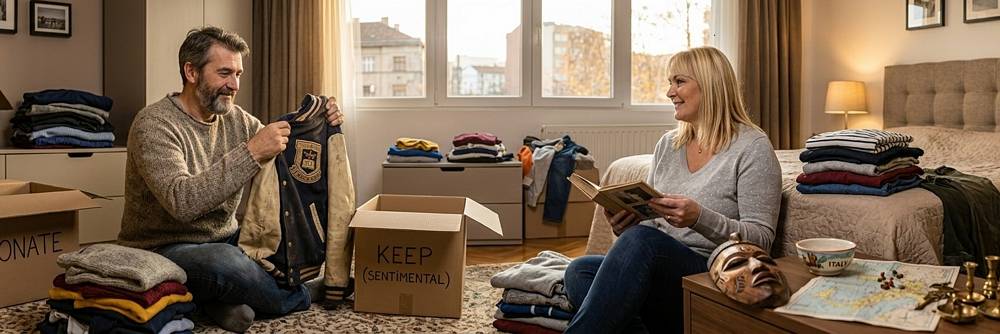
There’s a name for it. FOTO—Fear of Throwing Things Out.
It sounds like a joke, but anyone who has stood frozen over a box of old birthday cards knows it isn’t. We hold onto things because they hold us back in time. That ceramic mug from a holiday you barely remember. The jacket that doesn’t fit but cost a fortune. The drawing your kid made at age four.
These aren’t just objects. They’re backup files of moments we’re afraid to lose.
The tension is real. Sentimentality deserves respect—these things meant something, and dismissing that is its own kind of loss. But keeping everything eventually means living in a place where nothing breathes. One day the shelves are full. Then the cupboards. Then the storeroom door won’t close. And what felt like comfort starts to feel like weight. The meaning of the many begins to dilute the sanctity of the few.
The question isn’t whether to feel attached. It’s whether the attachment is still serving you.
- Start with one drawer. Not a room, not a wardrobe—one drawer. Finishing something small builds the confidence to tackle something larger.
- Don’t get sidetracked. The moment you open a box of mementos, the afternoon is gone. Set those aside for another day. Stay focused on what you came to do.
- Use four boxes. Keep. Donate. Trash. Unsure. A word of warning on the “Unsure” box: it’s a halfway house for procrastination. Use it sparingly. Revisit it in a month—you’ll find the decisions easier than they seemed.
- Sort first, buy storage later. Organise what remains after you’ve let things go, not before.
This takes time. Go at your own pace. But each thing you release is a decision made—and that’s worth something.
Decluttering is emotional editing. The goal isn’t a bare room. It’s a home where what’s left actually matters.
Leave a Reply