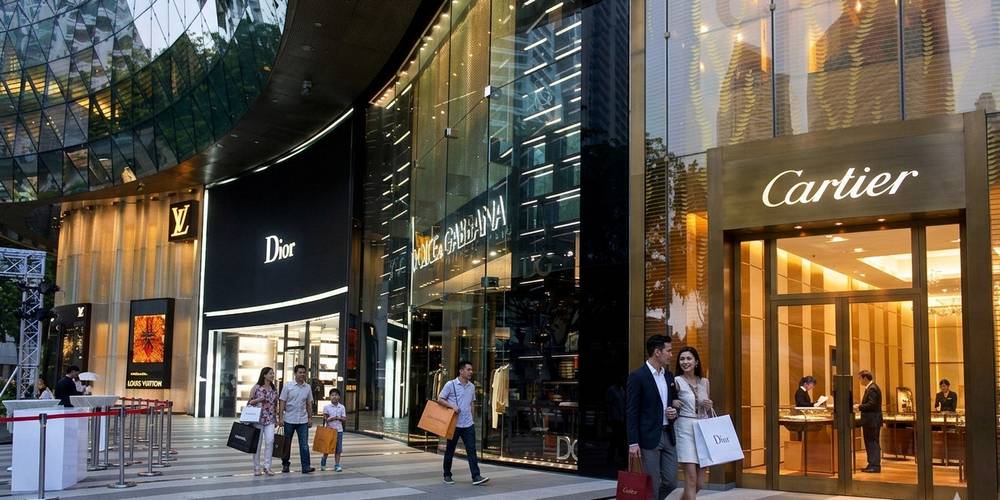
In the world of consumer discretionary products, excess inventory triggers a predictable response: hold a sale, lower the price, clear the shelves, and recoup what you can. High-fashion luxury doesn’t operate on this premise. It runs on the Veblen Effect, where higher prices actually create more demand. These goods become desirable precisely because they’re expensive, serving as status symbols through what economists call “conspicuous consumption.” The product becomes a positional good, valuable specifically because so few people can afford to own it.
This creates an upward-sloping demand curve that defies conventional economic wisdom. Protecting that curve requires extreme measures. Brands like Burberry, Richemont (which owns Cartier,) and Louis Vuitton have historically destroyed unsold stock rather than discount it. We’re talking about bags, watches, and clothes incinerated or shredded rather than marked down. In 2018, Burberry admitted to destroying over $37 million worth of unsold product in a single year. Industry-wide, luxury houses have collectively destroyed hundreds of millions of dollars in inventory to maintain their mystique.
A Burberry bag priced at $3,000 and sold for $500 at an outlet doesn’t just represent a $2,500 loss in revenue. It destroys the bag’s Veblen status entirely. Once a luxury item becomes affordable and accessible, it ceases to function as a positional good. The scarcity vanishes, and with it, the social signaling power that justified the original price. To these brands, a bonfire of unsold merchandise is simply the cost of keeping their story exclusive rather than discounted.
Every luxury brand exists in permanent tension, caught in the “Luxury Lifecycle.” On one side sits growth: the need to make money and expand market share. On the other sits exclusivity: the need to maintain the magic that makes the brand aspirational. In behavioral economics, this battle goes by the name Brand Dilution. It describes the path from being a coveted story to becoming a commodity that people ignore.
When Everyone Owns It, Nobody Wants It: How Michael Kors Lost Exclusivity
Michael Kors is the textbook example of a brand that nearly won itself into oblivion. In the early 2010s, the company achieved total market saturation. You couldn’t walk through a mall, airport, or office building without seeing the “MK” logo prominently displayed on handbags and accessories. By expanding aggressively into every department store and outlet mall in America, their revenue skyrocketed. They had also, rather inconveniently, triggered their own downfall.
Mass availability turned a status symbol into a uniform. The early adopters—the trendsetters who gave the brand its cultural cachet—fled the moment they saw their aspirational bag on every street corner. They migrated to more obscure brands, seeking out “quiet luxury” labels that still offered the scarcity Michael Kors had surrendered. The company didn’t collapse because their quality dropped. They collapsed because they won the mass market, and in the luxury game, winning the crowd means losing the crown.
The most expensive thing a luxury brand can do is make its product easy to buy. Luxury requires gatekeeping and controlled scarcity. The moment that story becomes available to anyone with a coupon code, the Veblen effect reverses. Accessibility becomes a liability. For brands operating at the highest tier, inventory destruction isn’t wasteful. It’s strategic. It’s the price of maintaining the only thing that matters: the belief that what you’re buying can’t be bought by just anyone.
Idea for Impact: The luxury paradox reveals a truth beyond fashion: scarcity isn’t just about supply, it’s about perception. Whether you’re building a brand, launching a product, or crafting a personal reputation, value often lies not in how many people you reach, but in how carefully you choose who gets access. The brands that thrive resist the temptation to chase every customer.
Leave a Reply