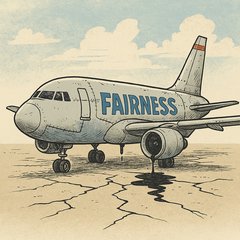
 The first question before launching a public fight isn’t Are we right? It’s Can we withstand the same scrutiny we’re about to apply to our opponent?
In 2015, Delta and its CEO Richard Anderson never asked that question. The answer caught up with them soon enough.
Delta led the charge against the Gulf carriers, accusing Emirates, Etihad, and Qatar Airways of receiving more than $50 billion in illegal subsidies. But the claim was shaky from the start. Much of what Delta labeled “subsidies” were simply state ownership investments or regional fuel advantages—structural realities of where those airlines were built. Meanwhile, the US Big 3 had spent the 2000s in Chapter 11 bankruptcy, shedding debt and pension obligations under government protection. There’s a glaring contradiction in a CEO who benefited from taxpayer relief suddenly discovering the sanctity of the free market.
Lesson #1: Before staking out a public position, pressure-test it against your own record. If you can’t, the campaign stops being about your opponent and starts being about you.
The deeper problem was misdiagnosis. The Gulf carriers weren’t winning because of financing—they were winning because they built a better product. Delta’s response was to wrap itself in the language of fairness instead of fixing its cabins, its service, or its culture. That’s not a trade dispute. That’s an admission.
By 2018, the feud de-escalated. The Trump administration signed “Records of Discussion” with the UAE and Qatar. The Gulf carriers agreed to financial transparency and hinted at restraint on certain routes—enough for the US3 to declare victory. Nothing substantive changed, but the concessions gave the US airlines a face-saving exit.
Lesson #2: When an opponent has lost, give them a dignified exit.
Then came 2020. The US carriers accepted more than $35 billion in direct government grants through the CARES Act. Whatever remained of their original argument against subsidies ended there.
By 2023, the story had flipped entirely. United partnered with Emirates, American with Qatar Airways. The very airlines once branded “illegal competitors” became the primary conduits for US passengers traveling to Africa, India, and Southeast Asia.
The market, as usual, had its own verdict.
Leave a Reply