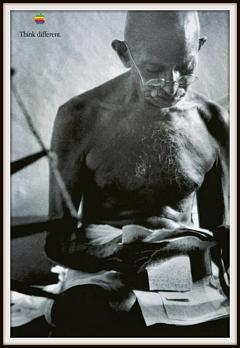
 Apple’s “Think Different” campaign in 1998 placed Gandhi among its rebels and visionaries. The image of him with his spinning wheel drew criticism: a man who preached simplicity and distrusted industrial excess was suddenly enlisted to sell expensive computers.
The paradox is less stark than it appears. Gandhi valued village industries, manual labor, and tools that empowered ordinary people. He warned that machines could concentrate wealth, displace workers, and corrode moral life.
But, Gandhi did not reject technology outright. He rejected exploitation. He opposed machines that stripped livelihoods, not those that eased effort or could be used widely. The spinning wheel itself was a machine, chosen because it symbolized self-reliance and resistance to colonial economics. His concern was always ethical: whether technology served human well-being and fairness.
Apple’s campaign celebrated “the crazy ones, the misfits, the rebels” who challenged dominant paradigms. Gandhi belonged in that company. He was a radical non-conformist who reshaped the world through non-violent resistance and economic self-sufficiency. His spinning wheel was not nostalgia but a revolutionary tool of independence. It challenged empire through grassroots empowerment.
Apple’s use of Gandhi carried irony, yet it fit the campaign’s theme. His “different” thinking was not about gadgets but about freedom, dignity, and self-governance. That disruption was as profound as any technological breakthrough.
Apple borrowed his image to sell machines he might have distrusted, but it was right about his place in history. Gandhi did think differently, and the world changed because of it.
Leave a Reply