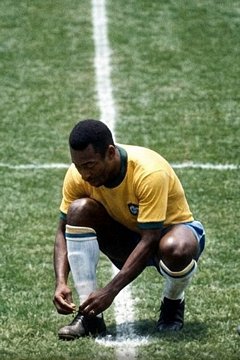
 In the lead-up to the 1970 World Cup, Adidas and Puma did something unusual for bitter rivals—rivals who were, in fact, brothers.
Rudolf and Adolf Dassler had built a shoe empire together in postwar Germany before a falling-out so bitter that it split the town of Herzogenaurach in two, with workers, locals, and eventually entire nations choosing sides between the two brands.
Against that backdrop of decades-long enmity, the brothers made an informal agreement: neither company would sign Pelé as an endorser. He was too visible, too influential, and a bidding war would cost both of them. The arrangement made sense. It held.
Until Puma decided to read it more carefully.
The pact said nothing about what Pelé wore on the field. It didn’t prohibit payment. It didn’t restrict camera angles. Puma approached Pelé, paid him $120,000, and devised a plan that became one of the most studied moments in sports marketing history.
Just before Brazil’s quarter-final match against Peru, Pelé asked the referee to pause the kickoff, knelt down, and tied his shoelaces. Puma had arranged for a cameraman to zoom in. Audiences across the world, watching what was then a record television broadcast for any World Cup, saw Pelé adjusting his Puma King boots. No announcer needed. No ad buy. No formal endorsement.
What Puma’s World Cup Gambit Teaches About Constraint Mapping
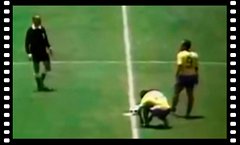 It worked so well that Pelé repeated the act in the semi-final against Uruguay. Brazil went on to win the 1970 World Cup, and Pelé’s performance throughout the tournament carried Puma’s brand along with it. The sales jumped. The pact, technically, was never broken—as investigative journalist Barbara Smit documents in Sneaker Wars: The Enemy Brothers Who Founded Adidas and Puma and the Family Feud That Forever Changed the Business of Sports (2008.)
The thinking behind the gambit is what makes it stick. Puma didn’t fight the constraint. They mapped it, found its boundary, and identified exactly what it left open. That’s lateral thinking in its most useful form—not creativity for its own sake, but the disciplined habit of separating what’s actually prohibited from what’s merely assumed to be. Most constraints are narrower than they appear. People treat the spirit of a rule as if it were the letter of it, voluntarily accepting limits that don’t actually exist.
Idea for Impact: When you hit a wall, ask exactly where it begins and ends. Most constraints rest on unexamined premises—and the gap is usually hiding in the ones nobody thought to question.
Leave a Reply