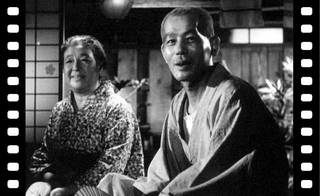

Tokyo greets them not with warmth but with a vague sense of detachment. The welcome they receive is subdued. They’re passed from home to home, sent to a hot spring to “relax,” and treated with a distant politeness that barely conceals impatience. No one behaves cruelly, but kindness feels strained. Their children aren’t villains—they’re simply overwhelmed by their own urban lives. The pain settles not in overt rejection but in quiet absences. What stings most is the loss of expected warmth. And it’s precisely that gap—between what was hoped for and what arrives—that Ozu wants us to sit with.
The Quiet Tyranny of Expecting Fairness
Ozu doesn’t dramatize this neglect. He avoids casting blame and instead reveals a more uncomfortable truth. Life doesn’t operate on a moral ledger. It isn’t designed to reward virtue or deliver fairness in equal measure. The world resists the neat blueprints we carry in our heads, and what we so often call unfairness is really just the world’s refusal to follow our plans.
We suffer not only because life is hard, but because we believed it was supposed to be fair. The deepest disappointments tend to come from misplaced expectations. We mistake randomness for injustice and assume that kindness, offered sincerely, will always find its way back to us. It doesn’t. Life doesn’t run on emotional symmetry.
Ozu returns us to the film to make this felt rather than argued. When Tomi dies shortly after they return home, Shūkichi’s mourning is quiet and restrained. Watching the sunrise, he murmurs that it was a beautiful dawn. Later, he confesses that if he’d known things would come to this, he would have been kinder to her while she was alive. These moments aren’t staged for drama. They unfold in stillness. Ozu lingers on empty rooms and shared spaces where nothing is said. The sorrow lives in what’s endured, not in what’s spoken.
Virtue Won’t Shield You from Indifference
The film offers something worth holding onto: the importance of separating disappointment from unfairness. Disappointment comes quietly and is often no one’s fault. Unfairness is different—it has a source, and when it’s real, it deserves to be named and confronted. But most of what we experience as unfairness is disappointment in disguise, expectation that the world didn’t honor.
Emotional steadiness doesn’t come from demanding that chaos resolve itself into something coherent. It comes from releasing the need for that coherence in the first place. We find our footing not through control but through clarity about what we can and can’t reasonably expect.
Before labeling something unfair, it’s worth asking whether the expectation behind it was ever grounded. Virtue that’s measured only by its rewards is fragile—it curdles into resentment the moment the return doesn’t come. The more durable way to meet the world is with quiet, consistent effort, independent of outcome. Kindness extended without expectation isn’t naivety. It’s a choice about the kind of person you want to be, regardless of what comes back.
Idea for Impact: We don’t control the wind, but we do choose how to sail. We don’t thrive by demanding fairness from the world. We thrive by living it ourselves—with steady grace, even when it goes unnoticed. There’s real strength in that: making virtue unconditional, and finding in that resolve something the world can’t easily take away.