 At this year’s Cannes Film Festival, a group of Danish filmmakers unveiled a manifesto for a cinema movement called Dogma 25. Building on the radical spirit of Dogme 95—a cinematic rebellion launched in 1995 against Hollywood’s excesses—it rekindles artistic constraint for the digital age. Where Dogme 95 rejected artificial lighting, canned music, and special effects to prioritize raw storytelling, Dogma 25 asks a hauntingly relevant question: Can limitation still liberate? Might less still be more?
In an era flooded with tools and visual spectacle, Dogma 25 embraces subtraction as revolution. It challenges filmmakers to distill, not indulge—to confront material with honesty, stripped of digital distraction. Rule #1 declares: “All films must be made using consumer-grade materials, tech, or smartphones.” This isn’t nostalgia. It’s defiance.
Constraint, far from stifling creativity, sculpts it. Boundaries compel precision, guide direction, and fuel innovation. A haiku doesn’t suffer from brevity—it glows because of it. Like water diverting around stone, creative force adapts and deepens. The greatest artists don’t evade limitations. They lean into them—discovering rhythm in friction, meaning in resistance. Constraint doesn’t just make art possible. It makes art vital.
Freedom isn’t the absence of rules—it’s fluency in them. Obstacles do not cloud the path. They etch it.
Idea for Impact: Constraints are the launchpad of creativity. If you’re seeking creative breakthrough, don’t chase abundance. Flip the paradigm. Let constraint be your compass. It might just point to something more daring, vibrant, and truthful than anything born in excess.
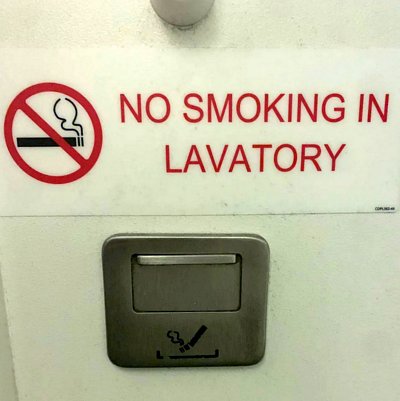 It’s a curious feature of our age that we still require, by law, ashtrays in the lavatories of commercial aircraft. Not because we’re nostalgic for the days when the skies were thick with the fug of unfiltered Marlboros, but because—despite decades of prohibition—someone, somewhere, will inevitably decide the rules
  The tendency to divide humanity into heroes and villains, saints and devils, is
  Spellcheck doesn’t create bad spellers; it lets spelling atrophy. Autocorrect and red squiggles do the work, and users
  We will never definitively prove whether mask mandates worked during the COVID-19 pandemic—not with the crisp authority of pharmacological trials—because the circumstances themselves
 The critical mind
 Luck isn’t merely chance—it’s about
  When you’re stuck or facing inner conflict, an unexpectedly helpful method is to imagine a conversation between different sides of yourself.