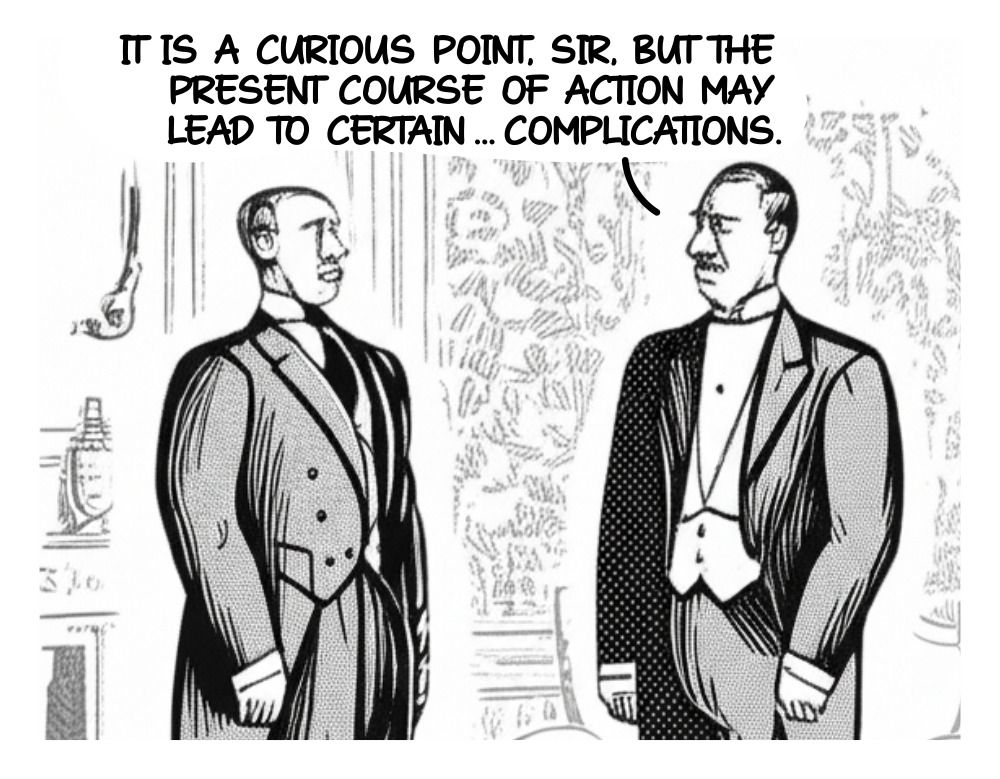
P. G. Wodehouse’s Jeeves and Wooster tales are more than delightful escapades. They offer masterclasses in elegant interaction and psychological finesse. One standout feature is Jeeves’s knack for steering Bertie Wooster away from disaster without resorting to blunt rebuke.
Jeeves never calls Bertie foolish. Instead, he refers to the latest tangle as a “rather complex imbroglio” or a “somewhat delicate situation.” These euphemisms allow Bertie to preserve his dignity while quietly grasping that he has stumbled again. Jeeves’s tact sustains trust, amplifies influence, and fosters a dynamic of gentle guidance over domination.
Central to this diplomacy is Jeeves’s expert use of passive voice. Rather than saying, “You’ve made a fool of yourself,” he offers, “There appears to have been a slight misunderstanding.” Shifting focus from the individual to the circumstance softens criticism. It diffuses blame, avoids defensiveness, and invites collaborative problem-solving—an ideal approach when harmony matters more than fault.
Passive voice offers distinct advantages in criticism. It cushions judgment, encourages reflection, and de-emphasizes the actor. By highlighting the event rather than the person, it makes feedback feel less accusatory and more constructive. This reduces tension and promotes respectful dialogue, especially in delicate or hierarchical relationships.
Yet diplomacy falters when passive voice is overused. “Mistakes were made” may sound politic, but it lacks clarity and direction. Vagueness erodes accountability.
Idea for Impact: Choosing between active and passive voice depends on intent. If tact is the aim, passive phrasing—handled as artfully as Jeeves handles a cravat—serves a distinct purpose. But when honesty and accountability take precedence, clarity matters more than softness. Language is not just what we say; it is how we say it. And in that, Jeeves stands as a model of refined expression.
 The tendency to divide humanity into heroes and villains, saints and devils, is
  The
The  Many people overestimate their listening skills, yet true listening is uncommon. However, anyone can become an excellent listener by embracing a key principle: listen
 Ever feel lonely even when you’re around others? Loneliness isn’t about being alone; it’s about disconnection. It’s the lack of someone who
  Ditch small talk—invite real stories.
  Encouraging someone to “just be positive” during tough times can inadvertently overlook the complexity of their situation and the depth of their emotions.
 When team members come to you with problems, resist the urge to jump straight into “fix-it” mode. It’s a common reflex, but it can
  Imagine you went through a tough loss when a child sadly passed away from a sudden illness three years ago. The pain still lingers, and time hasn’t made it easier. Still, you’ve done your best to rebuild your life, choosing not to dwell on that heartache.