• Skip to content
  • Skip to primary sidebar

Right Attitudes

Ideas for Impact

Simple Living

What the Mahabharata Teaches About Seeing by Refusing to See

October 20, 2025 By Nagesh Belludi Leave a Comment

Arjuna's Lesson in Focus from the Mahabharata Teaches About Seeing by Refusing to See The Mahābhārata, one of India’s most revered epics, intertwines themes of honor, duty, and destiny. Among its luminous tales is a striking lesson in pruned focus: young Arjuna’s test. Droṇācārya—the guru of warfare to both the Pāṇḍava and Kaurava princes, cousin clans bound by fate—devised a challenge to assess their discipline. He placed a wooden bird atop a tree and summoned each prince to aim at its eye. Before allowing the shot, he asked, “What do you see?”

Yudhiṣṭhira, the eldest of the cousins, stepped forward. Thoughtful and observant, he listed everything—the tree, the sky, the bird, even Droṇācārya. Though sincere, his scattered focus did not please the master. One by one, the other princes followed with similarly diffuse answers and were quietly dismissed.

Then came Arjuna. Calm and composed, he raised his bow, gaze locked onto the mark.”I see only the bird’s eye,” he said. Droṇācārya pressed, “Not the tree or branch?” Arjuna held firm.”Nothing else, Guru.” With reverent approval, the master allowed him to shoot. The arrow flew straight and true, striking the eye. That was the hallmark of the legend in the making. Arjuna’s clarity and devotion would shine as a beacon of mastery.

But the tale transcends its setting. It is not merely about talent—it celebrates radical focus. Arjuna’s greatness arose not from divine gifts but from subtraction: pruning distraction, discarding context, meeting the moment with terrifying purpose. His power lay in what he refused to see.

What Arjuna models is not just athletic elegance but cognitive courage—the discipline to silence all competing signals. In today’s age of constant distraction, such mastery feels almost mythical.

Idea for Impact: The modern tragedy is our inability to be Arjuna—to filter out the noise of desire, worry, and superficial validation in pursuit of a single, well-defined aim. This, too, is the bedrock of a well-lived life. And yet, it is a practice too rarely embraced.

Wondering what to read next?

  1. How to … Overcome Impact Blindness and Make Decisions with Long-Term Clarity
  2. Addition Through Subtraction
  3. This Ancient Japanese Concept Can Help You Embrace Imperfection
  4. Everything in Life Has an Opportunity Cost
  5. On Black Friday, Buy for Good—Not to Waste

Filed Under: Living the Good Life, Mental Models, Sharpening Your Skills Tagged With: Balance, Biases, Clutter, Discipline, Mindfulness, Parables, Simple Living, Targets

Japan’s MUJI Became an Iconic Brand by Refusing to Be One

September 26, 2025 By Nagesh Belludi Leave a Comment

Minimalism as Rebellion: MUJI's Counterstrike Against Consumer Excess

In the heyday of Japan’s consumer electronics boom, MUJI—short for Mujirushi Ryohin, or “no-brand quality goods”—stepped onto the scene as a quiet revolution. Launched in 1980, it offered a counterstrike against a market bloated with luxury logos and feature-packed excess. Consumers were drowning in labels and needless complexity. MUJI tossed them a lifeline.

Its genius wasn’t invention; it was restraint. MUJI’s philosophy ran on three simple principles: repurpose what others waste, strip out the ornamental, and reject the superfluous. This wasn’t minimalism for aesthetic purity. It was minimalism in service of reason—clarity with purpose, bordering on rebellion.

Take ochiwata, the cotton lint most manufacturers discard during combing. MUJI turns it into dishcloths, a subtle jab at industries obsessed with perfect materials. Or consider “Imperfect Dried Shiitake,” a bold rejection of beauty standards in the produce aisle. These items don’t hide their flaws; they wear them honestly. Even the packaging puts the product before the brand. MUJI doesn’t shout. It invites.

In a market starving for identity, MUJI chose integrity over polish. It slashed costs not to be cheap, but to be real. It isn’t anti-luxury; it’s anti-nonsense.

Idea for Impact: People don’t buy what you make—they buy what it means. MUJI nailed the message: by refusing to be a brand, it became one. A whisper that silenced the noise.

Wondering what to read next?

  1. The Rebellion of Restraint: Dogma 25 and the Call to Reinvent Cinema with Less
  2. Elon Musk Insults, Michael O’Leary Sells: Ryanair Knows Cheap-Fare Psychology
  3. We Trust What We Can See: James Dyson Builds for That Instinct
  4. Labubu Proves That Modern Luxury Is No Longer an Object, It’s a Story
  5. Offering a Chipotle Burrito at a Dollar is Not a Bargain but a Betrayal of Dignity

Filed Under: Business Stories, MBA in a Nutshell, Mental Models, The Great Innovators Tagged With: Creativity, Innovation, Japan, Marketing, Materialism, Parables, Simple Living

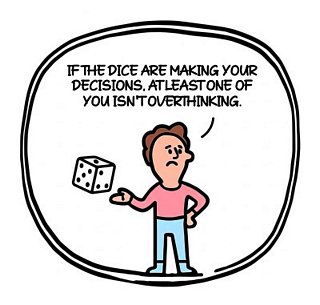
Let a Dice Decide: Random Choices Might Be Smarter Than You Think

September 10, 2025 By Nagesh Belludi Leave a Comment

Let a Dice Decide: Random Choices Might Be Smarter Than You Think We make thousands of decisions daily—what to wear, which email to answer first, whether to take the scenic route or stick to the main road. Most are low-stakes, but the act of choosing can sap mental energy. That’s decision fatigue: as options pile up, clarity frays, and even the inconsequential starts to feel weighty. The mind treats small choices like they’ve got far more significance than they deserve.

There’s a surprisingly elegant way out: hand off minor decisions to chance. Roll a die. Flip a coin. Outsource the trivial. Randomization cuts through indecision and delivers instant clarity. Ironically, when the coin’s in mid-air, we often discover what we truly want—hoping silently for a particular side to land face-up. That fleeting instinct speaks louder than hours of deliberation.

We already allow randomness to shape more of our lives than we realize. We hit shuffle and trust an algorithm to pick our next song. We choose checkout lines blindly, hoping they’re fastest. Our social feeds present content in curated chaos. Even picking a restaurant often comes down to whatever looks inviting in the moment. Randomness isn’t an interruption—it’s ambient, constant, and influential.

Using chance deliberately brings relief. Faced with mundane, energy-draining decisions, inviting a bit of randomness can be playful and effective. It breaks the loop of paralysis-by-analysis and forces commitment. It frees up brainpower for choices that actually require reflection. Not everything deserves a full internal debate.

Of course, not every decision fits this mold—career shifts, relationships, financial moves need real thought. But for the daily swarm of indecision, randomness offers clarity and release.

That’s freedom from the unimportant.

Wondering what to read next?

  1. Everything in Life Has an Opportunity Cost
  2. Don’t Ruminate Endlessly
  3. A Winner is Merely a Quitter with a Better Sense of Timing: When Quitting Is the Win
  4. In Imperfection, the True Magic of the Holidays Shines
  5. To-Do or Not To-Do?

Filed Under: Mental Models, Sharpening Your Skills Tagged With: Anxiety, Assertiveness, Clutter, Decision-Making, Discipline, Efficiency, Parables, Procrastination, Simple Living, Thought Process

The Champion Who Hated His Craft: Andre Agassi’s Raw Confession in ‘Open’

August 27, 2025 By Nagesh Belludi Leave a Comment

'Open An Autobiography' by Andre Agassi (ISBN 0307388409) When you first dive into Andre Agassi’s outstanding memoir, Open: An Autobiography (2010,) you’re hit with a shocking revelation right on the first page: “I play tennis for a living, even though I hate tennis, hate it with a dark and secret passion, and always have.”

This bewildering confession comes from one of the greatest tennis players of all time, a man who has racked up numerous accolades, including eight Grand Slam titles. The persona of a dedicated tennis champion pursuing his dreams turns out to be a facade.

Behind the Glory: Playing Through Pain

Agassi’s candid reflections highlight the internal conflicts and emotional challenges that often accompany the pursuit of success. His experience was overwhelming; he never truly had a choice in playing tennis, as his father forced him into it at a young age. What followed felt like a glorified prison camp, where the only way out was to succeed—something he did spectacularly, landing him on the world stage. Yet, by the time Agassi came to this realization, he felt trapped, believing there was nothing else he could pursue.

In Open, Agassi relives the feelings of powerlessness that fueled his detest for the very sport that had given him so much. When a job becomes all-consuming, it’s easy to develop a loathing for it. Being the best means everything revolves around performance, and the pressure to stay at the top is relentless. Failure is unacceptable, and the burden of tennis looms over every decision. Burnout becomes inevitable.

The Reluctant Legend - Andre Agassi Had a Complex Relationship with Tennis Agassi casts himself as a victim of his circumstances, expressing a weariness with the grind—a sentiment many can relate to. While few may hate their jobs as intensely as Agassi did, many struggle with the meaning of their work, questioning its eternal significance and fearing they are merely wasting time.

The Dark Side of Success

For years, Agassi believed real life was just around the corner, delayed by obstacles, unfinished business, and unsettled debts. Eventually, he realized those very obstacles were his life. Life isn’t something that happens to you; it’s something you shape with your choices and actions. You are the director of your own existence. Emotions like anger, jealousy, and fear aren’t just reactions, they’re nurtured. As long as you view yourself as a victim, success will remain out of reach.

Ultimately, there’s no point in toiling through the grind if you don’t enjoy the journey. Embrace the call that stirs your soul. In retirement, Agassi discovered new passions, particularly in education reform. He founded the Andre Agassi Foundation for Education, dedicated to improving opportunities for at-risk children. In his personal life, he met and married German tennis star Steffi Graf, who provided unwavering support, helping him navigate his post-tennis identity. Together, they embraced new ventures, illustrating Agassi’s resilience and his ability to make meaningful contributions beyond the tennis court.

Wondering what to read next?

  1. Great Jobs are Overwhelming, and Not Everybody Wants Them
  2. The Truth About Work-Life Balance
  3. Why You Can’t Relax on Your Next Vacation
  4. What Your Exhaustion May Be Telling You
  5. Hustle Culture is Losing Its Shine

Filed Under: Health and Well-being, Living the Good Life Tagged With: Assertiveness, Balance, Career Planning, Conflict, Legacy, Life Plan, Meaning, Mindfulness, Pursuits, Simple Living, Stress, Success, Work-Life

Busyness is a Lack of Priorities

August 22, 2025 By Nagesh Belludi Leave a Comment

Busyness is a Lack of Priorities You’re not stuck in busyness—you’re choosing it. That packed calendar, the blur of back-to-back tasks, the sense that your time isn’t your own? They’re symptoms of decisions made without reflection, not obligations imposed by others.

Urgency has a way of deceiving you. It makes everything feel critical, even when most of it isn’t. Reacting to every alert keeps you in survival mode. Choosing what genuinely matters restores control.

You don’t owe your time to every request or expectation. Drop the performative hustle. Ditch the tasks that look productive but do nothing. You’re not a bystander—you steer your schedule.

When overwhelm creeps in, pause. Step back. Reconsider what’s actually worth your attention. Busyness isn’t a badge of honor—it’s just the default when you stop choosing intentionally.

Idea for Impact: Busyness is a choice. Prioritize what matters. Accomplish what you want, not what you think you have to.

Wondering what to read next?

  1. The Simple Life, The Good Life // Book Summary of Greg McKeown’s ‘Essentialism’
  2. Hustle Culture is Losing Its Shine
  3. Yes, Money Can Buy Happiness
  4. The Costs of Perfectionism: A Case Study of A Two Michelin-Starred French Chef
  5. Challenge the Cult of Overzealous Time Management

Filed Under: Living the Good Life, Sharpening Your Skills Tagged With: Anxiety, Balance, Getting Things Done, Mindfulness, Perfectionism, Simple Living, Stress, Time Management, Work-Life

The Benefits of Having Nothing to Do

August 18, 2025 By Nagesh Belludi Leave a Comment

The Benefits of Having Nothing to Do These days, the moment boredom creeps in, we lunge for a distraction—scrolling, streaming, swiping. It’s less a decision than a reflex, like we’re allergic to silence.

But what if those “boring” moments were exactly what we need to hit pause and reconnect with ourselves? Those empty spaces might hold the key to clarity, focus, and self-reflection.

Boredom, though uncomfortable, creates space for reflection to flourish. In those quiet, unoccupied moments, we’re forced to face our thoughts. Embracing boredom has become a lost art, and in its absence, we’ve lost the skills needed for thoughtful living—reflection, focus, and intentionality. Sometimes, doing nothing is exactly what we need to live more consciously and fully.

Idea for Impact: The next time boredom strikes, resist the urge to reach for your phone. Sit with it. Pause. Ask yourself, “Am I living with purpose, or just going through the motions?” You might uncover something unexpected.

Wondering what to read next?

  1. Try Zero-Tasking: Doing Nothing Never Felt So Good
  2. Busyness is a Lack of Priorities
  3. Decisions, Decisions: Are You a Maximizing Maniac or a Satisficing Superstar?
  4. How to Encourage Yourself During Tough Times
  5. Hustle Culture is Losing Its Shine

Filed Under: Health and Well-being, Living the Good Life Tagged With: Anxiety, Balance, Mindfulness, Simple Living, Stress

The Wisdom of the Well-Timed Imperfection: The ‘Pratfall Effect’ and Authenticity

August 4, 2025 By Nagesh Belludi Leave a Comment

The Wisdom of the Authentic Pratfall: How Imperfection and Honesty Build Real Connection

In a culture obsessed with flawless presentation, revealing one’s imperfections may seem risky. Yet it can be unexpectedly powerful. This paradox—where a minor misstep enhances likability—is known in psychology as the Pratfall Effect, a phenomenon explored by social psychologist Elliot Aronson in the 1960s. His research found that a small, harmless error, when made by someone already viewed as competent, could deepen that person’s appeal. Competence inspires admiration, but fallibility invites connection.

Aronson illustrated this effect through a clever experiment. Participants listened to audio recordings of quiz-show contestants: one confident and high-performing, the other more mediocre. In some versions, the contestant spilled coffee mid-interview—a minor blunder. The competent contestant’s likability surged after the incident. In contrast, the average one saw no such boost. The study’s insight was precise: credibility sets the stage, but imperfection activates charm. Without initial competence, a flaw simply reads as failure.

The term Pratfall comes from slapstick comedy—a clumsy tumble played for laughs. But in the context of psychology, it gestures toward something more revealing: perfection creates distance. It can feel untouchable, even intimidating. A stumble, however slight, signals humanity. We feel closer not when others perform flawlessly, but when they allow their guard to drop.

Imperfect, Therefore Credible: When Admitting Weakness Builds Trust

Beyond Flawless: How Imperfection Boosts Appeal, Featuring Unilever's Real Beauty Revolution Marketers have adapted this insight with varying degrees of boldness. Dove, the personal care brand under Unilever, redefined beauty norms by spotlighting authenticity. Its “Real Beauty” campaign intentionally moved away from airbrushed models and showcased everyday bodies in ways that emphasized inner confidence and natural grace. Footwear retailer Zappos, known for its customer service ethos, leaned into its imperfections—openly acknowledging logistical hiccups and turning transparency into a form of customer intimacy. Ryanair, the European budget airline, took a more sardonic approach: it flaunts its no-frills discomfort, mocks traditional notions of luxury, and builds loyalty by refusing to pretend it was anything other than economical. Across these cases, flaws—whether candid or stylized—became signals of integrity.

For Ryanair especially, naming its limitations worked to clarify its priorities. Legroom may be tight, amenities scarce—but the promise of low fares and operational efficiency remained untouched. By owning its tradeoffs, the airline avoided suspicion. Concealment breeds doubt. Disclosure builds trust.

There’s also rhetorical value in this strategy. When a brand confesses to a shortcoming, it earns credibility—positioning itself to be believed when making a claim. Guinness, once hampered by delays in delivery, recast the wait as part of its charm with the tagline “Good things come to those who wait,” transforming patience into a premium. Stella Artois, a Belgian lager with upscale branding, embraced its high price point with “Reassuringly Expensive”—suggesting quality rather than excess. Lyons, a tea brand rooted in Irish tradition, celebrated its product not as a daily necessity but as a gentle, well-deserved indulgence. In each case, marketers found strength not by dodging imperfection, but by weaving it into the narrative.

Still, the Pratfall Effect has its internal tensions. Within corporate settings, the incentives that shape messaging can clash with those that govern individual risk. What elevates the brand might jeopardize the marketer. Vulnerability can look bold on a campaign brief but risky on a performance review. If an attempt at candor falters, it may be viewed as recklessness. In such environments, polish prevails.

In Business and Life, Curated Imperfection Creates Shared Meaning, Not Just Market Advantage

Some brands opt out entirely. Chanel and Lexus, for instance, present pristine identities that avoid the pratfall’s logic. Chanel tells stories of timeless elegance—floating above everyday context, immune to blemish. Lexus, Toyota’s luxury arm, relies on precision and craftsmanship. Their appeal stems from aspiration, not relatability. To these brands, imperfection risks dilution; their value proposition hinges on exclusivity, not accessibility.

Embrace Your Pratfall: How Mistakes and Authenticity Build Connection Yet the Pratfall Effect isn’t limited to marketing. It manifests in the more intimate moments of daily life. In romance, a small confession can melt emotional distance. In job interviews, an honest error, paired with thoughtfulness, can signal growth and humility. The fusion of capability and candor conveys something rare: a confidence that doesn’t rely on control.

This balancing act—practicing vulnerability without artifice—reveals character. Perfection, though impressive, can feel sterile. What persuades is often more textured: a self-aware flaw, deliberately shared, speaks volumes. It’s not an apology. It’s a quiet assurance that there’s nothing to hide. In this way, imperfection becomes a bridge—connecting people not by virtue of polish, but through the unmistakable resonance of being real.

Wondering what to read next?

  1. The Mere Exposure Effect: Why We Fall for the Most Persistent
  2. Elon Musk Insults, Michael O’Leary Sells: Ryanair Knows Cheap-Fare Psychology
  3. We Trust What We Can See: James Dyson Builds for That Instinct
  4. Labubu Proves That Modern Luxury Is No Longer an Object, It’s a Story
  5. Offering a Chipotle Burrito at a Dollar is Not a Bargain but a Betrayal of Dignity

Filed Under: Business Stories, MBA in a Nutshell, Mental Models, Sharpening Your Skills Tagged With: Assertiveness, Biases, Creativity, Critical Thinking, Likeability, Marketing, Parables, Personality, Persuasion, Psychology, Simple Living

This Single Word Can Drastically Elevate Your Productivity

June 23, 2025 By Nagesh Belludi Leave a Comment

Don't Agree to Less: Say 'No' and Focus on What Matters

You’re working hard, but you still feel stuck when it comes to making real progress. It’s easy to blame demanding clients, a tough boss, or family obligations. Maybe you fall back on familiar excuses like ‘stuff happens’ or ‘if only this’ or ‘if only that.’ Or you might even complain that the world isn’t moving fast enough for you.

But the real issue is your inability to decline what isn’t essential. Saying ‘yes’ feels easier—you don’t like turning people down because you don’t want to be the bad guy. And there’s always that nagging thought: “How long could this really take?” While those reasons may feel valid, they’re just excuses.

Every time you say ‘yes’ to something, you’re inherently saying ‘no’ to something else.

You can’t keep saying ‘yes’ to everything without consequences. And those consequences often show up as stalled progress and stress. Important things end up taking a backseat. If you’re not focusing on what truly matters to you, you’ll get overwhelmed, irritated, and ultimately unhappy.

The good news is, you can change this dynamic. You have the power.

Start by creating a clear list of what’s important to you at work and at home. It’s okay if work priorities are at the top or if family comes first. The key is knowing what matters to you.

Once you have that clarity, use your list to filter your time-allocation decisions. When a new request or task comes your way, check if it aligns with your top priorities. If it’s important, that’s great! Just remember, prioritizing it will push other things down your list, and you might not get to those.

If the request doesn’t align, simply decline it.

Don’t take on anything that won’t move you closer to where you want to be.

Just say ‘no.’

That one word—‘no’—is incredibly powerful. The initial discomfort of saying ‘no’ will fade quickly, but the long-term benefits will last. This isn’t about being selfish; it’s about being smart with your time and energy.

Don’t agree to something when you know you can—and must—say ‘no.’ If you keep saying ‘yes,’ you’ll have no one to blame but yourself for not making progress on what truly matters.

Don’t agree to less.

Wondering what to read next?

  1. Everything in Life Has an Opportunity Cost
  2. What Most People Get Wrong About Focus
  3. The Tyranny of Obligations: Summary of Sarah Knight’s ‘The Life-Changing Magic of Not Giving a F**k’
  4. Don’t Say “Yes” When You Really Want to Say “No”
  5. Escape the People-Pleasing Trap

Filed Under: Effective Communication, Living the Good Life, Mental Models Tagged With: Assertiveness, Balance, Decision-Making, Discipline, Likeability, Persuasion, Relationships, Simple Living, Time Management

The Tyranny of Obligations: Summary of Sarah Knight’s ‘The Life-Changing Magic of Not Giving a F**k’

June 12, 2025 By Nagesh Belludi Leave a Comment

'The Life-Changing Magic' by Sarah Knight (ISBN 1784298468) Sarah Knight’s The Life-Changing Magic of Not Giving a F**k (2015) dismantles the exhausting pursuit of appeasement, politeness, and obligation—the relentless trifecta that leaves people drained, resentful, and quietly miserable. Knight, once a top book editor known for her precision, now applies that same meticulous clarity to her own writing—turning it mercilessly against the suffocating burdens imposed by others, that insidious parasite of modern civility: obligation masquerading as virtue.

Borrowing from Marie Kondo’s tidying philosophy but swapping neatly stacked sweaters for unapologetically discarded commitments, she introduces the NotSorry Method. The premise is as blunt as it is necessary: identify which obligations are truly worth your time, eliminate the rest, and—most crucially—stop apologizing for doing so. What follows is a ruthless yet freeing act of mental decluttering, one that rescues readers from obligations that serve no meaningful purpose—like background apps silently draining battery life without permission.

Knight’s book is not an endorsement of rudeness or indifference. It is, instead, a blueprint for rational disengagement. She arms readers with firm yet tactful responses, providing both philosophical justification and practical scripts for saying “no” without the unnecessary theatrics. Her unapologetic approach has clearly struck a nerve—her TEDx Talk has amassed over 11 million views, proving just how many people are starved for permission to liberate themselves from exhausting social expectations. Knight’s success didn’t stop at one book; it exploded into an entire No F**ks Given series of self-help guides and journals, each reinforcing the same philosophy of ruthless clarity.

Speedread The Life-Changing Magic of Not Giving a F**k, then apply that same precision to any obligation that has long outlived its usefulness. The chapters are brisk, the advice razor-sharp, and the book itself a battle cry against the absurd expectation that one must accept every social burden with a grateful smile.

Wondering what to read next?

  1. Everything in Life Has an Opportunity Cost
  2. This Single Word Can Drastically Elevate Your Productivity
  3. Escape the People-Pleasing Trap
  4. The Champion Who Hated His Craft: Andre Agassi’s Raw Confession in ‘Open’
  5. What You’re Saying When You Say ‘Yes’

Filed Under: Living the Good Life, Managing People, Mental Models Tagged With: Assertiveness, Balance, Conflict, Discipline, Likeability, Negotiation, Simple Living, Stress, Time Management

A Mindset Hack to Make Your Weekends More Refreshing

May 29, 2025 By Nagesh Belludi Leave a Comment

A Mindset Hack to Make Your Weekends More Refreshing Ever feel like you’re dragging into Monday, as if the weekend was just an extension of the same grind? Instead of a true break, we often swap weekday stress for a packed schedule of chores and errands, never fully switching off mentally. A weekend meant to be restorative instead becomes a different kind of “busy.”

This study explored how mindset affects the weekend experience. Participants who consciously treated their weekend like a mini-vacation—being mindful and present in their activities—reported greater happiness on Monday. It wasn’t about doing more but about experiencing time differently.

Idea for Impact: Treat your weekend like a little getaway. Shift your perspective, savor the moments, and let go of the massive to-do list once in a while. Fully enjoy your time off, and you’ll feel the difference come Monday.

Wondering what to read next?

  1. Challenge the Cult of Overzealous Time Management
  2. The Simple Life, The Good Life // Book Summary of Greg McKeown’s ‘Essentialism’
  3. Seek Whispers of Quiet to Find Clarity in Stillness
  4. How to … Combat Those Pesky Distractions That Keep You From Living Fully
  5. I’ll Be Happy When …

Filed Under: Living the Good Life, Sharpening Your Skills Tagged With: Balance, Discipline, Lifehacks, Mindfulness, Pursuits, Simple Living, Time Management

« Previous Page
Next Page »

Primary Sidebar

Popular Now

Anxiety Assertiveness Attitudes Balance Biases Coaching Conflict Conversations Creativity Critical Thinking Decision-Making Discipline Emotions Entrepreneurs Ethics Etiquette Feedback Getting Along Getting Things Done Goals Great Manager Innovation Leadership Leadership Lessons Likeability Mental Models Mindfulness Motivation Parables Performance Management Persuasion Philosophy Problem Solving Procrastination Psychology Relationships Simple Living Social Skills Stress Suffering Thinking Tools Thought Process Time Management Winning on the Job Wisdom

About: Nagesh Belludi [hire] is a St. Petersburg, Florida-based freethinker, investor, and leadership coach. He specializes in helping executives and companies ensure that the overall quality of their decision-making benefits isn’t compromised by a lack of a big-picture understanding.

Get Updates

Signup for emails

Subscribe via RSS

Contact Nagesh Belludi

RECOMMENDED BOOK:
On Writing Well

On Writing Well: William Zinsser

Journalist William Zinsser's bestselling manual has inspired generations of writers to perfect their skills in introducing clarity and brevity, and presenting their unique voice into prose.

Explore

  • Announcements
  • Belief and Spirituality
  • Business Stories
  • Career Development
  • Effective Communication
  • Great Personalities
  • Health and Well-being
  • Ideas and Insights
  • Inspirational Quotations
  • Leadership
  • Leadership Reading
  • Leading Teams
  • Living the Good Life
  • Managing Business Functions
  • Managing People
  • MBA in a Nutshell
  • Mental Models
  • News Analysis
  • Personal Finance
  • Podcasts
  • Project Management
  • Proverbs & Maxims
  • Sharpening Your Skills
  • The Great Innovators

Recently,

  • We Don’t Buy Products, We Buy Narratives of Ourselves
  • Inspirational Quotations #1163
  • You Need Your Enemy to Be Worth It
  • The Quiet Rebellion
  • The ‘Near Enemy’: The Subtle Corruption That Makes Good Acts Fail
  • Inspirational Quotations #1162
  • The “Empty Vessel” Effect: Why Insecurity Speaks the Loudest

Unless otherwise stated in the individual document, the works above are © Nagesh Belludi under a Creative Commons BY-NC-ND license. You may quote, copy and share them freely, as long as you link back to RightAttitudes.com, don't make money with them, and don't modify the content. Enjoy!