 This HBR article highlights a compelling asymmetry in team dynamics: large teams excel at development and deployment, while small teams are better suited for disruption. Large teams execute. Small teams disrupt. The former march in formation; the latter think in rebellion.
Anecdotally, that rings true. Smaller teams, leaner in structure and tighter in cohesion, thrive at birthing radical ideas and reframing paradigms. They move quickly because they aren’t bogged down by bureaucracy and status meetings. They share context without memos, pivot without permission, and fail without fanfare. Their edge is subtraction: less red tape, fewer egos, and, mercifully, no corporate pep talks. That’s why Amazon swears by the “two-pizza team” rule—agility thrives in small bites.
Large teams thrive at refinement. They have the muscle to scale, test, and adapt ideas for customers. Their access to resources, infrastructure, and markets gives them an advantage in execution.
Disruption favors the quiet hum of concentrated minds, not the roar of crowded rooms. That’s why forward-thinking companies seed Skunkworks, nimble innovation cells within large organizations, designed to marry the agility of small teams with the power of big ones. A lightweight alternative is the ad hoc hackathon: short, focused bursts of innovation where small teams or cross-company partnerships can rapidly prototype with minimal overhead.
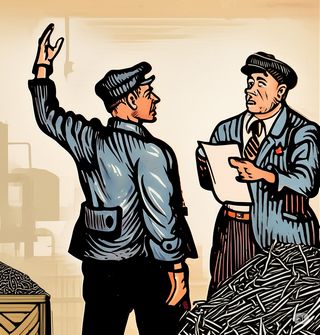 There’s an old joke about the Soviet Union’s approach to industrial planning. It’s been told so often it’s
 McDonald’s has long leaned on
  We tend to see
  Organizations often face a moral dilemma when confronting high-performing individuals—those rainmakers whose charisma and drive yield tangible results (Jack Welch’s
 .jpg "'Betrayal Crisis Catholic Church' by Boston Globe (ISBN 0316776750)")

 Marketers have adapted this insight with varying degrees of boldness. Dove, the personal care brand under Unilever, redefined beauty norms by spotlighting authenticity. Its
  Yet the Pratfall Effect
  Conscience isn’t as reliable a guide on moral questions as it’s often made out to be. Consider
 What struck me most in Penang is how Confucian values—often dismissed as rigid—are anything but. They
  I fly often. I’m in airports often. And I’m consistently amazed at the plaintive bleating from the rear of the aircraft—as if indignity were somehow sprung upon them unannounced. But no one ends up in seat 36B by accident. Airlines today offer a
  Most fortune cookie messages are vague, allowing for personal interpretation. None of these offer specifics—no details about time, place, or context. Because of this ambiguity, readers can easily connect the message to something in their own lives. “A pleasant surprise is waiting for you” could apply to anything from a surprise visit to an unexpected windfall. “The harder you work, the luckier you get” shares a motivational cliché. “You know how to have fun with others and enjoy solitude” covers two opposite traits, increasing the chance it resonates with anyone.
 The Barnum Effect, also known as the Forer Effect, describes a psychological phenomenon where individuals believe that general personality descriptions are tailored specifically to them, even though these descriptions are vague enough to apply to a wide range of people. This effect helps explain why people