• Skip to content
  • Skip to primary sidebar

Right Attitudes

Ideas for Impact

Persistence

Ridicule Is Often the Tax Levied on Originality: The Case of Ice King Frederic Tudor

March 23, 2026 By Nagesh Belludi Leave a Comment

'Ice King Frederic Tudor' by Carl Seaburg (ISBN 0939510804) I recently read Ice King: Frederic Tudor and His Circle (2003) by Carl Seaburg and Stanley Paterson. It tells the story of an important but largely forgotten chapter of American history—the birth of the commercial ice trade—tracing it from its laughed-at beginnings in Boston to a global industry that reshaped how the world ate, drank, and lived. The book is rich with personality, setback, and stubborn ambition, and it’s as much a character study as it is a business history.

The Slippery Speculation

In the winter of 1806, a young Boston merchant named Frederic Tudor walked out onto the frozen surface of Fresh Pond in Cambridge, watched laborers hack 80 tons of ice from the lake in great crystalline blocks, loaded them onto a ship called the Favorite, and set sail for Martinique.

Boston found this hilarious.

The city’s merchants—men who routinely speculated in coffee, mahogany, spices, and umbrellas—looked at Tudor and saw a fool. The Boston Gazette covered his departure with barely concealed mockery: “No joke. A vessel with a cargo of 80 tons of Ice has cleared out from this port for Martinique. We hope this will not prove to be a slippery speculation.”

Ice. To the tropics. On a wooden ship. In summer.

The math was simple, the conclusion obvious, and the skeptics entirely wrong about what that meant.

Tudor arrived in Martinique to find the ice had, miraculously, survived most of the journey. What hadn’t survived was the infrastructure to receive it. There was no ice house to store it. No local knowledge of how to use it. No customers who had ever seen a block of frozen water, let alone understood that they should want one. The ice melted in six weeks. Tudor lost $4,000—a serious sum—and sailed home to the sound of laughter he could probably hear from the dock.

He went back anyway.

The Contempt for Doubters

For the next 15 years, Tudor kept sailing. To Charleston. To Havana. To New Orleans. The obstacles were not occasional; they were relentless. He contracted yellow fever in the tropics and survived it. He suffered a mental breakdown and recovered. Employees stole from him. Government officials corrupted deals he had spent months building. The Jefferson embargo strangled his trade routes. The War of 1812 shuttered them entirely. The Panic of 1819 nearly finished him. And not once but twice, he was thrown into debtor’s prison—that particular humiliation reserved for men who owe more than they own and can no longer pretend otherwise.

Tudor endured all of it with a quality his contemporaries described, not entirely fondly, as implacable. He was defiant, imperious, and contemptuous of the men who doubted him. He did not explain himself. He did not seek reassurance. He simply continued.
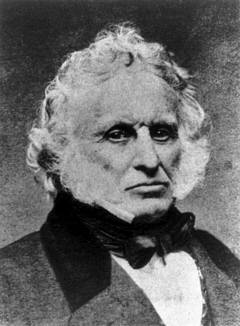
Frederic Tudor, the Ice King Who Invented the Global Ice Trade What kept him going was a conviction that looked, from the outside, like madness but was, in fact, a market insight of rare precision: there was no ice trade in the tropics because no one had ever built one. The absence of demand was not evidence that demand was impossible. It was evidence that no one had yet done the work of creating it.

So Tudor created it. He gave ice away, free, to bars and cafés, and kept supplying it until cold drinks became something people expected rather than wondered at. He taught locals to make ice cream, a product so novel and so immediately pleasurable that it sold itself. He demonstrated, patiently and repeatedly, that the thing his customers had never wanted was now the thing they couldn’t do without. He didn’t find a market. He built one from frozen water and sheer persistence.

The logistics evolved through decades of failure and tinkering. Hay, tried first as insulation, proved unreliable; sawdust, sourced cheaply from New England’s abundant sawmills, worked far better. Tudor collaborated with the inventor Nathaniel Wyeth to develop horse-drawn ice cutters that replaced hand axes and multiplied the speed of the harvest. He designed and built specialized ice houses in Havana, Calcutta, and Charleston—structures engineered to hold temperature in climates that had never needed to hold temperature before.
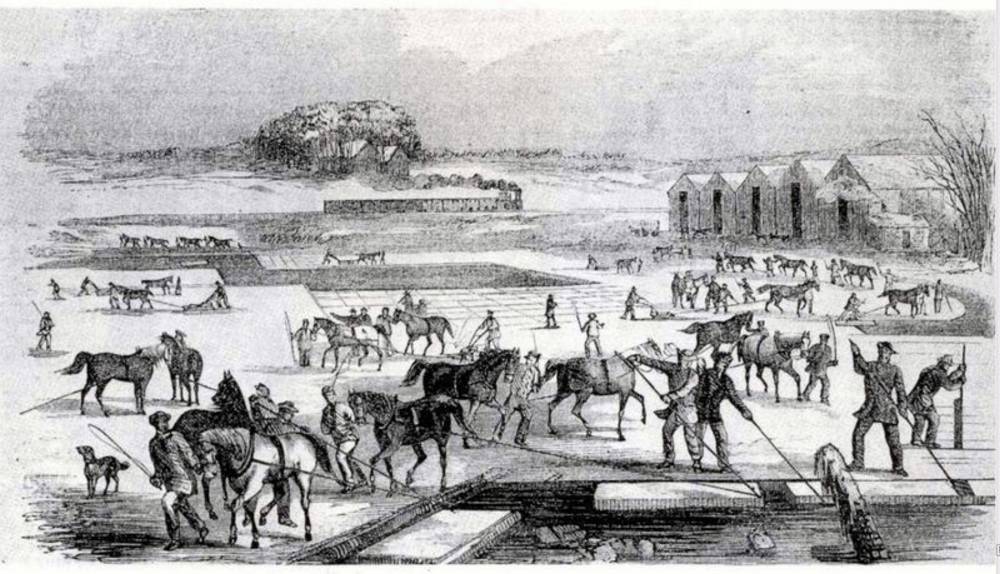
Ice Harvesting in Massachusetts, early 1850s

Eccentricity Looks Like Innovation Only in Hindsight

By 1833, Tudor had become the dominant figure in the global ice trade. That year, he sent the ship Tuscany from Boston to Calcutta carrying 180 tons of ice. The journey crossed the equator twice and covered 16,000 miles. When the Tuscany arrived in port after four months at sea, the cargo was still largely intact. The British in India—who had spent years enduring the subcontinent’s heat with no means of relief—celebrated the delivery. They immediately raised funds to build a permanent, palatial ice house.

The man Boston had laughed at for nearly three decades was celebrated in Calcutta.

Tudor died in 1864, at 80, wealthy and decorated with the title that had followed him since his triumph: the Ice King. A bachelor for most of his working life, he had married after fifty and fathered six children. He owned a country estate in Nahant. The industry he had conjured from a frozen Cambridge pond would continue to sustain cities across America and beyond until mechanical refrigeration finally made it obsolete in the early twentieth century.

He was described by those who knew him as defiant, reckless in spirit, imperious, and implacable to enemies. Not a comfortable man. Not a man who needed your approval or asked for it.

That last part mattered more than any of the rest.

The Boston merchants who laughed at Tudor in 1806 were not stupid. They were rational. They looked at the evidence available—ice melts, the tropics are hot, customers there have never asked for frozen goods—and reached a perfectly reasonable conclusion. What they lacked wasn’t intelligence. It was the willingness to hold a conviction before the evidence had caught up to it. Tudor held his for twenty-seven years.

The line between eccentricity and genius is drawn only after success. Before success, they are indistinguishable. The visionary and the fool stand in the same room, making the same arguments, to the same skeptical audience. The difference between them is not talent or connections or luck. It is the refusal to leave the room.

Ridicule is the tax levied on originality. Tudor paid it, in full, for decades.

And then he collected.

Wondering what to read next?

  1. FedEx’s ZapMail: A Bold Bet on the Future That Changed Too Fast
  2. The Tyranny of Previous Success: How John Donahoe’s Tech Playbook Made Nike Uncool
  3. Starbucks’ Oily Brew: Lessons on Innovation Missing the Mark
  4. How FedEx and Fred Smith Made Information the Package
  5. Elon Musk Insults, Michael O’Leary Sells: Ryanair Knows Cheap-Fare Psychology

Filed Under: Business Stories, Great Personalities, Leadership, Sharpening Your Skills Tagged With: Decision-Making, Entrepreneurs, Icons, Innovation, Leadership Lessons, Motivation, Persistence, Starbucks, Strategy, Success

The Longest Holdout: The Shoichi Yokoi Fallacy

May 22, 2023 By Nagesh Belludi Leave a Comment

In 1972, while hunting near the Talofofo River in Guam, two cousins from the village of Talofofo were startled by rustling sounds emanating from the tall reeds. Initially, they assumed it was an animal or a hidden child, but to their surprise, they came face to face with an elderly and disheveled man clutching a shrimp trap. This unexpected encounter took aback the hunters, and after some initial confusion, they captured the man and escorted him back to their makeshift jungle home, about an hour’s walk away. The old man pleaded with the cousins to end his life.

That fugitive turned out to be Shoichi Yokoi, a Japanese soldier. During the latter stages of World War II, Yokoi served in the supply corps of the Japanese army stationed on the island of Guam. In 1944, when General Douglas MacArthur’s troops invaded and reclaimed control of the island, Yokoi retreated into the dense jungle. There, he sought refuge in an underground cave and remained hidden for 28 years, living as a determined survivor under harsh conditions.

Yokoi sustained himself by inhabiting a tunnel-like cave he had carved amidst the thick foliage, relying on a diet of nuts, fruits, shrimp, frogs, and rats. He fashioned his clothing by skillfully weaving tree bark strips and using the moon’s phases to track time. In 1952, he chanced upon a leaflet announcing the war’s end, but he and his fellow soldiers dismissed it as enemy propaganda, choosing not to surrender. Over time, all of Yokoi’s comrades perished due to starvation or illness, or were captured.

Loyalty Without a Glance Can Shroud the Mind in Ignorance

Yokoi remained firmly convinced that his fellow soldiers would eventually come to rescue him, and he clung tenaciously to this belief. Surrender was out of the question, as he later explained, “We Japanese soldiers were taught to choose death over the shame of being taken alive.” (Additionally, stragglers like him believed that returning to Japan was impossible, fearing they would be branded as deserters and face the death penalty.)

In 1972, Yokoi finally returned to Japan, where he was hailed as a national hero. Upon his arrival in Tokyo, he famously declared, “It is with much embarrassment that I have returned alive,” echoing the indoctrination he had received before the war. For the older generation, he symbolized greatness, embodying the prewar values of diligence. However, for the younger generation, he represented an awkward reminder of outdated ideals. Being captured and surviving was deemed cowardly, as the ideal soldier made the ultimate sacrifice for the divine emperor, even at the cost of his own life.

Yokoi’s remarkable story of surviving in the jungle captured the imagination of the Japanese people. The country was undergoing an industrial boom, and many were fascinated by his ability to endure on a meager diet and his resourcefulness in creating clothing from tree bark. Yokoi even returned his army-issued rifle to “the honorable emperor,” expressing his embarrassment at having returned alive rather than dying in service to the emperor. He regretted not having served his majesty to the fullest.

However, Yokoi never quite felt at home in modern society. Before his conscription in 1941, he had been an apprentice tailor, and now, he found himself overwhelmed by the changes that had occurred during his absence. He subsequently led a quiet life as a hermit, becoming a popular television personality and advocating for a simple way of life. He traveled across the country, delivering public lectures criticizing Japan’s “wasteful modern lifestyle” and championing values of thrift and self-reliance. He was deeply admired for his unwavering determination, his spirit of ganbaru (“enduring adversity without giving in,”) and his unwavering commitment to traditional values.

Embrace the Gifts That Doubt Can Bring. Let Enlightenment Take Flight.

Overall, Yokoi spent 27 years in isolation in the jungles of Guam, stubbornly holding onto his identity as a Japanese soldier long after the war had ended. In doing so, he squandered his life by adhering to ideals that held no significance for anyone else, sacrificing his relationships, career, and personal happiness to pursue the Japanese principle of ganbaru, or unwavering perseverance.

There reaches a point where virtue, taken to the extreme, can transform into a vice. Shoichi Yokoi personified this fallacy. We often admire the act of unwavering commitment, but we tend to lose sight of the underlying reasons behind it due to the blinding effects of rigid adherence.

Beware of blind devotion to any ideology that promotes rigid and restrictive beliefs. Do not overestimate the value of your morals beyond their practical utility, and be receptive to changing your perspective when circumstances demand it. This requires reevaluating your priorities and recognizing that what you once cherished may no longer align with your desires or aspirations. When faced with new information or situations, consider the possibility of altering your stance. There is a difference between sticking to your principles and being imprudent.

Wondering what to read next?

  1. To Know Is to Contradict: The Power of Nuanced Thinking
  2. The Problem with People Who Don’t Think They Can Change
  3. Decoy Effect: The Sneaky Sales Trick That Turns Shoppers into Spenders
  4. The Mere Exposure Effect: Why We Fall for the Most Persistent
  5. Charlie Munger’s Iron Prescription

Filed Under: Mental Models, Sharpening Your Skills Tagged With: Attitudes, Biases, Mental Models, Persistence, Persuasion, Philosophy, Psychology, Thought Process, Wisdom

Lessons from Sam Walton: Learning from Failure

March 29, 2016 By Nagesh Belludi Leave a Comment

Sam Walton (1918–1992) experienced failures and setbacks. And, like all successful people, the iconic founder of Walmart and Sam’s Club prided himself on learning from those experiences.

Walton’s Initial Success … and Then, in a Heartbeat, Failure

By 1950, a 32-year-old Sam Walton had established himself as a successful retailer in Newport, Arkansas. In 1945, Walton had purchased a Ben Franklin variety store and set up a five-year personal goal to make it the most profitable variety store in the region. By 1950, Walton had a record $250,000 in sales and $30,000 to $40,000 in profit (some $2.5 million in sales and $300,000 to $400,000 in profits in today’s dollars.) His success had attracted a lot of attention.

Not only that, the young Walton family—Sam, his wife Helen, and four young children—had firmly established itself in Newport. Sam and Helen were very active in the community and had taken up prominent civic and church duties.

An innocuous legal oversight cost him this success. When he had signed the lease on the property rental for his Ben Franklin variety store in 1945, thanks to inexperience and excitement at becoming a merchant, Walton had agreed to give back the landlord 5% of sales. He later discovered this was the highest any retailer had paid for rental.

More significantly, Walton had also neglected to add a clause in his lease that would give him the option to renew the lease after five years. Therefore, in 1950, when the lease on Walton’s Ben Franklin store expired, his sneaky landlord knew there was nowhere else in town for Walton to relocate his store. The landlord refused to renew Walton’s lease at any price! The landlord bought Walton’s well-established store along with its fixtures and inventory and transferred the store to his son. Walton was devastated; he had no choice but to give up his successful store. In his best-selling autobiography Made in America, Walton recalled this as the lowest point of his business life:

I felt sick to my stomach. I couldn’t believe it was happening to me. It really was like a nightmare. I had built the best variety store in the whole region and worked hard in the community, done everything right, and now I was being kicked out of town. It didn’t seem fair. I blamed myself for ever getting suckered into such an awful lease, and I was furious at the landlord. Helen, just settling in with a brand-new family of four, was heartsick at the prospect of leaving Newport. But that’s what we were going to do.

Sam Walton Was Not One to Dwell on Disasters

All the hard work he had put in to build a successful store and the earning power he had established over five years had become worthless because of an innocuous mistake. Nevertheless, Walton didn’t let this disaster get him down.

I’ve never been one to dwell on reverses, and I didn’t do so then. It’s just a corny saying that you can make a positive out of most any negative if you work at it hard enough. I’ve always thought of problems as challenges, and this one wasn’t any different. I don’t know if that experience changed me or not. I know I read my leases a lot more carefully after that, and may be I because a little wary of just how tough the world can be. Also, it may have been about then that I began encouraging our eldest boy—six-year-old Bob—to become a lawyer. But I didn’t dwell on my disappointment. The challenge at hand was simple enough to figure out. I had to pick myself up and get on with it, do it all over again, only even better this time.

This Newport experience turned out to be a blessing in disguise for Walton. His family relocated to the relatively obscure Bentonville, Arkansas, for a brand-new start. Walton started over and established himself as a retailer again—only in even bigger and better ways. In 1962, Walton decided that the future of retailing lay in discounting. His strategy of buying low, selling at a discount, and making up for low margins by moving vast amounts of inventory, made Walmart the most successful retailer ever. From 1985 until his death in 1992, he was the richest man in the world.

Successful People Learn from Failure and Get On

'Sam Walton: Made In America' by Sam Walton (ISBN 0553562835) Walton’s was a typical entrepreneurial response to failure—successful people take risks, fail sometimes, but pick themselves up, ask what they can learn from the experience, and try again, even harder the next time.

On a related note, Bill Gates, the most successful entrepreneur of his generation, once said, “Success is a lousy teacher. It seduces smart people into thinking they can’t lose.”

Complement this lesson on failure with J.K. Rowling’s reflections on the benefits of failure in her famous 2008 commencement address at Harvard: “Failure meant a stripping away of the inessential. I stopped pretending to myself that I was anything other than what I was, and began to direct all my energy into finishing the only work that mattered to me…The knowledge that you have emerged wiser and stronger from setbacks means that you are, ever after, secure in your ability to survive.”

Wondering what to read next?

  1. How to Face Your Fear and Move Forward
  2. Fear of Failure is an Obstacle to Growth
  3. Success Conceals Wickedness
  4. Resilience Through Rejection
  5. Power Corrupts, and Power Attracts the Corruptible

Filed Under: Leadership Reading, Sharpening Your Skills Tagged With: Attitudes, Discipline, Entrepreneurs, Learning, Persistence, Personal Growth, Success

Primary Sidebar

Popular Now

Anxiety Assertiveness Attitudes Balance Biases Coaching Conflict Conversations Creativity Critical Thinking Decision-Making Discipline Emotions Entrepreneurs Etiquette Feedback Getting Along Getting Things Done Goals Great Manager Innovation Leadership Leadership Lessons Likeability Mental Models Mentoring Mindfulness Motivation Networking Parables Performance Management Persuasion Philosophy Problem Solving Procrastination Relationships Simple Living Social Skills Stress Suffering Thinking Tools Thought Process Time Management Winning on the Job Wisdom

About: Nagesh Belludi [hire] is a St. Petersburg, Florida-based freethinker, investor, and leadership coach. He specializes in helping executives and companies ensure that the overall quality of their decision-making benefits isn’t compromised by a lack of a big-picture understanding.

Get Updates

Signup for emails

Subscribe via RSS

Contact Nagesh Belludi

RECOMMENDED BOOK:
Meditations

Meditations: Marcus Aurelius

Roman Emperor Marcus Aurelius's diaries remain the sterling paradigm of the stoic mindset: civility, moderation in all things, and taking in triumph and tragedy with equanimity.

Explore

  • Announcements
  • Belief and Spirituality
  • Business Stories
  • Career Development
  • Effective Communication
  • Great Personalities
  • Health and Well-being
  • Ideas and Insights
  • Inspirational Quotations
  • Leadership
  • Leadership Reading
  • Leading Teams
  • Living the Good Life
  • Managing Business Functions
  • Managing People
  • MBA in a Nutshell
  • Mental Models
  • News Analysis
  • Personal Finance
  • Podcasts
  • Project Management
  • Proverbs & Maxims
  • Sharpening Your Skills
  • The Great Innovators

Recently,

  • You Don’t Know If a Good Day is a Good Day
  • Inspirational Quotations #1147
  • Life Isn’t Black and White
  • The Setting Shapes the Story
  • Ridicule Is Often the Tax Levied on Originality: The Case of Ice King Frederic Tudor
  • Inspirational Quotations #1146
  • Offering a Chipotle Burrito at a Dollar is Not a Bargain but a Betrayal of Dignity

Unless otherwise stated in the individual document, the works above are © Nagesh Belludi under a Creative Commons BY-NC-ND license. You may quote, copy and share them freely, as long as you link back to RightAttitudes.com, don't make money with them, and don't modify the content. Enjoy!