• Skip to content
  • Skip to primary sidebar

Right Attitudes

Ideas for Impact

Parables

The “Ashtray in the Sky” Mental Model: Idiot-Proofing by Design

November 10, 2025 By Nagesh Belludi Leave a Comment

Planes Still Have Ashtrays Even Though Smoking Is Banned: Idiot-Proofing by Design It’s a curious feature of our age that we still require, by law, ashtrays in the lavatories of commercial aircraft. Not because we’re nostalgic for the days when the skies were thick with the fug of unfiltered Marlboros, but because—despite decades of prohibition—someone, somewhere, will inevitably decide the rules don’t apply to them. The ashtray is not a relic. It’s a rebuke to the illusion that clear signage and the threat of punishment are enough to deter the determined cretin.

At first glance, an ashtray on a no-smoking flight may seem absurd. But anyone who has worked in safety design, risk engineering, security, or customer service knows the truth: whether out of ignorance, arrogance, or sheer defiance, some people will always push boundaries. And when they do, the consequences can be catastrophic unless the system is built to withstand them. On airplanes, the real danger isn’t the smoking, it’s what happens after. A smoldering cigarette flicked into a trash bin full of paper towels is no minor infraction; it’s a spark away from turning the plane into a firetrap.

Smart safety design doesn’t rely on perfect behavior. It plans for failure The ashtray in the airplane lavatory is a fireproof failsafe, a small admission that while we may outlaw idiocy, we can’t eliminate it. So we contain it. The ashtray doesn’t say, “Go ahead.” It says, “If you must, don’t kill us all.”

Redundancy isn’t wasteful—it’s wise. The same logic gives us fire exits, seatbelts, and those little hammers on buses meant only for when things go very wrong. These features reflect a mature understanding of risk. True safety doesn’t rely on perfect compliance, but on resilient design—built to anticipate that someone, somewhere, will act recklessly, and to shield the rest of us from the consequences.

Idea for Impact: The ashtray isn’t there for the smoker. It’s there for everyone else. A quiet reminder that rules will be broken, and survival depends on being ready.

Wondering what to read next?

  1. Be Smart by Not Being Stupid
  2. Accidents Can Happen When You Least Expect Them: The Overconfidence Effect
  3. Availability Heuristic: Our Preference for the Familiar
  4. How to Solve a Problem By Standing It on Its Head
  5. How Stress Impairs Your Problem-Solving Capabilities: Case Study of TransAsia Flight 235

Filed Under: Business Stories, MBA in a Nutshell, Mental Models, Sharpening Your Skills Tagged With: Assertiveness, Aviation, Biases, Critical Thinking, Decision-Making, Mental Models, Parables, Problem Solving, Risk, Thinking Tools, Thought Process, Wisdom

What Jeeves Teaches About Passive Voice as a Tool of Tact

October 24, 2025 By Nagesh Belludi Leave a Comment

What Jeeves Teaches About Passive Voice as a Tool of Tact

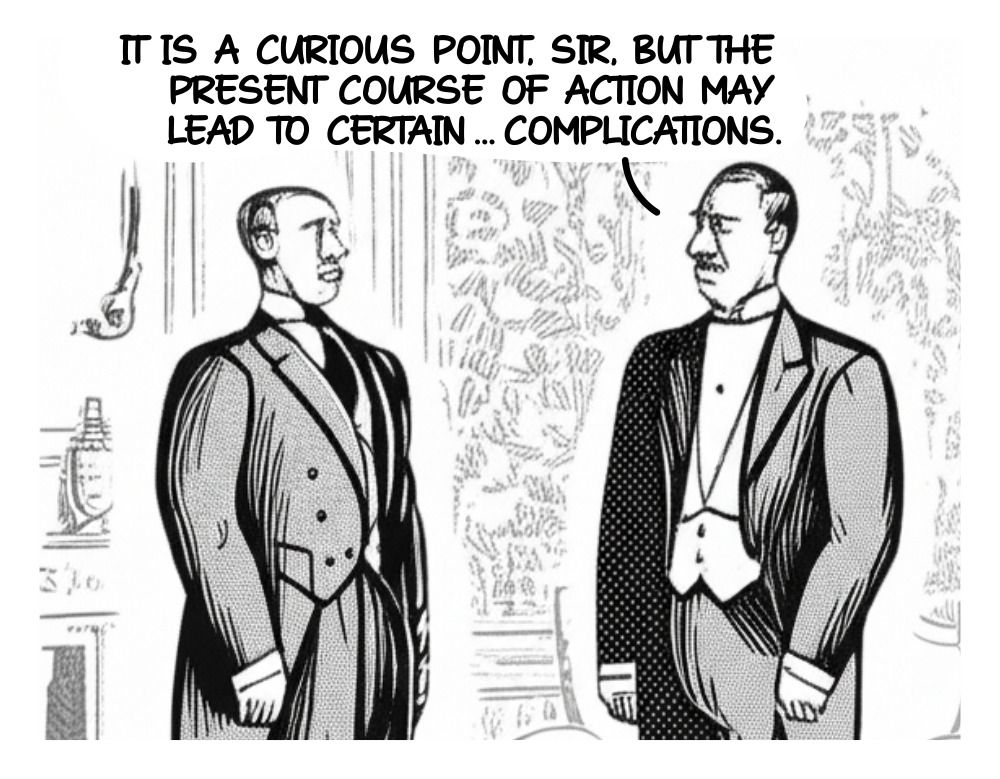
P. G. Wodehouse’s Jeeves and Wooster tales are more than delightful escapades. They offer masterclasses in elegant interaction and psychological finesse. One standout feature is Jeeves’s knack for steering Bertie Wooster away from disaster without resorting to blunt rebuke.

Jeeves never calls Bertie foolish. Instead, he refers to the latest tangle as a “rather complex imbroglio” or a “somewhat delicate situation.” These euphemisms allow Bertie to preserve his dignity while quietly grasping that he has stumbled again. Jeeves’s tact sustains trust, amplifies influence, and fosters a dynamic of gentle guidance over domination.

Central to this diplomacy is Jeeves’s expert use of passive voice. Rather than saying, “You’ve made a fool of yourself,” he offers, “There appears to have been a slight misunderstanding.” Shifting focus from the individual to the circumstance softens criticism. It diffuses blame, avoids defensiveness, and invites collaborative problem-solving—an ideal approach when harmony matters more than fault.

Passive voice offers distinct advantages in criticism. It cushions judgment, encourages reflection, and de-emphasizes the actor. By highlighting the event rather than the person, it makes feedback feel less accusatory and more constructive. This reduces tension and promotes respectful dialogue, especially in delicate or hierarchical relationships.

Yet diplomacy falters when passive voice is overused. “Mistakes were made” may sound politic, but it lacks clarity and direction. Vagueness erodes accountability.

Idea for Impact: Choosing between active and passive voice depends on intent. If tact is the aim, passive phrasing—handled as artfully as Jeeves handles a cravat—serves a distinct purpose. But when honesty and accountability take precedence, clarity matters more than softness. Language is not just what we say; it is how we say it. And in that, Jeeves stands as a model of refined expression.

Wondering what to read next?

  1. Avoid Control Talk
  2. The Sensitivity of Politics in Today’s Contentious Climate
  3. Witty Comebacks and Smart Responses for Nosy People
  4. Avoid Trigger Words: Own Your Words with Grace and Care
  5. Nice Ways to Say ‘No’

Filed Under: Effective Communication, Managing People, Sharpening Your Skills Tagged With: Assertiveness, Communication, Conflict, Conversations, Etiquette, Getting Along, Likeability, Parables, Persuasion, Social Skills

The Singapore Girl: Myth, Marketing, and Manufactured Grace

October 22, 2025 By Nagesh Belludi Leave a Comment

Grace in the Skies: The Icon of Singapore Airlines' Flight Attendants

Singapore Airlines (SIA) maintains a policy that forbids its flight attendants from using public transit while attired in the iconic sarong kebaya. The airline does not permit use of the MRT or buses while wearing this distinctive uniform—not due to fears of flash mobs or schedule disruptions, but because it understands a truth about prestige that many other institutions overlook: luxury, if it is to be believed, must never fraternize with the ordinary.

SIA reserves its cabin crew for premium environments only. Thoughtfully appointed airport settings, sleek aircraft, and exclusively chauffeured transport compose the backdrop against which these ambassadors operate. While competitors vie for attention with over-the-top safety videos and celebrity endorsements, Singapore Airlines recognizes that luxury lies as much in perception as it does in service.

For decades, the carrier has cultivated its reputation through a philosophy that transcends superficial marketing. The airline’s symbolic emissary, the Singapore Girl—part brand ambassador, part mythological figure—has become a timeless icon of grace and attentiveness. She represents the airline’s commitment to a cultivated ideal. She does more than serve; she embodies Singapore’s national pursuit of understated sophistication and Asian grace, an ethos perfectly captured by the hallmark tagline ‘A Great Way to Fly.’

Even the smallest service gestures reflect this ethos. Coffee cup handles are placed precisely at 3 o’clock for right-handed passengers. A simple glass of water in economy class is not merely handed over, but presented on a tray. Refinement is upheld even at 39,000 feet—a testament to the notion that elegance hinges as much on perception as on reality. And perception, when shaped with surgical precision, becomes power in marketing.

Idea for Impact: Success demands not only the delivery of excellence, but the relentless crafting of the narrative that defines it.

Wondering what to read next?

  1. Airline Safety Videos: From Dull Briefings to Dynamic Ad Platforms
  2. What Taco Bell Can Teach You About Staying Relevant
  3. Flying Cramped Coach: The Economics of Self-Inflicted Misery
  4. The Loss Aversion Mental Model: A Case Study on Why People Think Spirit is a Horrible Airline
  5. Make ‘Em Thirsty

Filed Under: Business Stories, MBA in a Nutshell, Mental Models, The Great Innovators Tagged With: Aviation, Creativity, Customer Service, Innovation, Marketing, Parables, Persuasion

What the Mahabharata Teaches About Seeing by Refusing to See

October 20, 2025 By Nagesh Belludi Leave a Comment

Arjuna's Lesson in Focus from the Mahabharata Teaches About Seeing by Refusing to See The Mahābhārata, one of India’s most revered epics, intertwines themes of honor, duty, and destiny. Among its luminous tales is a striking lesson in pruned focus: young Arjuna’s test. Droṇācārya—the guru of warfare to both the Pāṇḍava and Kaurava princes, cousin clans bound by fate—devised a challenge to assess their discipline. He placed a wooden bird atop a tree and summoned each prince to aim at its eye. Before allowing the shot, he asked, “What do you see?”

Yudhiṣṭhira, the eldest of the cousins, stepped forward. Thoughtful and observant, he listed everything—the tree, the sky, the bird, even Droṇācārya. Though sincere, his scattered focus did not please the master. One by one, the other princes followed with similarly diffuse answers and were quietly dismissed.

Then came Arjuna. Calm and composed, he raised his bow, gaze locked onto the mark.”I see only the bird’s eye,” he said. Droṇācārya pressed, “Not the tree or branch?” Arjuna held firm.”Nothing else, Guru.” With reverent approval, the master allowed him to shoot. The arrow flew straight and true, striking the eye. That was the hallmark of the legend in the making. Arjuna’s clarity and devotion would shine as a beacon of mastery.

But the tale transcends its setting. It is not merely about talent—it celebrates radical focus. Arjuna’s greatness arose not from divine gifts but from subtraction: pruning distraction, discarding context, meeting the moment with terrifying purpose. His power lay in what he refused to see.

What Arjuna models is not just athletic elegance but cognitive courage—the discipline to silence all competing signals. In today’s age of constant distraction, such mastery feels almost mythical.

Idea for Impact: The modern tragedy is our inability to be Arjuna—to filter out the noise of desire, worry, and superficial validation in pursuit of a single, well-defined aim. This, too, is the bedrock of a well-lived life. And yet, it is a practice too rarely embraced.

Wondering what to read next?

  1. How to … Overcome Impact Blindness and Make Decisions with Long-Term Clarity
  2. Addition Through Subtraction
  3. This Ancient Japanese Concept Can Help You Embrace Imperfection
  4. Everything in Life Has an Opportunity Cost
  5. Lilies and Leeches

Filed Under: Living the Good Life, Mental Models, Sharpening Your Skills Tagged With: Balance, Biases, Clutter, Discipline, Mindfulness, Parables, Simple Living, Targets

Sometimes, Wrong Wins Right

October 17, 2025 By Nagesh Belludi Leave a Comment

The 'Beanz Meanz Heinz' Campaign for Heinz (1967)

Baked beans are an indispensable part of the British culinary landscape, enjoyed at any meal—from a hearty breakfast on toast or as part of a “full English,” to a simple and satisfying dinner.

Their journey into British kitchens began with an American import. In 1886, H.J. Heinz introduced baked beans as a luxurious delicacy at London’s renowned Fortnum & Mason, and by 1901, distribution had expanded across the United Kingdom.

Their rising popularity was underscored during World War II when the Ministry of Food classified Heinz Baked Beans as an “essential food” amid rationing, paving the way for them to evolve into a convenient, budget-friendly meal option in the post-war era.

By the 1960s, Heinz’s early expansion and sustained quality had secured a dominant position in the UK market, even as competitors tried to claim a bite of the popularity pie.

To further cement its foothold, Heinz embraced an innovative marketing strategy that would soon become legendary. In an inspired moment reportedly sparked over two pints at The Victoria pub in Mornington Crescent, London, advertising executive Maurice Drake of Young & Rubicam coined the now-iconic slogan “Beanz Meanz Heinz.”

This playful twist on standard grammar—choosing memorable quirkiness over strict correctness—captured the public’s imagination and turned the phrase into one of the UK’s most enduring advertising slogans. Its lasting impact was such that in 2004, Heinz refreshed its packaging to sport a simplified “Heinz Beanz.”

Idea for Impact: Dare to deviate. Sometimes, wrong wins right.

Wondering what to read next?

  1. The Emotional Edge: Elevating Your Marketing Messaging
  2. We Trust What We Can See: James Dyson Builds for That Instinct
  3. Make ‘Em Thirsty
  4. Restless Dissatisfaction = Purposeful Innovation
  5. The Mere Exposure Effect: Why We Fall for the Most Persistent

Filed Under: Business Stories, MBA in a Nutshell, Sharpening Your Skills Tagged With: Creativity, Critical Thinking, Innovation, Marketing, Parables, Persuasion, Problem Solving

Chance and the Currency of Preparedness: A Case Study on an Indonesian Handbag Entrepreneur, Sunny Kamengmau

October 13, 2025 By Nagesh Belludi Leave a Comment

Luck Meets Readiness: Harnessing Chance with the Currency of Preparedness

Travelers are often captivated by the allure of handcrafted treasures they discover in remote corners of the world. This fascination frequently sparks a compelling entrepreneurial question: Could these artisanal goods be imported and sold abroad? That question—equal parts reverence and ambition—is often where vision begins. Yet the true challenge of bringing such ideas to life lies in finding the right local partner—someone deeply embedded in the artisan community and capable of navigating the complex processes of recruiting artisans, managing production, and ensuring quality control.

Prepared Minds and Fortunate Turns

This is the story of Sunny Kamengmau, an Indonesian entrepreneur whose boutique handbag brand, Robita, won the hearts of consumers in Japan. Originally from a small village on a far-flung island in the archipelago, Sunny moved to Bali in search of a livelihood. He worked various jobs—hotel gardener, security guard—and began learning English and Japanese to better connect with international visitors.

In 1995, serendipity arrived not as a revelation but as a conversation. A chance meeting with Japanese entrepreneur Nobuyuki Kakizaki at a hotel set the stage for an extraordinary journey. The two remained in contact, and three years later, they launched an initiative to create handmade leather bags for the Japanese market, where quiet beauty is deeply appreciated. That marked the birth of Robita.

Collaborating closely with local artisans, Sunny embraced traditional craftsmanship. Robita bags became known for their distinctive qualities: unstrained leather that preserved its natural character, rare embroidery and dyeing techniques, and hand-stitched textures that conveyed authenticity. These thoughtful details resonated with discerning Japanese consumers, who valued the brand’s understated elegance and rustic charm.

The Quiet Routes of Opportunity

The road to success was anything but smooth. Sunny faced financial hardships and endured the loss of his Japanese business partner. Still, his resilience bore fruit. Robita earned international acclaim and eventually opened a boutique in Bali. Despite its loyal following and notable achievements, the brand recently announced its closure—without a lengthy explanation. Just a quiet farewell.

Entrepreneurship is often associated with strategy and grit. But Robita’s story reveals a deeper truth: Success frequently depends as much on serendipity—timing, circumstances, and chance encounters—as it does on effort. Sunny didn’t manufacture his opportunity. He met it halfway, prepared to rise when it came. Preparedness doesn’t guarantee triumph, but it positions one to seize opportunity when it arrives.

Idea for Impact: Hard work doesn’t always pay off, but sometimes, it does—if luck chooses to lend a hand.

Wondering what to read next?

  1. Make ‘Em Thirsty
  2. Constraints Inspire Creativity: How IKEA Started the “Flatpack Revolution”
  3. Always Be Ready to Discover What You’re Not Looking For
  4. Elon Musk Insults, Michael O’Leary Sells: Ryanair Knows Cheap-Fare Psychology
  5. We Trust What We Can See: James Dyson Builds for That Instinct

Filed Under: Business Stories, Mental Models, Sharpening Your Skills Tagged With: Creativity, Entrepreneurs, Humility, Innovation, Luck, Marketing, Parables, Problem Solving, Skills for Success

A Taxonomy of Troubles: Summary of Tiffany Watt Smith’s ‘The Book of Human Emotions’

October 1, 2025 By Nagesh Belludi Leave a Comment

'The Book of Human Emotions' by Tiffany Watt Smith (ISBN 0316265403) Some books aren’t designed to be read front to back. Tiffany Watt Smith’s The Book of Human Emotions (2016) is a perfect example. It’s a compendium, a literary grab bag where readers can open to any page and uncover a curious nugget about the strange terrain of human feeling. Whether it launches a dinner-table debate or sends you into a cultural rabbit hole, its charm lies in its delightfully unsystematic approach.

Smith, a cultural historian focusing on the history of emotion, offers a colorful tour of the emotional spectrum. Some entries are instantly relatable; others are wonderfully obscure. The format is encyclopedic, ranging from single-sentence definitions to multi-page explorations. There’s basorexia, the sudden urge to kiss, and iktsuarpok, the anxious anticipation of someone’s arrival. Smith notes in the introduction that the modern idea of “emotions” didn’t appear until the 1830s. Before then, feelings were blamed on faulty souls or imbalanced bodily fluids like bile or phlegm.

The book is more than just a glossary; it’s threaded with sharp cultural insights—when a language has a specific word for a concept, it often indicates that this concept is culturally important, frequently discussed, or central to how people interact and understand their world. Smith touches on the aggressively enforced cheeriness of American customer service, a strange mandate for mandatory happiness that somehow leaves everyone slightly gloomier. She also highlights curiosities like awumbuk (from Papua New Guinea,) the oddly specific feeling of emptiness after guests leave, and the Dutch concept of gezelligheid, capturing the warmth of shared companionship.

Recommendation: Leaf through The Book of Human Emotions. Though the concept occasionally feels stretched, perhaps suggesting the author discovered that emotions alone might not justify an entire book, it remains engaging throughout. Smith writes with clarity and wit, avoiding the heaviness of academic prose. This is the kind of book that earns its place on the coffee table. It’s best enjoyed in fragments, one curious entry at a time, gently reminding us how language and culture shape what we feel and how we understand each other.

Wondering what to read next?

  1. What Jeeves Teaches About Passive Voice as a Tool of Tact
  2. Each Temperament Has Its Own Language
  3. The Mere Exposure Effect: Why We Fall for the Most Persistent
  4. Honest Commitments: Saying ‘No’ is Kindness
  5. Nice Ways to Say ‘No’

Filed Under: Effective Communication, Ideas and Insights, Sharpening Your Skills Tagged With: Assertiveness, Attitudes, Communication, Conversations, Meaning, Parables, Persuasion, Psychology

Japan’s MUJI Became an Iconic Brand by Refusing to Be One

September 26, 2025 By Nagesh Belludi Leave a Comment

Minimalism as Rebellion: MUJI's Counterstrike Against Consumer Excess

In the heyday of Japan’s consumer electronics boom, MUJI—short for Mujirushi Ryohin, or “no-brand quality goods”—stepped onto the scene as a quiet revolution. Launched in 1980, it offered a counterstrike against a market bloated with luxury logos and feature-packed excess. Consumers were drowning in labels and needless complexity. MUJI tossed them a lifeline.

Its genius wasn’t invention; it was restraint. MUJI’s philosophy ran on three simple principles: repurpose what others waste, strip out the ornamental, and reject the superfluous. This wasn’t minimalism for aesthetic purity. It was minimalism in service of reason—clarity with purpose, bordering on rebellion.

Take ochiwata, the cotton lint most manufacturers discard during combing. MUJI turns it into dishcloths, a subtle jab at industries obsessed with perfect materials. Or consider “Imperfect Dried Shiitake,” a bold rejection of beauty standards in the produce aisle. These items don’t hide their flaws; they wear them honestly. Even the packaging puts the product before the brand. MUJI doesn’t shout. It invites.

In a market starving for identity, MUJI chose integrity over polish. It slashed costs not to be cheap, but to be real. It isn’t anti-luxury; it’s anti-nonsense.

Idea for Impact: People don’t buy what you make—they buy what it means. MUJI nailed the message: by refusing to be a brand, it became one. A whisper that silenced the noise.

Wondering what to read next?

  1. The Rebellion of Restraint: Dogma 25 and the Call to Reinvent Cinema with Less
  2. Airline Safety Videos: From Dull Briefings to Dynamic Ad Platforms
  3. Elon Musk Insults, Michael O’Leary Sells: Ryanair Knows Cheap-Fare Psychology
  4. We Trust What We Can See: James Dyson Builds for That Instinct
  5. Labubu Proves That Modern Luxury Is No Longer an Object, It’s a Story

Filed Under: Business Stories, MBA in a Nutshell, Mental Models, The Great Innovators Tagged With: Creativity, Innovation, Japan, Marketing, Materialism, Parables, Simple Living

Let a Dice Decide: Random Choices Might Be Smarter Than You Think

September 10, 2025 By Nagesh Belludi Leave a Comment

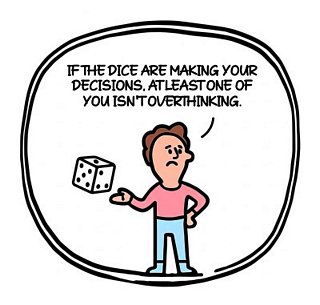
Let a Dice Decide: Random Choices Might Be Smarter Than You Think We make thousands of decisions daily—what to wear, which email to answer first, whether to take the scenic route or stick to the main road. Most are low-stakes, but the act of choosing can sap mental energy. That’s decision fatigue: as options pile up, clarity frays, and even the inconsequential starts to feel weighty. The mind treats small choices like they’ve got far more significance than they deserve.

There’s a surprisingly elegant way out: hand off minor decisions to chance. Roll a die. Flip a coin. Outsource the trivial. Randomization cuts through indecision and delivers instant clarity. Ironically, when the coin’s in mid-air, we often discover what we truly want—hoping silently for a particular side to land face-up. That fleeting instinct speaks louder than hours of deliberation.

We already allow randomness to shape more of our lives than we realize. We hit shuffle and trust an algorithm to pick our next song. We choose checkout lines blindly, hoping they’re fastest. Our social feeds present content in curated chaos. Even picking a restaurant often comes down to whatever looks inviting in the moment. Randomness isn’t an interruption—it’s ambient, constant, and influential.

Using chance deliberately brings relief. Faced with mundane, energy-draining decisions, inviting a bit of randomness can be playful and effective. It breaks the loop of paralysis-by-analysis and forces commitment. It frees up brainpower for choices that actually require reflection. Not everything deserves a full internal debate.

Of course, not every decision fits this mold—career shifts, relationships, financial moves need real thought. But for the daily swarm of indecision, randomness offers clarity and release.

That’s freedom from the unimportant.

Wondering what to read next?

  1. Everything in Life Has an Opportunity Cost
  2. Don’t Ruminate Endlessly
  3. In Imperfection, the True Magic of the Holidays Shines
  4. To-Do or Not To-Do?
  5. Decisions, Decisions: Are You a Maximizing Maniac or a Satisficing Superstar?

Filed Under: Mental Models, Sharpening Your Skills Tagged With: Anxiety, Assertiveness, Clutter, Decision-Making, Discipline, Efficiency, Parables, Procrastination, Simple Living, Thought Process

When Global Ideas Hit a Wall: BlaBlaCar in America

September 5, 2025 By Nagesh Belludi Leave a Comment

When Global Ideas Hit a Wall: BlaBlaCar in America BlaBlaCar’s deliberate decision not to expand into the United States underscores how cultural fault lines can impede the global flow of innovation. The French platform has flourished in Europe by turning empty car seats into affordable intercity transport. Its success was driven by thrift, compact geography, and a communal ethos—ideal conditions for ridesharing.

The American market, however, presented a less hospitable landscape. Low fuel prices weakened cost-based incentives. Widespread car ownership reduced demand, and vast distances with sparse populations made rider-driver matching difficult. Without established transit hubs, the logistics became cumbersome.

A deeper challenge lay in cultural norms. American car culture prizes autonomy, spontaneity, and personal space—values that conflict with BlaBlaCar’s fixed routes and shared rides. Legal complexities and strong competition from entrenched local-ride players like Uber and Lyft made the prospect of entry unappealing.

Rather than launching and failing, BlaBlaCar opted out—recognizing that the U.S. market lacked the structural and cultural conditions essential to its model’s success.

Idea for Impact: Success hinges on cultural fit. Some ideas do not translate well across borders. Cultures are intricate systems of values and habits that can pose structural barriers to foreign solutions.

Wondering what to read next?

  1. How FedEx and Fred Smith Made Information the Package
  2. Consumer Power Is Shifting and Consumer Packaged Goods Companies Are Struggling
  3. Chance and the Currency of Preparedness: A Case Study on an Indonesian Handbag Entrepreneur, Sunny Kamengmau
  4. Your Product May Be Excellent, But Is There A Market For It?
  5. What Virgin’s Richard Branson Teaches: The Entrepreneur as Savior, Stuntman, Spectacle

Filed Under: Business Stories, Leadership, MBA in a Nutshell, The Great Innovators Tagged With: Diversity, Entrepreneurs, Innovation, Leadership Lessons, Marketing, Parables, Problem Solving, Social Dynamics

« Previous Page
Next Page »

Primary Sidebar

Popular Now

Anxiety Assertiveness Attitudes Balance Biases Coaching Conflict Conversations Creativity Critical Thinking Decision-Making Discipline Emotions Entrepreneurs Etiquette Feedback Getting Along Getting Things Done Goals Great Manager Innovation Leadership Leadership Lessons Likeability Mental Models Mentoring Mindfulness Motivation Networking Parables Performance Management Persuasion Philosophy Problem Solving Procrastination Relationships Simple Living Social Skills Stress Suffering Thinking Tools Thought Process Time Management Winning on the Job Wisdom

About: Nagesh Belludi [hire] is a St. Petersburg, Florida-based freethinker, investor, and leadership coach. He specializes in helping executives and companies ensure that the overall quality of their decision-making benefits isn’t compromised by a lack of a big-picture understanding.

Get Updates

Signup for emails

Subscribe via RSS

Contact Nagesh Belludi

RECOMMENDED BOOK:
The Art of War

The Art of War: Sun Tzu

The ancient Chinese master Sun Tzu reveals the essence of conflict and how to win by knowing yourself, knowing your enemy, and fighting only when you can win.

Explore

  • Announcements
  • Belief and Spirituality
  • Business Stories
  • Career Development
  • Effective Communication
  • Great Personalities
  • Health and Well-being
  • Ideas and Insights
  • Inspirational Quotations
  • Leadership
  • Leadership Reading
  • Leading Teams
  • Living the Good Life
  • Managing Business Functions
  • Managing People
  • MBA in a Nutshell
  • Mental Models
  • News Analysis
  • Personal Finance
  • Podcasts
  • Project Management
  • Proverbs & Maxims
  • Sharpening Your Skills
  • The Great Innovators

Recently,

  • The Small Detail That Keeps a Conversation From Running Dry
  • Design for the 80% Experience
  • Inspirational Quotations #1143
  • The Hot-Desking Lie: How It Killed Focus and Gutted Collaboration
  • Unreliable Narrators Make a Story Sounds Too Neat
  • Bertrand Russell on The Value of Philosophy: Doubt in an Age of Dogma
  • Inspirational Quotations #1142

Unless otherwise stated in the individual document, the works above are © Nagesh Belludi under a Creative Commons BY-NC-ND license. You may quote, copy and share them freely, as long as you link back to RightAttitudes.com, don't make money with them, and don't modify the content. Enjoy!