.jpg "'Bad Therapy' by Abigail Shrier (ISBN 0593542924)") Bad Therapy: Why the Kids Aren’t Growing Up (2024), Abigail Shrier argues that the pendulum of psychological intervention has swung far past its intended arc. What began as a tool for healing has become a cultural reflex—where discomfort is mistaken for disorder, and ordinary childhood struggles are pathologized into syndromes.
Bad Therapy: Why the Kids Aren’t Growing Up (2024), Abigail Shrier argues that the pendulum of psychological intervention has swung far past its intended arc. What began as a tool for healing has become a cultural reflex—where discomfort is mistaken for disorder, and ordinary childhood struggles are pathologized into syndromes.
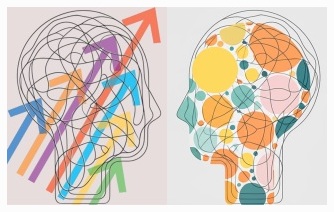
Shrier contends that modern psychology, once grounded in clinical rigor, now saturates everyday life. Emotional excavation—driven by talk therapy and social-emotional curricula—has become compulsive. Children are taught to monitor their moods like vital signs, retreating from friction rather than developing resilience. The result: a generation conditioned to flinch at adversity, dependent on emotional scaffolding, and primed to interpret setbacks as trauma.
Her prescription is a corrective swing back toward equilibrium. Therapy, she argues, should be reserved for genuine psychological disorders—not deployed as a universal rite of passage. Children must be allowed to stumble, struggle, and recover without constant intervention. Problem-solving, not introspection, should be the default. Critics rightly note that therapy has its place—especially for depression, anxiety, and ADHD—but its overuse risks diluting its power and purpose.
The call is not to abandon care, but to recalibrate it. Emotional literacy, taught judiciously, can complement experience—but it cannot substitute for it. Families and schools must resist the urge to diagnose every dip in mood or moment of distress. Instead, they should model steadiness, grit, and the understanding that discomfort is not pathology.
Balance, not backlash, is the goal. The pendulum must return to center—where therapy is a tool, not a crutch; where emotion is acknowledged, not medicalized; and where children grow not by avoiding pain, but by learning to endure it.
 A thing can feel bad and be right.
 There’s a peculiar cruelty in the well-meant, the kind that cloaks harm in sentiment and justifies injury with declarations of virtue.
.jpg "'The As If Principle' by Richard Wiseman (ISBN 1451675062)")
 At its core, the book pushes a blunt idea:
  “Don’t fight the wave,” they say, is the surfer’s first lesson.
 Regret is a backward-looking emotion. It’s an evaluation of past choices—regret arises from the discrepancy between what was and what could have been. Letting go of it is tough because it’s tangled with
  Ever feel lonely even when you’re around others? Loneliness isn’t about being alone; it’s about disconnection. It’s the lack of someone who
  Gratitude
  Encouraging someone to “just be positive” during tough times can inadvertently overlook the complexity of their situation and the depth of their emotions.
 The No-Complaint Challenge is more than simply holding back complaints. It’s about shifting your mindset. Start small—one day or a week. Replace negativity with gratitude or proactive problem-solving. Ask yourself, “What’s my next baby step forward?” Tiny steps