Advice about decision fatigue tends to lean on the same few examples.

Einstein reportedly owned several identical gray suits. Steve Jobs wore a black turtleneck, jeans, and New Balance sneakers, and Barack Obama has said he wears only gray or blue suits so he has fewer decisions to make.
The usual conclusion is that skipping small choices saves energy for large ones.
The research behind the term has since struggled to replicate, but the habit it describes still holds.
That conclusion is accurate, but it leaves out what the three men actually did. Each settled a question once and then stopped reconsidering it. Clothing was simply the area where they did it. The same approach applies to a much larger question: who you are and what you stand for.
Answering it takes deliberation, and the answer is worth having only if it’s yours. Values borrowed from a book or a colleague, or settled in ten minutes, produce a list that sounds reasonable and resolves nothing. The result of doing it properly is a personal constitution, a short set of statements about how you intend to live.
“Who am I” is too broad to answer in one sitting, so it helps to divide it by area of life. On work, you might write, “I take on projects I can finish well and decline the rest.” On time, “I protect my mornings.” On money, “I spend on experiences and skip upgrades I won’t notice.” On relationships, “I give a few people my full attention instead of many people part of it.” On travel, “I stay longer in fewer places.” Each line is specific enough to check a decision against, which a general statement like “I value excellence” isn’t.
Once you’ve worked the statements out, write them down. Thoughts kept in your head tend to adjust themselves to whatever you’re tempted to do, while a written line has fixed wording. You can’t revise it quietly at the moment you’d like it to say something else.
With the list in hand, you can test anything against it. Compare each commitment on your calendar to the statements, and anything you can’t connect to a line should be dropped or handed to someone else. Most people never run this comparison. They add commitments one at a time, each reasonable alone, and never measure the total against what they care about. Without a definition of your own, other people’s requests and priorities fill the space by default.
A list like this needs room for exceptions. Sometimes you’ll want a treat, and sometimes an opportunity will arrive that your list never anticipated. A rule that allows for neither tends to get abandoned. The better approach is to make exceptions deliberately: when you break a line, name the line and the reason. A named exception is part of the system, while an unnoticed one, repeated often enough, becomes the new rule.
Because you’ll change, the list should too. Reread it once a year and rewrite any line you can no longer defend. A list that’s been tested and revised this way leaves fewer decisions open, and life feels authored, not argued.
Idea for Impact: Fewer options, more freedom. Figure out who you are, write it down, and remove whatever doesn’t fit.
 Angela Duckworth’s
  Positive thinking has
 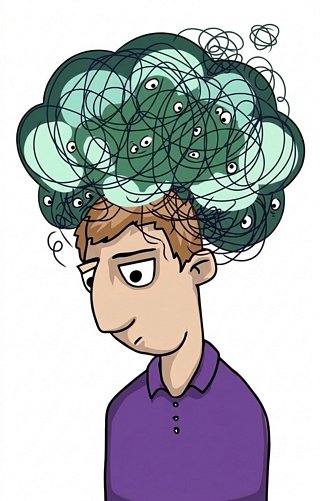 You’re lying awake at 3am replaying an argument. You tell yourself to stop. The thought gets louder. You try harder. Louder still. At some point it feels less like a thought and
  Outside
 One of the most liberating choices you can make is to stop chasing applause disguised as approval—whether it comes as
  When American playwright and diplomat
 .jpg "'Reboot' by Jerry Colonna (ISBN 0062749536)")
 Your to-do list isn’t a productivity tool. It’s