• Skip to content
  • Skip to primary sidebar

Right Attitudes

Ideas for Impact

Search Results for: personal finance

Book Summary of John Bogle’s ‘Little Book of Common Sense Investing’

January 25, 2011 By Nagesh Belludi Leave a Comment

The Little Book of Common Sense Investing, John Bogle “In investing, the winning strategy for reaping the rewards of capitalism depends on owning businesses, not trading stocks,” argues John Bogle in making a strong case for low-cost index funds in his text, “The Little Book of Common Sense Investing.” With statistics and graphs, Bogle rationalizes that low-cost index funds outperform most investment professionals and offer better-than-average returns for investors over the long term.

John Bogle is the legendary founder of the investor-owned Vanguard Group, currently the world’s largest mutual fund company by total assets under management. Over the course of 25 years at the helm of Vanguard, until his retirement in 1999, he focused the efforts of Vanguard on offering cost-conscious investment choices to the masses. John Bogle is the bestselling author of many other books on investment advice.

Superiority of Low-Cost Index Funds

John Bogle founded the world’s first index mutual fund, the Vanguard 500 Index Fund in 1975. Since then, “Saint Jack” (as critics labeled Bogle mockingly) has untiringly promoted the virtues of low-fee, no-load, low-turnover, passively-managed index (or more precisely, index-tracking) mutual funds. Investing in such funds, he contends in “The Little Book,” is the simplest and most effective way to invest in a diversified portfolio of stocks and bonds, and profit from earnings growth of businesses and the dividends they yield.

John Bogle methodically discusses every theme relevant to successful investing: the myths of speculation and market timing, inflation, frictional costs (fees charged by brokers and investment advisors, costs of transactions, front-end and back-end loads,) and the effects of compounding and taxes. He then convincingly counters arguments against investing in total market index funds through easy-to-follow quantitative appraisals of investing in individual stocks and bonds, actively managed funds, hedge funds, and sector-specific funds. At the end of each chapter, Bogle reinforces his position with words of wisdom from some of the greatest minds in economics and investing: Ben Graham, Warren Buffet, John Maynard Keynes, Peter Lynch, and the like.

Invaluable Insights for Investors

The majority of people do not have the time, energy, determination, or aptitude for understanding economics, examining investments, managing risk, and building wealth for themselves. They are either overly cautious, or they invest heedlessly, submit to market trends, or engage in speculation. In reading John Bogle’s authoritative book, modest investors will recognize that low-cost index funds offer them broad diversification, reasonably good returns over the long-term, and the ability to outperform a majority of investment professionals.

Informed investors will find, notwithstanding many drawn-out discussions, a great reiteration of John Bogle’s now-familiar, commonsensical ideas on the merits of index investing.

Leadership Reader’s Bottom-line

  • “The Little Book of Common Sense Investing: The Only Way to Guarantee Your Fair Share of Stock Market Returns,” by John C Bogle
  • Subject: Personal finance, investment advice
  • Required reading for building wealth prudently through investments. The excellent insights in “The Little Book” deserve every investor’s considerations.
  • Recommended topics for further reading: asset allocation, financial planning, and retirement planning.
  • 4 out of 5 Stars

Filed Under: Leadership Reading, Personal Finance Tagged With: Books for Impact, Getting Rich, Personal Finance, Simple Living

The Easier Way to Build Wealth

April 6, 2010 By Nagesh Belludi Leave a Comment

“Work a lot, spend a little, save the difference, invest it wisely, leave it alone. It’s not that hard. We just make it harder than it needs to be. Paying too much attention to the details of markets is a chief culprit.”
— Morgan Housel in Motley Fool

It is amazing that most people just do not seem to accumulate enough wealth despite making a comfortable living. Many live from paycheck to paycheck, even with steadily rising incomes. Borrowers often fall behind on their mortgage payments. Credit card and consumer debt is growing at an alarming pace. Employees in the prime of their lives are not setting aside anything significant for retirement. As a result, many baby boomers cannot stop working at the usual retirement age because they are not ready to fund the rest of their lives.

Every Dollar You Make Equals LESS than a Dollar for You to Spend

Are you sometimes disappointed at not realizing your dreams of building wealth or becoming financially secure? The overwhelming odds are that at the root of your feeling of financial insufficiency is how you tend to spend.

A common folly is to assume that every dollar you make equates to a dollar you can spend. In reality, you need to make much more than a dollar to spend each dollar. Apply the following some simple arithmetic to calculate the true purchasing power of your income.

  • Suppose that you are employed in the United States and you are in the 28% tax bracket. If you pay 6.2% in Social Security deductions, 1.45% in Medicare deductions, and your state income tax rate is 4%, then your total deductions are 39.65% of your income. On every $1 you earn, you pay $0.3965 in deductions. Therefore, for every $1 you make, your purchasing power is just $0.6035. In other words, you have to earn $1.65 (1.65 = 1/0.6035) to spend every $1. For instance, you would have to earn $3,811 to buy a 47″ flat screen TV that costs $2,300.
  • When you invest your money, you do not pay Social Security or Medicare deductions on dividends and capital gains. If the tax rate on long-term gains and dividends is 15% and your state income tax rate is 4%, you will retain $0.81 of every $1 you make in long-term gains and dividends. Even then, you have to earn $1.23 in dividends and capital gains to spend $1.

Harness Your Purchasing Power

“Anything you do to make yourself more valuable will pay off in real purchasing power.”
—Warren Buffet

There are only two ways to get rich: make more money and spend less. The first method is relatively difficult: it is never easy to get a significant raise or a better job at a better place, win the lottery, take a second job, sustain a secondary source of income, or consistently make sizeable gains in the capital markets. It is easier to build some discipline in your spending habits.

  • Track all your expenses for a month. At the end of the month, analyze your cash flow. Scrutinize your expenses in terms of ‘wants’ and ‘needs.’ Happiness comes from matching your wants to your needs. Consider ideas for cutting costs and their consequences. Examine your discretionary spending. Scale down or dispose of unnecessary services or subscriptions, irrelevant utilities and features. Consider reprioritizing your expenditures with a medium- and long-term perspective.
  • Examine your spending instincts. Be mindful of the perils of consumerism and materialism. Do not let your rising income fuel increased spending. Simplify your life.
  • A one-time windfall, bonus, or tax refund is no excuse for indulgent spending. Be selective in your purchases without abandoning your plans for paying off debt, saving money or funding your retirement account.
  • Seek to be disciplined and prudent, not necessarily thrifty or frugal. Cultivate an appropriate financial discipline without hurting the quality of your life. Reward and treat yourself for your achievements. Invest in anything that makes you feel good, happy, or helps you realize your goals.

Filed Under: Personal Finance Tagged With: Balance, Getting Rich, Materialism, Personal Finance, Simple Living

The Eight Guiding Principles of Successful Investors

March 7, 2009 By Nagesh Belludi Leave a Comment

Eight guiding principles for successful investing in personal finance

“Success in investing doesn’t correlate with I.Q. once you’re above the level of 25. Once you have ordinary intelligence, what you need is the temperament to control the urges that get other people into trouble in investing.”
* Warren Buffett

I have invested in stock markets since I was sixteen. Largely, I have been quite a successful investor, if you disregard the current slump in the financial markets. Over the years, primarily though my mistakes, I have learnt several invaluable lessons that have shaped my personal investing philosophy. Here is a summary.

  1. Do not invest money you cannot afford to lose. Know your limitations and own a mix of asset classes that are just right for you. Understand your ability to tolerate the hurts of losing money.
  2. Personal finance » Buying a stock is the easy part. Knowing when to sell is difficult. Buying a stock is the easy part. Knowing when to sell, especially in the case of hot stocks, is challenging. Do ample research before buying stocks or mutual funds. Establish a few criteria for selling and have the discipline to sell when a stock meets your criteria.
  3. Invest; do not speculate. You cannot try to outsmart the market by trying to time the market or day trade. You cannot be right on every trade and every stock that you lay hands on—research has shown that even the best investors are right in about five of every eight stock purchases.
  4. Do not fret about missing an opportunity. Opportunities abound in every market—bull or bear, short-term or long-term.
  5. Do your own research. Stock research is indeed hard work, yet indispensable. Monitor stocks frequently. Pay attention to price-to-earning ratio (PE,) price-to-earning-to-growth ratio (PEG,) revenues and cash flow. Learn how to read company balance sheets and other financial statements.
  6. Follow each company’s fundamentals carefully. Consider vital changes to the company’s operations, competitive landscapes, and industry prospects. Pay attention to macro-economic factors that may influence the industry.
  7. Financial markets » Be skeptical of too much optimism and hype. Be skeptical of too much optimism and hype. Do not pursue past performance and buy a stock or mutual fund, possibly after a period of high returns. Watch out for stock analysts and investment advisors touting stocks after good news and playing down stocks that have already fallen. Understand that financial advisors may promote mutual funds that pay them high commissions and not necessarily get better returns for you.

  8. Never lose sleep over your investments. Never let your emotions guide your investments transactions. Money is, after all, not the most important thing in your life.

Filed Under: Personal Finance Tagged With: Getting Rich, Personal Finance

How to Best Prepare Yourself For an Online Master of Science in Speech-Language Pathology

January 9, 2026 By Nagesh Belludi Leave a Comment

How to Best Prepare Yourself For an Online Master of Science in Speech-Language Pathology

So, you’ve earned your undergraduate degree and you’re looking to step into the next phase of your education. That’s excellent news and something that you’re probably equal parts excited for and equal parts nervous for. That’s completely normal. It would be strange if you weren’t a little nervous. That’s probably why you’ve come here, isn’t that right? To get a better grip on how to approach doing your master’s in speech-language pathology. It’s a rigorous degree and if you sort of know what to expect but you’re not fully aware of how to best prepare for this study, then you’ve come to the right place.

Below, you will learn about what speech-language pathology is, how you can best prepare to study for this in terms of academics, how to create a study system that works for you, the importance of understanding the technical side of things, given this is an online course and how to prepare for the reality of clinical hours. Starting to sound fascinating or daunting? A bit of both? Alright, well, hopefully by the end of this, it will feel more fascinating than daunting.

What Exactly is Speed-Language Pathology?

Alright, well, first things first, what exactly is speech-language pathology? It’s essentially a healthcare and educational field focused on the assessment, diagnosis and treatment of communication and swallowing disorders. The field is very varied because it mixes things from the science field with human connection, drawing on linguistics, neuroscience, psychology and anatomy.

Speech pathology isn’t just about correcting speech errors; it supports people in expressing thoughts, understanding others, participating socially and maintaining quality of life. At its core, speech-language pathology is about empowering individuals to communicate effectively and safely. After all, communication is what builds relationships and so working in this field is truly something that will change people’s lives. If you are thinking of doing this but you perhaps have an undergraduate degree in something completely different, don’t worry, you can do leveling degree courses for speech language pathology , which give you the tools you’ll need to start properly studying and eventually working in this field.

Create a Study System That Actually Works

Online learning offers flexibility but it also demands discipline. Success depends less on motivation and more on systems. Design a weekly routine that fits naturally into daily life. Dedicated study blocks, consistent wake times and planned breaks prevent burnout. A quiet and organized workspace helps signal focus mode even when studying at home.

Try to create some digital calendars with color-coded classes and deadlines, task managers for breaking large assignments into steps and note-taking apps or handwritten notebooks based on learning style. Try not to do too much in a day or in a week, though. Work hard but also be realistic about what you’re able to do. It doesn’t make sense for you to fill your time up with a whole bunch of study sessions if you’re just exhausted going into each of them. You have to maintain balance.

Get Comfortable With the Tech Side of Learning

Technology is the classroom in an online SLP program. Learning platforms, video conferencing tools and digital assessment systems become something that you’re confronted with every day. Before classes start, test everything. Ensure you have reliable internet, a functional webcam, quality headphones and updated software so that you’re never caught off guard.

Equally important is digital communication etiquette. Discussion boards and group projects require clear writing, professionalism and timely responses. Practicing concise but thoughtful online communication sets a strong impression with peers and faculty, which is something you may want to keep in mind.

Prepare for the Clinical Reality Early

Speech-language pathology is a clinical profession at heart. Even in an online format, programs include hands-on practicum experiences in real settings. Preparation involves more than paperwork. Start thinking about populations of interest, such as pediatrics, medical SLP or schools. This clarity helps when selecting or being assigned clinical placements.

Other smart steps include:

  • Researching local clinics, schools and hospitals

  • Understanding supervision requirements and state licensure basics

  • Practicing professional communication and self-reflection

Clinical work can be emotionally demanding. Developing resilience, openness to feedback and ethical awareness early supports long-term growth.

Strengthen Time Management and Self-Care Skills

Graduate school challenges both intellect and stamina. Time management skills should go hand in hand with self-care habits. Regular sleep, movement and balanced meals directly affect concentration and learning. Scheduling downtime is not indulgent; it is strategic and it is a strategy that you can’t afford to miss out on.

Mindset matters too. Perfectionism often backfires in graduate school. Progress, curiosity and adaptability matter more than flawless performance. Learning to ask for help early is a professional skill, not a weakness.

Align Your Life With Your Long-Term Goals

An online Master of Science in Speech-Language Pathology is not just an academic commitment; it is a lifestyle shift. Preparing means aligning finances, work schedules and personal responsibilities with program demands.

Planning ahead reduces friction. This may involve adjusting work hours, discussing expectations with family or setting boundaries around study time. Every proactive decision creates space to focus on learning and professional identity development, which is great. You just have to keep it up for the four years it takes to complete this degree. Now you feel more excited than daunted, isn’t that right?

Filed Under: Inspirational Quotations

You Need to Stop Turning Warren Buffett Into a Prophet

January 5, 2026 By Nagesh Belludi Leave a Comment

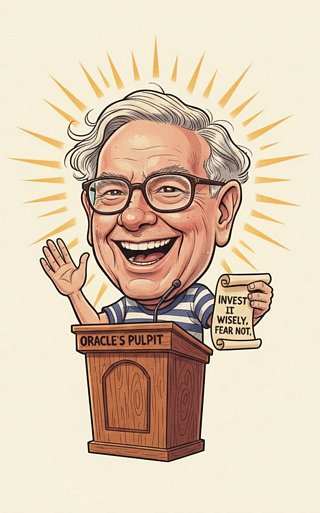
You Need to Stop Turning Warren Buffett Into a Prophet The new year marked Warren Buffett’s formal handover of the reins as CEO of Berkshire Hathaway to his chosen successor. The transition was deliberate and orderly. It signaled to shareholders and markets that Berkshire’s culture of discipline, patience, and long-term capital allocation is meant to outlive the man who built it.

Over the decades, Buffett has risen to an unusual cultural altitude, especially among devoted adherents of value investing. He’s part financial oracle and part homespun philosopher, dispensing deceptively simple wisdom with the aura of someone blessed with a Midas touch.

His most ardent admirers don’t merely study his methods; they venerate them. His shareholder letters are treated like sacred texts, his offhand remarks are parsed for hidden meaning, and his investing principles are elevated to universal law, supposedly immune to context, nuance, or time.

When Admiration Hardens into Uncritical Reverence

This isn’t to say Buffett’s philosophy lacks substance. His long-term mindset, focus on intrinsic value, and preference for durable businesses over speculation have shaped modern investing. Yet his most devoted followers treat these principles as commandments, overlooking the historical conditions that enabled his extraordinary success.

Buffett began in an era of lower valuations, thinner competition, and scarce financial data. He also enjoyed access to insurance float—an immense reservoir of low-cost capital ordinary investors can’t replicate. Many disciples still believe that faithfully applying his playbook in today’s very different market will produce the same results.

Buffett’s carefully cultivated public persona only deepens this loyalty. His down-home Midwestern charm isn’t accidental; it functions as armor. His accessible soundbites reinforce a comforting worldview in which patient investors always win, markets always recover, and disciplined value investing always triumphs. These narratives glide past inconvenient realities such as Japan’s post-1990 stagnation or the U.S. market’s lost decade from 2000 to 2010. His followers rarely ask for clarification. They don’t notice the cherry-picking or the broad-brushing. They accept the story as delivered.

Even his critiques are selective. Buffett often condemns the high fees charged by hedge funds and asset managers, yet his own early partnerships were structured with lucrative fees and equity stakes. They looked far more like the models he now derides than the mythologized image that surrounds him. He shifted toward long-term business ownership only after securing a substantial percentage stake in Berkshire Hathaway through those early arrangements. His admirers conveniently overlook the contradiction.

Buffett’s Wisdom Should Be Engaged With, Not Obeyed

None of this diminishes Buffett’s stature as a great investor or a compelling role model. His principles will remain valuable, and his track record is undeniable. But unchallenged hero worship is dangerous, especially when it replaces critical thinking with unquestioning allegiance. Many followers repeat his words, absorb his lessons, and apply his ideas without examining whether the underlying assumptions still hold. Markets evolve. Conditions shift. Rigid adherence to any single philosophy can become a liability.

Buffett’s ideas deserve scrutiny, not sainthood. His principles should be examined, not obeyed. Markets reward independent judgment, not intellectual submission. Thinking critically about those we admire isn’t disloyal. It’s essential.

Idea for Impact: Mistaking admiration for devotion that substitutes for analysis is a costly error. Real understanding requires scrutiny, adaptation, and the courage to rethink what once felt certain.

Filed Under: Business Stories, Leadership, Mental Models Tagged With: Biases, Critical Thinking, Icons, Leadership Lessons, Mental Models, Psychology, Role Models, Social Dynamics

How to Take Back Control When You’re Juggling Too Many Bills

November 14, 2025 By Nagesh Belludi Leave a Comment

When you’re dealing with multiple bills at once, it can feel like your entire life revolves around due dates, reminders, and trying not to fall behind. One late payment leads to another, the fees start stacking up, and before long, you’re exhausted just thinking about money. It’s a common point where many people explore options like a personal loan for debt consolidation simply because they need breathing room. But before you make any big decisions, it helps to understand why things feel so chaotic – and how to simplify everything without adding more stress.

Start by Seeing Everything Clearly

Most people who feel overwhelmed aren’t struggling because they don’t earn enough. They’re struggling because their bills are scattered across the month, making it hard to get a clear picture of what’s really going on. When everything feels unpredictable, it’s easy to lose track.

Start with a simple step: gather every recurring bill you have – the large ones, the tiny ones, the subscriptions you think don’t matter, the instalments you forgot about. Write them all down. Seeing the full list in one place can feel confronting, but it’s the fastest way to understand what you’re actually dealing with.

Group Your Bills So They’re Easier to Manage

The biggest source of financial stress usually isn’t the amount you owe – it’s the volume of separate payments. When bills are spread out, they take up far more mental space than they need to.

You can simplify your month by:

  • Moving due dates so they align with your pay cycle
  • Grouping multiple bills into one weekly or fortnightly batch
  • Automating anything that’s fixed and predictable
  • Setting reminders for the variable bills you need to check manually

When your payments fall into naturally organised blocks, your budget becomes easier to manage and far less intimidating.

Create a Cushion for Irregular Expenses

One of the reasons bills feel unmanageable is because the “unexpected” costs never stop. Car servicing, memberships, medical bills, school supplies, annual insurance renewals – they’re technically predictable, but they don’t happen monthly, so they catch you off guard.

The solution is simple: treat irregular costs like monthly ones by saving for them gradually.

Try this:

  • Add up your yearly non-monthly expenses
  • Divide the total by 12
  • Set aside that amount every month

It doesn’t have to be perfect. Even a small cushion helps you avoid dipping into credit or scrambling for extra cash when something pops up.

Stop Letting Small Payments Disrupt Your Budget

Tiny payments can create huge stress if there are too many of them. A $10 subscription. A $20 app. A $40 instalment on something you barely use. Individually, they seem harmless. Collectively, they create chaos.

Do a quick audit and ask:

  • Have I used this in the last 60 days?
  • Does this still add value to my life?
  • Would I miss it if it disappeared tomorrow?

If the answer is no, cancel it. Clearing out the clutter gives your budget room to breathe.

Open the Bills Instead of Avoiding Them

Avoidance is natural when money feels overwhelming. It tricks your brain into thinking the problem is smaller than it is. But bills don’t disappear – they just pile up quietly until they demand attention.

Try building a simple weekly habit:

  • Pick one day
  • Spend 10 minutes checking your accounts
  • Look at upcoming payments
  • Adjust anything that feels out of place

Consistency is more important than perfection. This tiny routine helps you stay ahead of problems instead of reacting to them.

Make a Simple Plan for the Largest Bills First

Not all bills carry the same weight. Some have higher interest, some have strict penalties, and some impact your credit if you fall behind. Sort your bills by priority and deal with the ones that affect your financial stability first.

A helpful approach:

  • Identify which bills cause the most stress
  • See if any can be renegotiated or reduced
  • Pay attention to those with higher fees or interest
  • Focus on progress, not perfection

Clearing pressure from the biggest bills creates momentum that makes everything else easier to manage.

You Don’t Need a Complex System – Just a Clear One

The biggest misconception is that you need spreadsheets, apps, budgeting formulas, or strict routines to get your finances under control. In reality, most people just need clarity and consistency. Fewer due dates. Fewer surprises. Fewer small commitments draining energy and money.

When you clean up the mental load – the noise, the chaos, the scattered bills – you give yourself the breathing space to focus on what actually matters.

The goal isn’t to be perfect with money. It’s to feel calm, capable, and confident again. With a few organised steps, you can shift from “barely keeping up” to “finally feeling in control”, without turning your entire life upside down.

Filed Under: Inspirational Quotations

Protect the Downside with Pre-mortems

November 2, 2023 By Nagesh Belludi Leave a Comment

'The Obstacle Is the Way' by Ryan Holiday (ISBN 1591846358) American self-help author Ryan Holiday’s The Obstacle Is the Way (2014) draws inspiration from Stoic philosophy to demonstrate how obstacles and challenges can be transformed into opportunities for personal growth and success. One recommended mindset is the pre-mortem: envisioning potential difficulties aligns with Stoic principles of accepting what one cannot control and focusing on their responses to external events:

In a postmortem, doctors convene to examine the causes of a patient’s unexpected death so they can learn and improve for the next time a similar circumstance arises. Outside of the medical world, we call this a number of things—a debriefing, an exit interview, a wrap-up meeting, a review—but whatever it’s called, the idea is the same: We’re examining the project in hindsight, after it happened.

A pre-mortem is different. In it, we look to envision what could go wrong, what will go wrong, in advance, before we start. Far too many ambitious undertakings fail for preventable reasons. Far too many people don’t have a backup plan because they refuse to consider that something might not go exactly as they wish. Your plan and the way things turn out rarely resemble each other. What you think you deserve is also rarely what you’ll get. Yet we constantly deny this fact and are repeatedly shocked by the events of the world as they unfold.

Idea for Impact: By embracing anticipation, you equip yourself with the tools to fortify your defenses, and in some cases, sidestep challenges altogether. You’re ready with a safety net ready to catch you if you stumble. With anticipation, you can endure.

P.S. Many industries—engineering, manufacturing, healthcare just to name a few—have a very formal, structured, systematic approach to identify and prioritize potential failures, their causes, and their consequences. As with a pre-mortem, the primary purpose of FMEA is to proactively assess and mitigate risks by understanding how a process or system might fail and the impact of those failures.

Filed Under: Mental Models, Sharpening Your Skills Tagged With: Critical Thinking, Decision-Making, Mental Models, Problem Solving, Risk, Thinking Tools, Wisdom

Make a Habit of Stepping Back from Work

November 10, 2020 By Nagesh Belludi Leave a Comment

“Busyness” often initiates as a lack of focus. Our culture has been seduced into thinking that we can achieve anything if we try harder and work longer.

Besides, good jobs are overwhelming. Many company cultures count on employees to compartmentalize their lives and prioritize work over all else. Managers expect that employees become what sociologists have identified as “ideal workers”: folks who are entirely dedicated to their jobs and are always on call, sometimes at great expense to their personal life. Such dedication is detrimental not just to employee wellbeing but also to the bottom line.

Being productive requires acknowledging that you can’t work for extended periods and maintain a high-performance level.

Make a habit of stepping back. Taking your mind off work can help you overcome mental blocks. Being productive requires creative thinking more than perseverance.

You’re more likely to find breakthrough ideas when you temporarily remove yourself from the grind. The best solutions uncover themselves when you step into the shower, go for a run, have lunch away from your desk, or set off on holiday.

  • Up the Good Stuff. To feel less burned-out, do a little more of the things you love and a smidgen less drudge work.
  • Seek Breathing Room. That’s a metaphor for space to catch up with yourself, regroup, think over whatever’s happening, and know how you feel and what to do next.
  • Thwart Decision Fatigue. You have a limited capacity for concentrating over extended periods. You can restore your executive function and overcome mental fatigue through interventions—short rest, engaging in creative purists, and increasing the body’s glucose levels.

Idea for Impact: If you want to get more done, start taking breaks. Busyness is very different from effectiveness.

Filed Under: Health and Well-being, Sharpening Your Skills Tagged With: Balance, Discipline, Mindfulness, Stress, Time Management

Inspirational Quotations #775

February 10, 2019 By Nagesh Belludi

Man can will nothing unless he has first understood that he must count on no one but himself; that he is alone, abandoned on earth in the midst of his infinite responsibilities, without help, with no other aim than the one he sets himself, with no other destiny than the one he forges for himself on this earth.
—Jean-Paul Sartre (French Philosopher)

Rely on the ordinary virtues that intelligent, balanced human beings have relied on for centuries: common sense, thrift, realistic expectations, patience, and perseverance.
—John C. Bogle (American Mutual Fund Pioneer)

Men are more apt to be mistaken in their generalizations than in their particular observations.
—Niccolo Machiavelli (Florentine Political Philosopher)

Most of us follow our conscience as we follow a wheelbarrow. We push it in front of us in the direction we want to go.
—Billy Graham (American Baptist Religious Leader)

Most people don’t know why they’re doing what they’re doing. They imitate others, go with the flow, and follow paths without making their own. They spend decades in pursuit of something that someone convinced them they should want, without realizing that it won’t make them happy. Don’t.
—Derek Sivers (American Entrepreneur)

I’m not into the money thing. You can only sleep in one bed at a time. You can only eat one meal at a time, or be in one car at a time. So I don’t have to have millions of dollars to be happy. All I need are clothes on my back, a decent meal, and a little loving when I feel like it. That’s the bottom line.
—Ray Charles (American Singer)

Man is the roof and crown of creation. He may be tossed about by uncertain storms of life, but the solution to it lies in his own efforts in finding an ideal, and then raising his personality, from the level of petty emotions, to the loftier heights of the chosen ideal.
—Swami Chinmayananda (Indian Hindu Teacher)

Managers have traditionally developed the skills in finance, planning, marketing and production techniques. Too often the relationships with their people have been assigned a secondary role. This is too important a subject not to receive first line attention.
—William Hewlett (American Engineer, Businessperson)

Our careers aren’t paths so much as landscapes that are navigated. We’re free agents, entrepreneurs, intrapreneurs—each with our own unique brand.
—Keith Ferrazzi (American Author)

Anything will give up its secrets if you love it enough. Not only have I found that when I talk to the little flower or to the little peanut they will give up their secrets, but I have found that when I silently commune with people they give up their secrets also—if you love them enough.
—George Washington Carver (American Scientist)

You gain strength, courage, and confidence by every experience in which you really stop to look fear in the face. You must do the thing which you think you cannot do.
—Eleanor Roosevelt (American First Lady)

The greatest honor history can bestow is that of peacemaker.
—Richard Nixon (American Head of State)

Filed Under: Inspirational Quotations

Conspicuous Consumption and The Era of Excess // Book Summary of ‘Luxury Fever’

July 3, 2018 By Nagesh Belludi Leave a Comment

The Superrich Influence the Standards for Desirability in Consumer Goods: The Less Rich Emulate Them

'Luxury Fever' by Robert Frank (ISBN 0691146934) The core argument of Cornell economist Robert Frank’s Luxury Fever: Why Money Fails to Satisfy in an Era of Excess (1999) is that the extravagant consumption of the most affluent in our society has a ripple effect on everyone’s spending.

According to Frank, the desire for many to indulge in luxury “possessions” is motivated less by the gratification they may bring than by what others are buying or want to buy. We try to achieve happiness by improving our relative social status. For example, if your neighbor didn’t buy his new Mercedes Benz, you wouldn’t probably feel the need for the latest-and-greatest Jaguar, and you’d both work less, and spend more time with your loved ones and invest in meaningful experiences that bring you joy.

It is not just the rich who have gone on a spending spree. Middle- and lower-income earners have been spending more as well. The prime mover in this change may have been the increased spending of the superrich but their higher spending level has set a new standard for the near-rich to emulate, and so on down the income ladder. But although middle- and lower-income families are spending much more than in the recent past, the incomes of these families have not been growing.

While the rich have the money to indulge their whims, the rest of us tend to finance our wasteful spending through reduced personal savings or through increasing debt. To substantiate this trend, Frank describes burgeoning household debt and a remarkable increase in personal bankruptcies.

Luxury Fever summarizes persuasive biological and psychological evidence that suggests how human nature is such that we measure our success in relation to what others have. In other words, we tend to spend money on luxuries to appear to be more successful than others are. Frank concludes, “Evidence from the large scientific literature on the determinants of subjective well-being consistently suggests that we have strong concerns about relative position.”

Relative Consumption, Not Absolute Consumption, Affects Consumers’ Happiness

Much of the increased luxury spending is wasteful, given that consumers could get the same benefits by consuming non-luxuries with lower price tags. Research has proven that money doesn’t buy happiness,

Behavioral scientists find that once a threshold level of affluence is reached, the average level of human well-being in a country is almost completely independent of its stock of material consumption goods.

Frank’s thesis on runaway consumption and extravagant luxuries seems as valid now as it was in 1999, when his book was published at the height of the dot-com boom. The era of excess has now proliferated to India, China, Russia, and other developing countries that are facing not only widening economic inequalities between their rich and poor, but also mushrooming appetites for luxury goods among their affluent middle classes.

Can a Progressive Consumption Tax Challenge the “Luxury Arms Race”?

Based on the solid evidence he provides, Frank’s thesis on runaway consumption of extravagant luxuries and this era of excess is hard to dispute. Consumers have indeed been saving less, working longer hours, and spending more per capita on luxury goods. However, his claim that the spending patterns of the super wealthy has incited luxury fever among the non-wealthy lacks substantial evidence.

The Luxury Fever‘s solution to this problem is to come down hard on lavish consumption and to encourage more savings. To this end, Frank presents policy proposals that are reasonable in the abstract, but will face serious political and cultural hurdles. Frank promotes a tax exemption for savings and a steeply progressive consumption-based tax as a substitute for income and sales taxes. If Americans expend less on luxury goods, he argues, we’d collectively work less, and make more money available “to restore our long neglected public infrastructure and repair our tattered social safety net.” However, economists have argued that a progressive consumption tax would burden the non-wealthy more than the wealthy because the latter tend to save much larger percentages of their incomes.

The Good and Bad Sides of Consumerism: How to Clamp Down on Conspicuous Consumption and Encourage More Saving

Despite its flaws, Robert Frank’s Luxury Fever is a valuable read in behavioral psychology and behavioral economics. Luxury Fever offers an appealing compendium of interesting case studies, anecdotal evidence, and statistics on society’s current “wants-not-needs” and “more is better” materialistic way of life, and its harmful impact on our lives, relationships, and societies.

Complement with The Millionaire Next Door (1996, read my summary,) a bestselling exposition on the surprising secrets of America’s wealthy.

Filed Under: Living the Good Life, Personal Finance Tagged With: Marketing, Materialism, Money, Simple Living

« Previous Page
Next Page »

Primary Sidebar

Popular Now

Anxiety Assertiveness Attitudes Balance Biases Coaching Conflict Conversations Creativity Critical Thinking Decision-Making Discipline Emotions Entrepreneurs Etiquette Feedback Getting Along Getting Things Done Goals Great Manager Innovation Leadership Leadership Lessons Likeability Mental Models Mentoring Mindfulness Motivation Networking Parables Performance Management Persuasion Philosophy Problem Solving Procrastination Relationships Simple Living Social Skills Stress Suffering Thinking Tools Thought Process Time Management Winning on the Job Wisdom

About: Nagesh Belludi [hire] is a St. Petersburg, Florida-based freethinker, investor, and leadership coach. He specializes in helping executives and companies ensure that the overall quality of their decision-making benefits isn’t compromised by a lack of a big-picture understanding.

Get Updates

Signup for emails

Subscribe via RSS

Contact Nagesh Belludi

RECOMMENDED BOOK:
When Things Fall Apart

When Things Fall Apart: Pema Chödrön

Buddhist nun Pema Chodron's treasury of wisdom for overcoming life's pain and difficulties, and ways for creating effective social action.

Explore

  • Announcements
  • Belief and Spirituality
  • Business Stories
  • Career Development
  • Effective Communication
  • Great Personalities
  • Health and Well-being
  • Ideas and Insights
  • Inspirational Quotations
  • Leadership
  • Leadership Reading
  • Leading Teams
  • Living the Good Life
  • Managing Business Functions
  • Managing People
  • MBA in a Nutshell
  • Mental Models
  • News Analysis
  • Personal Finance
  • Podcasts
  • Project Management
  • Proverbs & Maxims
  • Sharpening Your Skills
  • The Great Innovators

Recently,

  • Gut Instinct as Compressed Reason—Why Disney Walked Away from Twitter in 2016
  • The Tyranny of Previous Success: How John Donahoe’s Tech Playbook Made Nike Uncool
  • Inspirational Quotations #1145
  • Values Are Easier to Espouse Than to Embody: Howard Schultz Dodges the Wealth Tax
  • Don’t Let Attachment Masquerade as Love
  • Say It Straight: Why Clarity Beats Precision in Everyday Conversation
  • Inspirational Quotations #1144

Unless otherwise stated in the individual document, the works above are © Nagesh Belludi under a Creative Commons BY-NC-ND license. You may quote, copy and share them freely, as long as you link back to RightAttitudes.com, don't make money with them, and don't modify the content. Enjoy!