If rampant trust and privacy issues, unrestricted tracking and misuse of your personal data, the superficiality of online relationships, and the perils of group polarization haven’t persuaded you yet to quit social media, consider the risks of “Facebook envy.” The pretenses of perfection on social media can make you compare your own life to an ideal that doesn’t really exist.
The Age of Envy: Seeing Your Friends Happy Can Make You Sad
Study after study confirms that Facebook and other social media contribute to unhappiness and feelings of inadequacy by providing a glimpse of just the highlights reel of other people’s lives.
When posting on Facebook, many people present their very best takes on their lives—their filtered descriptions tend to make their lives look more exciting. Everyone else’s vacations seem more fun, their relationships happier, and their jobs more exciting than your daily grind. Incidentally, they look younger, well dressed, and in-shape than you do too.
The Embellishment of Truths Makes Others Feel Discontented by Comparison
Catching up with others on social media can indeed make you feel jealous and envious. It’s in human nature that comparisons to lives that appear better than yours can bring you down. As the 18th century French philosopher Montesquieu wrote, “If one only wished to be happy, this could be horrible for the rest of civilization; but we wish to be happier than other people, and this is always difficult, for we believe others to be happier than they are.”
The obsession with self-image and the shallowness of friendships can stimulate your competitive inclinations to cherry-pick and portray an even sunnier facade of your lives.
The Never-ending One-upmanship on Facebook
Facebook is an outlet for the self-publicizing, narcissist human tendency—it is about creating positive impressions, often with the purpose of either enchanting or annoying others. And “where jealousy and selfish ambition exist, there is disorder and every evil thing” (New Testament, James 3:16.)
Social media have created this annoying compulsion to preserve a coherent and cheerful, public persona at all times. Your life must look picture-perfect, even if, under the wraps, you’re dealing with the burdens of everyday life. Moreover, given the urge to build this deceptive identity on social media, there’s little room for pessimism or honest portrayal of life’s realities.
Studies even detail how social media are contributing factors to cultivating feelings of inadequacy, depression, and other mental health issues in teenagers.
Idea for Impact: You Don’t Need Social Media to Participate in Society
Being on social media is a utility, a conduit—not an end in itself.
If you find yourself wasting time on social media or getting demotivated, consider using Facebook less or quitting it totally. Shun the narcissistic inclination to publicize the excruciating minutiae of your life.
Go engage flesh and blood people. Don’t just be interesting—be interested! You’ll be happier.
.jpg "'Pour Your Heart Into It' by Howard Schultz (ISBN 0786883561)")
.jpg "'Onward: How Starbucks Fought for Its Life without Losing Its Soul' by Howard Schultz, Joanne Gordon (ISBN 1609613821)")

.jpg "'Ever Yours: The Essential Letters' by Vincent van Gogh (ISBN 0300209479)")
 Vincent embarked upon his artistic career at the somewhat advanced age of 27. According to


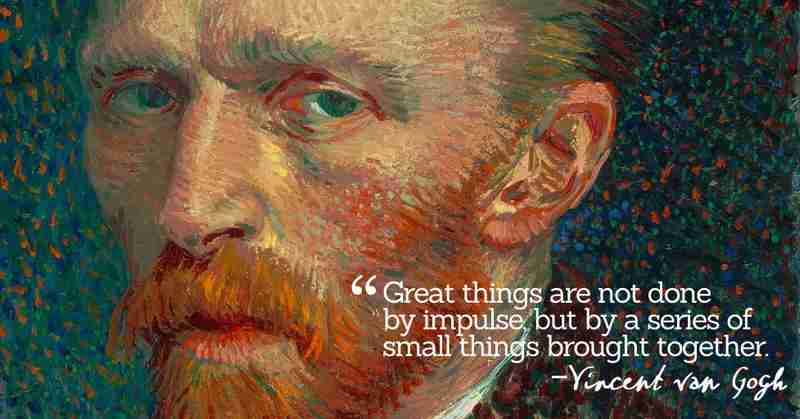
 Vincent was raised in a religious and cultured atmosphere. Growing up, he possessed a difficult temper and lacked self-confidence. All through youth, Vincent struggled to find his place in the world. This was a precursor to his life-long struggle to find meaning and establish some kind of harmonious relationship with the outer world.
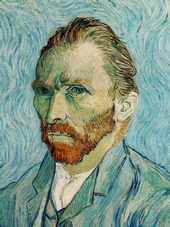 For the next nine years, with Theo’s financial and emotional support, Vincent traveled around Europe teaching himself to draw and paint. He struggled financially and even starved sometimes after spending the entire stipend that Theo sent him on art supplies rather than on the necessities of living. After a great deal of meticulous experimentation and assiduous practice, Vincent developed his artistic expertise to a level where he could execute art swiftly.