• Skip to content
  • Skip to primary sidebar

Right Attitudes

Ideas for Impact

To-Do or Not To-Do?

December 10, 2025 By Nagesh Belludi Leave a Comment

Knowing What to Ignore is Just as Important as Knowing What to Pursue We rely on to-do lists to organize our tasks, yet they often spiral beyond what’s manageable, overwhelming us with more than we can realistically accomplish.

What we choose not to do is just as defining as what we pursue. That is where a “don’t-do” list really comes in handy—it serves as a filter for distractions, those pointless tasks, and commitments that consume your time without yielding much in return. At work, this might mean forgoing duties that do not add significant value. In life, it could entail letting go of habits or projects that simply crowd out what actually matters.

Saying no today does not mean no forever. Some tasks can be revisited later; however, actively clearing space ensures that priorities remain front and center.

Idea for Impact: A to-do list drives action, while a not-to-do list sharpens focus. Figuring out what not to do often gets you further.


Wondering what to read next?

  1. Don’t Ruminate Endlessly
  2. Hofstadter’s Law: Why Everything Takes Longer Than Anticipated
  3. Everything in Life Has an Opportunity Cost
  4. Do Things Fast
  5. Zeigarnik Effect: How Incomplete Tasks Trigger Stress

Filed Under: Living the Good Life, Mental Models, Sharpening Your Skills Tagged With: Assertiveness, Decision-Making, Discipline, Goals, Procrastination, Thought Process, Time Management

Nice Ways to Say ‘No’

December 8, 2025 By Nagesh Belludi Leave a Comment

Nice Ways to Say 'No': Assert Yourself Sometimes, saying ‘no’ is easier than saying ‘yes.’ Every ‘no’ is, in fact, a ‘yes’ to something else—your time, energy, and priorities. The strength to say ‘no’ comes from recognizing this tradeoff and valuing what truly matters to you.

Many of us are conditioned to say ‘yes’ to please others or avoid conflict, even at the expense of our own happiness. As entrepreneur and author James Altucher puts it in The Power of No (2014,) “When you say ‘yes’ to something you don’t want to do, here’s the result: you hate what you are doing, you resent the person who asked you, and you hurt yourself.” The more you give in, the more demands pile up, leaving you stretched thin and unrecognizable.

At work, this tendency can lead to taking on tasks that aren’t your responsibility—ones others avoid because they’re tedious or undervalued. In life, an overpacked schedule of other people’s priorities leaves little room for your own well-being. If your mental health is suffering, it’s time to change.

Reclaiming your time starts with asking: “Am I saying ‘yes’ for me?” Saying ‘no’ doesn’t have to be harsh or rude. It’s your right to protect your time, resources, and peace, no explanation needed. Thoughtful ‘no’s show respect—for yourself and others.

If you struggle with ‘no,’ here’s a list of assertive, polite phrases to help:

  • “I am unable to take on any more commitments at the moment.”
  • “I’m sorry, I don’t think I can give you the answer you’re hoping for.”
  • “I like your offer, but my schedule just won’t allow me to say ‘yes.'”
  • “That’s an excellent offer, but we’re not in a position to take advantage of it right now.”
  • “Good idea, but I’m afraid we have to pass on it for now.”
  • “This just won’t work for me.”
  • “Sorry, but this isn’t something I do.”
  • “I’m sorry you have that problem. I hope you find a solution soon.”
  • “Let me think about it and get back to you.” (This buys you time to consider thoughtfully.)
  • “I can’t commit to this right now, but thank you for thinking of me.”
  • “I’m honored you asked, but I don’t have the capacity to take this on.”
  • “I don’t feel like I can give this the time and attention it deserves.”
  • “Thank you for asking, but I have to say ‘no.'”
  • “This isn’t a priority for me at the moment.”

When pressured to say ‘yes’ but unsure, use that pause. A simple “Let me think about it” buys you room to assess if the request aligns with your goals and capacity. This isn’t avoidance—it’s intentional self-preservation.

Idea for Impact: Saying ‘no’ is an act of freedom. It frees you from draining obligations and creates space for what truly matters. Every ‘no’ is a step toward prioritizing yourself and reclaiming your life.

Wondering what to read next?

  1. Honest Commitments: Saying ‘No’ is Kindness
  2. What Jeeves Teaches About Passive Voice as a Tool of Tact
  3. Don’t Say “Yes” When You Really Want to Say “No”
  4. What Most People Get Wrong About Focus
  5. Buy Yourself Time

Filed Under: Effective Communication, Managing People, Sharpening Your Skills Tagged With: Assertiveness, Balance, Communication, Conflict, Conversations, Likeability, Negotiation, Persuasion

Inspirational Quotations #1131

December 7, 2025 By Nagesh Belludi

Perfection of means and confusion of goals seem, in my opinion, to characterize our age.
—Albert Einstein (German-born Theoretical Physicist)

That which is given with pride and ostentation is rather an ambition than a bounty.
—Seneca the Younger (Lucius Annaeus Seneca) (Roman Stoic Philosopher)

Always do what you feel deeply in the within to be the true thing to do.
—Wallace Wattles (American New Thought Author)

We like to be deceived.
—Blaise Pascal (French Philosopher, Scientist)

Know whence you came. If you know whence you came, there is really no limit to where you can go.
—James Baldwin (American Novelist, Social Critic)

Knowledge is the consequence of time, and multitude of days are fittest to teach wisdom.
—Jeremy Collier (English Anglican Clergyman)

The waste of life occasioned by trying to do too many things at once is appalling.
—Orison Swett Marden (American New Thought Writer)

The frontiers are not east or west, north or south, but wherever a man fronts a fact.
—Henry David Thoreau (American Philosopher)

We ought to give thanks for all fortune: it is good, because it is good, if bad, because it works in us patience, humility and the contempt of this world and the hope of our eternal country.
—C. S. Lewis (Irish-born Author, Scholar)

The best words for resolving a disagreement are, “I could be wrong; I often am.” It’s true.
—Brian Tracy (American Author)

When you work seven days a week, fourteen hours a day, you get lucky.
—Armand Hammer (American Entrepreneur, Businessman)

You may call for peace as loudly as you wish, but where there is no brotherhood there can in the end be no peace.
—Max Lerner (American Author)

Filed Under: Inspirational Quotations

Boundaries Define What You are—and What You’re Not

December 5, 2025 By Nagesh Belludi Leave a Comment

Boundaries Define What You are---and What You're Not Boundaries define what you’ll tolerate and what you won’t. Without them, you hand control of your time and energy to others.

Setting boundaries isn’t about being rude. It’s about owning your space. If someone doesn’t like it, tough. You’re not here to make life easier for them.

Boundaries send a clear message: “Respect me or step back.” Without them, confusion and frustration creep in. You end up stuck doing favors for people who never even asked if you had the time.

Your boundaries reflect your values. Before you can set them, you’ve got to know your own limits and priorities. You can’t defend what you haven’t defined.

State your boundaries firmly, not as a request but as a fact. Those who respect them show they understand you. Those who don’t make it clear they never did.

Idea for Impact: If someone crosses the line, stand firm. Let them know their actions are not acceptable. Do not back down.

Wondering what to read next?

  1. Competitive vs Cooperative Negotiation
  2. How to … Deal with Less Intelligent People
  3. Managerial Lessons from the Show Business: Summary of Leadership from the Director’s Chair
  4. A Short Course on: How to Find the Right Relationship
  5. The Likeability Factor: Whose “Do Not Pair” List Includes You?

Filed Under: Effective Communication, Managing People Tagged With: Assertiveness, Conflict, Getting Along, Likeability, Negotiation, Relationships

Finding Their Voice: How Creative Expression Becomes Therapy for Silent Teens

December 5, 2025 By Nagesh Belludi Leave a Comment

Teenagers have never been known for their eagerness to share what’s really going on inside. Between the eye rolls and one-word answers, many parents find themselves facing a wall of silence when trying to connect with their struggling teen. But something remarkable happens when you hand that same quiet teenager a paintbrush, a guitar, or a journal. Suddenly, the words they couldn’t speak appear on paper. The emotions they kept buried come alive in color and sound.

Creative expression is quietly revolutionizing how we approach teen mental health. While traditional talk therapy remains valuable, many adolescents find it easier to process difficult emotions through art, music, writing, and movement rather than sitting face-to-face with an adult asking how they feel.

Why Teens Go Silent

The teenage years bring a perfect storm of changes. Bodies are transforming, social dynamics feel like life or death, academic pressure mounts, and the future looms with terrifying uncertainty. Add social media comparison and a global news cycle that rarely offers hope, and it’s no wonder so many teens retreat inward.

When emotional pain becomes overwhelming, silence often feels safer than vulnerability. Teens worry about burdening their parents, being judged by peers, or simply not having the words to describe the tangle of feelings inside them. Depression, anxiety, trauma, and stress create what psychologists call “alexithymia,” a difficulty identifying and describing emotions. For teens still developing emotional literacy, this challenge intensifies.

Many families eventually seek support from a teen depression treatment center when their child’s withdrawal becomes concerning. These specialized facilities recognize that one-size-fits-all approaches don’t work. That’s why creative therapies have become central to modern adolescent mental health treatment.

The Power of Creative Outlets

Creative expression bypasses the verbal roadblocks that trap so many teenagers. When teens can’t find words, they can find colors. When they can’t explain their anxiety, they can express it through drumbeats or dance movements. The creative process itself becomes the conversation.

Art therapy allows teens to externalize internal struggles. A teenager might paint their depression as a heavy gray cloud or sculpt their anxiety into tangled clay. These concrete representations make abstract feelings manageable and discussable. Suddenly, a therapist and teen have something tangible to explore together, without the pressure of direct confrontation.

Music therapy taps into rhythm and melody to regulate emotions and express what words cannot. Whether writing lyrics, learning an instrument, or simply listening to carefully selected songs, music creates a safe container for painful emotions. The vibrations and patterns in music can actually calm the nervous system, offering immediate relief while building long-term coping skills.

Writing therapy, including poetry and journaling, gives teens privacy and control. They can write without fear of interruption or judgment. They can edit, cross out, or burn what they’ve written. Many teens who refuse to speak in therapy will fill notebooks with their truth, gradually building trust and communication skills.

Movement and dance therapy recognize that trauma and emotion live in the body, not just the mind. Teens who’ve learned to disconnect from their feelings often reconnect through physical expression. Movement releases stored tension and rebuilds the mind-body connection that stress and trauma disrupt.

Real Change Through Creative Process

The magic isn’t just in the final product but in the process itself. When a teen picks up a paintbrush or guitar, they’re making choices, taking action, and creating something from nothing. This builds agency, a crucial quality that depression strips away. Each creative decision reinforces that their choices matter and they can affect their environment.

Creative work also builds frustration tolerance and problem-solving skills. A melody that won’t resolve, a poem that won’t flow, or a drawing that doesn’t match the vision teaches persistence. These small victories in the studio translate to resilience in daily life.

Perhaps most importantly, creative expression helps teens develop their identity separate from their struggles. They’re not just “the depressed kid” or “the anxious one.” They’re a poet, a painter, a musician. This identity expansion opens new possibilities for how they see themselves and their future.

Finding the Right Support

While creative activities at home offer tremendous value, professional guidance amplifies their therapeutic impact. Trained art, music, and drama therapists know how to guide teens through creative processes that promote healing, not just distraction. They understand developmental stages, trauma responses, and how to hold space for difficult emotions that surface during creation.

For teens experiencing severe depression, anxiety, or other mental health challenges, comprehensive treatment often combines creative therapies with traditional counseling, family therapy, and sometimes medication. This integrated approach addresses mental health from multiple angles, meeting teens where they are and building from their strengths.

Opening the Door

If your teen has gone silent, consider offering creative outlets without pressure or expectation. Stock the house with art supplies, instruments, or journals. Share creative activities that interest them, whether that’s photography, digital art, songwriting, or skateboarding. Watch for what makes their eyes light up.

Sometimes the path back to connection doesn’t run through words at all. It runs through color, sound, movement, and imagination. When teens find their voice through creative expression, they’re not just making art. They’re making sense of their world, building coping skills, and discovering that what’s inside them deserves to exist outside too.

The silence might not break all at once, but gradually, creatively, healing begins.

Filed Under: Inspirational Quotations

The Case Against Team Work

December 3, 2025 By Nagesh Belludi Leave a Comment

The Case Against Team Work

Teamwork has long been a favorite buzzword in management circles, pitched as the ultimate fix for productivity and innovation. Managers, conditioned by years of teamwork training, often push it everywhere without asking if it actually fits. But teamwork can be overhyped—even a roadblock to real progress. It’s not the best solution for every job. Sometimes it stifles more than it supports.

Teamwork often falls short of its promise. Studies show it doesn’t guarantee fresh ideas or higher output. Instead, it tends to blur accountability. When everyone shares a task, no one fully owns it. Deadlines slip as team members wait on each other. Solo work, though, forces ownership. You’re in charge, you’re motivated, and you move fast—no bureaucracy slowing you down.

Managers Conditioned to Embrace Teamwork

Then comes the “compromise effect.” In teams, bold ideas get watered down to dodge conflict. Original concepts get softened, reshaped, or even scrapped to chase consensus. What’s left is a safe, forgettable solution that tries to please everyone but excites no one. Solo work, by contrast, sparks the kind of daring ideas that big teams often bury.

And don’t ignore the heavy cost of coordination. Teams burn hours in endless check-ins, emails, and meetings just to stay “aligned.” This constant syncing drains time and energy, leaving less for the actual work. Independent workers, though, can cut through the noise, making sharp, fast decisions without all the back-and-forth.

So why do managers and HR teams keep pushing teamwork? It’s easy. Collaboration builds camaraderie, creates a sense of shared purpose, and makes workloads easier to shift around. Teamwork also helps mask individual performance, letting weaker players blend into the crowd. Companies love branding themselves around “collaboration” and “inclusivity,” even when these ideals barely move the productivity needle.

In Quiet Minds, Solutions Ignite

Teamwork still has its place. When you’re tackling messy problems that need many expert voices, collaboration can be a game-changer. When you need people invested, early involvement helps build commitment. And when the mission is critical, collaboration aligns everyone around big-picture goals.

But teamwork isn’t a cure-all. When deep, focused thought is required, solo work wins. Radical, game-changing ideas rarely spring from big committees—they thrive in small, bold groups where conformity isn’t king. When time is tight, you’ll make faster, sharper progress with clear leadership, not endless “involvement theater.”

Idea for Impact: Stop defaulting to teamwork for every project. Strike a smarter balance. Blend autonomy with selective collaboration. Pick the best approach for the job, and you’ll get accountability, originality, and speed—without the dead weight teamwork often drags along.

Wondering what to read next?

  1. The Abilene Paradox: Just ‘Cause Everyone Agrees Doesn’t Mean They Do
  2. Many Creative People Think They Can Invent Best Working Solo
  3. How to Stimulate Group Creativity // Book Summary of Edward de Bono’s ‘Six Thinking Hats’
  4. The High Cost of Too Much Job Rotation: A Case Study in Ford’s Failure in Teamwork and Vision
  5. Why Group Brainstorming Falls Short on Creativity and How to Improve It

Filed Under: Leading Teams, Managing People Tagged With: Conflict, Creativity, Innovation, Networking, Persuasion, Social Dynamics, Teams, Thought Process

Teams That Thrive make it Safe to Speak & Safe to Fail

December 1, 2025 By Nagesh Belludi Leave a Comment

Google Project Aristotle Findings: Teams That Thrive make it Safe to Speak & Safe to Fail In 2012, Google’s Project Aristotle set out to discover what makes teams effective. After studying hundreds of its own, the research identified five key traits. The most critical? Psychological safety.

Psychological safety is the foundation of high-performing teams. It means you can speak up, share ideas, and take risks without fear of ridicule or punishment. In these environments, openness isn’t optional—it’s expected. Creativity and collaboration thrive because people aren’t afraid to contribute.

The opposite is true in fear-driven cultures. In rigid, hierarchical environments, challenging the status quo risks backlash. Employees play it safe, innovation dries up, and self-preservation replaces bold thinking.

Teams that foster psychological safety communicate more openly, innovate faster, and recover better from mistakes. They ask questions, seek feedback, and view failure as a necessary step toward growth.

Idea for Impact: Managers shape this environment. Leading with vulnerability, welcoming tough conversations, encouraging every voice, and rewarding smart risks are not extras—they are essential. Respect must stay at the core.

Wondering what to read next?

  1. Don’t Manage with Fear
  2. Bringing out the Best in People through Positive Reinforcement
  3. From the Inside Out: How Empowering Your Employees Builds Customer Loyalty
  4. Managing the Overwhelmed: How to Coach Stressed Employees
  5. The Speed Trap: How Extreme Pressure Stifles Creativity

Filed Under: Leading Teams, Managing People, MBA in a Nutshell Tagged With: Assertiveness, Coaching, Feedback, Great Manager, Human Resources, Performance Management, Persuasion, Workplace

Inspirational Quotations #1130

November 30, 2025 By Nagesh Belludi

Some one speaks admirably of the well-ripened fruit of sage delay.
—Honore de Balzac (French Novelist)

A man who has not passed through the inferno of his passions has never overcome them.
—Carl Gustav Jung (Swiss Psychologist)

Many speak the truth when they say that they despise riches, but they mean the riches possessed by other men.
—Charles Caleb Colton (English Clergyman, Aphorist)

How often in the various amusements of the world is one tempted to pause a moment and ask oneself whether one really likes it!
—Anthony Trollope (English Novelist)

Power without principle is barren, but principle without power is futile. This is a party of government and I will lead it as party of government.
—Tony Blair (British Statesman)

Good nature is more agreeable in conversation than wit, and gives a certain air to the countenance which is more amiable than beauty.—It shows virtue in the fairest light; takes off, in some measure, from the deformity of vice; and makes even folly and impertinence supportable.
—Joseph Addison (English Poet, Playwright, Politician)

Always live up to your standards – by lowering them, if necessary.
—Mignon McLaughlin (American Journalist)

Whether a man is burdened by power or enjoys power; whether he is trapped by responsibility or made free by it; whether he is moved by other people and outer forces or moves them – this is of the essence of leadership.
—Theodore H. White (American Journalist)

If you suppress grief too much, it can well redouble.
—Moliere (French Playwright)

Profundity of thought belongs to youth, clarity of thought to old age.
—Friedrich Nietzsche (German Philosopher, Scholar)

Filed Under: Inspirational Quotations

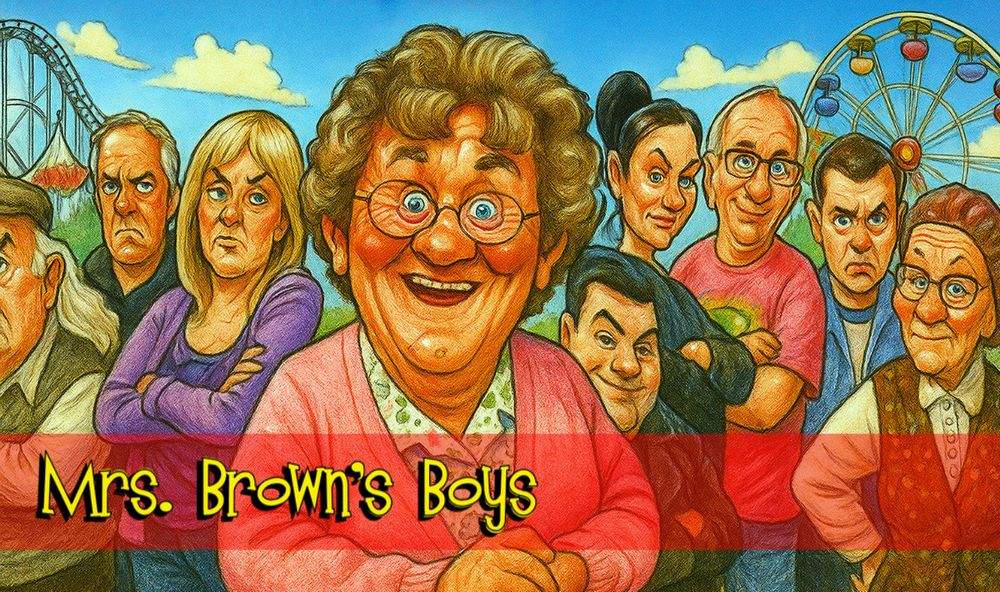
‘Mrs Brown’s Boys’ Teaches That the Most Sincere Moment is the Unplanned One

November 28, 2025 By Nagesh Belludi Leave a Comment

The Most Sincere Moment is the Unplanned One (Lessons from Mrs Brown's Boys)

I’ve been binge-watching the Irish-British sitcom Mrs. Brown’s Boys. It’s a refreshingly unpolished comedy—equal parts pratfall, dry wit, and show-business bravado. The series delights in on-air flubs and live-studio gags. Beneath the chaos lies a shrewd grasp of character and timing.

The show has deservedly received poor reviews from critics and TV audiences, but it thrives where traditional comedies hesitate—embracing the messy and unscripted with gleeful abandon.

One of the show’s hallmarks is its reliance on ad-libbing. During sketches, actors bait Brendan O’Carroll—who plays the indomitable Agnes Brown—with off-book quips, and he returns the favor by springing surprises on them. This give-and-take sparks real mishaps: actors flub lines, snort with laughter, or break character outright. These unscripted gaffes often hit harder than the written punchlines and lend the series a raw, stage-play immediacy.

That anything-goes spirit comes from an unconventional ensemble. Most of the main cast are family members and lifelong friends. They’ve grown up with these characters—on radio, in touring stage shows, and on TV. That loyalty infuses each scene with genuine warmth, turning flubbed lines into endearing inside jokes. In Mrs. Brown’s Boys, even the mayhem feels like a home movie you’re invited to sneer at—and secretly applaud.

Rather than hiding its seams, Mrs. Brown’s Boys tears them wide open. It winks at the camera and revels in live-show unpredictability. These fourth-wall breaches aren’t gimmicks—they’re invitations. Viewers aren’t just watching; they’re in on the joke, complicit in every pratfall and punchline. This collapse of artifice invites a question: what do we value more—crafted dialogue or unscripted reality? Mrs. Brown’s Boys discards polish in favor of spontaneous combustion. When an actor snorts mid-scene, it’s not a mistake—it’s a reminder that we’re witnessing something real. And that vulnerability—that glorious unsteadiness—is its greatest asset.

Messy and divisive, the show thrives on human unpredictability. It doesn’t just deliver punchlines, it invents them live. You’re not merely laughing at the jokes; you’re watching them take shape in real time. That, perhaps, is the show’s slyest joke.

At its core, Mrs. Brown’s Boys is more than slapstick anarchy—it’s a case study in presence. In work or in life, we’re tempted by flawless facades. But real moments emerge only when we risk imperfection. The show’s unscripted humor reminds us that when control slips, authenticity rushes in—and those unguarded flashes are often the funniest, and most human, of all.

Idea for Impact: Often, irreverence—when wielded with wit—is the finest antidote to cultural pomposity.

Wondering what to read next?

  1. The Wisdom of the Well-Timed Imperfection: The ‘Pratfall Effect’ and Authenticity
  2. Your Product May Be Excellent, But Is There A Market For It?
  3. Airline Safety Videos: From Dull Briefings to Dynamic Ad Platforms
  4. What Virgin’s Richard Branson Teaches: The Entrepreneur as Savior, Stuntman, Spectacle
  5. We Trust What We Can See: James Dyson Builds for That Instinct

Filed Under: Effective Communication, Sharpening Your Skills, The Great Innovators Tagged With: Creativity, Getting Along, Humor, Innovation, Likeability, Parables, Personality, Persuasion, Psychology, Thought Process

Hustle Culture is Losing Its Shine

November 26, 2025 By Nagesh Belludi Leave a Comment

Hustle Culture is Losing Its Shine Hustle culture promotes the idea that ambition is demonstrated through exhaustion, making sacrifices in well-being appear necessary for success. Society has embraced this mindset, glorifying relentless productivity even at the cost of health and happiness.

While intense focus on major projects can be valuable, maintaining such a pace continuously blurs the line between motivation and burnout. Social media amplifies this mentality, showcasing polished images of achievement while hiding the sleepless nights, strained relationships, and health challenges that often accompany it. The rise-and-grind mindset turns success into an endless pursuit, frequently obscuring its true cost.

In this process, personal relationships and healthy habits frequently deteriorate. Meaningful conversations diminish, connections weaken, and self-care is replaced by caffeine-fueled nights and quick-fix meals.

Idea for Impact: Hustle can be an effective tool, but it should remain just that—a tool, not a lifestyle. A fulfilling life is not built on burnout; it is built on sustainability.

Wondering what to read next?

  1. Busyness is a Lack of Priorities
  2. Great Jobs are Overwhelming, and Not Everybody Wants Them
  3. Why You Can’t Relax on Your Next Vacation
  4. The Champion Who Hated His Craft: Andre Agassi’s Raw Confession in ‘Open’
  5. Is Your Harried Mind Causing You to Underachieve?

Filed Under: Health and Well-being, Living the Good Life Tagged With: Balance, Mindfulness, Simple Living, Stress, Suffering, Time Management, Work-Life

« Previous Page
Next Page »

Primary Sidebar

Popular Now

Anxiety Assertiveness Attitudes Balance Biases Coaching Conflict Conversations Creativity Critical Thinking Decision-Making Discipline Emotions Entrepreneurs Etiquette Feedback Getting Along Getting Things Done Goals Great Manager Innovation Leadership Leadership Lessons Likeability Mental Models Mentoring Mindfulness Motivation Networking Parables Performance Management Persuasion Philosophy Problem Solving Procrastination Relationships Simple Living Social Skills Stress Suffering Thinking Tools Thought Process Time Management Winning on the Job Wisdom

About: Nagesh Belludi [hire] is a St. Petersburg, Florida-based freethinker, investor, and leadership coach. He specializes in helping executives and companies ensure that the overall quality of their decision-making benefits isn’t compromised by a lack of a big-picture understanding.

Get Updates

Signup for emails

Subscribe via RSS

Contact Nagesh Belludi

RECOMMENDED BOOK:
The Life-Changing Magic of Tidying Up

The Life-Changing Magic of Tidying Up: Marie Kondo

Japanese organizing consultant Marie Kondo's bestseller has elevated the domestic chore of cleaning up into a process of emancipation and self-discovery.

Explore

  • Announcements
  • Belief and Spirituality
  • Business Stories
  • Career Development
  • Effective Communication
  • Great Personalities
  • Health and Well-being
  • Ideas and Insights
  • Inspirational Quotations
  • Leadership
  • Leadership Reading
  • Leading Teams
  • Living the Good Life
  • Managing Business Functions
  • Managing People
  • MBA in a Nutshell
  • Mental Models
  • News Analysis
  • Personal Finance
  • Podcasts
  • Project Management
  • Proverbs & Maxims
  • Sharpening Your Skills
  • The Great Innovators

Recently,

  • Inspirational Quotations #1143
  • The Hot-Desking Lie: How It Killed Focus and Gutted Collaboration
  • Unreliable Narrators Make a Story Sounds Too Neat
  • Bertrand Russell on The Value of Philosophy: Doubt in an Age of Dogma
  • Inspirational Quotations #1142
  • The Law of Petty Irritations
  • Look, Here’s the Deal: Your Insecurity is Masquerading as Authority

Unless otherwise stated in the individual document, the works above are © Nagesh Belludi under a Creative Commons BY-NC-ND license. You may quote, copy and share them freely, as long as you link back to RightAttitudes.com, don't make money with them, and don't modify the content. Enjoy!