• Skip to content
  • Skip to primary sidebar

Right Attitudes

Ideas for Impact

A Simple Portfolio-Building Guide for Future Nurse Educators

January 14, 2026 By Nagesh Belludi Leave a Comment

AACN counted 1,977 vacant full-time nursing faculty positions for academic year 2023–2024, a 7.8% vacancy rate out of 25,247 budgeted roles. That’s a big, very practical reason to start treating the teaching you already do at the bedside as something worth saving and shaping.

This article shows you how to collect everyday clinical moments, convert them into simple lesson assets, and build a portfolio that signals ‘I can teach’ before you ever hold a formal educator title. We’ll keep it grounded in what nursing schools and regulators are telling us, including AACN’s national vacancy survey (sent to 1,091 schools; 922 responded, an 84.5% response rate) and the shift toward clinical judgment in the Next Generation NCLEX. And because many programs for online RN to MSN nurse educator explicitly emphasise creating lesson plans and overseeing students’ clinical practices, you’ll be aligning your portfolio with skills you’re likely to be asked to demonstrate anyway.

Teach It Once and Keep It Forever

You don’t need a new role to start building educator evidence because bedside nursing already includes teaching in small, repeated ways. Sometimes you’re educating a patient, sometimes you’re coaching a newer nurse through a workflow and sometimes you’re translating a provider’s plan into steps the whole team can act on.

The key move is to stop letting those moments disappear after the shift report.

AACN’s 2023–2024 Faculty Vacancy Survey found that 59.4% of responding nursing schools reported at least one vacant full-time faculty position (548 out of 922 schools). When schools are stretched, they don’t just want caring clinicians, they need people who can explain, structure and evaluate learning in a way that’s consistent from student to student.

You’re not ‘writing about yourself.’ You’re building a small library of reusable teaching pieces that make your thinking visible. Start with one teachable moment per week and capture it in three lines: (1) what the learner needed to do (2) what you said or demonstrated and (3) how you checked whether it landed. Keep it de-identified, of course, and generalise it into ‘a patient with…’ language so you’re preserving learning without preserving private details.

One more detail that matters if you’re teaching in a particular part of the country: AACN reports that among schools with vacancies, the West had an 11.0% full-time vacancy rate for academic year 2023–2024. In other words, in some regions the need for confident, well-prepared educators is even more intense which is good motivation to package your teaching strengths clearly.

The next step is making your work legible to academia because ‘I’m good at teaching’ is hard to evaluate, but ‘here’s what I teach and how I assess it’ is much easier.

Your Portfolio as a Capacity Booster

A portfolio can feel personal but it also has a system-level effect: it reduces friction.

When a school is trying to hire or place clinical instructors, time disappears into back-and-forth questions. What can you teach? Can you evaluate students fairly? Can you run a clinical day without guessing what ‘good’ looks like? A portfolio answers those questions faster and faster onboarding is a quiet form of capacity.

AACN’s nursing faculty shortage fact sheet (updated May 2024) notes that in 2023, 5,491 qualified applications were turned away from master’s programs and 4,461 qualified applications were turned away from doctoral programs with primary reasons including shortages of faculty, preceptors and clinical education sites. You can’t fix those constraints alone but you can show up as someone who’s ready to teach in a way that protects standards and saves time.

Build a ‘micro-syllabus shelf.’ Not a full course. Just three short, clearly structured teaching modules you could deliver in 10 to 15 minutes during a clinical day or precepting shift, each with one objective and one simple check for understanding. If someone asked you tomorrow to support clinical learning, you’d have something ready that’s coherent, consistent and easy to reuse.

It also helps to know that federal workforce support exists specifically to grow nurse faculty. HRSA’s Nurse Faculty Loan Program (NOFO HRSA-24-015) stated it would award approximately $26.5 million to up to 90 grantees over one year to increase the number of qualified nursing faculty nationwide, with loan cancellation up to 85% for graduates who complete up to four years of full-time nurse faculty employment. That’s a strong signal that ‘becoming nurse faculty’ is a real, supported pathway and schools have reasons to keep developing the pipeline.

Make It NGN-Proof

If you want your portfolio to feel current, build it around clinical judgment.

NCSBN announced it launched the Next Generation NCLEX on April 1, 2023, explicitly tying the exam’s direction to the need for entry-level nurses to make increasingly complex decisions using clinical judgment. That emphasis gives you a helpful filter: choose bedside moments where a learner had to notice cues, prioritise, select an action and adapt.

There’s also a practical career angle here. AACN’s 2023–2024 vacancy survey reported that 79.8% of vacant full-time faculty positions required or preferred a doctoral degree. You may be early in the journey but you can still show you’re serious about education by presenting teaching artifacts that look like how educators work: objectives, structure, feedback and measurable learning.

Here are three portfolio pieces that do that without turning your life into a paperwork project:

  • A one-page ‘clinical judgment debrief’ template: cues noticed, options considered, action chosen, what you’d do differently next time.

  • A simple evaluation for one common learning moment (handoff clarity, medication teaching, prioritisation, infection prevention) with 3–4 levels so feedback is consistent.

  • A ‘version history’ reflection note: your first draft of a mini-lesson, what didn’t work and the revised version after you tried it again.

If someone read only your portfolio, would they see how you think or only what you did?

Document the Good You’re Already Doing

A bedside-to-lesson-plan portfolio works because it follows a steady logic: capture real teaching moments, shape them into usable learning assets and align them with how nursing education now talks about competence and clinical judgment. It’s also a surprisingly optimistic project because it asks you to notice what’s going well in your practice and turn it into something that can lift other people faster .

If you’re considering an RN-to-MSN Nurse Educator path, it’s worth remembering what programs say they’re preparing you to do: create effective lesson plans and oversee clinical practice. Starting your portfolio now makes those outcomes feel less like ‘school tasks’ and more like a natural extension of the nurse you already are.

So keep it simple: one de-identified bedside moment, one clear objective, one quick check for understanding, saved in a place you can build on.
Filed Under: Inspirational Quotations

Is It Ever Too Late to Send a Condolence Card?

January 14, 2026 By Nagesh Belludi Leave a Comment

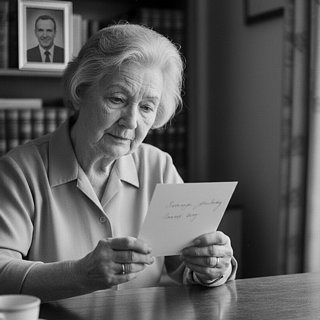
Is It Ever Too Late to Send a Condolence Card? News of a death often arrives on its own schedule, sometimes long after the moment itself, carrying the quiet weight of something that still matters. Many people, confronted with that delay, retreat into silence, convinced the chance to acknowledge the loss has passed.

Condolence etiquette has never hinged on punctuality. It rests on the willingness to recognize another person’s pain and to honor the life that ended. We underestimate how much solace lies in being remembered, even belatedly, by another human being.

Families living with loss do not follow a tidy emotional timetable. Their grief continues long after the initial messages fade. A card that arrives months later does not intrude. It joins the ongoing landscape of remembrance, signaling that the person who died has not slipped from view.

A simple card carries weight when it contains a sincere memory or a few honest lines. Such gestures do not resolve anything. They acknowledge. They accompany. They remind.

A belated condolence often strengthens its purpose, showing that remembrance has endured beyond the first wave of attention. It proves that compassion can outlast the news cycle, the social awkwardness, and the instinct to step aside.

Decency does not expire. Time does not blunt the value of kindness. It often sharpens it, demonstrating that empathy can still reach across the distance that loss creates.

Wondering what to read next?

  1. No Need to Send a Thank-you Card for a Thank-you Card
  2. How Small Talk in Italy Changed My Perspective on Talking to Strangers
  3. Signs Your Helpful Hand Might Stray to Sass
  4. Stop asking, “What do you do for a living?”
  5. A Trick to Help you Praise At Least Three People Every Day

Filed Under: Effective Communication, Sharpening Your Skills Tagged With: Conversations, Courtesy, Etiquette, Gratitude, Social Life, Social Skills

When Nursing Starts to Feel Like a Dead End

January 13, 2026 By Nagesh Belludi Leave a Comment

When Nursing Starts to Feel Like a Dead End

Nursing rewards commitment, but it does not always reward longevity. Many experienced nurses reach a point where effort no longer translates into momentum. This is about recognising that moment, questioning the grind, and looking at career progress as something deliberate and sustainable, not rushed or self-destructive.

You can like your job and still feel boxed in by it. A lot of nurses reach a point where the work keeps piling up and the shifts get heavier, and yet the role itself stays fixed. You are trusted and relied on but maxed out, yet the path forward looks fuzzy. That tension sits in the background of daily life, especially when work already takes more out of you than it gives back. At some point, the question becomes simple: stay where you are, or find a way to move forward without blowing everything up.

Hitting the Ceiling in Clinical Roles

Most nurses know the feeling of being good at the job but stuck in the same lane. You handle more complex situations and mentor newer staff, you carry a lot of unspoken responsibility, yet your scope does not really change. Promotions are limited. Pay bumps are small. The work keeps coming anyway.

That is often the moment when education enters the picture, not as a dream move, but as a practical one. Some nurses start looking for paths that do not add unnecessary steps or drag things out for years. An integrated option like an RN to MSN degree can feel appealing in this context because it skips the stop-start pattern of earning multiple credentials along the way. It is less about chasing a title and more about opening doors that actually change what your workday looks like.

For many people, the appeal is simple: a clearer direction and a sense that the effort actually goes somewhere real.

What Advanced Practice Actually Changes

Moving into advanced practice is not about becoming a different person at work. It is about having more say in clinical decisions and more control over how you use your skills. Nurse practitioners, for example, work with greater independence and often have more predictable career options.

That direction is not accidental. Demand for nurse practitioners continues to grow , and roles are expanding across primary care, mental health, and specialty settings, according to data from the U.S. Bureau of Labor Statistics. Those roles come with different expectations, but also with clearer authority and professional footing.

If you are already carrying responsibility without the title or flexibility to match it, that difference can feel meaningful. It is all about doing work that lines up better with your experience and judgment.

Education Paths That Do Not Add Extra Years

One of the biggest blockers for nurses thinking about graduate school is time. Not everyone has the patience or energy to stack degree after degree while still working full time. Traditional routes can feel drawn out, especially when they include steps that do not really change your day-to-day role.

That is where streamlined education paths come into focus. Integrated programs appeal to people who already know what they want and do not need extra proving ground along the way. The draw is efficiency. You study with a clear endpoint in sight and avoid repeating material you already use on the floor. There is no “starting from the bottom” again setback, btu a natural continuation of where you already are.

For someone balancing work, family and basic a bit of me-time, that structure can make advanced education feel doable rather than overwhelming. It is less about speed and more about respect for the reality of adult life. It’s the educational pathway that has been missing, but now, at least, it is available in nursing.

Hustle Culture Versus Sustainable Progress

Healthcare does not escape hustle culture. There is a constant hum around doing more and taking on extra shifts, pushing through exhaustion because that is what dedicated people do. The problem is that this framing leaves very little room for long-term thinking.

Stepping back from that mindset does not mean giving up. It often means choosing progress that does not drain you dry. A thoughtful look at hustle culture cuts through the idea that constant pressure equals success. Hustling is great, but not at the cost of your sanity.

For nurses, sustainable progress usually looks quieter and more deliberate. It might mean fewer shifts but more influence. It might mean changing roles instead of adding more tasks. The goal is not to escape work, but to shape it into something you can live with for years, not just survive this month.

Choosing Forward Without Burning Out

Career growth does not have to feel dramatic to be real. For many nurses, the most honest moves are the ones that reduce friction instead of adding it. You already know the work. You already carry responsibility. The next step is about aligning your role with that reality.

When choices are grounded in clarity rather than pressure, they tend to hold up better. Moving forward does not require noise or grand gestures. Sometimes it just means choosing a path that respects your time, your energy, and the life waiting for you when the shift ends.

Filed Under: Inspirational Quotations

With Regional Demand and a Strong Job Market, Now Is The Time To Become A Nurse

January 12, 2026 By Nagesh Belludi Leave a Comment

With Regional Demand and a Strong Job Market, Now Is The Time To Become A Nurse

Across the United States, the demand for nurses is growing faster than the workforce can keep up with. If you’re considering a career that offers purpose, stability and real opportunities wherever you live, nursing deserves serious attention right now.

If you’ve ever thought about a career in nursing , it’s very likely because you want work that feels useful, secure or both. Nurses are hugely in demand across the States right now, which is already shaping how healthcare employers recruit and support new staff. When you understand where that demand comes from and how it affects your prospects, nursing becomes easier to picture as a realistic career choice rather than a vague ambition.

A Nationwide Shortage that Affects Everyday Care

If you or your family have required medical care lately, it’s likely you’ve already experienced the effects of the nursing shortage at first hand, with longer waiting times in clinics and triage areas and stretched hospital wards usually reflecting staffing pressures. National data shows that while the United States has millions of registered nurses, many states still do not have enough to meet patient needs. This gap exists due to a combination of population growth, staff turnover and nurse retirements that are outweighing the recruiting that’s happening at the same time, whilst the recruitment itself is being slowed down by a lack of available nursing school places. Projections suggest close to 190,000 registered nurse job positions will open up each year through the mid 2030s, driven both by new roles and replacement needs. For you, this matters right now, because long-term shortages usually push employers to invest more in training and early career support.

Why Location Shapes Your Chances

Demand for nurses is uneven across the country , which means where you already live or plan to work can strongly influence your opportunities. Many states have seven or eight nurses per person, significantly lower than the national average of just under ten nurses per 1000 residents; some have a few more (and South Dakota has almost 16 nurses per 1000 residents). The fewer nurses there are to go around, the more hospitals and clinics struggle to fill shifts, which increases pressure on services. In practice, this often leads employers to widen their hiring criteria in an effort to speed up recruitment, which can make it easier for new nurses to secure their first role.

The South and West Face the Sharpest Pressure

Regional data shows that the South and the West experience some of the most severe shortages, largely because their rapid population growth has outpaced the supply of trained nurses. Large states with big populations such as Texas and California feel this strain particularly strongly, as expanding cities require more hospitals, clinics and long-term care facilities (and often suffer more from poverty-related illnesses in deprived urban areas). For you, this can mean stronger incentives such as sign-on bonuses or flexible scheduling, since employers are competing for limited staff; where demand is high, new nurses have greater leverage when entering the workforce.

Rural Communities Offer Different Advantages

Shortages are by no means limited to major cities and rural areas across many states face even greater challenges. Aside from issues of poverty and poor lifestyle due to lack of employment opportunities, smaller communities often lack nearby training programmes, which makes replacing retiring nurses difficult. If you choose a rural setting, you may well be asked to take on a broader role because teams are smaller and resources are limited. But don’t see that as a bad thing: wider responsibility can accelerate your learning and confidence, which is valuable early in your career. Rural employers also tend to offer support such as loan repayment or housing assistance, because they know that attracting nurses is essential to keeping services open altogether.

A Strong Job Outlook With Room To Diversify

Regional shortages are reinforced by a positive national job outlook. Registered nurse employment is expected to grow faster than the average for all occupations, with demand spread across hospitals, outpatient centres, community health and long term care. This breadth matters because it gives you flexibility rather than locking you into one setting. You can begin in acute care to build skills and, should you decide on a change of scene, move into public health or specialist roles later. Unlike in some industries, the demand for nurses follows the profession rather than the needs of a single workplace or company.

Entering a Profession That Truly Needs You

When you think about landing your first nursing job, it’s normal to worry about competition or lack of experience, like you would do in any other role. That said, current conditions should help counter those fears, because employers must rely on a cupply of new graduates to keep services running. Many hospitals now offer structured transition programmes that support nurses in their first year, combining supervision with hands-on learning. These programmes exist because retention matters as much as recruitment during a shortage; every extra pair of hands makes a big difference and is expensive to replace as well as to train. For you as a trainee, that can often mean more readily-available guidance and clearer expectations as you build confidence.

Choosing Clarity Over Uncertainty

Committing to training always involves effort, but the current nursing landscape offers much clearer signals than many careers can in 2026. Regional shortages, strong national growth and supportive entry pathways all point in the same direction: the US healthcare system needs you. If you want work that matters and prospects fed by constant demand, nursing stands out well above the crowd.

Filed Under: Inspirational Quotations

What Appears Self-Evident to One May Be Entirely Opaque to Another: How the Dalai Lama Apology Highlights Cultural Relativism

January 12, 2026 By Nagesh Belludi Leave a Comment

Dalai Lama Apology Highlights Cultural Relativism and Context-Bound Moral Judgments In 2023, a video of the Dalai Lama interacting with a young boy at a public event in India ignited global outrage. The footage showed him kissing the child on the lips, then extending his tongue and telling the boy to “suck my tongue.” The reaction was immediate and visceral; across cultures, people found the moment disturbing and profoundly inappropriate.
His office issued an apology and invoked cultural context. Defenders pointed to a Tibetan custom in which sticking out one’s tongue is a gesture of respect, an old practice tied to the 9th-century tyrant Lang Darma, whose black tongue became a symbol of malevolence. After his death, Tibetans briefly exposed their tongues to show they were not his reincarnation, a gesture that evolved into a sign of sincerity.

But the phrase uttered in 2023 had no connection to that tradition, and there’s no “sucking” involved in the Tibetan practice of sticking out one’s tongue in greeting.

And even if the Dalai Lama, an elderly spiritual figure known for his playful demeanor, intended the moment as harmless warmth, intention could not neutralize the optics. As a global leader, his “place” is no longer a monastery; it is the global stage, where every gesture is interpreted through a worldwide semiotic field. The incident became a lightning rod for debates about cultural relativism, the limits of intention, and the way symbols mutate across borders.

More importantly, the harm was not abstract. The optics themselves caused real damage to the child’s dignity, to public trust, and to the moral authority of a figure whose influence extends far beyond his tradition. No contextual explanation could override the intuitive recoil. Some behaviors, regardless of cultural lineage, trigger near-universal moral instincts.

The episode exposes the friction between divergent cultural operating systems in an interconnected world, but it also reveals the limits of relativism. Morality may be shaped by upbringing, but its foundations are not infinitely elastic. When a gesture crosses a line most humans recognize instinctively, tradition cannot serve as a shield.

Idea for Impact: Tradition excuses nothing. Morality may shift from one society to another, often amounting to little more than the habits a culture has chosen to bless. But that variability has limits. Not every strange or unsettling act can be waved away with appeals to heritage or upbringing; at some point, tradition stops being an explanation and becomes an evasion.

Wondering what to read next?

  1. Embracing Cultural Sensitivity: A Case Study of Akira Kurosawa’s Oscar Speech
  2. Power Corrupts, and Power Attracts the Corruptible
  3. You Need to Stop Turning Warren Buffett Into a Prophet
  4. Power Inspires Hypocrisy
  5. Virtue Deferred: Marcial Maciel, The Catholic Church, and How Institutions Learn to Look Away

Filed Under: Business Stories, Leadership, Mental Models Tagged With: Attitudes, Biases, Diversity, Ethics, Group Dynamics, Icons, Psychology, Role Models

Global Perspectives – How PMHNP Roles Are Evolving Internationally

January 11, 2026 By Nagesh Belludi Leave a Comment

Global Perspectives - How PMHNP Roles Are Evolving Internationally

The Psychiatric Mental Health Nurse Practitioner role has grown tremendously over the last 10 years due to increased demand for mental health care worldwide and the recognition of nurses’ ability to lead psychiatric care. The issue of mental health needs has increased in diverse groups of people due to different factors like urbanization, social isolation, aging population, and the post-impact of the crisis around the world.

In turn, healthcare systems worldwide are adjusting their workforce models to benefit communities, and the PMHNP role is adapting as well. Individuals who consider pursuing a PMHNP degree will find a more interconnected, dynamic, and responsive landscape in terms of cultural context and healthcare policy.

With the countries reconsidering the way mental health care is provided, PMHNPs are gaining more responsibilities, both as they practice independently and collaboratively to provide care and those involving policy and education leadership. The perspective on the current evolution of the profession worldwide provides an opportunity to understand the profession’s next opportunities and challenges.

The United States – Expanding Scope and Autonomy

The PMHNP role has developed at an accelerated pace in the USA due to the broadening of the scope of practice legislation and the shortage of psychiatric practitioners. Various states have also given full practice authority to PMHNPs so that they can assess, diagnose and manage patients without the supervision of a physician. This has especially been evident in underserved and rural regions where proximate access to psychiatrists is inaccessible.

US education programs are growing their enrolments and include training in telepsychiatry to equip graduates to meet various care needs, regardless of the setting. With a lessening of mental health stigma and a growing number of services demanded, PMHNPs are becoming leaders in healthcare decision-making , influencing the standards of practice, and adding to interdisciplinary care models.

Canada – Harmonizing Practice Across Provinces

Canada provides an alternative regulatory arrangement in which provincial governments define the scope of practice in the nursing field. The PMHNP jobs are also growing, albeit at differing rates across the regions. Other provinces, like Ontario and British Columbia, have recognized the advanced role of psychiatric nursing, and nurse practitioners can therefore provide comprehensive mental health care and assessment.

Canadian PMHNPs work in co-operative care with physicians, psychologists and social workers, commonly in community health centers or integrated primary care teams. The focus on interprofessional practice has been part of a larger health system devotion to affordable, holistic care and PMHNPs are poised to be stakeholders in mental wellness initiatives.

Europe – Diverse Frameworks and Growing Recognition

The PMHNP is developing within a quilt of healthcare systems and educational standards across Europe. In other countries like the United Kingdom, the Netherlands, and Sweden, psychiatric nurse practitioners have been formalized as a part of the mental health system. Advanced nursing roles in the UK include mental health assessment, prescriptions, and case management, but the titles and functions can vary from the US model.

Collaboration across many disciplines is highly valued in European healthcare systems , and PMHNPs work with psychiatrists, psychologists, and rehabilitation professionals. The educational path differs: in some countries, preparation is at the master’s level, while in others, doctoral standards are adopted. The role of the PMHNP is still on the rise as countries address workforce deficits and improve access to mental health care.

Australia and New Zealand – Integrating Care in Diverse Settings

Other regions that have grown advanced mental health nursing include Australia and New Zealand, where nurse practitioners can assess, diagnose, and manage care, including prescribing medications under specified regulatory bodies. These nations have been focused on culturally responsive practice, especially with rural and indigenous communities, where PMHNPs are crucial for filling service gaps.

Clinical specialty training in mental health nursing is part of the educational paths usually followed for nurse practitioner credentialing. The introduction of PMHNPs into multidisciplinary teams helps promote efforts in youth mental health, trauma recovery, and community resiliency.

Low- and Middle-Income Countries – Innovation Amid Constraints

The development of the PMHNP role is also accompanied by systemic constraints experienced in many low- and middle-income countries, including scarce resources, workforce shortages, and inconsistent regulatory systems. Despite these issues, new strategies are being developed.

Asian, African, and Latin American countries are beginning to formalize advanced nursing roles, and some already offer postgraduate certificate programs or master’s programs specific to mental health. Models involving task-sharing practices, such as expanding the responsibilities of non-physician clinicians under supervision, are becoming increasingly popular, especially in areas experiencing shortages of psychiatrists.

Under such settings, PMHNPs and psychiatric clinical nurses could serve as frontline providers supported by telepsychiatry programs, mobile health initiatives, and the integration of community health workers. Although regulators differ in their recognition, pragmatic responses to unmet mental health needs are increasingly being implemented through more advanced nursing roles.

Telehealth and Technology – A Global Catalyst

One common theme across all regions is how technology has influenced the PMHNP role. Telehealth has expanded access to care, enabling PMHNPs to reach patients regardless of geographic or socioeconomic boundaries. Those nations with strong digital infrastructure have quickly adopted telepsychiatry and are expanding their capacity to accommodate remote service delivery.

Education and training are also affected by technology, as online courses, virtual simulations, and cross-border education increase access to PMHNP training. Such innovations help develop the workforce and build a more globalized community of professionals.

A Vision for the Future

The development of the PMHNP role at the international level is seen as an extension of changes in healthcare delivery, labor force planning, and societal expectations. In the United States, PMHNPs are driving the future of mental health care through autonomous practice; in Europe, through collaborative care models; and in resource-constrained environments, through innovative models.

For clinicians and learners considering the world of advanced practice, developments worldwide offer motivation and insight into how different health systems can use nursing leadership. The development of the PMHNP role is not just a response to existing demands but an idea of accessible, high-quality mental health care for everyone.

Filed Under: Inspirational Quotations

Inspirational Quotations #1136

January 11, 2026 By Nagesh Belludi

There are no persons more solicitous about the preservation of rank, than those who have no rank at all.
—William Shenstone (English Poet)

There is not a fiercer hell than the failure in a great object.
—John Keats (English Poet)

When a man takes the road to destruction, the gods help him along.
—Aeschylus (Greek Playwright)

Everyone believes very easily whatever they fear or desire.
—Jean de La Fontaine (French Poet)

Both man and womankind belie their nature when they are not kind.
—Gamaliel Bailey (American Journalist)

A good face is a letter of recommendation.
—Common Proverb

What I call a good patient is one who, having found a good physician, sticks to him till he dies.
—Oliver Wendell Holmes, Sr. (American Physician, Essayist)

Capitalism is a social system based on the recognition of individual rights, including property rights, in which all property is privately owned.
—Ayn Rand (Russian-born American Novelist)

Blemishes are hid by night and every fault forgiven; darkness makes any woman fair.
—Ovid (Publius Ovidius Naso) (Roman Poet)

What is an adult? A child blown up by age.
—Simone de Beauvoir (French Philosopher)

Seeing is believing, but feeling’s the truth.
—Thomas Fuller (English Cleric, Historian)

Doing good is the only certainly happy action of a man’s life.
—Philip Sidney (English Soldier, Poet, Courtier)

The friend that can be bought is not worth having.
—Irish Proverb

Filed Under: Inspirational Quotations

Nursing 101: Make Sure You Have What It Takes to Make an Impact in the Nursing World as You Get Started

January 10, 2026 By Nagesh Belludi Leave a Comment

Nursing 101: Make Sure You Have What It Takes to Make an Impact in the Nursing World as You Get Started

So, you want to become a nurse? You have your undergraduate degree in another field but you’ve found out about the Accelerated Bachelor of Science in Nursing degree (ABSN program) and you’ve learnt that you can do this fast-tracked degree to build on the one you have. You could get into nursing in just over 12 months. It sounds great, doesn’t it? And it is. Amazing to think that the nursing field offers something like this; however, you must be aware of the fact that, whilst you might already have an undergrad, you must have some subjects under your belt that will assist you in the ABSN program. This includes subjects like statistics, psychology, biology and anatomy. Keen to learn more? Great, it’s time to dive in.

There are certain prerequisites for nursing online that you need to be aware of. If you don’t know them, you have come to the right place because you’re about to learn all there is to know. To start, you must build the right academic foundation before you do anything else. Sure, you have a BA already but you must cross off some additional subjects. Then, you need to spend some time looking at your GPA and also looking at what exactly the ABSN program demands of you. Think you’re ready? It’s time to dive in.

Building the Right Academic Foundation

Before applying to an ABSN program, it is important to make sure your academic base is strong. Nursing relies on both science and critical thinking, so prior coursework matters more than many people realize. Classes like anatomy, psychology and statistics are not just boxes to check. They directly shape how easily you understand nursing material later on. These subjects prepare you for understanding the human body, interpreting research and connecting physical health with mental and emotional well-being. If you don’t have these, the program will likely be a lot harder for you to grasp because these are simply the foundations of this field.

Key courses that often matter most include:

  • Human anatomy and physiology to understand how body systems function

  • Psychology to understand behavior, stress and patient interaction

  • Statistics to interpret medical research and evidence-based practice

  • Microbiology to understand infection control and disease processes

Why GPA Plays Such a Big Role

ABSN programs move fast because they compress years of nursing education into a shorter time frame. Schools use GPA as a way to predict whether you can handle that intensity. A strong GPA shows consistency, discipline and the ability to manage challenging material. Your GPA reflects more than grades. It reflects how well you manage deadlines, absorb complex topics and stay committed when things get difficult. These qualities are essential in nursing, where responsibility is constant and stakes are high.

Even if your GPA is not perfect, showing dedication and growth can still work in your favor. Schools want to see commitment just as much as raw academic performance. So, if you find yourself in the situation of not having achieved your ideal GPA, don’t worry. Try to get in touch with the nursing school you’re interested in to plead your case. Show your passion and commitment for the field and see what they say. Don’t give up!

Understanding What an Accelerated Nursing Program Demands

An ABSN program is intense by design. It takes the content of a traditional four-year nursing degree and delivers it in a much shorter window, usually within 12 months. This means long study hours, frequent exams and very little downtime. You are expected to absorb information quickly and apply it immediately in clinical settings. That requires organization, focus and emotional resilience. It is not just about memorizing material. It is about learning to think like a nurse. This pace can be challenging but it is also what makes ABSN programs so effective. They prepare you for the reality of nursing, where quick thinking and adaptability are everyday skills.

The Personal Skills That Matter Just as Much as Academics

Nursing is a people-centered profession and personal qualities matter just as much as test scores. If you want to make an impact in nursing, emotional intelligence and resilience are essential. You have to be someone who is willing to help, who can showcase empathy, cultural sensitivity and who can stay focused even when beyond tired.

These skills help you connect with patients, work effectively in teams and manage the emotional demands of healthcare.

Preparing Before You Apply to the Program

Getting ready for an ABSN program starts long before applying. It is about creating a strong academic and personal foundation that makes the transition smoother.

Ways to prepare include:

  • Reviewing science material before classes begin

  • Practicing time management strategies

  • Creating a support system of family or friends

  • Understanding the physical and mental demands of clinical work

Preparation helps reduce stress and increases confidence. When you know what is coming, it feels easier to meet challenges head-on.

A Strong Start Shapes a Strong Career

Success in nursing begins long before graduation. It starts with making sure your foundations are solid. Taking the right prerequisite courses, maintaining a competitive GPA and preparing mentally for an accelerated program all set the stage for long-term success.

Nursing is not just about passing exams. It is about developing competence, compassion and confidence that will lead you on your journey.

Filed Under: Inspirational Quotations

How to Best Prepare Yourself For an Online Master of Science in Speech-Language Pathology

January 9, 2026 By Nagesh Belludi Leave a Comment

How to Best Prepare Yourself For an Online Master of Science in Speech-Language Pathology

So, you’ve earned your undergraduate degree and you’re looking to step into the next phase of your education. That’s excellent news and something that you’re probably equal parts excited for and equal parts nervous for. That’s completely normal. It would be strange if you weren’t a little nervous. That’s probably why you’ve come here, isn’t that right? To get a better grip on how to approach doing your master’s in speech-language pathology. It’s a rigorous degree and if you sort of know what to expect but you’re not fully aware of how to best prepare for this study, then you’ve come to the right place.

Below, you will learn about what speech-language pathology is, how you can best prepare to study for this in terms of academics, how to create a study system that works for you, the importance of understanding the technical side of things, given this is an online course and how to prepare for the reality of clinical hours. Starting to sound fascinating or daunting? A bit of both? Alright, well, hopefully by the end of this, it will feel more fascinating than daunting.

What Exactly is Speed-Language Pathology?

Alright, well, first things first, what exactly is speech-language pathology? It’s essentially a healthcare and educational field focused on the assessment, diagnosis and treatment of communication and swallowing disorders. The field is very varied because it mixes things from the science field with human connection, drawing on linguistics, neuroscience, psychology and anatomy.

Speech pathology isn’t just about correcting speech errors; it supports people in expressing thoughts, understanding others, participating socially and maintaining quality of life. At its core, speech-language pathology is about empowering individuals to communicate effectively and safely. After all, communication is what builds relationships and so working in this field is truly something that will change people’s lives. If you are thinking of doing this but you perhaps have an undergraduate degree in something completely different, don’t worry, you can do leveling degree courses for speech language pathology , which give you the tools you’ll need to start properly studying and eventually working in this field.

Create a Study System That Actually Works

Online learning offers flexibility but it also demands discipline. Success depends less on motivation and more on systems. Design a weekly routine that fits naturally into daily life. Dedicated study blocks, consistent wake times and planned breaks prevent burnout. A quiet and organized workspace helps signal focus mode even when studying at home.

Try to create some digital calendars with color-coded classes and deadlines, task managers for breaking large assignments into steps and note-taking apps or handwritten notebooks based on learning style. Try not to do too much in a day or in a week, though. Work hard but also be realistic about what you’re able to do. It doesn’t make sense for you to fill your time up with a whole bunch of study sessions if you’re just exhausted going into each of them. You have to maintain balance.

Get Comfortable With the Tech Side of Learning

Technology is the classroom in an online SLP program. Learning platforms, video conferencing tools and digital assessment systems become something that you’re confronted with every day. Before classes start, test everything. Ensure you have reliable internet, a functional webcam, quality headphones and updated software so that you’re never caught off guard.

Equally important is digital communication etiquette. Discussion boards and group projects require clear writing, professionalism and timely responses. Practicing concise but thoughtful online communication sets a strong impression with peers and faculty, which is something you may want to keep in mind.

Prepare for the Clinical Reality Early

Speech-language pathology is a clinical profession at heart. Even in an online format, programs include hands-on practicum experiences in real settings. Preparation involves more than paperwork. Start thinking about populations of interest, such as pediatrics, medical SLP or schools. This clarity helps when selecting or being assigned clinical placements.

Other smart steps include:

  • Researching local clinics, schools and hospitals

  • Understanding supervision requirements and state licensure basics

  • Practicing professional communication and self-reflection

Clinical work can be emotionally demanding. Developing resilience, openness to feedback and ethical awareness early supports long-term growth.

Strengthen Time Management and Self-Care Skills

Graduate school challenges both intellect and stamina. Time management skills should go hand in hand with self-care habits. Regular sleep, movement and balanced meals directly affect concentration and learning. Scheduling downtime is not indulgent; it is strategic and it is a strategy that you can’t afford to miss out on.

Mindset matters too. Perfectionism often backfires in graduate school. Progress, curiosity and adaptability matter more than flawless performance. Learning to ask for help early is a professional skill, not a weakness.

Align Your Life With Your Long-Term Goals

An online Master of Science in Speech-Language Pathology is not just an academic commitment; it is a lifestyle shift. Preparing means aligning finances, work schedules and personal responsibilities with program demands.

Planning ahead reduces friction. This may involve adjusting work hours, discussing expectations with family or setting boundaries around study time. Every proactive decision creates space to focus on learning and professional identity development, which is great. You just have to keep it up for the four years it takes to complete this degree. Now you feel more excited than daunted, isn’t that right?

Filed Under: Inspirational Quotations

Ditch Deadlines That Deceive

January 9, 2026 By Nagesh Belludi Leave a Comment

Ditch Fake Deadlines and Stop Letting Deceptive Urgency Drive Work Imposing fake deadlines may ignite a temporary burst of activity, but the cost is steep: truth is sacrificed, trust frayed, and reason quietly exiled.

While artificial urgency can sometimes inspire excellence, it more often conditions teams to greet future demands with suspicion rather than motivation. Like crying “Wolf!,” it dulls responsiveness and undermines your team’s intelligence.

The damage runs deeper than missed deliverables—it corrodes morale, dims creative spark, and leaves the workplace echoing with cynicism. Sustainable performance doesn’t emerge from panic-fueled productivity drills, but from trust, clarity, and purpose.

Wondering what to read next?

  1. Why Your Employees Don’t Trust You—and What to Do About it
  2. Don’t Lead a Dysfunctional Team
  3. Undertake Not What You Cannot Perform
  4. Trust is Misunderstood
  5. The Likeability Factor: Whose “Do Not Pair” List Includes You?

Filed Under: Leading Teams, Managing People, Project Management, Sharpening Your Skills Tagged With: Budgeting, Character, Getting Along, Great Manager, Likeability, Mental Models, Persuasion, Relationships, Targets, Teams

« Previous Page
Next Page »

Primary Sidebar

Popular Now

Anxiety Assertiveness Attitudes Balance Biases Coaching Conflict Conversations Creativity Critical Thinking Decision-Making Discipline Emotions Entrepreneurs Etiquette Feedback Getting Along Getting Things Done Goals Great Manager Innovation Leadership Leadership Lessons Likeability Mental Models Mentoring Mindfulness Motivation Networking Parables Performance Management Persuasion Philosophy Problem Solving Procrastination Relationships Simple Living Social Skills Stress Suffering Thinking Tools Thought Process Time Management Winning on the Job Wisdom

About: Nagesh Belludi [hire] is a St. Petersburg, Florida-based freethinker, investor, and leadership coach. He specializes in helping executives and companies ensure that the overall quality of their decision-making benefits isn’t compromised by a lack of a big-picture understanding.

Get Updates

Signup for emails

Subscribe via RSS

Contact Nagesh Belludi

RECOMMENDED BOOK:
The Guide

The Guide: R. K. Narayan

R.K. Narayan's story of the transformation of Raju is a profound, yet dryly humorous assessment of the frailty of the human condition and the meaning and consequences of our actions

Explore

  • Announcements
  • Belief and Spirituality
  • Business Stories
  • Career Development
  • Effective Communication
  • Great Personalities
  • Health and Well-being
  • Ideas and Insights
  • Inspirational Quotations
  • Leadership
  • Leadership Reading
  • Leading Teams
  • Living the Good Life
  • Managing Business Functions
  • Managing People
  • MBA in a Nutshell
  • Mental Models
  • News Analysis
  • Personal Finance
  • Podcasts
  • Project Management
  • Proverbs & Maxims
  • Sharpening Your Skills
  • The Great Innovators

Recently,

  • Inspirational Quotations #1143
  • The Hot-Desking Lie: How It Killed Focus and Gutted Collaboration
  • Unreliable Narrators Make a Story Sounds Too Neat
  • Bertrand Russell on The Value of Philosophy: Doubt in an Age of Dogma
  • Inspirational Quotations #1142
  • The Law of Petty Irritations
  • Look, Here’s the Deal: Your Insecurity is Masquerading as Authority

Unless otherwise stated in the individual document, the works above are © Nagesh Belludi under a Creative Commons BY-NC-ND license. You may quote, copy and share them freely, as long as you link back to RightAttitudes.com, don't make money with them, and don't modify the content. Enjoy!