
• Skip to content
  • Skip to primary sidebar

Right Attitudes

Ideas for Impact

Good Taste in Humor

December 19, 2025 By Nagesh Belludi Leave a Comment

Dawn French: Good Taste Makes Humor Funny; Bad Taste Ruins the Humor British comedian and The Vicar of Dibley star Dawn French is credited with saying, “When it’s funny, it’s not bad taste. And when it’s bad taste, it’s not funny.” These words capture a fundamental truth: comedy balances cleverness and offense, joy and discomfort.

Humor is subjective, yet great comedy thrives on wit, relatability, and the unexpected—not cruelty or cheap shock value. It illuminates life’s absurdities, inviting fresh perspectives without alienating its audience. When comedy resorts to malice or punches down, it fails both ethically and comedically. By adapting to shifting cultural norms, true humor unites us by challenging preconceptions and sparking dialogue.

Idea for Impact: Use French’s words as your litmus test. Don’t just aim for laughs—strive to be artful, intelligent, and empathetic. Make people think rather than regret laughing.
Wondering what to read next?

  1. Witty Comebacks and Smart Responses for Nosy People
  2. Signs Your Helpful Hand Might Stray to Sass
  3. Avoid Trigger Words: Own Your Words with Grace and Care
  4. “Are We Fixing, Whinging, or Distracting?”
  5. What Jeeves Teaches About Passive Voice as a Tool of Tact

Filed Under: Effective Communication, Sharpening Your Skills Tagged With: Conversations, Etiquette, Getting Along, Humor, Likeability, Mental Models, Social Skills

Eat with Purpose, on Purpose

December 17, 2025 By Nagesh Belludi Leave a Comment

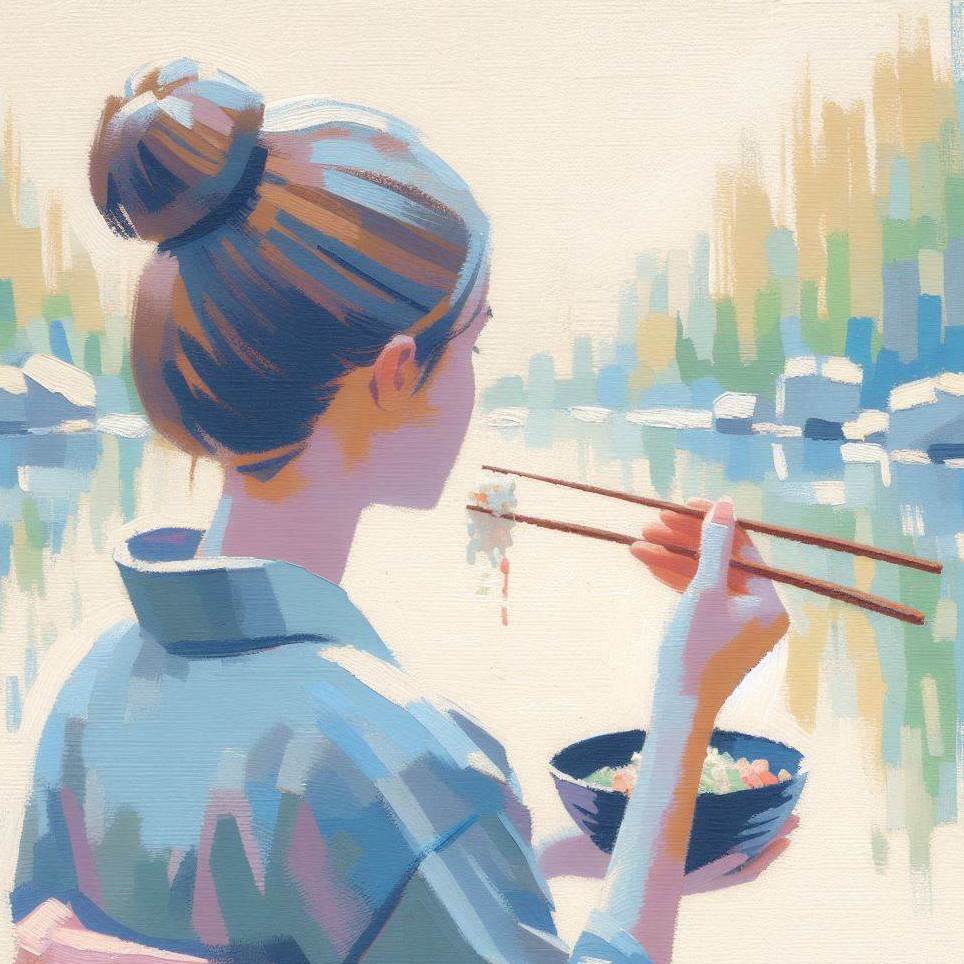
Eat Mindfully, Moderately, And Listen To Your Body's Fullness Cues

In India, Mitāhāra (Sanskrit for “moderate diet”) is central to Āyurveda and yoga, emphasizing a balanced, mindful diet suited to your unique needs. The goal? Align meals with your doṣa (body constitution) to stay healthy and prevent disease. Moderation is key—no excess, no shortage. Think wholesome, unprocessed foods like fruits, veggies, grains, and legumes. It’s a practice rooted in yoga, promoting physical purification, spiritual growth, and mental clarity. Eat with intention, and your body will thank you.

In Okinawa, locals follow Hara Hachi Bu (Japanese for “stomach 80% full,”) eating only until they’re about 80% satisfied. This approach, linked to their exceptional health and longevity, has earned them the title “land of centenarians.” Based on Confucian teachings of moderation, it’s now a popular Japanese proverb: “Stomach 80% full, no illness; stomach 120% full, doctor needed.” Follow this, and both your health and relationship with food will thrive.

Both Mitāhāra and Hara Hachi Bu share a core principle: caloric restriction—cutting calories without sacrificing nutrition. Studies show this can slow aging and extend lifespan in animals by reducing oxidative stress and improving metabolic function. While human aging is still debated, evidence suggests it may help reduce age-related diseases. The benefits go beyond longevity: mindful eating improves digestion, energy, sleep, weight management, mental clarity, and overall well-being. To practice, listen to your body’s cues, eat mindfully, and focus on whole foods like fruits, veggies, grains, and legumes. Limit unhealthy fats and sugars, avoid late-night meals, and stick to a consistent eating schedule. Watch out for overeating—those takeout boxes? They often pack more than you think. Social events or all-you-can-eat buffets? Beware—overindulgence lurks there.

Dieting is personal—what works for one may not work for another. It’s best to consult a dietician or doctor for a tailored plan. But here’s the key: eat mindfully. Pay attention to hunger cues and avoid overeating. Forget drastic calorie cuts—it’s about eating with intention. Are you consciously choosing your food, or eating mindlessly? Is your food fueling your body or filling a void? Mindless eating serves no real purpose.

Healthy eating isn’t about strict rules, unrealistic thinness, or depriving yourself of what you love. It’s about feeling great, having energy, and supporting your health. So, eat mindfully, eat with purpose, and eat on purpose. Your body will thank you.

Wondering what to read next?

  1. The Reason Why Weight Watchers Works whereas ‘DIY Dieting’ Fails
  2. This Isn’t Really a Diet Book, But It’ll Teach You to Eat Better
  3. Stop Dieting, Start Savoring
  4. Be Careful What You Start
  5. What the Dry January Trap Shows Us About Extremes

Filed Under: Health and Well-being Tagged With: Change Management, Discipline, Goals, Mindfulness, Motivation, Persuasion, Stress

It’s Never About You

December 15, 2025 By Nagesh Belludi Leave a Comment

Don't Take It Personally: Others' Actions Reflect Them, Not Your Worth. Disappointed? Hurt? Offended?

Let’s get real: most slights aren’t about you.

Someone trashed your Instagram post, shot down your opinion, or picked a petty fight? Not about you. They’re venting or projecting. You’re just collateral damage.

Your friend forgot your birthday, your coworker swiped your idea, or a relative threw a harsh critique? It stings. Still not about you. Their actions come from their own mess.

Customer service left you hanging, or some frustrating process ate hours of your life? Annoying, yes—personal, no. These systems aren’t made for you.

Lost money or a bad investment? Blame timing, luck, or the universe’s indifference. Not about you.

Someone dropped a cruel comment? Still not about you. Their bias says everything about them, not you.

Here’s the truth: people are self-absorbed. We live in our own bubbles, always chasing our own needs and fears. We rarely see others as full people. They’re props in our drama. And who loses sleep over props?

Idea for Impact: When someone disappoints you, remember: it’s not about you. Odds are, you didn’t even cross their mind.

Stop asking, “What does this say about me?” The answer is, “Nothing.” Flip the script. Focus on what their behavior says about them. Dropping the “me lens” reduces stress, lowers anxiety, and builds empathy. Life’s randomness isn’t yours to control. But resilience? That’s your superpower. Not every bump needs a deep dive.

Wondering what to read next?

  1. Affection Is No Defense: Good Intentions Make Excellent Alibis
  2. You’re Worthy of Respect
  3. How to … Care Less About What Other People Think
  4. Could Limiting Social Media Reduce Your Anxiety About Work?
  5. Who Told You That Everybody Was Going to Like You?

Filed Under: Managing People, Mental Models, Sharpening Your Skills Tagged With: Assertiveness, Attitudes, Confidence, Conflict, Emotions, Getting Along, Likeability, Relationships, Resilience

Inspirational Quotations #1132

December 14, 2025 By Nagesh Belludi

Crime is terribly revealing. Try and vary your methods as you will, your tastes, your habits, your attitude of mind, and your soul is revealed by your actions.
—Agatha Christie (British Novelist)

Publicity is justly commended as a remedy for social and industrial diseases. Sunlight is said to be the best of disinfectants; electric light the most efficient policeman.
—Louis Brandeis (American Jurist)

A man’s worth is no greater than the worth of his ambitions.
—Marcus Aurelius (Emperor of Rome, Stoic Philosopher)

Justice delayed is justice denied.
—William Ewart Gladstone (English Liberal Statesman)

Not alone for that which is mine will I rejoice, but for that which has been withheld, which was coveted and longed for but denied, for I am what I am for having bad to rise superior to the need.
—Muriel Strode (American Author, Businesswoman)

A fool must now and then be right, by chance.
—William Cowper (English Anglican Poet)

The morning of life is like the dawn of day, full of purity, of imagery, and harmony.
—Francois-Rene de Chateaubriand (French Writer, Statesman)

The busier we are, the more acutely we feel that we live.
—Immanuel Kant (Prussian German Philosopher)

Love doesn’t mean doing extraordinary or heroic things. It means knowing how to do ordinary things with tenderness.
—Jean Vanier (French-Canadian Humanitarian)

I really wonder what gives us the right to wreck this poor planet of ours.
—Kurt Vonnegut (American Novelist)

Only in love are unity and duality not in conflict.
—Rabindranath Tagore (Bengali Poet, Polymath)

A shy failure is nobler than an immodest success.
—Kahlil Gibran (Lebanese-born American Philosopher)

Filed Under: Inspirational Quotations

What You’re Saying When You Say ‘Yes’

December 12, 2025 By Nagesh Belludi Leave a Comment

Every 'Yes' Demands a Mindful 'No': Choose Wisely for Lasting Impact Life’s a series of trade-offs; each choice has an opportunity cost—what we must abandon. Time’s finite; each yes to one thing’s a silent no to another. Whether we work, spend time with family, learn, or rest, we’re always exchanging pursuits.

Recognizing these trade-offs is key to better decisions. Instead of blindly agreeing, consider your sacrifice. Are the alternatives you forgo more aligned with your long-term goals? Will this choice serve your well-being and priorities? Thinking about opportunity cost moves decisions from impulse to intention, making sure each commitment reflects what truly matters.

Every intentional yes requires a thoughtful no. Choose consciously. Let opportunity cost sharpen your decision-making, helping you use time wisely and live in greater alignment with your values.

Wondering what to read next?

  1. Everything in Life Has an Opportunity Cost
  2. Books in Brief: “Hell Yeah or No” Mental Model
  3. Never Take the First Offer
  4. What Most People Get Wrong About Focus
  5. Escape the People-Pleasing Trap

Filed Under: Mental Models, Sharpening Your Skills Tagged With: Assertiveness, Conflict, Conversations, Decision-Making, Discipline, Negotiation, Persuasion, Time Management

To-Do or Not To-Do?

December 10, 2025 By Nagesh Belludi Leave a Comment

Knowing What to Ignore is Just as Important as Knowing What to Pursue We rely on to-do lists to organize our tasks, yet they often spiral beyond what’s manageable, overwhelming us with more than we can realistically accomplish.

What we choose not to do is just as defining as what we pursue. That is where a “don’t-do” list really comes in handy—it serves as a filter for distractions, those pointless tasks, and commitments that consume your time without yielding much in return. At work, this might mean forgoing duties that do not add significant value. In life, it could entail letting go of habits or projects that simply crowd out what actually matters.

Saying no today does not mean no forever. Some tasks can be revisited later; however, actively clearing space ensures that priorities remain front and center.

Idea for Impact: A to-do list drives action, while a not-to-do list sharpens focus. Figuring out what not to do often gets you further.

Wondering what to read next?

  1. Don’t Ruminate Endlessly
  2. Hofstadter’s Law: Why Everything Takes Longer Than Anticipated
  3. Everything in Life Has an Opportunity Cost
  4. Do Things Fast
  5. Let a Dice Decide: Random Choices Might Be Smarter Than You Think

Filed Under: Living the Good Life, Mental Models, Sharpening Your Skills Tagged With: Assertiveness, Decision-Making, Discipline, Goals, Procrastination, Thought Process, Time Management

Nice Ways to Say ‘No’

December 8, 2025 By Nagesh Belludi Leave a Comment

Nice Ways to Say 'No': Assert Yourself Sometimes, saying ‘no’ is easier than saying ‘yes.’ Every ‘no’ is, in fact, a ‘yes’ to something else—your time, energy, and priorities. The strength to say ‘no’ comes from recognizing this tradeoff and valuing what truly matters to you.

Many of us are conditioned to say ‘yes’ to please others or avoid conflict, even at the expense of our own happiness. As entrepreneur and author James Altucher puts it in The Power of No (2014,) “When you say ‘yes’ to something you don’t want to do, here’s the result: you hate what you are doing, you resent the person who asked you, and you hurt yourself.” The more you give in, the more demands pile up, leaving you stretched thin and unrecognizable.

At work, this tendency can lead to taking on tasks that aren’t your responsibility—ones others avoid because they’re tedious or undervalued. In life, an overpacked schedule of other people’s priorities leaves little room for your own well-being. If your mental health is suffering, it’s time to change.

Reclaiming your time starts with asking: “Am I saying ‘yes’ for me?” Saying ‘no’ doesn’t have to be harsh or rude. It’s your right to protect your time, resources, and peace, no explanation needed. Thoughtful ‘no’s show respect—for yourself and others.

If you struggle with ‘no,’ here’s a list of assertive, polite phrases to help:

  • “I am unable to take on any more commitments at the moment.”
  • “I’m sorry, I don’t think I can give you the answer you’re hoping for.”
  • “I like your offer, but my schedule just won’t allow me to say ‘yes.'”
  • “That’s an excellent offer, but we’re not in a position to take advantage of it right now.”
  • “Good idea, but I’m afraid we have to pass on it for now.”
  • “This just won’t work for me.”
  • “Sorry, but this isn’t something I do.”
  • “I’m sorry you have that problem. I hope you find a solution soon.”
  • “Let me think about it and get back to you.” (This buys you time to consider thoughtfully.)
  • “I can’t commit to this right now, but thank you for thinking of me.”
  • “I’m honored you asked, but I don’t have the capacity to take this on.”
  • “I don’t feel like I can give this the time and attention it deserves.”
  • “Thank you for asking, but I have to say ‘no.'”
  • “This isn’t a priority for me at the moment.”

When pressured to say ‘yes’ but unsure, use that pause. A simple “Let me think about it” buys you room to assess if the request aligns with your goals and capacity. This isn’t avoidance—it’s intentional self-preservation.

Idea for Impact: Saying ‘no’ is an act of freedom. It frees you from draining obligations and creates space for what truly matters. Every ‘no’ is a step toward prioritizing yourself and reclaiming your life.

Wondering what to read next?

  1. Honest Commitments: Saying ‘No’ is Kindness
  2. What Jeeves Teaches About Passive Voice as a Tool of Tact
  3. Don’t Say “Yes” When You Really Want to Say “No”
  4. What Most People Get Wrong About Focus
  5. Buy Yourself Time

Filed Under: Effective Communication, Managing People, Sharpening Your Skills Tagged With: Assertiveness, Balance, Communication, Conflict, Conversations, Likeability, Negotiation, Persuasion

Inspirational Quotations #1131

December 7, 2025 By Nagesh Belludi

Perfection of means and confusion of goals seem, in my opinion, to characterize our age.
—Albert Einstein (German-born Theoretical Physicist)

That which is given with pride and ostentation is rather an ambition than a bounty.
—Seneca the Younger (Lucius Annaeus Seneca) (Roman Stoic Philosopher)

Always do what you feel deeply in the within to be the true thing to do.
—Wallace Wattles (American New Thought Author)

We like to be deceived.
—Blaise Pascal (French Philosopher, Scientist)

Know whence you came. If you know whence you came, there is really no limit to where you can go.
—James Baldwin (American Novelist, Social Critic)

Knowledge is the consequence of time, and multitude of days are fittest to teach wisdom.
—Jeremy Collier (English Anglican Clergyman)

The waste of life occasioned by trying to do too many things at once is appalling.
—Orison Swett Marden (American New Thought Writer)

The frontiers are not east or west, north or south, but wherever a man fronts a fact.
—Henry David Thoreau (American Philosopher)

We ought to give thanks for all fortune: it is good, because it is good, if bad, because it works in us patience, humility and the contempt of this world and the hope of our eternal country.
—C. S. Lewis (Irish-born Author, Scholar)

The best words for resolving a disagreement are, “I could be wrong; I often am.” It’s true.
—Brian Tracy (American Author)

When you work seven days a week, fourteen hours a day, you get lucky.
—Armand Hammer (American Entrepreneur, Businessman)

You may call for peace as loudly as you wish, but where there is no brotherhood there can in the end be no peace.
—Max Lerner (American Author)

Filed Under: Inspirational Quotations

Boundaries Define What You are—and What You’re Not

December 5, 2025 By Nagesh Belludi Leave a Comment

Boundaries Define What You are---and What You're Not Boundaries define what you’ll tolerate and what you won’t. Without them, you hand control of your time and energy to others.

Setting boundaries isn’t about being rude. It’s about owning your space. If someone doesn’t like it, tough. You’re not here to make life easier for them.

Boundaries send a clear message: “Respect me or step back.” Without them, confusion and frustration creep in. You end up stuck doing favors for people who never even asked if you had the time.

Your boundaries reflect your values. Before you can set them, you’ve got to know your own limits and priorities. You can’t defend what you haven’t defined.

State your boundaries firmly, not as a request but as a fact. Those who respect them show they understand you. Those who don’t make it clear they never did.

Idea for Impact: If someone crosses the line, stand firm. Let them know their actions are not acceptable. Do not back down.

Wondering what to read next?

  1. Competitive vs Cooperative Negotiation
  2. How to … Deal with Less Intelligent People
  3. Managerial Lessons from the Show Business: Summary of Leadership from the Director’s Chair
  4. The Likeability Factor: Whose “Do Not Pair” List Includes You?
  5. No Amount of Shared Triumph Makes a Relationship Immune to Collapse

Filed Under: Effective Communication, Managing People Tagged With: Assertiveness, Conflict, Getting Along, Likeability, Negotiation, Relationships

Finding Their Voice: How Creative Expression Becomes Therapy for Silent Teens

December 5, 2025 By Nagesh Belludi Leave a Comment

Teenagers have never been known for their eagerness to share what’s really going on inside. Between the eye rolls and one-word answers, many parents find themselves facing a wall of silence when trying to connect with their struggling teen. But something remarkable happens when you hand that same quiet teenager a paintbrush, a guitar, or a journal. Suddenly, the words they couldn’t speak appear on paper. The emotions they kept buried come alive in color and sound.

Creative expression is quietly revolutionizing how we approach teen mental health. While traditional talk therapy remains valuable, many adolescents find it easier to process difficult emotions through art, music, writing, and movement rather than sitting face-to-face with an adult asking how they feel.

Why Teens Go Silent

The teenage years bring a perfect storm of changes. Bodies are transforming, social dynamics feel like life or death, academic pressure mounts, and the future looms with terrifying uncertainty. Add social media comparison and a global news cycle that rarely offers hope, and it’s no wonder so many teens retreat inward.

When emotional pain becomes overwhelming, silence often feels safer than vulnerability. Teens worry about burdening their parents, being judged by peers, or simply not having the words to describe the tangle of feelings inside them. Depression, anxiety, trauma, and stress create what psychologists call “alexithymia,” a difficulty identifying and describing emotions. For teens still developing emotional literacy, this challenge intensifies.

Many families eventually seek support from a teen depression treatment center when their child’s withdrawal becomes concerning. These specialized facilities recognize that one-size-fits-all approaches don’t work. That’s why creative therapies have become central to modern adolescent mental health treatment.

The Power of Creative Outlets

Creative expression bypasses the verbal roadblocks that trap so many teenagers. When teens can’t find words, they can find colors. When they can’t explain their anxiety, they can express it through drumbeats or dance movements. The creative process itself becomes the conversation.

Art therapy allows teens to externalize internal struggles. A teenager might paint their depression as a heavy gray cloud or sculpt their anxiety into tangled clay. These concrete representations make abstract feelings manageable and discussable. Suddenly, a therapist and teen have something tangible to explore together, without the pressure of direct confrontation.

Music therapy taps into rhythm and melody to regulate emotions and express what words cannot. Whether writing lyrics, learning an instrument, or simply listening to carefully selected songs, music creates a safe container for painful emotions. The vibrations and patterns in music can actually calm the nervous system, offering immediate relief while building long-term coping skills.

Writing therapy, including poetry and journaling, gives teens privacy and control. They can write without fear of interruption or judgment. They can edit, cross out, or burn what they’ve written. Many teens who refuse to speak in therapy will fill notebooks with their truth, gradually building trust and communication skills.

Movement and dance therapy recognize that trauma and emotion live in the body, not just the mind. Teens who’ve learned to disconnect from their feelings often reconnect through physical expression. Movement releases stored tension and rebuilds the mind-body connection that stress and trauma disrupt.

Real Change Through Creative Process

The magic isn’t just in the final product but in the process itself. When a teen picks up a paintbrush or guitar, they’re making choices, taking action, and creating something from nothing. This builds agency, a crucial quality that depression strips away. Each creative decision reinforces that their choices matter and they can affect their environment.

Creative work also builds frustration tolerance and problem-solving skills. A melody that won’t resolve, a poem that won’t flow, or a drawing that doesn’t match the vision teaches persistence. These small victories in the studio translate to resilience in daily life.

Perhaps most importantly, creative expression helps teens develop their identity separate from their struggles. They’re not just “the depressed kid” or “the anxious one.” They’re a poet, a painter, a musician. This identity expansion opens new possibilities for how they see themselves and their future.

Finding the Right Support

While creative activities at home offer tremendous value, professional guidance amplifies their therapeutic impact. Trained art, music, and drama therapists know how to guide teens through creative processes that promote healing, not just distraction. They understand developmental stages, trauma responses, and how to hold space for difficult emotions that surface during creation.

For teens experiencing severe depression, anxiety, or other mental health challenges, comprehensive treatment often combines creative therapies with traditional counseling, family therapy, and sometimes medication. This integrated approach addresses mental health from multiple angles, meeting teens where they are and building from their strengths.

Opening the Door

If your teen has gone silent, consider offering creative outlets without pressure or expectation. Stock the house with art supplies, instruments, or journals. Share creative activities that interest them, whether that’s photography, digital art, songwriting, or skateboarding. Watch for what makes their eyes light up.

Sometimes the path back to connection doesn’t run through words at all. It runs through color, sound, movement, and imagination. When teens find their voice through creative expression, they’re not just making art. They’re making sense of their world, building coping skills, and discovering that what’s inside them deserves to exist outside too.

The silence might not break all at once, but gradually, creatively, healing begins.

Filed Under: Inspirational Quotations

« Previous Page
Next Page »

Primary Sidebar

Popular Now

Anxiety Assertiveness Attitudes Balance Biases Coaching Conflict Conversations Creativity Critical Thinking Decision-Making Discipline Emotions Entrepreneurs Ethics Etiquette Feedback Getting Along Getting Things Done Goals Great Manager Innovation Leadership Lessons Likeability Mental Models Mindfulness Motivation Parables Performance Management Personal Growth Persuasion Philosophy Problem Solving Procrastination Psychology Relationships Resilience Simple Living Social Skills Stress Thinking Tools Thought Process Time Management Winning on the Job Wisdom

About: Nagesh Belludi [hire] is a St. Petersburg, Florida-based freethinker, investor, and leadership coach. He specializes in helping executives and companies ensure that the overall quality of their decision-making benefits isn’t compromised by a lack of a big-picture understanding.

Get Updates

Signup for emails

Subscribe via RSS

Contact Nagesh Belludi

RECOMMENDED BOOK:
The Wright Brothers

The Wright Brothers: David McCullough

Historian David McCullough's enjoyable, fast-paced tale of how the Wrights broke through against great odds to invent inventing powered flight.

Explore

  • Announcements
  • Belief and Spirituality
  • Business Stories
  • Career Development
  • Effective Communication
  • Great Personalities
  • Health and Well-being
  • Ideas and Insights
  • Inspirational Quotations
  • Leadership
  • Leadership Reading
  • Leading Teams
  • Living the Good Life
  • Managing Business Functions
  • Managing People
  • MBA in a Nutshell
  • Mental Models
  • News Analysis
  • Personal Finance
  • Podcasts
  • Project Management
  • Proverbs & Maxims
  • Sharpening Your Skills
  • The Great Innovators

Recently,

  • The Commercialization of Yoga: Downward Dog, Upward Profit
  • Write Your Constitution, Then Cut What Doesn’t Fit
  • Inspirational Quotations #1175
  • How to Interview for Grit
  • Everything’s a Remix: Originality is Overrated
  • In Japan, Shame is Not a Private Torment but a Civic Virtue
  • Inspirational Quotations #1174

Unless otherwise stated in the individual document, the works above are © Nagesh Belludi under a Creative Commons BY-NC-ND license. You may quote, copy and share them freely, as long as you link back to RightAttitudes.com, don't make money with them, and don't modify the content. Enjoy!