• Skip to content
  • Skip to primary sidebar

Right Attitudes

Ideas for Impact

Finding Potential Problems & Risk Analysis: A Case Study on ‘The Three Faces of Eve’

June 24, 2016 By Nagesh Belludi Leave a Comment

The Three Faces of Eve (1957)

Risk Analysis is a Forerunner to Risk Reduction

My previous article stressed the importance of problem finding as an intellectual skill and as a definitive forerunner to any creative process. In this article, I will draw attention to another facet of problem finding: thinking through potential problems.

Sometimes people are unaware of the harmful, unintended side effects of their actions. They fail to realize that a current state of affairs may lead to problems later on. Their actions and decisions could result in outcomes that are different from those planned. Risk analysis reduces the chance of non-optimal results.

The Three Contracts of Eve

'The 3 Faces of Eve' by Corbett H. Thigpen and Hervey M. Cleckley (ISBN 0445081376) A particularly instructive example of finding potential problems and mitigating risk concerns the Hollywood classic The Three Faces of Eve (1957). This psychological drama features the true story of Chris Sizemore who suffered from dissociative identity disorder (also called multiple personality disorder.) Based on The Three Faces of Eve by her psychiatrists Corbett Thigpen and Hervey Cleckley, the movie portrays Sizemore’s three personalities, which manifest in three characters: Eve White, Eve Black, and Jane.

Before filming started on The Three Faces of Eve, the legal department of the 20th Century Fox studio insisted that Sizemore sign three separate contracts—one for each of her personalities—to cover the studio from any possible legal action. For that reason, Sizemore was asked to evoke “Eve White,” “Eve Black,” and “Jane,” and then sign an agreement while manifesting each of these respective personalities. According to Aubrey Solomon’s The Films of 20th Century-Fox and her commentary on the movie’s DVD, the three signatures on the three contracts were all different because they were a product of three distinct personalities that Sizemore had invoked because of her multiple personality disorder.

Idea for Impact: Risk analysis and risk reduction should be one of the primary goals of any intellectual process.

Postscript Notes

  • I recommend the movie The Three Faces of Eve for its captivating glimpse into the mind of a person afflicted with dissociative identity disorder. Actress Joanne Woodward won the 1958 Academy Award (Oscar) for best actress for her portrayal of the three Eves.
  • The automotive, aerospace, and other engineering disciplines use a formal risk analysis procedure called “failure mode and effects analysis” (FEMA.) FEMA examines the key risk factors that may fail a project, system, design, or process, the potential effects of those failures, and the seriousness of these effects.

Wondering what to read next?

  1. Overcoming Personal Constraints is a Key to Success
  2. You Can’t Develop Solutions Unless You Realize You Got Problems: Problem Finding is an Undervalued Skill
  3. Turning a Minus Into a Plus … Constraints are Catalysts for Innovation
  4. Creativity by Imitation: How to Steal Others’ Ideas and Innovate
  5. Four Ideas for Business Improvement Ideas

Filed Under: Mental Models, Sharpening Your Skills Tagged With: Creativity, Critical Thinking, Innovation, Mental Models, Personality, Risk, Thinking Tools, Thought Process, Winning on the Job

You Can’t Develop Solutions Unless You Realize You Got Problems: Problem Finding is an Undervalued Skill

June 21, 2016 By Nagesh Belludi Leave a Comment

Problem finding plays an important role in creative thinking

Problem finding is one of the most significant parts of problem solving. However, it tends to be an underappreciated skill. Many managers naively consider it strange to encourage employees to look for problems at work: “Why look for new problems when we’ve got no resources to work on ones we’ve already identified?”

Many courses and books on problem solving and creativity overlook problem finding. Many educational resources tend to assume that problem solving really begins only after problems have been identified.

Problem-identification lead to the invention of the ballpoint pen

The story of the invention of the ballpoint pen demonstrates the importance of problem finding. Had the inventors not recognized a problem with the existing writing instruments of their day, they would not have developed their invention.

In the 1920s, Hungarian journalist Laszlo Biro spent much time proofreading and checking for errors in others’ writings. To communicate these errors to the authors, Laszlo could not use pencils because their impressions fade quickly. He tried using a fountain pen, but the ink from the fountain pen dried slowly and often left smudges on paper.

Laszlo observed that the ink used in newspaper printing dried quickly and left the paper smudge-free. When he tried using that ink in his fountain pen, however, the ink was too viscous to flow into the tip of the fountain pen.

Laszlo then collaborated with his chemist-brother Gyorgy Biro to invent a new pen tip consisting of a ball that was enclosed within a socket. As the ball rolled inside the socket, the ball could pick up ink from a reservoir or cartridge and then continue to roll to deposit the ink on the paper. The Biro brothers thus invented the ballpoint pen. The company they created is now part of the BIC Company. The ballpoint pen continues to be called a ‘Biro’ in some countries.

Often, creativity is the outcome of discovered problem solving

Greek Philosopher Plato famously wrote in The Republic, “Let us begin and create in idea a State; and yet a true creator is necessity, which is the mother of our invention.”

One reason we fail to identify problems is that we do not stop to think about improving various situations that we encounter. Very often, these problems are directly in front of us; we need to consciously identify them and convert them into opportunities for problem solving. Instead, we tend to take inconveniences and unpleasant situations for granted and assume they are merely “facts of life.”

  • The grain mill was not invented until somebody in antiquity identified the ineffectiveness of two hours of pounding grain to make a cup of flour.
  • The world’s first traffic lights were installed around the British Houses of Parliament in London only after somebody thought of the problem of traffic congestion. In other words, up until the problems from congestion were identified in the 1860s, no one attempted to systematically consider how the problem might be solved.
  • James Watt invented his seminal separate-condenser steam engine after discovering an interesting problem with the Newcomen steam engine. In 1763, when Watt was working as an instrument maker at the University of Glasgow, he was assigned to repair a model of a Newcomen engine for a lecture-demonstration. Watt initially had difficulty getting the Newcomen engine to work because its parts were poorly constructed. When he finally had it running, he was surprised at its efficiency. Watt observed that the engine was constantly running out of coal because the constant heating and cooling of the cylinder resulted in a large waste of energy. Watt then devised a system whereby the cylinder and the condenser were separate. This led to his invention of the “steam engine” (or, more precisely, the separate-condenser steam engine.)
  • As I mentioned in a previous article on the opportunities in customers’ pain points, crispy potato chips were invented only when Chef George Crum of New York’s Saratoga Springs attempted to appease a cranky customer who frequently sent Crum’s fried potatoes back to the kitchen complaining that they were mushy and not crunchy enough. Decades later, Laura Scudder invented airtight packaging for potato chips only after becoming conscious of customers’ complaints that chips packaged in metal containers quickly go stale and crumble during handling.

If problems are not identified, solutions are unlikely to be proposed

It pays to keep your eyes open and look at inconveniences, difficulties, and troubles as creative problems to be solved. Don’t ignore these merely as facts of life.

Curiosity, intrigue, and motivation influence problem finding (and problem solving.) One of the easiest ways to develop your skills in problem finding is to ponder at anything around you and wonder why those gadgets and contraptions were ever invented. Analyze carefully and you’ll learn that the first step taken by the inventors of these objects was the identification of the problems the objects were designed to solve.

When you look around various objects in your life, think about what life was before these objects were invented. What problems could these inventions have solved? Why was the zipper invented? What problems motivated Bjarne Stroustrup to create C++? What was internet search like before Google? How did commerce transpire before the advent of coins and bills and money?

Some people make a career out of problem finding. Managers who want to know if their organizations are running efficiently frequently hire consultants to look for problems that managers do not know exist in their businesses.

And finally, if you want to become an inventor or an entrepreneur, try to start with problems you already have in your work or in your life. Ideally, identify problems shared by a large number of people to increase the probability that your inventions will be put in widespread use.

Idea for Impact: A creative solution to a problem often depends on first finding and defining a creative problem. Very often, the solution to a problem becomes obvious when the problem has been properly identified, defined, and represented.

Wondering what to read next?

  1. Four Ideas for Business Improvement Ideas
  2. Overcoming Personal Constraints is a Key to Success
  3. Avoid Defining the Problem Based on a Proposed Solution
  4. Finding Potential Problems & Risk Analysis: A Case Study on ‘The Three Faces of Eve’
  5. Van Gogh Didn’t Just Copy—He Reinvented

Filed Under: Mental Models, Sharpening Your Skills Tagged With: Artists, Creativity, Critical Thinking, Luck, Mental Models, Problem Solving, Scientists, Thinking Tools, Thought Process, Winning on the Job

Inspirational Quotations by Elbert Hubbard (#637)

June 19, 2016 By Nagesh Belludi 1 Comment

Today marks the birthday of Elbert Hubbard (1856–1915,) a popular American salesman, author, and philosopher from the turn of the twentieth century.

This self-described “business man with a literary attachment” had an unusual career. Hubbard was a brilliant marketer and salesperson for a soap company. At age 37, he sold his shares in the company to establish an arts and crafts community called Roycroft in East Aurora, New York. Roycroft attracted publishers, bookbinders, and artisans who, although not paid well, had a great deal of freedom to experiment with and refine their trade-skills.

Hubbard wrote six novels and hundreds of inspirational biographical essays called Little Journeys to the Homes of the Great. His A Message to Garcia (1899) was a bestselling inspirational essay on sales and marketing. His satirical newspaper The Philistine: A Periodical of Protest had a monthly circulation of over 100,000.

In 1915, Hubbard died on a voyage from New York to Liverpool aboard the RMS Lusitania when a German submarine torpedoed it off the coast of Ireland. He is the author of “When life gives you lemons, make lemonade,” a popular proverb that urges optimism in the face of difficulty.

Inspirational Quotations by Elbert Hubbard

The best preparation for good work tomorrow is to do good work today.
—Elbert Hubbard (American Writer)

The happiness of this life depends less on what befalls you than the way in which you take it.
—Elbert Hubbard (American Writer)

The ineffable joy of forgiving and being forgiven forms an ecstasy that might well arouse the envy of the gods.
—Elbert Hubbard (American Writer)

Be pleasant until ten o’clock in the morning and the rest of the day will take care of itself.
—Elbert Hubbard (American Writer)

It does not take much strength to do things, but it requires a great deal of strength to decide what to do.
—Elbert Hubbard (American Writer)

We awaken in others the same attitude of mind we hold toward them.
—Elbert Hubbard (American Writer)

Live truth instead of professing it.
—Elbert Hubbard (American Writer)

Never explain—your friends do not need it and your enemies will not believe you anyhow.
—Elbert Hubbard (American Writer)

Do not take life too seriously—you will never get out of it alive.
—Elbert Hubbard (American Writer)

Folks who never do any more than they get paid for, never get paid for anymore than they do.
—Elbert Hubbard (American Writer)

Where parents do too much for their children, the children will not do much for themselves.
—Elbert Hubbard (American Writer)

The path of least resistance is what makes rivers run crooked.
—Elbert Hubbard (American Writer)

Simply be filled with the thought of good, and it will radiate—you do not have to bother about it, any more than you need trouble about your digestion.
—Elbert Hubbard (American Writer)

Genius may have its limitations, but stupidity is not thus handicapped.
—Elbert Hubbard (American Writer)

If you err it is not for me to punish you. We are punished by our sins not for them.
—Elbert Hubbard (American Writer)

The best way to prepare for life is to begin to live.
—Elbert Hubbard (American Writer)

We find what we expect to find, and we receive what we ask for.
—Elbert Hubbard (American Writer)

He picked up the lemons that Fate had sent him and started a lemonade-stand.
—Elbert Hubbard (American Writer)

Money never made a fool of anybody; it only shows them up.
—Elbert Hubbard (American Writer)

Habit is a form of exercise.
—Elbert Hubbard (American Writer)

The cheerful loser is the winner.
—Elbert Hubbard (American Writer)

Genius is often only the power of making continuous efforts. The line between failure and success is so fine that we scarcely know when we pass it—so fine that we are often on the line and do not know it. How many a man has thrown up his hands at a time when a little more effort, a little more patience, would have achieved success. As the tide goes clear out, so it comes clear in. In business sometimes prospects may seem darkest when really they are on the turn. A little more persistence, a little more effort, and what seemed hopeless failure may turn to glorious success. There is no failure except in no longer trying. There is no defeat except from within, no really insurmountable barrier save our own inherent weakness of purpose.
—Elbert Hubbard (American Writer)

Anyone who idolizes you is going to hate you when he discovers that you are fallible. He never forgives. He has deceived himself, and he blames you for it.
—Elbert Hubbard (American Writer)

What others say of me matters little, what I myself say and do matters much.
—Elbert Hubbard (American Writer)

People who are able to do their own thinking should not allow others to do it for them.
—Elbert Hubbard (American Writer)

A retentive memory may be a good thing, but the ability to forget is the true token of greatness.
—Elbert Hubbard (American Writer)

The reason men oppose progress is not that they hate progress, but that they love inertia.
—Elbert Hubbard (American Writer)

If you want work well done, select a busy man; the other kind has no time.
—Elbert Hubbard (American Writer)

Character is the result of two things: mental attitude and the way we spend our time.
—Elbert Hubbard (American Writer)

I believe in my own divinity—and yours.
—Elbert Hubbard (American Writer)

The world is moving so fast these days that the man who says it can’t be done is generally interrupted by someone doing it.
—Elbert Hubbard (American Writer)

Constant effort and frequent mistakes are the stepping stones of genius.
—Elbert Hubbard (American Writer)

Some men succeed by what they know; some by what they do; and a few by what they are.
—Elbert Hubbard (American Writer)

Knowledge is the distilled essence of our intuitions, corroborated by experience.
—Elbert Hubbard (American Writer)

Luck is tenacity of purpose.
—Elbert Hubbard (American Writer)

Life is a compromise between fate and free will.
—Elbert Hubbard (American Writer)

Your friend is who man who knows all about you, and still likes you.
—Elbert Hubbard (American Writer)

Filed Under: Inspirational Quotations

Lessons from Amazon: ‘Mock Press Release’ Discipline to Sell an Idea

June 17, 2016 By Nagesh Belludi Leave a Comment

If you have a brilliant idea at work, the modern workplace demands that you distill your ideas into a killer PowerPoint presentation to enlighten, entertain (with animations and special effects,) and convince your audience.

As I mentioned in my previous blog article, presentations may make ineffective communication tools. They tend to promote “a seductive laziness of thought that is anti-rigor, anti-elegance, and—most damaging—anti-audience.”

'The Everything Store' by Brad Stone (ISBN 0316219266) Amazon’s corporate culture agrees. In Brad Stone’s The Everything Store, former Amazon executive Jeff Holden commented that “PowerPoint is a very imprecise communication mechanism. It is fantastically easy to hide between bullet points. You are never forced to express your thoughts completely.”

Instead of PowerPoint presentations, Amazon uses a narrative format called the ‘Mock Press Release.’ According to this disciplined approach, for every new feature, product, or service that employees intend to pitch within their divisions, they must produce a press release-style document wherein a hypothetical Amazon customer would first learn about the feature.

Amazon contends that if something isn’t interesting enough for a customer and can’t be eloquently expressed in a mock press release format, Amazon probably shouldn’t invest in the idea. Brad Stone’s The Everything Store mentions,

Bezos announced that employees could no longer use such corporate crutches and would have to write their presentations in prose, in what he called narratives. … He wanted people thinking deeply and taking the time to express their thoughts cogently.

Bezos refined the formula even further. Every time a new feature or product was proposed, he decreed that the narrative should take the shape of a mock press release. The goal was to get employees to distill a pitch into its purest essence, to start from something the customer might see—the public announcement—and work backward.

Amazon’s famously customer-oriented culture argues that this disciplined innovation forces all ideas to be rationalized from the customers’ perspective. Therefore, Amazon encourages it’s employees to write these mock press releases in what’s internally called “Oprah-speak” (how the idea would be explained plainly on The Oprah Winfrey Show) rather than in “geek speak.”

Rather than have employees present their ideas using PowerPoint decks, attendees receive copies of multi-page narratives (as opposed to the one-page format used at Procter & Gamble) and study the ideas before ensuing debate and decision.

On Quora, former Amazon executive Ian McAllister argued the advantages of this narrative form:

We try to work backwards from the customer, rather than starting with an idea for a product and trying to bolt customers onto it. While working backwards can be applied to any specific product decision, using this approach is especially important when developing new products or features.

McAllister also provided a sample outline for the Amazon mock press release,

  • Heading – Name the product in a way the reader (i.e. your target customers) will understand.
  • Sub-Heading – Describe who the market for the product is and what benefit they get. One sentence only underneath the title.
  • Summary – Give a summary of the product and the benefit. Assume the reader will not read anything else so make this paragraph good.
  • Problem – Describe the problem your product solves.
  • Solution – Describe how your product elegantly solves the problem.
  • Quote from You – A quote from a spokesperson in your company.
  • How to Get Started – Describe how easy it is to get started.
  • Customer Quote – Provide a quote from a hypothetical customer that describes how they experienced the benefit.
  • Closing and Call to Action – Wrap it up and give pointers where the reader should go next.

Also see:

  • Procter & Gamble’s ‘One-Page Memo’ discipline to sell an idea
  • STAR technique to answer interview questions. This story-telling format can help narrate direct, meaningful, personalized experiences that best demonstrate your qualifications.

Wondering what to read next?

  1. Why Amazon Banned PowerPoint
  2. Lessons from Procter & Gamble: ‘One-Page Memo’ to Sell an Idea
  3. The More You Write, The Better You Become
  4. Presentations are Corrupting per Edward Tufte’s “The Cognitive Style of PowerPoint”
  5. Persuade Others to See Things Your Way: Use Aristotle’s Ethos, Logos, Pathos, and Timing

Filed Under: Business Stories, Effective Communication Tagged With: Amazon, Jeff Bezos, Persuasion, Presentations, Writing

Lessons from Procter & Gamble: ‘One-Page Memo’ to Sell an Idea

June 14, 2016 By Nagesh Belludi Leave a Comment

In effective communication, less is often more. Brevity can communicate ideas more clearly.

Based on this idea, Procter & Gamble (P&G)’s corporate culture uses a powerful discipline called the ‘One-Page Memo’ for clear and concise communication.

P&G’s corporate culture requires any idea or proposal to fit onto one side of one piece of paper and must follow a predictable format. According to Charles Decker’s excellent book Winning with the P&G 99, the one-page memo consists of the following narrative elements:

  • Statement of Purpose: An introductory sentence that concisely and succinctly states the reason for the recommendation. Provides a context for the memo as a whole.
  • Background: Factual analysis that connects the purpose of the memo to the strategic objectives of the company or the brand. Also provides facts in relation to the problem the recommendation is supposed to address.
  • Recommendation: The specific proposal on how to solve the problem or exploit the opportunity detailed in the background section.
  • Rationale: The reasons for the recommendation, and the logic by which the recommendation was reached.
  • Discussion: Details of the recommendation, anticipated questions or areas of concern, risk assessment, identification of other alternatives, details of the recommendation.
  • Next Steps: Who will be following through on the recommendation, what target dates they would be working towards, what actions they would be taking to execute the recommendation.
  • Supporting Exhibits: Other supplementary information as applicable.

The last item, the supporting exhibits, provides additional data to validate the rest of the one-page memo.

Charles Decker states, “If you can learn to write a P&G memo, you can learn how to think. The memo becomes a knowledge codification tool, a way to present ideas, arguments, and recommendations in a language and style everyone at P&G understands.”

Winning with the P&G 99 also quotes an advertising agency executive: “P&G seems to have figured out that if you structure information certain ways, people will readily understand it, good ideas will emerge, and bad ideas will be exposed. I really think that is what has made them so successful. They make fewer mistakes because they find mistakes before they happen.”

Additionally, P&G’s renowned salesforce uses a Persuasive Selling Format (PSF) narrative that is structured along similar lines.

Wondering what to read next?

  1. Lessons from Amazon: ‘Mock Press Release’ Discipline to Sell an Idea
  2. The More You Write, The Better You Become
  3. Why Amazon Banned PowerPoint
  4. Presentations are Corrupting per Edward Tufte’s “The Cognitive Style of PowerPoint”
  5. Persuade Others to See Things Your Way: Use Aristotle’s Ethos, Logos, Pathos, and Timing

Filed Under: Business Stories, Effective Communication Tagged With: Persuasion, Presentations, Writing

Inspirational Quotations by Charles Kingsley (#636)

June 12, 2016 By Nagesh Belludi Leave a Comment

Today marks the birthday of Charles Kingsley (1819–1875,) English writer and Anglican priest. Kingsley wrote numerous historical novels, including Hypatia (1853), Hereward the Wake (1865) and Westward Ho (1855).

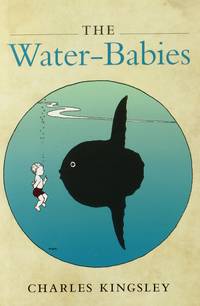
'The Water-Babies' by Charles Kingsley (ISBN 0199645604) Kingsley is best remembered for his extremely popular children’s book The Water-Babies (1863,) written to teach unconditional love, redemption, and other Christian values. The Water-Babies is an allegorical fairytale of a 10-year-old, chimney-sweeping orphan named Tom. While clearing soot one day, Tom falls through a chimney into the room of a rich young girl named Ellie. Mistaken for a thief, Tom is chased out of town. Overwhelmed by exhaustion, he submits to thirst, tumbles into a stream, falls fast asleep, and drowns. Fairies turn him into a peculiar creature called a “water-baby.” In his new life, Tom meets various fairies, aquatic creatures, and other water-babies. He also encounters the vicious Mrs. Bedonbyasyoudid (a reference to Revelation 16:6 in the New Testament) and the motherly Mrs. Doasyouwouldbedoneby (a reference to the Golden Rule.) When he reaches the Other-End-of-Nowhere, he helps his vicious former master Mr. Grimes find repentance.

The Water-Babies was extremely popular when it was published, and it helped rally support for the 1840 Chimney Sweepers’ Regulation Act, which prohibited the use of child labor to climb into and clean chimneys.

However, The Water-Babies lost its popularity over time because of its insults against the Irish, Catholics, Jews, Americans, and the poor, even if Kingsley’s writing merely reflected many of the common prejudices of his time.

Inspirational Quotations by Charles Kingsley

What’s the use of doing a kindness, if you do it a day too late.
—Charles Kingsley (English Clergyman)

Thank God every morning when you get up that you have something to do which must be done, whether you like it or not.
—Charles Kingsley (English Clergyman)

Being forced to work, and forced to do your best, will breed in you temperance and self-control, diligence and strength of will, cheerfulness and content, and a hundred virtues which the idle will never know.
—Charles Kingsley (English Clergyman)

If you wish to be miserable, think about yourself; about what you want, what you like, what respect people ought to pay you, what people think of you; and then to you nothing will be pure. You will spoil everything you touch; you will make sin and misery for yourself out of everything God sends you; you will be as wretched as you choose.
—Charles Kingsley (English Clergyman)

What I want is, not to possess religion, but to have a religion that shall possess me.
—Charles Kingsley (English Clergyman)

Stick to the old truths and the old paths, and learn their divineness by sick beds, and in everyday work, and do not darken your mind with intellectual puzzles, which may breed disbelief, but can never breed vital religion or practical usefulness.
—Charles Kingsley (English Clergyman)

We act as though comfort and luxury were the chief requirements of life, when all that we need to make us really happy is something to be enthusiastic about.
—Charles Kingsley (English Clergyman)

Do noble things, do not dream them all day long.
—Charles Kingsley (English Clergyman)

Feelings are like chemicals; the more you analyze them the worse they smell.
—Charles Kingsley (English Clergyman)

If I am ever obscure in my expressions, do not fancy that therefore I am deep. If I were really deep, all the world would understand, though they might not appreciate. The perfectly popular style is the perfectly scientific one. To me an obscurity is a reason for suspecting a fallacy.
—Charles Kingsley (English Clergyman)

Do today’s duty, fight today’s temptation; do not weaken and distract yourself by looking forward to things you cannot see, and could not understand if you saw them.
—Charles Kingsley (English Clergyman)

The men whom I have seen succeed best in life always have been cheerful and hopeful men; who went about their business with a smile on their faces; and took the changes and chances of this mortal life like men; facing rough and smooth alike as it came.
—Charles Kingsley (English Clergyman)

“Young and Old”—A Poem by Charles Kingsley

Here’s a poem from Chapter II of Kingsley’s The Water-Babies. This poignant poem contrasts youth and old age. The first stanza promotes a productive youth. The second stanza hints at aging natural imagery and wishes that you be alongside the one that you cherished in your youth.

When all the world is young, lad,
And all the trees are green;
And every goose a swan, lad,
And every lass a queen;
Then hey for boot and horse, lad,
And round the world away;
Young blood must have its course, lad,
And every dog his day.

When all the world is old, lad,
And all the trees are brown;
And all the sport is stale, lad,
And all the wheels run down;
Creep home, and take your place there,
The spent and maimed among:
God grant you find one face there,
You loved when all was young.

Filed Under: Inspirational Quotations

Presentations are Corrupting per Edward Tufte’s “The Cognitive Style of PowerPoint”

June 10, 2016 By Nagesh Belludi Leave a Comment

Presentations are one of the most frequently used methods of communication in the modern workplace. However, Edward Tufte argues that they reduce the analytical timbre of communication. In other words, presentation slides lack the resolution to effectively convey context, “weaken verbal and spatial reasoning, and almost always corrupt statistical analysis.”

Tufte, an American statistician and academic, is renowned for his work The Visual Display of Quantitative Information, a bestselling text on data, statistics, graphics, visualization, and information.

'The Cognitive Style of PowerPoint' by Edward Tufte (ISBN 0961392169) In his cranky pamphlet The Cognitive Style of PowerPoint, Tufte offers a sharp-tongued criticism of presentations as a communication format. He argues that we treat slides more as a medium for self-expression than as a medium to connect with our audiences. His most revealing examples of how presentations corrupt our elegance of expression are his critique of NASA’s slides from the Columbia shuttle disaster and a parody of Abraham Lincoln’s Gettysburg Address condensed into a PowerPoint deck.

By forcibly condensing our ideas into bullet point-statements, phrases, and slides, Tufte contends that we break up narrative flow and flatten the information we’re trying to convey. In particular, he claims that presentations’ bullet points can’t signify logical relationships well and thus dilute the audiences’ thought process. The resulting message is watered down, lacks proper emphasis, and doesn’t communicate the context very effectively.

Tufte favors well-structured memos that convey ideas comprehensively, clearly, and meaningfully. In agreement, I’ll offer two articles next week about Procter & Gamble and Amazon’s use of these memos as a communication discipline.

Wondering what to read next?

  1. The More You Write, The Better You Become
  2. Why Amazon Banned PowerPoint
  3. Lessons from Procter & Gamble: ‘One-Page Memo’ to Sell an Idea
  4. Lessons from Amazon: ‘Mock Press Release’ Discipline to Sell an Idea
  5. Persuade Others to See Things Your Way: Use Aristotle’s Ethos, Logos, Pathos, and Timing

Filed Under: Effective Communication Tagged With: Persuasion, Presentations, Writing

To Become Time-Conscious, Always Ask, “Is It a Priority?”

June 7, 2016 By Nagesh Belludi 1 Comment

As I wrote in my three-part series on time logging, time analyzing, and time budgeting, life is all about values and the relative priorities you attach to these values.

Priorities imply choice; you get to make a choice in almost everything you do. Every choice involves tradeoffs: when you choose to do something, it implies that you choose not do something else.

Before being sucked into doing anything, ask, “Is this the best use of my time?”

Another way to think about this is in terms of “opportunity cost.” Everything in life has an opportunity cost. Whenever you take up one opportunity, you forfeit another. When you choose to go to a movie with a friend, it means you aren’t going to the library to work on a research paper that’s due next week. When you choose to spend this month’s savings on new furniture, it means you can’t add to your retirement account. So, when making decisions about anything, keep opportunity costs in mind. Be aware of what you’re giving up.

One of the most important choices you make—often subconsciously—is how you use your time, which is your most important resource. Before doing anything, be aware of what you are giving up; decide whether the benefits are worth the time you’re investing in the task.

The Nagging “5-5-5” Questions

Poor time management often has less to do with your packed schedule than with your indecisive, unorganized, or undisciplined mind. To improve your life, stop wasting time on things that don’t matter. Have a little voice in your head that constantly nags you by asking the following “5-5-5” questions:

  • Is this a priority?
  • Will this matter in 5 days?
  • Will this matter in 5 months?
  • Will this matter in 5 years?

The “5-5-5” questions will prevent you from being caught up in little tasks and trivialities that aren’t truly important.

Idea for Impact: Be time conscious; constantly ask yourself, “Is this time-effective?”

According to my world’s shortest course on time management, “There are countless things you can do. There are numerous things you want to do. There are several things others expect you to do. There are many things you think you are supposed to do. However, there are only a few things that you must do. Focus on those and avoid the rest.”

As I mentioned in my article “don’t say ‘yes’ when you really want to say ‘no’,” don’t be vulnerable enough to be pulled along by forces that are beyond your control. Be accommodating when you can and assertive when you must. Be intentional about how you choose to use our time. Your life depends on it.

Wondering what to read next?

  1. Personal Energy: How to Manage It and Get More Done // Summary of ‘The Power of Full Engagement’
  2. Get Your Priorities Straight
  3. How to … Nap at Work without Sleeping
  4. Warren Buffett’s Advice on How to Focus on Priorities and Subdue Distractions
  5. Niksen: The Dutch Art of Embracing Stillness, Doing Nothing

Filed Under: Sharpening Your Skills Tagged With: Balance, Task Management, Time Management

Inspirational Quotations #635

June 5, 2016 By Nagesh Belludi Leave a Comment

Flattery is from the teeth out. Sincere appreciation is from the heart out.
—Dale Carnegie (American Author)

My reason is not framed to bend or stoop: my knees are.
—Michel de Montaigne (French Philosopher)

Opportunity is often difficult to recognize; we usually expect it to beckon us with beepers and billboards.
—William Arthur Ward (American Author)

The first attribute that characterizes the greater man from the moron is his thicker layer of inhibition.
—Martin H. Fischer

Is it not by love alone that we succeed in penetrating to the very essence of being?
—Igor Stravinsky (Russian-born American Composer)

Fear is the proof of a degenerate mind.
—Virgil (Roman Poet)

Suffering becomes beautiful when anyone bears great calamities with cheerfulness, not through insensibility but through greatness of mind.
—Aristotle (Ancient Greek Philosopher)

Action is a great restorer and builder of confidence. Inaction is not only the result, but the cause, of fear. Perhaps the action you take will be successful; perhaps different action or adjustments will have to follow. But any action is better than no action at all.
—Norman Vincent Peale (American Clergyman, Self-Help Author)

Part of the happiness of life consists not in fighting battles, but in avoiding them. A masterly retreat is in itself a victory.
—Norman Vincent Peale (American Clergyman, Self-Help Author)

Ignore what a man desires, and you ignore the very source of his power.
—Walter Lippmann (American Journalist)

The act of acting morally is behaving as if everything we do matters.
—Gloria Steinem (American Feminist)

Filed Under: Inspirational Quotations

How to Stop Rambling

June 3, 2016 By Nagesh Belludi Leave a Comment

How to Stop Rambling Poster: Keep Rambling and Annoy All

Some people are natural ramblers. Others are prone to ramble when they feel impassioned about a topic and have a propensity for going off on tangents. Others tend to blather because they feel jumpy and insecure when asked to talk about something they don’t totally understand. Still others feel compelled to talk just to make themselves heard or when they don’t want to lose the floor.

Whatever the reason you may ramble, here are some ideas to help you be short and clearer in your conversations with others.

Follow the “Traffic Light Rule”

Career coach Marty Nemko offers a “Traffic Light” rule of thumb to keep conversations short:

  • During the first 30 seconds of an utterance, your light is green: your listener is probably paying attention.
  • During the second 30 seconds, your light is yellow—your listener may be starting to wish you’d finish.
  • After the one-minute mark, your light is red: Yes, there are rare times you should “run a red light:” when your listener is obviously fully engaged in your missive. But usually, when an utterance exceeds one minute, with each passing second, you increase the risk of boring your listener and having them think of you as a chatterbox, windbag, or blowhard.

How to be Concise and Retain your Audience’s Interest

If you have nothing to say, say nothing at all. Don’t skirt around the topic, “fake the funk,” or seem indecisive. Simply say, “I am not educated about this topic.” If you’re asked something you should know about but don’t, it’s acceptable to say, “I don’t know, let me get back to you.” Do your research and follow-up with the audience.

If you have lots to say about something,

  • First take a few moments to think about what you want to say and structure your answer. Pausing before you give an answer will make you look more thoughtful and intelligent than if you crudely blurt out an unstructured response as soon as a question is posed. If necessary, buy some time: “Give me a moment to gather my thoughts.”
  • Once you’ve thought of your answer, simply state it. Do not add new details as you speak. Stick to your planned details and structure; you will be able to provide a consistent, concise, and well-reasoned answer.
  • Avoid littering your conversation with irrelevant or trivial details. Often, it’s more important to be articulate than accurate. Keep your sentences brief and to the point. Don’t wander from your point.
  • If you have more to say than you can say in a minute or two, realize that even though your audience may be interested in listening to everything you have to say, their attention may quickly dissolve into disinterest. Limit yourself to a minute or two and use that brief time to provide the most important points or a summary. Then ask, “Would you like me to expand?”

Sometimes you can defer a question by saying, “I’d be interested in what others think about this.” However, you will look devious if you use this technique too often.

Prepare and rehearse. Before attending a meeting, event, or gathering, think about the likely topics people may want to converse with you about. Think about the message you want to get across and rehearse your responses.

Wondering what to read next?

  1. How to Mediate in a Dispute
  2. A Taxonomy of Troubles: Summary of Tiffany Watt Smith’s ‘The Book of Human Emotions’
  3. Say It Straight: Why Clarity Beats Precision in Everyday Conversation
  4. The “Shadow Job Description”: The One Question That Changes the Interview Dynamic
  5. How to Ask for a Raise—and Negotiate in a Way That Commands Respect

Filed Under: Effective Communication Tagged With: Communication, Conversations, Interviewing

« Previous Page
Next Page »

Primary Sidebar

Popular Now

Anxiety Assertiveness Attitudes Balance Biases Coaching Conflict Conversations Creativity Critical Thinking Decision-Making Discipline Emotions Entrepreneurs Ethics Etiquette Feedback Getting Along Getting Things Done Goals Great Manager Innovation Leadership Lessons Likeability Mental Models Mindfulness Motivation Parables Performance Management Personal Growth Persuasion Philosophy Problem Solving Procrastination Psychology Relationships Resilience Simple Living Social Skills Stress Thinking Tools Thought Process Time Management Winning on the Job Wisdom

About: Nagesh Belludi [hire] is a St. Petersburg, Florida-based freethinker, investor, and leadership coach. He specializes in helping executives and companies ensure that the overall quality of their decision-making benefits isn’t compromised by a lack of a big-picture understanding.

Get Updates

Signup for emails

Subscribe via RSS

Contact Nagesh Belludi

RECOMMENDED BOOK:
On Writing Well

On Writing Well: William Zinsser

Journalist William Zinsser's bestselling manual has inspired generations of writers to perfect their skills in introducing clarity and brevity, and presenting their unique voice into prose.

Explore

  • Announcements
  • Belief and Spirituality
  • Business Stories
  • Career Development
  • Effective Communication
  • Great Personalities
  • Health and Well-being
  • Ideas and Insights
  • Inspirational Quotations
  • Leadership
  • Leadership Reading
  • Leading Teams
  • Living the Good Life
  • Managing Business Functions
  • Managing People
  • MBA in a Nutshell
  • Mental Models
  • News Analysis
  • Personal Finance
  • Podcasts
  • Project Management
  • Proverbs & Maxims
  • Sharpening Your Skills
  • The Great Innovators

Recently,

  • Uncomfortable Taking Compliments? Just Say ‘Thank You.’
  • Before You Become an Entrepreneur, Talk Yourself Out of It
  • ‘In the Mood for Love’ and the Residue of Stoic Restraint
  • Inspirational Quotations #1177
  • How to Deal with … Interrupters
  • How to Deal with … Overtalkers
  • Stress You Can’t Name Is Stress You Can’t Manage

Unless otherwise stated in the individual document, the works above are © Nagesh Belludi under a Creative Commons BY-NC-ND license. You may quote, copy and share them freely, as long as you link back to RightAttitudes.com, don't make money with them, and don't modify the content. Enjoy!