.jpg "'Bad Therapy' by Abigail Shrier (ISBN 0593542924)") Bad Therapy: Why the Kids Aren’t Growing Up (2024), Abigail Shrier argues that the pendulum of psychological intervention has swung far past its intended arc. What began as a tool for healing has become a cultural reflex—where discomfort is mistaken for disorder, and ordinary childhood struggles are pathologized into syndromes.
Bad Therapy: Why the Kids Aren’t Growing Up (2024), Abigail Shrier argues that the pendulum of psychological intervention has swung far past its intended arc. What began as a tool for healing has become a cultural reflex—where discomfort is mistaken for disorder, and ordinary childhood struggles are pathologized into syndromes.
Shrier contends that modern psychology, once grounded in clinical rigor, now saturates everyday life. Emotional excavation—driven by talk therapy and social-emotional curricula—has become compulsive. Children are taught to monitor their moods like vital signs, retreating from friction rather than developing resilience. The result: a generation conditioned to flinch at adversity, dependent on emotional scaffolding, and primed to interpret setbacks as trauma.
Her prescription is a corrective swing back toward equilibrium. Therapy, she argues, should be reserved for genuine psychological disorders—not deployed as a universal rite of passage. Children must be allowed to stumble, struggle, and recover without constant intervention. Problem-solving, not introspection, should be the default. Critics rightly note that therapy has its place—especially for depression, anxiety, and ADHD—but its overuse risks diluting its power and purpose.
The call is not to abandon care, but to recalibrate it. Emotional literacy, taught judiciously, can complement experience—but it cannot substitute for it. Families and schools must resist the urge to diagnose every dip in mood or moment of distress. Instead, they should model steadiness, grit, and the understanding that discomfort is not pathology.
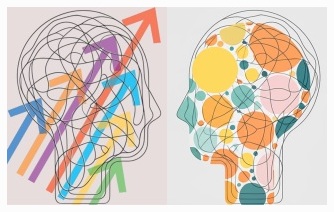
Balance, not backlash, is the goal. The pendulum must return to center—where therapy is a tool, not a crutch; where emotion is acknowledged, not medicalized; and where children grow not by avoiding pain, but by learning to endure it.
 A thing can feel bad and be right.
 The paths you tread most lightly are often the ones that later shape your life. A single moment of indulgence, a flicker of forgetfulness—each
 Marketers have adapted this insight with varying degrees of boldness. Dove, the personal care brand under Unilever, redefined beauty norms by spotlighting authenticity. Its
  Yet the Pratfall Effect
  Yet another preliminary report from a fatal airline accident leaves crucial details unresolved and continues to fuel debate—echoing the
  The tendency to divide humanity into heroes and villains, saints and devils, is
  A recent WSJ dispatch
  Spellcheck doesn’t create bad spellers; it lets spelling atrophy. Autocorrect and red squiggles do the work, and users
  Conscience isn’t as reliable a guide on moral questions as it’s often made out to be. Consider
  We will never definitively prove whether mask mandates worked during the COVID-19 pandemic—not with the crisp authority of pharmacological trials—because the circumstances themselves