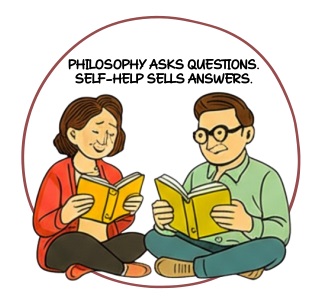
 Self-help and philosophy both claim to enhance life, but they approach the task from opposite ends. Self-help assumes you know what you want—success, happiness, confidence—and hands you the tools to get there. Philosophy asks whether those goals are worth wanting in the first place.
Self-help offers strategies: affirmations, routines, lists. It treats discomfort like a bug to be patched. Philosophy treats it as a signal—something to examine, not suppress. Consider Aristotle’s Nicomachean Ethics: it doesn’t show you how to be happy, it interrogates what happiness even means. That shift from prescription to inquiry is the fault line.
Philosophy doesn’t sell quick wins. In fact, it doesn’t sell anything. It withholds answers and insists on better questions. That ambiguity frustrates, but it’s also what makes it enduring. Where self-help simplifies, philosophy destabilizes—often constructively.
Modern self-help is philosophy run through a blender: palatable, repeatable, stripped of nuance. It offers clarity at the cost of depth. While self-help patches the surface, philosophy digs through the foundation—often asking whether the building needed to be there in the first place.
If you want action, self-help delivers fast. If you want to probe your assumptions—slowly, painfully, fruitfully—philosophy waits. It may not give you a better life. But it will offer a clearer lens for judging what “better” even means.
Idea for Impact: Self-help flatters your instincts. Philosophy cross-examines them—sometimes into silence.
 Consider the Ritz-Carlton. Every employee—from housekeeper to concierge—is authorized to spend up to $2,000 per guest, per incident, without managerial approval, to
  Life is not a cradle of comfort but a crucible of experience. To be conscious is to be vulnerable—to injury, to loss, to the slow erosion of certainty. Suffering is not a glitch in the system; it is the system. And yet, the modern mind, coddled by convenience and narcotized by distraction, recoils from this fact as if it were an indecency rather than a reality.

.jpg "'How Big Things Get Done' by Bent Flyvbjerg (ISBN 593239512)")

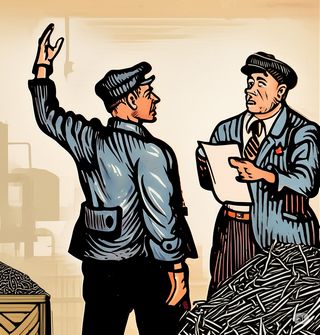 There’s an old joke about the Soviet Union’s approach to industrial planning. It’s been told so often it’s
 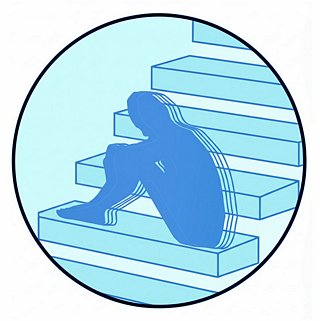 We romanticize transformation—new routines, cleaner diets, sharper habits. But in practice, change rarely arrives in cinematic sweeps. It comes in quieter forms: a switch from soda to water, a walk around the block, skipping the evening snack. Small choices. Easily overlooked. In aggregate,
 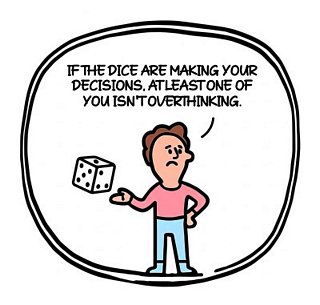 We make thousands of decisions daily—what to wear, which email to answer first, whether to take the scenic route or stick to the main road. Most are low-stakes, but the act of choosing can sap mental energy. That’s
 McDonald’s has long leaned on