• Skip to content
  • Skip to primary sidebar

Right Attitudes

Ideas for Impact

Mental Models

Insight Arrives on Its Own Schedule

January 26, 2026 By Nagesh Belludi Leave a Comment

Insight Arrives on Its Own Schedule - Lessons from King Lear's Edgar In King Lear, Edgar reaches his breaking point and his awakening at the same time.

He has endured loss, disguise, exile, and the collapse of everything he once relied on.

By the final movement of Act V, he delivers the famous line, “Ripeness is all.”

At that point, he has earned it. The clarity he speaks from isn’t theoretical. It’s the result of watching events unfold beyond his control and learning the hard limits of force and urgency.

The line stands as distilled wisdom.

There is no theatrical flourish in the moment. Edgar simply recognizes that events mature according to their own internal logic, not according to anyone’s appetite for speed.

Clarity often shows up when it’s ready.

After so much chaos, he understands that survival—and action—depend on meeting circumstances at the moment they are fully formed. Nothing earlier will hold. Nothing dragged forward will last.

That reminder cuts sharply against the modern instinct to accelerate everything.

Any unfolding situation moves only when its conditions align, not when impatience demands progress.

Idea for Impact: Patience is a disciplined calibration of timing, not a passive wait.

Wondering what to read next?

  1. In Praise of Inner Voices: A Powerful Tool for Smarter Decisions
  2. Making Tough Decisions with Scant Data
  3. How Contributing Factors Stack Up and Accidents Unfold: A Case Study of the 2024 Delta A350 & CRJ-900 Collision
  4. The “Ashtray in the Sky” Mental Model: Idiot-Proofing by Design
  5. What Airline Disasters Teach About Cognitive Impairment and Decision-Making Under Stress

Filed Under: Mental Models, Sharpening Your Skills Tagged With: Conflict, Decision-Making, Introspection, Mindfulness, Philosophy, Problem Solving, Thought Process, Wisdom

Elon Musk Insults, Michael O’Leary Sells: Ryanair Knows Cheap-Fare Psychology

January 23, 2026 By Nagesh Belludi Leave a Comment

Michael O'Leary Shaped Ryanair Into Bold Reflection of His Combative Persona Ryanair’s CEO Michael O’Leary has long been one of my most admired businessmen. His achievements speak for themselves, but what has always impressed me even more is the consistency of his communication and the clarity of the philosophy that underpins everything he does.


O’Leary never wavers. He never dilutes his message. Every interview, every press question, every throwaway comment—he’s hammering home the same point: keep costs low, run tight, and don’t pretend to be something you’re not. He has essentially cloned himself into a corporate entity, crafting a pugnacious and brash airline that mirrors his own combative nature and provocative disregard for the status quo.

I met him once, one-on-one, and despite the famously sharp public image, he was remarkably courteous. People who’ve worked with him echo that impression: behind the bluster and profanity is someone family-oriented, grounded, and genuinely pleasant to deal with, even if he stays tough as nails in business. That mix of discipline, bluntness, cunning, and unexpected warmth is exactly what I’ve always respected about him.

This week’s confrontation with Elon Musk only reinforced all of that. What began as a disagreement about Starlink has already turned into one of the most entertaining corporate feuds of the moment, and O’Leary has turned every bit of it into a masterclass in opportunistic publicity.

It started when O’Leary called Musk an “idiot” during a Newstalk interview, explaining why Ryanair won’t be installing Starlink on its planes. His reasoning was pure Ryanair: the equipment would cost €200–€250 million, add weight, burn more fuel, and provide a service passengers don’t actually want to pay for. On a ninety-minute flight, most travelers are thinking about their holiday, not paying extra to check email. And even for those who might want Wi-Fi, the hassle of setting up payment for an hour of browsing hardly seems worthwhile.

Ryanair Turns Elon Musk Feud Into Flash Sale and Publicity Goldmine

This Frugality Is Classic Ryanair

Ryanair has always understood something fundamental about its passengers: the vast majority simply want to get from A to B cheaply, quickly, and safely. Everything else is secondary. With that understanding, the airline became remarkably adept at turning negative publicity into an asset. As long as headlines didn’t question the cheap fares, turnaround times, or safety, they caused no real damage to the brand—often they actually helped.

Endless articles painting Ryanair as ruthless, miserly, or cold-hearted kept its name circulating and, more importantly, reinforced a single underlying idea: this airline cuts every possible cost and passes the savings to passengers. The public absorbed that message, consciously or not. Outrage over Ryanair’s latest supposed scandal often faded within hours—only for the same critics to find themselves browsing its website the next day, hunting for the cheapest flight they could find.

So when Musk fired back online this week, calling O’Leary an “utter idiot,” the situation was practically a gift. While Musk vented on X and teased a potential buyout—polling his followers on whether he should “restore Ryan as their rightful ruler” by taking over the company—O’Leary did what he does best: he turned the noise into marketing gold. Ryanair launched its “Big Idiot Seat Sale,” a flash promotion that mocked the feud while offering tens of thousands of seats for under €17. Millions of subscribers received emails featuring caricatures of both men perched on a plinth labeled “Big Idiots,” and the airline’s social media team gleefully encouraged customers to “thank that big IDIOT @elonmusk” for the cheap fares. It was classic Ryanair—irreverent, self-aware, and ruthlessly effective.

Ryanair Knows a Well-Timed Insult Is the Cheapest Publicity

O’Leary even staged a press conference on Wednesday to address Musk’s latest online outburst—a tirade in which Musk labeled him an “insufferable special-needs chimp.” The spectacle guaranteed cameras would roll and headlines would multiply.

For a man who has built an empire on ruthless efficiency this kind of free global publicity is priceless. Industry observers weren’t surprised; O’Leary has long understood that controversy when met with humor only sharpens Ryanair’s image as the scrappy sharp-tongued champion of low fares.

Ryanair vs Sabena: Brussels Statue Ad Sparked 2001 Fare War Spectacle His flair for humorous controversy goes back years. During a 2001 clash with Sabena, Belgium’s then-national carrier, Ryanair ran an ad featuring Brussels’ Manneken Pis statue with the line, “Pissed off with Sabena’s high fares?” Sabena sued and won, forcing an apology—which O’Leary delivered as a gleefully sarcastic “We’re Sooooo Sorry Sabena!” complete with even more fare comparisons. The real masterstroke came outside the Brussels courthouse, where Ryanair had encouraged people to show up, voice their support, and walk away with ultra-low-fare tickets. A massive crowd turned out, turning a legal reprimand into a street-level spectacle. This wasn’t just symbolic; Ryanair had literally set up on-the-ground promotions across Brussels. It was early proof of O’Leary’s formula in perfect sync: humor, provocation, and free publicity feeding off one another.

The frugality isn’t just marketing—it’s woven into the company’s DNA. A former Ryanair pilot once recalled that the airline used to charge staff for tickets to their own Christmas party, and supposedly not at a discount. He was convinced the company actually turned a profit on the event. It’s the same mindset that drives decisions like rejecting Starlink: if it doesn’t keep fares low, Ryanair won’t pursue it.

In the end, Musk may have satellites, rockets, and a global social media platform, but O’Leary has something more potent in this moment: the ability to turn a petty argument into a worldwide advertisement for Ryanair’s unbeatable prices, reliable service, and no-nonsense approach. The airline emerges from the feud looking cheeky, confident, and completely in control—exactly the way O’Leary prefers it.

Wondering what to read next?

  1. We Trust What We Can See: James Dyson Builds for That Instinct
  2. The Loss Aversion Mental Model: A Case Study on Why People Think Spirit is a Horrible Airline
  3. Airline Safety Videos: From Dull Briefings to Dynamic Ad Platforms
  4. The Mere Exposure Effect: Why We Fall for the Most Persistent
  5. Labubu Proves That Modern Luxury Is No Longer an Object, It’s a Story

Filed Under: Business Stories, MBA in a Nutshell, Mental Models, Sharpening Your Skills, The Great Innovators Tagged With: Aviation, Biases, Creativity, Critical Thinking, Entrepreneurs, Icons, Innovation, Marketing, Parables, Psychology, Strategy

When Stressed, Aim for ‘Just Enough’

January 16, 2026 By Nagesh Belludi Leave a Comment

The Power of 'Just Enough': A Temporary Reset for a Stressed Mind When stress hits, lowering your standards and aiming for “just enough” can be a game-changer. Perfectionism only piles on the pressure, so ease up. By lowering your expectations, you make tasks more manageable and reduce the mental load.

Perfection is overrated. Focus on progress, not perfection. Giving yourself permission to do “just enough” creates space for a mental break and helps you stop chasing unrealistic standards. Chasing unattainable goals leads straight to burnout. Accept that “good enough” is enough. This allows you to maintain energy and avoid exhaustion while keeping your focus on what really matters.

Lowering your standards is an act of self-compassion. You’re not a robot. It’s okay to step back from perfection—your well-being depends on it. But remember, it’s a temporary fix. Don’t make a habit of it or you’ll stall your growth.

Wondering what to read next?

  1. Book Summary of ‘Yeah, No. Not Happening’: Karen Karbo on Rejecting the Pursuit of Perfection’s Snare
  2. The Motivational Force of Hating to Lose
  3. Mise En Place Your Life: How This Culinary Concept Can Boost Your Productivity
  4. When Giving Up Can Be Good for You
  5. Everything in Life Has an Opportunity Cost

Filed Under: Living the Good Life, Mental Models, Sharpening Your Skills Tagged With: Assertiveness, Attitudes, Mindfulness, Perfectionism, Procrastination, Stress

What Appears Self-Evident to One May Be Entirely Opaque to Another: How the Dalai Lama Apology Highlights Cultural Relativism

January 12, 2026 By Nagesh Belludi Leave a Comment

Dalai Lama Apology Highlights Cultural Relativism and Context-Bound Moral Judgments In 2023, a video of the Dalai Lama interacting with a young boy at a public event in India ignited global outrage. The footage showed him kissing the child on the lips, then extending his tongue and telling the boy to “suck my tongue.” The reaction was immediate and visceral; across cultures, people found the moment disturbing and profoundly inappropriate.
His office issued an apology and invoked cultural context. Defenders pointed to a Tibetan custom in which sticking out one’s tongue is a gesture of respect, an old practice tied to the 9th-century tyrant Lang Darma, whose black tongue became a symbol of malevolence. After his death, Tibetans briefly exposed their tongues to show they were not his reincarnation, a gesture that evolved into a sign of sincerity.

But the phrase uttered in 2023 had no connection to that tradition, and there’s no “sucking” involved in the Tibetan practice of sticking out one’s tongue in greeting.

And even if the Dalai Lama, an elderly spiritual figure known for his playful demeanor, intended the moment as harmless warmth, intention could not neutralize the optics. As a global leader, his “place” is no longer a monastery; it is the global stage, where every gesture is interpreted through a worldwide semiotic field. The incident became a lightning rod for debates about cultural relativism, the limits of intention, and the way symbols mutate across borders.

More importantly, the harm was not abstract. The optics themselves caused real damage to the child’s dignity, to public trust, and to the moral authority of a figure whose influence extends far beyond his tradition. No contextual explanation could override the intuitive recoil. Some behaviors, regardless of cultural lineage, trigger near-universal moral instincts.

The episode exposes the friction between divergent cultural operating systems in an interconnected world, but it also reveals the limits of relativism. Morality may be shaped by upbringing, but its foundations are not infinitely elastic. When a gesture crosses a line most humans recognize instinctively, tradition cannot serve as a shield.

Idea for Impact: Tradition excuses nothing. Morality may shift from one society to another, often amounting to little more than the habits a culture has chosen to bless. But that variability has limits. Not every strange or unsettling act can be waved away with appeals to heritage or upbringing; at some point, tradition stops being an explanation and becomes an evasion.

Wondering what to read next?

  1. Embracing Cultural Sensitivity: A Case Study of Akira Kurosawa’s Oscar Speech
  2. Power Corrupts, and Power Attracts the Corruptible
  3. You Need to Stop Turning Warren Buffett Into a Prophet
  4. Power Inspires Hypocrisy
  5. Virtue Deferred: Marcial Maciel, The Catholic Church, and How Institutions Learn to Look Away

Filed Under: Business Stories, Leadership, Mental Models Tagged With: Attitudes, Biases, Diversity, Ethics, Group Dynamics, Icons, Psychology, Role Models

Invention is Refined Theft

January 7, 2026 By Nagesh Belludi Leave a Comment

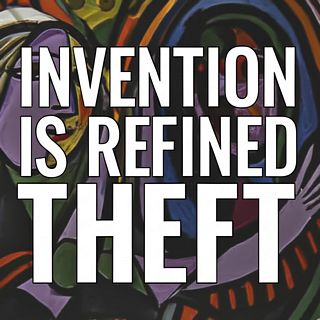
Invention Is Refined Theft: Imitation Lays the Groundwork for Original Creation Originality is often idolized, portrayed as a spark of genius that materializes out of thin air. But the truth is far more practical: most great ideas begin as refined imitation. Innovation isn’t rebellion; it’s mutation. It builds upon what has come before and reshapes it into something unexpected.

  • Kia was once known for borrowing from brands like Lotus and Mercedes. But it wasn’t until designer Peter Schreyer brought fresh vision to models like the Soul and Optima that the company redefined itself. That transformation didn’t come from rejecting influence—it thrived on it.
  • Before Picasso revolutionized art with Cubism, he studied classical techniques obsessively. His groundbreaking work didn’t stem from ignorance of tradition. It emerged by breaking it down after mastering it.
  • Xiaomi echoed Apple’s minimalist design in its early years, drawing criticism as a clone. But the company quickly proved itself with a unique operating system, bold marketing, and a sprawling ecosystem of devices that rivaled industry leaders.

Idea for Impact: Copying clever people is less foolish than pretending you are one. All creation is derivative. Imitation provides the structure upon which novelty is built. Originality is its offspring, not its opposite.

Wondering what to read next?

  1. Van Gogh Didn’t Just Copy—He Reinvented
  2. Constraints Inspire Creativity: How IKEA Started the “Flatpack Revolution”
  3. How to … Get into a Creative Mindset
  4. Overcoming Personal Constraints is a Key to Success
  5. Innovation: Be as Eager to Stop Zombie Projects as You Are to Begin the New

Filed Under: Business Stories, Mental Models, Sharpening Your Skills, The Great Innovators Tagged With: Artists, Creativity, Icons, Innovation, Parables, Problem Solving, Role Models, Thought Process

You Need to Stop Turning Warren Buffett Into a Prophet

January 5, 2026 By Nagesh Belludi Leave a Comment

You Need to Stop Turning Warren Buffett Into a Prophet The new year marked Warren Buffett’s formal handover of the reins as CEO of Berkshire Hathaway to his chosen successor. The transition was deliberate and orderly. It signaled to shareholders and markets that Berkshire’s culture of discipline, patience, and long-term capital allocation is meant to outlive the man who built it.

Over the decades, Buffett has risen to an unusual cultural altitude, especially among devoted adherents of value investing. He’s part financial oracle and part homespun philosopher, dispensing deceptively simple wisdom with the aura of someone blessed with a Midas touch.

His most ardent admirers don’t merely study his methods; they venerate them. His shareholder letters are treated like sacred texts, his offhand remarks are parsed for hidden meaning, and his investing principles are elevated to universal law, supposedly immune to context, nuance, or time.

When Admiration Hardens into Uncritical Reverence

This isn’t to say Buffett’s philosophy lacks substance. His long-term mindset, focus on intrinsic value, and preference for durable businesses over speculation have shaped modern investing. Yet his most devoted followers treat these principles as commandments, overlooking the historical conditions that enabled his extraordinary success.

Buffett began in an era of lower valuations, thinner competition, and scarce financial data. He also enjoyed access to insurance float—an immense reservoir of low-cost capital ordinary investors can’t replicate. Many disciples still believe that faithfully applying his playbook in today’s very different market will produce the same results.

Buffett’s carefully cultivated public persona only deepens this loyalty. His down-home Midwestern charm isn’t accidental; it functions as armor. His accessible soundbites reinforce a comforting worldview in which patient investors always win, markets always recover, and disciplined value investing always triumphs. These narratives glide past inconvenient realities such as Japan’s post-1990 stagnation or the U.S. market’s lost decade from 2000 to 2010. His followers rarely ask for clarification. They don’t notice the cherry-picking or the broad-brushing. They accept the story as delivered.

Even his critiques are selective. Buffett often condemns the high fees charged by hedge funds and asset managers, yet his own early partnerships were structured with lucrative fees and equity stakes. They looked far more like the models he now derides than the mythologized image that surrounds him. He shifted toward long-term business ownership only after securing a substantial percentage stake in Berkshire Hathaway through those early arrangements. His admirers conveniently overlook the contradiction.

Buffett’s Wisdom Should Be Engaged With, Not Obeyed

None of this diminishes Buffett’s stature as a great investor or a compelling role model. His principles will remain valuable, and his track record is undeniable. But unchallenged hero worship is dangerous, especially when it replaces critical thinking with unquestioning allegiance. Many followers repeat his words, absorb his lessons, and apply his ideas without examining whether the underlying assumptions still hold. Markets evolve. Conditions shift. Rigid adherence to any single philosophy can become a liability.

Buffett’s ideas deserve scrutiny, not sainthood. His principles should be examined, not obeyed. Markets reward independent judgment, not intellectual submission. Thinking critically about those we admire isn’t disloyal. It’s essential.

Idea for Impact: Mistaking admiration for devotion that substitutes for analysis is a costly error. Real understanding requires scrutiny, adaptation, and the courage to rethink what once felt certain.

Wondering what to read next?

  1. Beware of Key-Person Dependency Risk
  2. A Real Lesson from the Downfall of Theranos: Silo Mentality
  3. Innovation Without Borders: Shatter the ‘Not Invented Here’ Mindset
  4. What Appears Self-Evident to One May Be Entirely Opaque to Another: How the Dalai Lama Apology Highlights Cultural Relativism
  5. Creativity by Imitation: How to Steal Others’ Ideas and Innovate

Filed Under: Business Stories, Leadership, Mental Models Tagged With: Biases, Critical Thinking, Icons, Leadership Lessons, Mental Models, Psychology, Role Models, Social Dynamics

What the Dry January Trap Shows Us About Extremes

January 2, 2026 By Nagesh Belludi Leave a Comment

What the The Dry January Trap teaches: Beyond the Cycle of Excess and Atonement Dry January is marketed as a ritual of renewal—a sober start to the year, a clean break from December’s excess. But beneath its virtuous packaging lies a familiar cycle. Instead of encouraging balance, it often replicates the very problem it claims to fix: the swing between indulgence and abstinence.

This binary—binge, then ban—doesn’t disrupt harmful habits. It reinforces them. By framing total sobriety as a seasonal corrective, Dry January legitimizes the very extremes it should disavow. True discipline is not abstention by calendar. It is the quiet, daily refusal to be ruled by impulse or fashion.

The same pattern surfaces beyond alcohol. Crash diets after holiday feasts. All-night cramming before exams. Financial detoxes to offset overspending. Each offers the illusion of control in the wake of excess—a performance of restraint with no staying power.

Discipline rooted in deprivation is flimsy. It fades with novelty. Lasting change comes from steady practice, not dramatic purges. If one must abstain, let it be for clarity, not conformity.

Idea for Impact: The antidote to overindulgence isn’t temporary denial—it’s moderation before the excess begins.

Wondering what to read next?

  1. Use This Trick to Make Daily Habits Stick This Year
  2. Be Careful What You Start
  3. The #1 Hack to Build Healthy Habits in the New Year
  4. A Worthwhile New Year’s Resolution
  5. How to Turn Your Procrastination Time into Productive Time

Filed Under: Health and Well-being, Living the Good Life, Mental Models, Sharpening Your Skills Tagged With: Assertiveness, Change Management, Discipline, Getting Things Done, Goals, Lifehacks, Mindfulness, Motivation, Procrastination, Targets

A Worthwhile New Year’s Resolution

December 31, 2025 By Nagesh Belludi Leave a Comment

A Worthwhile New Year's Resolution: Embracing Authentic Living and Imperfection Few things feel more exhausting than the annual tradition of drafting New Year’s resolutions. It seems the world collectively decides that, after a month of indulgence, we must suddenly repent with a list of impossible goals. This year, I’m opting out.

As the holiday decorations come down and the last bits of wrapping paper are shoved into the trash, we shift from celebration to self-discipline. December centers on joy and excess. January, by contrast, ushers in guilt, self-denial, and a touch too much self-righteousness.

Resolutions often serve as long, detailed inventories of our perceived shortcomings. The extra weight, the overflowing inbox, the unfinished books, the credit card bill staring us down—they all remind us that we should be thinner, richer, more productive, and more accomplished. Apparently, 2025 didn’t cut it. So now 2026 is the year we finally get our act together.

A few impulsive purchases or skipped workouts are not signs of failure. They are proof that we’re living. Still, resolutions twist these everyday moments into problems that need fixing, turning the new year into some sort of overdue bill.

By February, most resolutions are abandoned. Junk food bans crumble. Ambitious wake-up times slip back into snooze mode. Flipping the calendar doesn’t flip a switch in our minds. We are who we are—beautifully flawed, balancing indulgence and responsibility like everyone else.

Instead of another round of self-imposed suffering, we can try something refreshing. Let’s embrace where we are, imperfections included. If we must resolve to do something, let it be this: accept that we’ll never be perfectly polished, but we’ll always be wonderfully, unapologetically alive.

Wondering what to read next?

  1. What the Dry January Trap Shows Us About Extremes
  2. The #1 Hack to Build Healthy Habits in the New Year
  3. The ‘What-the-Hell’ Effect: How Minor Slip-Ups Trigger a Cycle of Giving Up
  4. Everything in Life Has an Opportunity Cost
  5. Half-Size Your Goals

Filed Under: Living the Good Life, Mental Models Tagged With: Assertiveness, Attitudes, Change Management, Clutter, Discipline, Getting Things Done, Goals, Procrastination, Targets, Wisdom

Messy Yet Meaningful

December 29, 2025 By Nagesh Belludi Leave a Comment

Embracing Chaos: The Path to Maturity Through Curiosity, Restraint, and Poetic Understanding Modern life tempts us toward simple ideals—peace, joy, freedom—but wisdom lies in reimagining these not as escapes from discomfort, but as quiet, sustained negotiations with the messier textures of reality and our own evolving psychology.

Peace isn’t the erasure of struggle. It’s the discipline of stillness in the eye of life’s whirlwind.

Joy isn’t the refusal of hardship. It’s the art of finding richness within the imperfect texture of experience.

Freedom isn’t the absence of constraint. It’s the capacity to act wisely within necessary limits.

Love isn’t just the presence of another. It’s the slow triumph of solitude, learned and accepted.

Growth isn’t a race toward improvement. It’s the quiet reconfiguration of the self in real time.

Purpose isn’t the conquest of doubt. It’s the patient search for significance beneath ambiguity.

Security isn’t a fortress of caution. It’s the intuition to risk and retreat in thoughtful balance.

Idea for Impact: Maturity doesn’t come from tidying life’s chaos, but from meeting it with curiosity, restraint, and poetic understanding.

Wondering what to read next?

  1. The More You Can Manage Your Emotions, the More Effective You’ll Be
  2. Change Your Perspective, Change Your Reactions
  3. Embracing the Inner Demons Without Attachment: The Parable of Milarepa
  4. If You Want to Be Loved, Love
  5. Anger is the Hardest of the Negative Emotions to Subdue

Filed Under: Living the Good Life, Mental Models Tagged With: Attitudes, Clutter, Emotions, Meaning, Mindfulness, Philosophy, Suffering, Virtues, Wisdom

Do Things Fast

December 26, 2025 By Nagesh Belludi Leave a Comment

Do Things Fast: Action Creates Traction Procrastination isn’t just waiting—it’s the surrender of agency.

It’s not a delay of action—it’s a relinquishing of will.

The clock is indifferent to your hesitation, but your conscience is not.

Tasks rarely demand much time. They’re often quicker than you imagine, if measured by the minute. But what drags them out is the internal struggle: overthinking, fear, distraction.

That quiet battle inside your mind is the real delay—not the work itself, but the resistance before it. That battle—not the task—is what drains you.

Delay isn’t about duration; it’s about hesitation.

Do things fast—not recklessly, but with intention.

Start, and it’s swift. Stall, and it stretches endlessly, draining energy and time.

Action creates traction. With that, momentum grows.

Wondering what to read next?

  1. Did School Turn You Into a Procrastinator?
  2. An Effective Question to Help Feel the Success Now
  3. Just Start with ONE THING
  4. Don’t Do the Easiest Jobs First
  5. Ask This One Question Every Morning to Find Your Focus

Filed Under: Health and Well-being, Living the Good Life, Mental Models, Sharpening Your Skills Tagged With: Decision-Making, Discipline, Getting Things Done, Goals, Motivation, Perfectionism, Procrastination, Time Management

« Previous Page
Next Page »

Primary Sidebar

Popular Now

Anxiety Assertiveness Attitudes Balance Biases Coaching Conflict Conversations Creativity Critical Thinking Decision-Making Discipline Emotions Entrepreneurs Etiquette Feedback Getting Along Getting Things Done Goals Great Manager Innovation Leadership Leadership Lessons Likeability Mental Models Mentoring Mindfulness Motivation Networking Parables Performance Management Persuasion Philosophy Problem Solving Procrastination Relationships Simple Living Social Skills Stress Suffering Thinking Tools Thought Process Time Management Winning on the Job Wisdom

About: Nagesh Belludi [hire] is a St. Petersburg, Florida-based freethinker, investor, and leadership coach. He specializes in helping executives and companies ensure that the overall quality of their decision-making benefits isn’t compromised by a lack of a big-picture understanding.

Get Updates

Signup for emails

Subscribe via RSS

Contact Nagesh Belludi

RECOMMENDED BOOK:
So Good They Can't Ignore You

So Good They Can't Ignore You: Cal Newport

Computer scientist Cal Newport explains how blindly following one's passion is a poor career strategy. Developing precious skills can initiate a passionate pursuit and a meaningful career.

Explore

  • Announcements
  • Belief and Spirituality
  • Business Stories
  • Career Development
  • Effective Communication
  • Great Personalities
  • Health and Well-being
  • Ideas and Insights
  • Inspirational Quotations
  • Leadership
  • Leadership Reading
  • Leading Teams
  • Living the Good Life
  • Managing Business Functions
  • Managing People
  • MBA in a Nutshell
  • Mental Models
  • News Analysis
  • Personal Finance
  • Podcasts
  • Project Management
  • Proverbs & Maxims
  • Sharpening Your Skills
  • The Great Innovators

Recently,

  • The Small Detail That Keeps a Conversation From Running Dry
  • Design for the 80% Experience
  • Inspirational Quotations #1143
  • The Hot-Desking Lie: How It Killed Focus and Gutted Collaboration
  • Unreliable Narrators Make a Story Sounds Too Neat
  • Bertrand Russell on The Value of Philosophy: Doubt in an Age of Dogma
  • Inspirational Quotations #1142

Unless otherwise stated in the individual document, the works above are © Nagesh Belludi under a Creative Commons BY-NC-ND license. You may quote, copy and share them freely, as long as you link back to RightAttitudes.com, don't make money with them, and don't modify the content. Enjoy!