• Skip to content
  • Skip to primary sidebar

Right Attitudes

Ideas for Impact

Nagesh Belludi

Inspirational Quotations #1139

February 1, 2026 By Nagesh Belludi

Love must not touch the marrow of the soul. Our affections must be breakable chains that we can cast them off or tighten them.
—Euripides (Ancient Greek Dramatist)

Yoga is skill in action.
—Swami Chinmayananda (Indian Hindu Spiritual Teacher)

The idea that seeing life means going from place to place and doing a great variety of obvious things is an illusion natural to dull minds.
—Charles Cooley (American Sociologist)

Nothing will come of nothing.
—William Shakespeare (British Playwright)

All great truths begin as blasphemies.
—George Bernard Shaw (Irish Playwright)

Rhetoric is the art of ruling the minds of men.
—Plato (Ancient Greek Philosopher)

Deny first-truths, and reasoning is void. If an opponent denies them, we can only add: “Be not as the horse and the mule, who have no understanding.”
—Charles Simmons (American Editor, Novelist)

Cats never strike a pose that isn’t photogenic.
—Lilian Jackson Braun (American Mystery Novelist)

We have it in our power to begin the world over again.
—Thomas Paine (American Nationalist)

Whatever needs to be maintained through force is doomed.
—Henry Miller (American Novelist)

Most people can’t understand how others can blow their noses differently than they do.
—Ivan Turgenev (Russian Novelist, Playwright)

In order to love simply, it is necessary to know how to show love.
—Fyodor Dostoyevsky (Russian Novelist)

Love’s like the measles, all the worse when it comes late in life.
—Douglas William Jerrold (English Dramatist)

Filed Under: Inspirational Quotations

The Surprising Stress-Relief Power of Cleaning

January 30, 2026 By Nagesh Belludi Leave a Comment

The Surprising Stress-Relief Power of Cleaning When stress builds, some people instinctively take a few minutes to clean. It’s more than a quick break—it’s a powerful reset. Stress floods the mind with tangled, racing thoughts. Cleaning cuts through the chaos, shifting focus to the present moment. It restores order, inside and out, clearing both space and mind.

Unlike other stress relievers like walking or cooking, cleaning delivers instant, visible results. Each cleared surface and sorted pile brings a hit of control, making problems feel smaller and more manageable. It’s a fast, tangible way to push back against overwhelm.

Idea for Impact: Cleaning is more than a chore. It’s a metaphor for reclaiming order from mental chaos. Make it a steady habit, not just a crisis response, and it becomes a reliable anchor—a way to stay balanced when life spins out.

Wondering what to read next?

  1. Five Ways … You Could Prevent Clutter in the First Place
  2. How to … Make a Dreaded Chore More Fun
  3. When Giving Up Can Be Good for You
  4. How to Embrace Multitasking
  5. Dear Hoarder, Learn to Let Go

Filed Under: Living the Good Life, Mental Models, Sharpening Your Skills Tagged With: Clutter, Discipline, Mindfulness, Motivation, Procrastination, Simple Living

Geezer’s Paradox: Not Trying to Be Cool is the New Cool

January 28, 2026 By Nagesh Belludi 1 Comment

Geezer's Paradox: Not Trying to Be Cool is the New Cool My friend Jack recently offered a retrospective on his decade-long dalliance with sneaker trends—a ride as unpredictable as it was swift. He began faithfully attached to New Balance, those once-maligned “dad shoes” that screamed suburban resignation. Then came Converse, adopted not for comfort but for credibility, as his children entered the age of judgment and he entered the age of trying not to embarrass them. Shortly thereafter, he flirted with On sneakers during a Lululemon-inspired phase that boldly declared, “I’m trendy, indeed!” Yet as fashion’s fickle currents swept him toward HOKA’s cloud-like comforts, Jack eventually circled back to a reinvented New Balance—now celebrated as a bona fide streetwear icon. Worn out by the relentless trend chase, he abandoned the pursuit of cool, discovering—ironically—that true style springs from indifferent authenticity.

Jack’s quest for sneaker coolness, while amusing, is not merely anecdotal. It exemplifies what might be called the Geezer’s Paradox: the older we get, the less we care about being cool—and, perversely, the cooler we become. This isn’t wisdom. It’s exhaustion masquerading as enlightenment. The effort required to stay ahead of trends eventually outweighs the social reward, and so we opt out. Not with a bang, but with a sigh and a pair of shoes that don’t hurt our arches.

The paradox lies in the cultural feedback loop. Indifference, once a symptom of age, now reads as authenticity. And authenticity, in the current economy of curated selves, is the ultimate currency. Jack didn’t become cool by trying. He became cool by ceasing to try—though not before spending several hundred pounds on footwear that promised transcendence and delivered blisters.

Idea for Impact: Coolness, like happiness, resents pursuit. Stop chasing it and it might just follow you home. Or at least to the corner shop in a pair of sensible trainers.

Wondering what to read next?

  1. The Wisdom of the Well-Timed Imperfection: The ‘Pratfall Effect’ and Authenticity
  2. This Ancient Japanese Concept Can Help You Embrace Imperfection
  3. I’ll Be Happy When …
  4. Lilies and Leeches
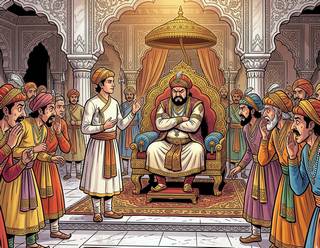
  5. What the Mahabharata Teaches About Seeing by Refusing to See

Filed Under: Living the Good Life, Mental Models, Sharpening Your Skills Tagged With: Assertiveness, Attitudes, Biases, Happiness, Humor, Materialism, Mindfulness, Parables, Persuasion, Simple Living

Insight Arrives on Its Own Schedule

January 26, 2026 By Nagesh Belludi Leave a Comment

Insight Arrives on Its Own Schedule - Lessons from King Lear's Edgar In King Lear, Edgar reaches his breaking point and his awakening at the same time.

He has endured loss, disguise, exile, and the collapse of everything he once relied on.

By the final movement of Act V, he delivers the famous line, “Ripeness is all.”

At that point, he has earned it. The clarity he speaks from isn’t theoretical. It’s the result of watching events unfold beyond his control and learning the hard limits of force and urgency.

The line stands as distilled wisdom.

There is no theatrical flourish in the moment. Edgar simply recognizes that events mature according to their own internal logic, not according to anyone’s appetite for speed.

Clarity often shows up when it’s ready.

After so much chaos, he understands that survival—and action—depend on meeting circumstances at the moment they are fully formed. Nothing earlier will hold. Nothing dragged forward will last.

That reminder cuts sharply against the modern instinct to accelerate everything.

Any unfolding situation moves only when its conditions align, not when impatience demands progress.

Idea for Impact: Patience is a disciplined calibration of timing, not a passive wait.

Wondering what to read next?

  1. In Praise of Inner Voices: A Powerful Tool for Smarter Decisions
  2. How to Embrace Uncertainty and Leave Room for Doubt
  3. Imagine a Better Response
  4. Making Tough Decisions with Scant Data
  5. “Fly the Aircraft First”

Filed Under: Mental Models, Sharpening Your Skills Tagged With: Conflict, Decision-Making, Introspection, Mindfulness, Philosophy, Problem Solving, Thought Process, Wisdom

Inspirational Quotations #1138

January 25, 2026 By Nagesh Belludi

A vile imagination, once indulged, gets the key of our minds, and can get in again very easily, whether we will or no, and can so return as to bring seven other spirits with it more wicked than itself; and what may follow no one knows.
—Charles Spurgeon (English Baptist Preacher)

An intellectual is someone whose mind watches itself.
—Albert Camus (Algerian-born French Philosopher)

It is the mind that makes the body.
—Sojourner Truth (African-American Abolitionist)

The only business of the head in the world is to bow a ceaseless obeisance to the heart.
—William Butler Yeats (Irish Poet)

To love and to be loved, one must do good to others. The inevitable condition whereby to become blessed, is to bless others.
—Mary Baker Eddy (American Religious Leader)

The only real security that a man can have in this world is a reserve of knowledge, experience and ability.
—Henry Ford (American Businessperson)

The journey of a thousand leagues begins with a single step. So we must never neglect any work of peace within our reach, however small.
—Adlai Stevenson (American Diplomat)

If more of us valued food and cheer and song above hoarded gold, it would be a merrier world.
—J. R. R. Tolkien (British Philologist, Writer)

The atheist staring from his attic window is often nearer to God than the believer caught up in his own false image of God.
—Martin Buber (Austrian Jewish Philosopher)

Filed Under: Inspirational Quotations

Elon Musk Insults, Michael O’Leary Sells: Ryanair Knows Cheap-Fare Psychology

January 23, 2026 By Nagesh Belludi Leave a Comment

Michael O'Leary Shaped Ryanair Into Bold Reflection of His Combative Persona Ryanair’s CEO Michael O’Leary has long been one of my most admired businessmen. His achievements speak for themselves, but what has always impressed me even more is the consistency of his communication and the clarity of the philosophy that underpins everything he does.

O’Leary never wavers. He never dilutes his message. Every interview, every press question, every throwaway comment—he’s hammering home the same point: keep costs low, run tight, and don’t pretend to be something you’re not. He has essentially cloned himself into a corporate entity, crafting a pugnacious and brash airline that mirrors his own combative nature and provocative disregard for the status quo.

I met him once, one-on-one, and despite the famously sharp public image, he was remarkably courteous. People who’ve worked with him echo that impression: behind the bluster and profanity is someone family-oriented, grounded, and genuinely pleasant to deal with, even if he stays tough as nails in business. That mix of discipline, bluntness, cunning, and unexpected warmth is exactly what I’ve always respected about him.

This week’s confrontation with Elon Musk only reinforced all of that. What began as a disagreement about Starlink has already turned into one of the most entertaining corporate feuds of the moment, and O’Leary has turned every bit of it into a masterclass in opportunistic publicity.

It started when O’Leary called Musk an “idiot” during a Newstalk interview, explaining why Ryanair won’t be installing Starlink on its planes. His reasoning was pure Ryanair: the equipment would cost €200–€250 million, add weight, burn more fuel, and provide a service passengers don’t actually want to pay for. On a ninety-minute flight, most travelers are thinking about their holiday, not paying extra to check email. And even for those who might want Wi-Fi, the hassle of setting up payment for an hour of browsing hardly seems worthwhile.

Ryanair Turns Elon Musk Feud Into Flash Sale and Publicity Goldmine

This Frugality Is Classic Ryanair

Ryanair has always understood something fundamental about its passengers: the vast majority simply want to get from A to B cheaply, quickly, and safely. Everything else is secondary. With that understanding, the airline became remarkably adept at turning negative publicity into an asset. As long as headlines didn’t question the cheap fares, turnaround times, or safety, they caused no real damage to the brand—often they actually helped.

Endless articles painting Ryanair as ruthless, miserly, or cold-hearted kept its name circulating and, more importantly, reinforced a single underlying idea: this airline cuts every possible cost and passes the savings to passengers. The public absorbed that message, consciously or not. Outrage over Ryanair’s latest supposed scandal often faded within hours—only for the same critics to find themselves browsing its website the next day, hunting for the cheapest flight they could find.

So when Musk fired back online this week, calling O’Leary an “utter idiot,” the situation was practically a gift. While Musk vented on X and teased a potential buyout—polling his followers on whether he should “restore Ryan as their rightful ruler” by taking over the company—O’Leary did what he does best: he turned the noise into marketing gold. Ryanair launched its “Big Idiot Seat Sale,” a flash promotion that mocked the feud while offering tens of thousands of seats for under €17. Millions of subscribers received emails featuring caricatures of both men perched on a plinth labeled “Big Idiots,” and the airline’s social media team gleefully encouraged customers to “thank that big IDIOT @elonmusk” for the cheap fares. It was classic Ryanair—irreverent, self-aware, and ruthlessly effective.

Ryanair Knows a Well-Timed Insult Is the Cheapest Publicity

O’Leary even staged a press conference on Wednesday to address Musk’s latest online outburst—a tirade in which Musk labeled him an “insufferable special-needs chimp.” The spectacle guaranteed cameras would roll and headlines would multiply.

For a man who has built an empire on ruthless efficiency this kind of free global publicity is priceless. Industry observers weren’t surprised; O’Leary has long understood that controversy when met with humor only sharpens Ryanair’s image as the scrappy sharp-tongued champion of low fares.

Ryanair vs Sabena: Brussels Statue Ad Sparked 2001 Fare War Spectacle His flair for humorous controversy goes back years. During a 2001 clash with Sabena, Belgium’s then-national carrier, Ryanair ran an ad featuring Brussels’ Manneken Pis statue with the line, “Pissed off with Sabena’s high fares?” Sabena sued and won, forcing an apology—which O’Leary delivered as a gleefully sarcastic “We’re Sooooo Sorry Sabena!” complete with even more fare comparisons. The real masterstroke came outside the Brussels courthouse, where Ryanair had encouraged people to show up, voice their support, and walk away with ultra-low-fare tickets. A massive crowd turned out, turning a legal reprimand into a street-level spectacle. This wasn’t just symbolic; Ryanair had literally set up on-the-ground promotions across Brussels. It was early proof of O’Leary’s formula in perfect sync: humor, provocation, and free publicity feeding off one another.

The frugality isn’t just marketing—it’s woven into the company’s DNA. A former Ryanair pilot once recalled that the airline used to charge staff for tickets to their own Christmas party, and supposedly not at a discount. He was convinced the company actually turned a profit on the event. It’s the same mindset that drives decisions like rejecting Starlink: if it doesn’t keep fares low, Ryanair won’t pursue it.

In the end, Musk may have satellites, rockets, and a global social media platform, but O’Leary has something more potent in this moment: the ability to turn a petty argument into a worldwide advertisement for Ryanair’s unbeatable prices, reliable service, and no-nonsense approach. The airline emerges from the feud looking cheeky, confident, and completely in control—exactly the way O’Leary prefers it.

Wondering what to read next?

  1. We Trust What We Can See: James Dyson Builds for That Instinct
  2. The Loss Aversion Mental Model: A Case Study on Why People Think Spirit is a Horrible Airline
  3. Offering a Chipotle Burrito at a Dollar is Not a Bargain but a Betrayal of Dignity
  4. Airline Safety Videos: From Dull Briefings to Dynamic Ad Platforms
  5. Labubu Proves That Modern Luxury Is No Longer an Object, It’s a Story

Filed Under: Business Stories, MBA in a Nutshell, Mental Models, Sharpening Your Skills, The Great Innovators Tagged With: Aviation, Biases, Creativity, Critical Thinking, Entrepreneurs, Icons, Innovation, Marketing, Parables, Psychology, Strategy

How to Read the AP Stylebook

January 21, 2026 By Nagesh Belludi Leave a Comment

How to Read the AP Stylebook---Loo Literature The AP Stylebook is not a book to be conquered, nor is The World Almanac and Book of Facts. They are tools, not tomes. They exist to be consulted, scanned, and revisited. Treating them like novels to be read from cover to cover is a category error.

The task is not memorization; it is orientation. Success lies in knowing what is inside and where to find it. Think of these volumes as companions. Keep them close and dip into them often. Call it “loo literature” if you like—the practice of using idle moments to absorb their contents in small, concentrated bursts.

This method builds familiarity. Repetition creates a mental map of the book’s architecture. Over time, the intimidating mass of rules and facts becomes terrain you can navigate with ease.

Scanning beats slogging. Let your eyes wander and stop when something catches your attention: a curious rule in The AP Stylebook, a surprising statistic in the Almanac, or a detail that makes you pause. Those moments of discovery stick, eventually becoming landmarks in your memory.

Other reference works reward the same approach. Consider dictionaries of quotations, encyclopedias of political history, or guides to parliamentary procedure. None demand mastery, yet all reward repeated, low-pressure encounters.

Idea for Impact: Do not cram. Do not memorize. Familiarize, familiarize, familiarize. That steady discipline turns The AP Stylebook, The World Almanac, and their kin from daunting bricks into trusted allies.

Wondering what to read next?

  1. Curate Wisely: Navigating Book Overload
  2. How to Read Faster and Better
  3. Do Self-Help Books Really Help?
  4. A Guide to Intelligent Reading // Book Summary of Mortimer Adler’s ‘How to Read a Book’
  5. What Your Messy Desk Says About You

Filed Under: Effective Communication, Leadership Reading, Sharpening Your Skills Tagged With: Books, Critical Thinking, Discipline, Motivation, Reading, Writing

Band Dynamics are Fragile

January 19, 2026 By Nagesh Belludi Leave a Comment

'Eternal Flame The Bangles' by Jennifer Otter Bickerdike (ISBN 0306833344) When you crack open Jennifer Otter Bickerdike’s Eternal Flame: The Authorized Biography of The Bangles (2025,) you’re not just revisiting a band. You’re witnessing a rare kind of group endurance. The Bangles didn’t merely survive the implosion that ended their run in the late ’80s. They resurrected themselves in the late ’90s—and never looked back. While other bands disintegrated under the weight of ego, exhaustion, and fame’s corrosive glare, The Bangles chose something harder: reconciliation.

Formed in Los Angeles, The Bangles emerged from the Paisley Underground scene with a sound that fused ’60s jangle pop, tight harmonies, and melodic rock. They were pioneers—one of the first all-female bands to achieve mainstream success entirely on their own terms. Hits like “Manic Monday,” “Walk Like an Egyptian,” and “Eternal Flame” made them household names. But the spotlight came with a cost.

The story of The Bangles isn’t one of uninterrupted harmony. It’s a tale of creative friction, personal reinvention, and the kind of compromise that doesn’t dilute artistry—it sustains it. They’ve weathered lineup changes, solo detours, and the grind of touring. Yet their sound remains unmistakably theirs: bright, melodic, and defiantly alive. What keeps them going isn’t just talent. It’s a shared vision, a respect for each other’s space, and a refusal to let burnout become destiny.

Contrast that with the implosions of Fleetwood Mac, Pink Floyd, Guns N’ Roses, The Smashing Pumpkins, The Beatles, and the Spice Girls—bands whose brilliance couldn’t outlast their breakdowns. The Bangles prove that longevity isn’t about avoiding conflict. It’s about surviving it with vision, respect, and grit.

Idea for Impact: Talent ignites a band. But it’s shared purpose, emotional maturity, and the courage to rebuild that keep the flame burning.

Wondering what to read next?

  1. No Amount of Shared Triumph Makes a Relationship Immune to Collapse
  2. Keep Politics and Religion Out of the Office
  3. The Likeability Factor: Whose “Do Not Pair” List Includes You?
  4. Managerial Lessons from the Show Business: Summary of Leadership from the Director’s Chair
  5. The High Cost of Winning a Small Argument

Filed Under: Leading Teams, Managing People Tagged With: Balance, Conflict, Getting Along, Negotiation, Relationships, Social Dynamics, Teams

Top 10 Duties of a Pharmacist: Here’s What You Can Expect

January 18, 2026 By Nagesh Belludi Leave a Comment

Top 10 Duties of a Pharmacist: Here's What You Can Expect

Have you noticed that every time you walk into a pharmacy, whether it’s a large corporate one or a small local one around the corner from your home, the pharmacists in the back are never standing still? You never see a non-moving pharmacist. This might sound like a bit of an odd statement but there is truth to it. Just think of the last time you went to a pharmacy. If they aren’t helping a patient, they’re filling up medicine boxes for collection, rearranging their medicines, checking sell-by dates, jotting something down on their laptops and overall, just staying busy bees. But what exactly are they truly doing? If this interestes you, then keep reading.

Pharmacists do a lot of things, much more than the 10 duties mentioned below but these serve as a general idea of what they do daily, so that you can have a better understanding of this occupation. The job duties as a pharmacist are not mundane nor are they easy, so settle in because you’re about to learn a lot.

1. Dispensing Medications Safely and Accurately

Dispensing medication is one of the most visible duties of a pharmacist but it involves much more than filling a bottle. Each prescription is reviewed for accuracy, dosage and potential interactions. You ensure that the medication matches the doctor’s instructions and is safe for the patient based on their health history. But before you can do that as a pharmacist, you have to be able to read the doctor’s handwriting to start, which seems to be an additional secret skill of pharmacists that the average person simply cannot get the hang of.

This responsibility requires attention to detail and a strong understanding of pharmacology. A single mistake can have serious consequences, which is why pharmacists approach this task with careful focus and consistency. It’s definitely a job in which precision is key.

2. Reviewing Prescriptions for Errors and Interactions

Before any medication reaches a patient, it must be evaluated. This is where pharmacists act as a final safety checkpoint in the healthcare system. Prescriptions are reviewed for possible issues that could harm the patient.

Key checks include:

  • Dosage accuracy based on age, weight and condition

  • Drug-to-drug interactions

  • Allergies or contraindications

  • Duplicate therapies

3. Counseling Patients on Medication Use

Patient education is a major part of pharmacy practice. You explain how to take medications, what side effects to watch for and what to avoid while using them. This conversation helps patients feel confident and informed. Clear communication reduces misuse and improves treatment success. Many people feel more comfortable asking a pharmacist questions than contacting a doctor, which makes your role essential in everyday healthcare guidance. You should never answer questions that only a doctor should answer but you can give insight into how to use the medicine prescribed, as that was prescribed by the doctor and is therefore allowed.

4. Managing Medication Therapy Plans

Pharmacists help patients manage long-term treatment plans, especially for chronic conditions like diabetes, hypertension or asthma. This includes monitoring progress, adjusting dosages when needed and working with doctors to optimize results. Medication therapy management focuses on ensuring that every medication serves a purpose and works together effectively. This role improves outcomes and reduces unnecessary or harmful drug use. There is a deeper link between a patient and their pharmacist than between the patient and their doctor.

5. Supporting Healthcare Teams

Pharmacists collaborate with doctors, nurses and other healthcare professionals. They contribute expertise on drug selection, dosing and safety.

This teamwork often includes:

  • Recommending alternative medications

  • Advising on treatment protocols

  • Supporting hospital rounds

  • Participating in patient care planning

6. Monitoring Patient Health and Outcomes

Pharmacists track how patients respond to treatment. This may involve checking blood pressure, blood glucose levels or other markers, depending on the setting. When results show concerns, adjustments can be made quickly. This ongoing observation turns pharmacists into active participants in patient health , not just medication distributors. It strengthens trust and ensures treatments stay effective over time. As a patient, you know that you visit your pharmacist very now and again, maybe even more often if you have recurring medicine. This means that your pharmacists likely see you more often than your doctor and they can track how you’re doing.

7. Managing Pharmacy Operations

Beyond clinical duties, pharmacists oversee daily pharmacy operations. This includes inventory control, workflow management and ensuring compliance with regulations. You maintain a balance between efficiency and safety. Keeping medications stocked, managing staff schedules and maintaining proper documentation all fall under this responsibility. These operational skills ensure the pharmacy runs smoothly and patients receive timely service.

8. Educating Communities on Health and Wellness

Pharmacists often serve as educators in their communities. They help people understand disease prevention, medication safety and healthy habits. Education efforts can include vaccine awareness and administration, quit smoking programs, medication safety workshops and chronic disease management guidance.

9. Staying Current With Medical Advancements

Medicine changes constantly and pharmacists must stay informed. New medications, updated guidelines and evolving safety protocols require ongoing education. This keeps your knowledge sharp and ensures patients receive the most effective treatments available. Continuous learning is part of the profession and helps maintain confidence and credibility in clinical decisions.

10. Ensuring Legal and Ethical Compliance

Pharmacists must follow strict legal and ethical standards. This includes handling controlled substances, protecting patient privacy and maintaining accurate records. Ethical judgment is essential when dealing with sensitive situations, such as potential misuse of medication or conflicting prescriptions. Upholding these standards protects patients and preserves trust in the healthcare system.

Well, there you have it. This is what a pharmacist does.

Filed Under: Inspirational Quotations

Inspirational Quotations #1137

January 18, 2026 By Nagesh Belludi

Wit is the lowest form of humor.
—Alexander Pope (English Poet)

There is no such thing as an underestimate of average intelligence.
—Henry Adams (American Historian)

Pleasure has its time; so too, has wisdom. Make love in thy youth, and in old age attend to thy salvation.
—Voltaire (French Philosopher, Author)

Let all of life be an unfettered howl.
—Vladimir Nabokov (Russian-born American Novelist)

In prosperity, caution; in adversity, patience.
—Dutch Proverb

How strange when an illusion dies, it’s as though you’ve lost a child.
—Judy Garland (American Actress, Singer)

Of all creatures that breathe and move upon the earth, nothing is bred that is weaker than man.
—Homer (Ancient Greek Poet)

Pass no rash condemnation on other peoples words or actions.
—Thomas a Kempis (German Religious Writer)

The human brain must continue to frame the problems for the electronic machine to solve.
—David Sarnoff (American Broadcaster, Businessman)

In the meantime, our policy is a masterly inactivity.
—John C. Calhoun (American Politician)

A police state finds that it cannot command the grain to grow.
—John F. Kennedy (American Head of State)

It is… easy to be certain. One has only to be sufficiently vague.
—Charles Sanders Peirce (American Philosopher)

Of all created comforts, God is the lender; you are the borrower, not the owner.
—Samuel Rutherford (Scottish Theologian)

We condemn in others the wrong we don’t want to face in ourselves.
—Frederick Buechner (American Writer, Theologian)

Filed Under: Inspirational Quotations

« Previous Page
Next Page »

Primary Sidebar

Popular Now

Anxiety Assertiveness Attitudes Balance Biases Coaching Conflict Conversations Creativity Critical Thinking Decision-Making Discipline Emotions Entrepreneurs Ethics Etiquette Feedback Getting Along Getting Things Done Goals Great Manager Innovation Leadership Leadership Lessons Likeability Mental Models Mindfulness Motivation Parables Performance Management Persuasion Philosophy Problem Solving Procrastination Psychology Relationships Simple Living Social Skills Stress Suffering Thinking Tools Thought Process Time Management Winning on the Job Wisdom

About: Nagesh Belludi [hire] is a St. Petersburg, Florida-based freethinker, investor, and leadership coach. He specializes in helping executives and companies ensure that the overall quality of their decision-making benefits isn’t compromised by a lack of a big-picture understanding.

Get Updates

Signup for emails

Subscribe via RSS

Contact Nagesh Belludi

RECOMMENDED BOOK:
Liminal Thinking

Liminal Thinking: Dave Gray

Strategic design consultant Dave Gray manual on addressing complex challenges by recognizing ignorance, seeking understanding, and creating positive change.

Explore

  • Announcements
  • Belief and Spirituality
  • Business Stories
  • Career Development
  • Effective Communication
  • Great Personalities
  • Health and Well-being
  • Ideas and Insights
  • Inspirational Quotations
  • Leadership
  • Leadership Reading
  • Leading Teams
  • Living the Good Life
  • Managing Business Functions
  • Managing People
  • MBA in a Nutshell
  • Mental Models
  • News Analysis
  • Personal Finance
  • Podcasts
  • Project Management
  • Proverbs & Maxims
  • Sharpening Your Skills
  • The Great Innovators

Recently,

  • Beware the Dangerous Romance of Rebellion
  • The Fallacy of Outsourced Sin: The Cow Paradox in India
  • Inspirational Quotations #1151
  • Don’t Ruin Your Brilliant Idea by Talking About It
  • Gandhi’s Wheel, Apple’s Spin: The Paradox of Apple’s ‘Think Different’ Campaign
  • Book Summary: Hadley Freeman’s ‘Life Moves Pretty Fast’—How ’80s Movies Wrote America’s Story
  • Inspirational Quotations #1150

Unless otherwise stated in the individual document, the works above are © Nagesh Belludi under a Creative Commons BY-NC-ND license. You may quote, copy and share them freely, as long as you link back to RightAttitudes.com, don't make money with them, and don't modify the content. Enjoy!