• Skip to content
  • Skip to primary sidebar

Right Attitudes

Ideas for Impact

Nagesh Belludi

Three Leadership Lessons from Ron Johnson’s Debacle at J.C. Penney

April 11, 2013 By Nagesh Belludi Leave a Comment

Monday’s dismissal of J.C. Penney CEO Ron Johnson comes as no surprise.

In late 2011, J.C. Penney had hired Ron Johnson from Apple to revive the sagging fortunes of the storied retailer. He was deemed as a retailing genius who had proved himself by creating Target’s hip-yet-inexpensive cachet and then by leading Apple’s highly lucrative retail stores.

During his 17-month tenure, Ron Johnson had poured hundreds of millions into rapidly remaking the retailer. Mostly, his attempt at the high-stakes makeover of J.C. Penney hadn’t worked. Revenue deteriorated sharply, feedback from customers and employees was persistently negative, and the J.C. Penney share price declined by over 50%.

Lesson 1: Don’t disenfranchise your traditional customer base

Over the years, J.C. Penney’s economic moat had declined considerably. J.C. Penney lost customers to higher-end retailers and specialty stores who had started to offer better value at lower prices. At the other end, Wal-Mart and Target wooed price-sensitive customers with better-than-basic goods.

When retailing relatively undifferentiated merchandise, one of the key levers to revenue is discounts and promotions. Like other retailers, J.C. Penney had trained its customers to buy largely when its stores had a sale. Shoppers recognized that J.C. Penney’s tag prices were made-up to be marked down during sales events and were fixated on coupons, discounts, and promotions. Shoppers had come to regard of shopping at J.C. Penney as a treasure hunt for significantly marked-down merchandise.

Within weeks of joining J.C. Penney, Ron Johnson observed that three-quarters of everything sold had been discounted by at least 50% from list price. Instead of marking up the tag prices and then using deep discount sales to attract customers, he initiated a new “fair and square every day” pricing strategy. By offering good prices every day he attempted to change customer bahavior and dissuade them from waiting for markdowns. Further, by minimizing sales, promotions, and coupons, Ron Johnson eliminated the thrill of pursuing markdowns, a key characteristic of J.C. Penney’s conventional customer. When the pricing strategy flopped, Ron Johnson reinstated sales and coupons, and even brought back “fake prices.” The successive changes confused employees and customers. Additionally, J.C. Penney stopped carrying some traditional brands that many of its long-time customers had favored and injected trendy brands to appeal to younger customers. Ron Johnson’s team created exciting marketing and advertising that was seen as too edgy and further confused traditional customers.

Lesson 2: Don’t be so hubristic as to wager big on hunches without prototyping

At Apple, Steve Jobs frequently shunned extensive consumer research because he had the exceptional genius to introduce the right products, with the right features, at the right time. Drawing from his success at the helm of Apple stores, Ron Johnson was perhaps overconfident that he had all the right answers and could therefore forego the crucial feedback from employees and customers before embarking to “revolutionize retailing” by “teaching people how to shop on their terms” and “fundamentally disrupting the traditional retailing paradigm.”

The gravest error Ron Johnson made at J.C. Penney was not testing his new pricing strategy in a handful of stores. According to this WSJ article, when a colleague proposed a limited store-test of the new pricing strategy, Johnson allegedly responded, “We didn’t test at Apple.”

Clearly, what Ron Johnson thought of value was not what its customers saw as value. As a result, J.C. Penney overlooked the reality that, for its customers, pursuing discounted goods on sale was part of the fun of shopping at J.C. Penney. Ron Johnson set about to tear down an old business model before he had switched over to a new business model without prototyping.

Ron Johnson possibly had a compelling out-of-the-box vision for J.C. Penney. However, he did not stay closely connected to J.C. Penney’s customers and employees before the launch of a radical strategic change. It is challenging to be an effective leader when customers and employees don’t understand and buy major changes.

Incremental improvements to J.C. Penney’s merchandising strategy through extensive prototyping and measured makeover could have provided the opportunity to learn through trialing and encouraged ownership of the strategy by employees, especially those in customer-facing roles.

Lesson 3: Beware of the “Halo Bias” in rating leaders

We tend to attribute a manager/leader’s success to his apparent genius and we overlook the role of the context (team, product, industry, timing, and luck) in his success. Thus, we come to expect him to have the same success in a different context. We anticipate that the very tactics and devices that proved successful in the past would work for him in the new context. (See my earlier article on the halo and horns biases in rating people.)

Ron Johnson certainly proved his retailing genius by first creating Target’s hip-yet-inexpensive brand image and then, for ten years, by leading Apple’s highly lucrative retail stores where he most famously introduced the Genius Bar concept. Nevertheless, his experience with selling premium-priced products at full price all the time with no promotions at the Apple stores did not translate well to J.C. Penney’s undifferentiated merchandise and its customer base of bargain hunters.

In June 2011, J.C. Penney stock spiked by 17.5% when the company announced Ron Johnson’s appointment as CEO. Wall Street saw in him a proven leader with the silver bullet. Investors got overly optimistic that he would remake the embattled retailer and overlooked the fact that J.C. Penney lacked the brand image of Apple and its most-sought-after products. Alas, J.C. Penney stock slid by over 50% during Ron Johnson’s 17-month tenure. The golden boy of retail never hit his stride.
Wondering what to read next?

  1. Leadership is Being Visible at Times of Crises
  2. The Business of Business is People and Other Leadership Lessons from Southwest Airlines’s Herb Kelleher
  3. Two Leadership Lessons from United Airlines’ CEO, Oscar Munoz
  4. Don’t Be Deceived by Others’ Success
  5. Reinvent Everyday

Filed Under: Leadership, Leading Teams, Managing Business Functions Tagged With: Apple, Leadership Lessons, Winning on the Job

Leadership: Stay out of the kitchen if you can’t handle the heat

April 8, 2013 By Nagesh Belludi Leave a Comment

Not everybody is prepared to endure the demanding responsibilities of a leadership role:

  • It’s tough to challenge status quo and to pilot your organization forward into unfamiliar territory
  • It’s tough to be long-term oriented and to propose transformative ideas that may fall eventually short of expectations
  • It’s tough to see around the corner and to rely on gut intuitions to develop an “end state” vision
  • It’s tough to prioritize decisiveness over inclusivity and to take tough—and sometimes unpopular—decisions
  • It’s tough to resist the urge to settle and to avoid letting circumstances define your strategy
  • It’s tough to gain strong credibility and communicate the direction and priorities of your organization
  • It’s tough to face censure and be verbally graceful under fire
  • It’s tough to be decisive, to acknowledge setbacks, and to change course midstream, if required
  • It’s tough to rationalize seemingly irrational actions and to ask for resources
  • It’s tough to be tough-minded without being inflexible or insensitive
  • It’s tough to do the right thing while resisting the temptation to please your constituents
  • It’s tough to say no when you must; it’s tough to say yes when you can’t

If you cannot come to terms with the pressures of a leadership role, perhaps leadership may be the wrong kind of work for you.

It is acceptable to be an individual contributor; although you must still develop your leadership skills to succeed in any role in the modern organization.

Wondering what to read next?

  1. The Likeability Factor: Whose “Do Not Pair” List Includes You?
  2. Likeability Is What’ll Get You Ahead
  3. The Dramatic Fall of Theranos & Elizabeth Holmes // Book Summary of John Carreyrou’s ‘Bad Blood’
  4. Why Mergers Tend to Fail
  5. Leadership Isn’t a Popularity Contest

Filed Under: Career Development, Leadership, Leading Teams Tagged With: Leadership Lessons, Likeability

Inspirational Quotations #470

April 7, 2013 By Nagesh Belludi Leave a Comment

Yes, there is a Nirvanah; it is in leading your sheep to a green pasture, and in putting your child to sleep, and in writing the last line of your poem.
—Khalil Gibran (Lebanese-born American Philosopher)

Fortune leaves always some door open to come at a remedy.
—Miguel de Cervantes (Spanish Novelist)

An ounce of application is worth a ton of abstraction.
—Booker T. Washington (American Educator)

Home is the place where, when you have to go there, they have to take you in.
—Robert Frost (American Poet)

Habit is habit, and not to be flung out of the window by any man, but coaxed downstairs one step at a time.
—Mark Twain (American Humorist)

Most of the shadows of this life are caused by standing in our own sunshine
—Henry Ward Beecher (American Protestant Clergyman)

Do not free a camel of the burden of his hump; you may be freeing him from being a camel.
—G. K. Chesterton (English Journalist)

A society in which women are taught anything at all but the management of a family, the care of men, and the creation of the future generation, is a society which is on the way out.
—L. Ron Hubbard (American Scientologist Religious Leader)

A thing is worth precisely what it can do for you; not what you choose to pay for it.
—John Ruskin (English Art Critic)

Much rain wears the marble.
—William Shakespeare (British Playwright)

In preparing for battle I have always found that plans are useless, but planning is indispensable.
—Dwight D. Eisenhower (American Head of State)

Experience is the child of thought, and thought is the child of action. We cannot learn men from books.
—Benjamin Disraeli (British Head of State)

Filed Under: Inspirational Quotations

Roger Ebert: “Try to contribute joy to the world”

April 5, 2013 By Nagesh Belludi Leave a Comment

After surviving a disfiguring spell of thyroid cancer, legendary film critic and Pulitzer Prize-winner Roger Ebert passed away on Wednesday at age 70.

Roger Ebert wrote for the Chicago Sun-Times for 46 years and syndicated his movie reviews to more than 200 newspapers in the United States and Canada. He maintained a journal as well as a compilation of his film reviews on his website, rogerebert.suntimes.com.

As a movie enthusiast, I habitually examine Roger Ebert’s opinions for a framework to reflect on a movie’s cultural, emotional, and technical perspectives. For a sample, see his review of Yojimbo (1961, Dir: Akira Kurosawa,) one of my favorite movies.

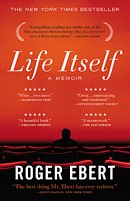
Roger Ebert published more than a dozen books in his lifetime, including “The Great Movies,” a 100-essay appreciation of the greatest movies. Here is a quote from his poignant autobiography, “Life Itself: A Memoir.”

'Life Itself: A Memoir' by Roger Ebert, film critic I believe that if, at the end of it all, according to our abilities, we have done something to make others a little happier, and something to make ourselves a little happier, that is about the best we can do. To make others less happy is a crime. To make ourselves unhappy is where all crime starts. We must try to contribute joy to the world. That is true no matter what our problems, our health, our circumstances. We must try. I didn’t always know this, and am happy I lived long enough to find it out.

Filed Under: Leadership Reading, Sharpening Your Skills

Inspirational Quotations #469

March 31, 2013 By Nagesh Belludi Leave a Comment

The vision that you glorify in your mind, the ideal that you enthrone in your heart—this you will build your life by, this you will become.
—James Allen

People are made of flesh and blood and a miracle fibre called courage.
—Mignon McLaughlin (American Journalist)

I am certain that after the dust of centuries has passed over our cities, we, too, will be remembered not for victories or defeats in battle or in politics, but for our contribution to the human spirit.
—John F. Kennedy (American Head of State)

The ideal attitude is to be physically loose and mentally tight.
—Arthur Ashe (American Sportsperson)

Think twice before pointing a finger to any one as other three fingers are always pointing towards you.
—Indira Gandhi (Indian Head of State)

In this world there is room for everyone. And the good earth is rich and can provide for everyone. The way of life can be free and beautiful, but we have lost the way.
—Charlie Chaplin (British Actor)

A man, as a general rule, owes very little to what he is born with—a man is what he makes of himself.
—Alexander Graham Bell (Scottish-born American Inventor)

Any man’s life will be filled with constant, unexpected encouragements of this kind if he makes up his mind to do his level best each day of his life—that is, tries to make each day reach as nearly as possible the high-water mark of pure, unselfish, useful living.
—Booker T. Washington (American Educator)

Filed Under: Inspirational Quotations

There Isn’t a Shortcut to the Top

March 27, 2013 By Nagesh Belludi Leave a Comment

Good college basketball players are often persuaded not to turn pro during their junior years because, once they start professional basketball, they are expected to play regularly and will miss the chance to get extensive coaching and work on their fundamentals. Instead, they are encouraged to stay for another year at college and bear the opportunity costs.

Likewise, a sound understanding of the fundamentals of a business and worthwhile operating experience cannot be skipped.

The Fast Track to the Top May Look Attractive

Organizations are full of young high-performers who seem to have the right pedigree, are sharp and ambitious, and have impressed their managers with some early achievements. As soon as they have “proved” themselves, HR succession programs tend to fast-track high potentials to the next challenge even if they are not entirely prepared, thus unintentionally setting them up for stressful transitions, bitterness, or eventual failure.

In many instances, young employees are so determined to move up the corporate ladder quickly that they don’t remain in one position long enough to master the right skills and learn from mistakes. They thereby risk accumulating a very large gap in their knowledge and skills.

Idea for Impact: Work on the Fundamentals as You Build a Career

Before making your next career move, perform a realistic self-appraisal and consider how the move may support or impede your longer-term goals. See my previous article for a list of questions to assess your chance of a promotion or a lateral move.

One of the most important skills for career success is the ability to synthesize business requirements and adjust your management approach to the conditions at hand. Each new responsibility should involve an incremental challenge that requires new learning, new approaches, and a chance to demonstrate improvement in your managerial judgment. As a career coach, I recommend staying in one position for one or two business cycles to adequately learn about the nature of the business, test fresh approaches, impact the business, and get feedback on your work.

Furthermore, not all career moves need be up the ladder. Even though most careers follow an upward trajectory, many successful careers consist of a mixture of lateral and upward career moves, each with additional responsibilities or opportunities to build experiences in different market, product, or geographical contexts with prospects for promotion in the future.

Wondering what to read next?

  1. What Every Manager Should Know Why Generation Y Quits
  2. I’m Not Impressed with Your Self-Elevating Job Title
  3. Wouldn’t You Take a Pay Cut to Get a Better Job Title?
  4. What’s Next When You Get Snubbed for a Promotion
  5. Don’t Use Personality Assessments to Sort the Talented from the Less Talented

Filed Under: Career Development, Managing People Tagged With: Career Planning

Inspirational Quotations #468

March 24, 2013 By Nagesh Belludi Leave a Comment

You can know the name of a bird in all the languages of the world, but when you’re finished, you’ll know absolutely nothing whatever about the bird… So let’s look at the bird and see what it’s doing—that’s what counts. I learned very early the difference between knowing the name of something and knowing something.
—Richard Feynman (American Physicist)

If you have a big problem in your life, all that means is that you are being a small person!
—T. Harv Eker (American Motivational Speaker)

We never want to count on the kindness of strangers in order to meet tomorrow’s obligations. When forced to choose, I will not trade even a night’s sleep for the chance of extra profits.
—Warren Buffett (American Investor)

The race of mankind would perish, did they cease to aid each other. From the time that the mother binds the child’s head till the moment that some kind assistant wipes the death-damp from the brow of the dying, we cannot exist without mutual help. All, therefore, that need aid have a right to ask it from their fellow-mortals; no one who holds the power of granting can refuse it without guilt.
—Walter Scott (Scottish Novelist)

We learn best from experience but we never directly experience the consequences of many of our most important decisions.
—Peter Senge (American Management Consultant)

There is a science of getting rich, and it is an exact science, like algebra or arithmetic. There are certain laws which govern the process of acquiring riches, and once these laws are learned and obeyed by anyone, that person will get rich with mathematical certainty.
—Wallace Wattles (American New Thought Author)

There are moments in history when brooding tragedy and its dark shadows can be lightened by recalling great moments of the past.
—Indira Gandhi (Indian Head of State)

Filed Under: Inspirational Quotations

Inspirational Quotations #467

March 17, 2013 By Nagesh Belludi Leave a Comment

To be what we are, and to become what we are capable of becoming, is the only end of life.
—Robert Louis Stevenson (Scottish Novelist)

We have found that our great philosophers and our great men of action are optimists. So, too, our most potent men of letters have been optimists in their books and in their lives. No pessimist ever won an audience commensurately wide with his genius.
—Helen Keller (American Author)

Come what may, time and the hour runs through the roughest day.
—William Shakespeare (British Playwright)

Change has no constituency—and a perceived revolution has even less.
—Jack Welch (American Businessperson)

We have every right to dream heroic dreams. Those who say that we’re in a time when there are no heroes, they just don’t know where to look.
—Ronald Reagan (American Head of State)

Every valuable human being must be a radical and a rebel, for what he must aim at is to make things better than they are.
—Niels Bohr (Danish Physicist)

Across the gulfs and barriers that now divide us, we must remember that there are no permanent enemies. Hostility today is a fact, but it is not a ruling law. The supreme reality of our time is our indivisibility as children of God and our common vulnerability on this planet.
—John F. Kennedy (American Head of State)

Man—being made reasonable, and so a thinking creature, there is nothing more worthy of his being than the right direction and employment of his thoughts, since upon this depends both his usefulness to the public and his own present and future benefit in all respects.
—William Penn (American Entrepreneur)

There is beauty everywhere. Just put your heart into your eyes.
—Hans Taeger

Action is greater than writing. A good man is a nobler object of contemplation than a great author. There are but two things worth living for: to do what is worthy of being written; and to write what is worthy of being read; and the greater of these is the doing.
—Albert Pike (American Military Leader)

We must distinguish between spirituality in general terms, which aims to make us better people, and religion. Adopting a religion remains optional, but becoming a better human being is essential.
—Matthieu Ricard (French Buddhist Monk)

Filed Under: Inspirational Quotations

Inspirational Quotations #466

March 10, 2013 By Nagesh Belludi Leave a Comment

Freedom is a fragile thing and is never more than one generation away from extinction. It is not ours by inheritance; it must be fought for and defended constantly by each generation, for it comes only once to a people. Those who have known freedom and then lost it have never known it again.
—Ronald Reagan (American Head of State)

To a people famishing and idle, the only acceptable form in which God can dare to appear is work and promise of food and wages.
—Mohandas K. Gandhi (Indian Hindu Political leader)

The life of every man is a diary in which he means to write one story, and writes another; and his humblest hour is when he compares the volume as it is with what he vowed to make it.
—J. M. Barrie (Scottish Novelist)

The worthwhile problems are the ones you can really solve or help solve, the ones you can really contribute something to. No problem is too small or too trivial if we can really do something about it.
—Richard Feynman (American Physicist)

The reasonable man adapts himself to the world; the unreasonable man persists in trying to adapt the world to himself. Therefore, all progress depends on the unreasonable man.
—George Bernard Shaw (Irish Playwright)

Family quarrels have a total bitterness unmatched by others. Yet it sometimes happens that they also have a kind of tang, a pleasantness beneath the unpleasantness, based on the tacit understanding that this is not for keeps; that any limb you climb out on will still be there later for you to climb back.
—Mignon McLaughlin (American Journalist)

Don’t fool yourself that important things can be put off till tomorrow; they can be put off forever, or not at all.
—Mignon McLaughlin (American Journalist)

The life of every man is a diary in which he means to write one story, and writes another; and his humblest hour is when he compares the volume as it is with what he vowed to make it.
—J. M. Barrie (Scottish Novelist)

My temper leads me to peace and harmony with all men; and it is peculiarly my wish to avoid any personal feuds or dissensions with those, who are embarked in the same great national interest with myself, as every difference of this kind in its consequence must be very injurious.
—George Washington (American Head of State)

Little friends may prove great friends.
—Aesop (Greek Fabulist)

The most important thing a father can do for his children is to love their mother.
—Theodore Hesburgh (American Catholic Educator)

Filed Under: Inspirational Quotations

Inspirational Quotations #465

March 3, 2013 By Nagesh Belludi Leave a Comment

Be of good cheer about death, and know of a certainty, that no evil can happen to a good man, either in life or after death.
—Socrates (Anceient Greek Philosopher)

How feeble are we that we’re swayed more by dubious flattery than by valid suggestions.
—Marty Nemko (American Career Coach, Author)

In my experience, there’s only one thing that will always steer you toward success: That’s to have a vision and to stick with it… Once I have a vision for a new venture, I’m going to ride that vision until the wheels come off.
—Russell Simmons (American Entrepreneur)

Even a high experience is worth nothing, when not polished and kept warm.
—Hans Taeger

It helps a lot looking at life from the perspective of one’s certain death. Try to visualize yourself at the hour of death. Just a couple of minutes each day. It’s basic Buddhist beginners practice.
—Hans Taeger

The individual or the group which organizes any society, however social its intentions or pretensions, arrogates an inordinate portion of social privilege to itself.
—Reinhold Niebuhr (American Protestant Theologian)

Man’s capacity for justice makes democracy possible, but man’s inclination to injustice makes democracy necessary.
—Reinhold Niebuhr (American Protestant Theologian)

Filed Under: Inspirational Quotations

« Previous Page
Next Page »

Primary Sidebar

Popular Now

Anxiety Assertiveness Attitudes Balance Biases Coaching Conflict Conversations Creativity Critical Thinking Decision-Making Discipline Emotions Entrepreneurs Etiquette Feedback Getting Along Getting Things Done Goals Great Manager Innovation Leadership Leadership Lessons Likeability Mental Models Mindfulness Motivation Networking Parables Performance Management Persuasion Philosophy Problem Solving Procrastination Psychology Relationships Simple Living Social Skills Stress Suffering Thinking Tools Thought Process Time Management Winning on the Job Wisdom

About: Nagesh Belludi [hire] is a St. Petersburg, Florida-based freethinker, investor, and leadership coach. He specializes in helping executives and companies ensure that the overall quality of their decision-making benefits isn’t compromised by a lack of a big-picture understanding.

Get Updates

Signup for emails

Subscribe via RSS

Contact Nagesh Belludi

RECOMMENDED BOOK:
Ego is the Enemy

Ego is the Enemy: Ryan Holiday

Ryan Holiday describes how a lack of humility can impede a full, successful life. Lessons: be humble and persistent; value discipline and results, not passion and confidence. Be less, do more.

Explore

  • Announcements
  • Belief and Spirituality
  • Business Stories
  • Career Development
  • Effective Communication
  • Great Personalities
  • Health and Well-being
  • Ideas and Insights
  • Inspirational Quotations
  • Leadership
  • Leadership Reading
  • Leading Teams
  • Living the Good Life
  • Managing Business Functions
  • Managing People
  • MBA in a Nutshell
  • Mental Models
  • News Analysis
  • Personal Finance
  • Podcasts
  • Project Management
  • Proverbs & Maxims
  • Sharpening Your Skills
  • The Great Innovators

Recently,

  • Optionality is the Ultimate Hack
  • Life Isn’t Fair, Nor Does It Pretend To Be: What ‘Tokyo Story’ Teaches Us About Disappointment
  • Inspirational Quotations #1148
  • The Only Cure for Imposter Syndrome Is Evidence
  • The Inopportune Case of the Airbus A340 Aircraft: When Tomorrow Left Yesterday Behind
  • You Don’t Know If a Good Day is a Good Day
  • Inspirational Quotations #1147

Unless otherwise stated in the individual document, the works above are © Nagesh Belludi under a Creative Commons BY-NC-ND license. You may quote, copy and share them freely, as long as you link back to RightAttitudes.com, don't make money with them, and don't modify the content. Enjoy!