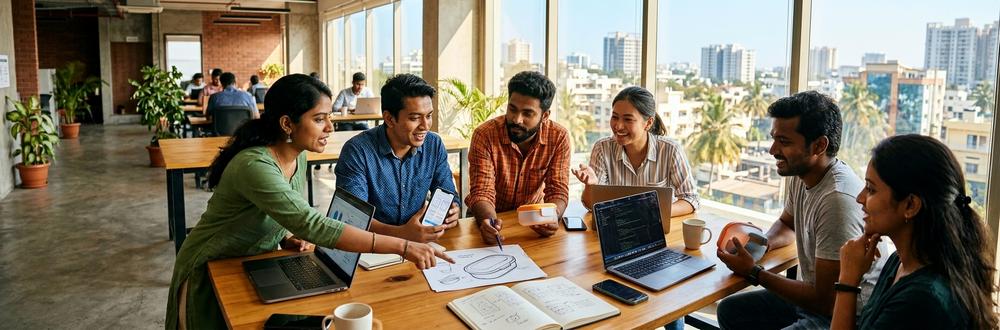

Over the past two decades I’ve traveled extensively across Asia, and I’ve watched a significant change take hold. A new generation of self-directed entrepreneurs is reshaping the region’s economy.
What strikes me most is how different their starting point is from the one my generation inherited. Growing up in South India, I learned a simple, narrow definition of a good life: get a strong education, find a stable job at a stable company, stay there permanently, avoid unnecessary risk, and never mention entrepreneurship. Risk-taking was treated as more than unwise. Families regarded it as a moral failing. Stability was the virtue we were raised to revere. The word entrepreneur itself carried a faint embarrassment, since it suggested someone who hadn’t managed to find a proper job.
When old norms lose their authority, the human mind defaults to innovation, not obedience.
Today, in cities from Jakarta to Bangalore and from Ho Chi Minh City to Kuala Lumpur, I meet people with a different outlook. They’re highly educated and digitally fluent, and they follow global developments closely. Their turn toward entrepreneurship reflects confidence, and it also responds to economic pressure. High unemployment, fear of recession, and industries slow to adapt have made traditional careers less secure. Rapid growth has produced prosperity unevenly, widening the gaps between urban and rural communities and between high-skill and low-skill workers. For many young people, building a business carries less risk than depending on institutions that no longer guarantee stability.
The tools available to them differ sharply from anything my generation had. Cheap smartphones and widespread internet access have democratized information and market access. E-commerce platforms, gig-economy apps, and social media have lowered the cost of launching a business to almost nothing.
Education has changed as well. Universities now emphasize critical thinking, creativity, and entrepreneurship. Many young people study abroad or at Western-style institutions at home, and they return with global networks and a willingness to challenge inherited norms. The stigma around failure has faded gradually. Starting a business and stumbling is increasingly treated as a learning experience, and families no longer regard it as a catastrophe.
Economic liberalization has opened opportunities that didn’t exist before. Exposure to global brands, startup ecosystems, and venture capital has normalized the idea that innovation can come from anywhere. Governments and private investors are building incubators, accelerators, and funding programs that would have been unimaginable when I was growing up.
Across Asia, a generation is quietly pursuing careers their parents assumed were off limits.


These young founders treat structural barriers as design problems rather than fixed constraints. For them, entrepreneurship is a form of agency and a way out of circumstances where established systems no longer guarantee security.
I’ve seen this unfold in person, in specific places and in individual lives, and the energy behind it is unmistakable. The future they’re building looks very different from the one my generation inherited, and it’s far more self-authored.
Idea for Impact: Organizations that want to attract this generation should offer ownership early, in the form of real decisions, real budgets, and real accountability. Young professionals who might otherwise start their own ventures tend to stay when the work lets them build something.