.jpg "'Ice King Frederic Tudor' by Carl Seaburg (ISBN 0939510804)") I recently read Ice King: Frederic Tudor and His Circle (2003) by Carl Seaburg and Stanley Paterson. It tells the story of an important but largely forgotten chapter of American history—the birth of the commercial ice trade—tracing it from its laughed-at beginnings in Boston to a global industry that reshaped how the world ate, drank, and lived. The book is rich with personality, setback, and stubborn ambition, and it’s as much a character study as it is a business history.
I recently read Ice King: Frederic Tudor and His Circle (2003) by Carl Seaburg and Stanley Paterson. It tells the story of an important but largely forgotten chapter of American history—the birth of the commercial ice trade—tracing it from its laughed-at beginnings in Boston to a global industry that reshaped how the world ate, drank, and lived. The book is rich with personality, setback, and stubborn ambition, and it’s as much a character study as it is a business history.
The Slippery Speculation
In the winter of 1806, a young Boston merchant named Frederic Tudor walked out onto the frozen surface of Fresh Pond in Cambridge, watched laborers hack 80 tons of ice from the lake in great crystalline blocks, loaded them onto a ship called the Favorite, and set sail for Martinique.
Boston found this hilarious.
The city’s merchants—men who routinely speculated in coffee, mahogany, spices, and umbrellas—looked at Tudor and saw a fool. The Boston Gazette covered his departure with barely concealed mockery: “No joke. A vessel with a cargo of 80 tons of Ice has cleared out from this port for Martinique. We hope this will not prove to be a slippery speculation.”
Ice. To the tropics. On a wooden ship. In summer.
The math was simple, the conclusion obvious, and the skeptics entirely wrong about what that meant.
Tudor arrived in Martinique to find the ice had, miraculously, survived most of the journey. What hadn’t survived was the infrastructure to receive it. There was no ice house to store it. No local knowledge of how to use it. No customers who had ever seen a block of frozen water, let alone understood that they should want one. The ice melted in six weeks. Tudor lost $4,000—a serious sum—and sailed home to the sound of laughter he could probably hear from the dock.
He went back anyway.
The Contempt for Doubters
For the next 15 years, Tudor kept sailing. To Charleston. To Havana. To New Orleans. The obstacles were not occasional; they were relentless. He contracted yellow fever in the tropics and survived it. He suffered a mental breakdown and recovered. Employees stole from him. Government officials corrupted deals he had spent months building. The Jefferson embargo strangled his trade routes. The War of 1812 shuttered them entirely. The Panic of 1819 nearly finished him. And not once but twice, he was thrown into debtor’s prison—that particular humiliation reserved for men who owe more than they own and can no longer pretend otherwise.
Tudor endured all of it with a quality his contemporaries described, not entirely fondly, as implacable. He was defiant, imperious, and contemptuous of the men who doubted him. He did not explain himself. He did not seek reassurance. He simply continued.
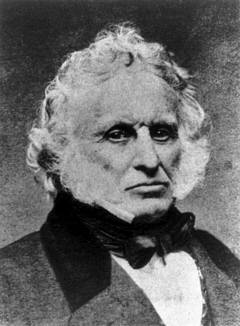 What kept him going was a conviction that looked, from the outside, like madness but was, in fact, a market insight of rare precision: there was no ice trade in the tropics because no one had ever built one. The absence of demand was not evidence that demand was impossible. It was evidence that no one had yet done the work of creating it.
So Tudor created it. He gave ice away, free, to bars and cafés, and kept supplying it until cold drinks became something people expected rather than wondered at. He taught locals to make ice cream, a product so novel and so immediately pleasurable that it sold itself. He demonstrated, patiently and repeatedly, that the thing his customers had never wanted was now the thing they couldn’t do without. He didn’t find a market. He built one from frozen water and sheer persistence.
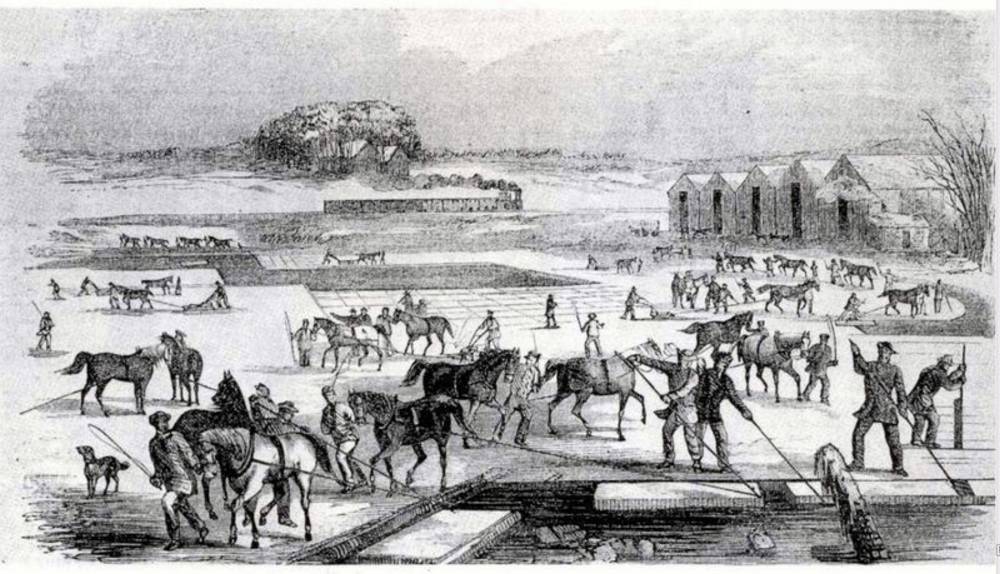
The logistics evolved through decades of failure and tinkering. Hay, tried first as insulation, proved unreliable; sawdust, sourced cheaply from New England’s abundant sawmills, worked far better. Tudor collaborated with the inventor Nathaniel Wyeth to develop horse-drawn ice cutters that replaced hand axes and multiplied the speed of the harvest. He designed and built specialized ice houses in Havana, Calcutta, and Charleston—structures engineered to hold temperature in climates that had never needed to hold temperature before.
Eccentricity Looks Like Innovation Only in Hindsight
By 1833, Tudor had become the dominant figure in the global ice trade. That year, he sent the ship Tuscany from Boston to Calcutta carrying 180 tons of ice. The journey crossed the equator twice and covered 16,000 miles. When the Tuscany arrived in port after four months at sea, the cargo was still largely intact. The British in India—who had spent years enduring the subcontinent’s heat with no means of relief—celebrated the delivery. They immediately raised funds to build a permanent, palatial ice house.
The man Boston had laughed at for nearly three decades was celebrated in Calcutta.
Tudor died in 1864, at 80, wealthy and decorated with the title that had followed him since his triumph: the Ice King. A bachelor for most of his working life, he had married after fifty and fathered six children. He owned a country estate in Nahant. The industry he had conjured from a frozen Cambridge pond would continue to sustain cities across America and beyond until mechanical refrigeration finally made it obsolete in the early twentieth century.
He was described by those who knew him as defiant, reckless in spirit, imperious, and implacable to enemies. Not a comfortable man. Not a man who needed your approval or asked for it.
That last part mattered more than any of the rest.
The Boston merchants who laughed at Tudor in 1806 were not stupid. They were rational. They looked at the evidence available—ice melts, the tropics are hot, customers there have never asked for frozen goods—and reached a perfectly reasonable conclusion. What they lacked wasn’t intelligence. It was the willingness to hold a conviction before the evidence had caught up to it. Tudor held his for twenty-seven years.
The line between eccentricity and genius is drawn only after success. Before success, they are indistinguishable. The visionary and the fool stand in the same room, making the same arguments, to the same skeptical audience. The difference between them is not talent or connections or luck. It is the refusal to leave the room.
Ridicule is the tax levied on originality. Tudor paid it, in full, for decades.
And then he collected.
Leave a Reply